
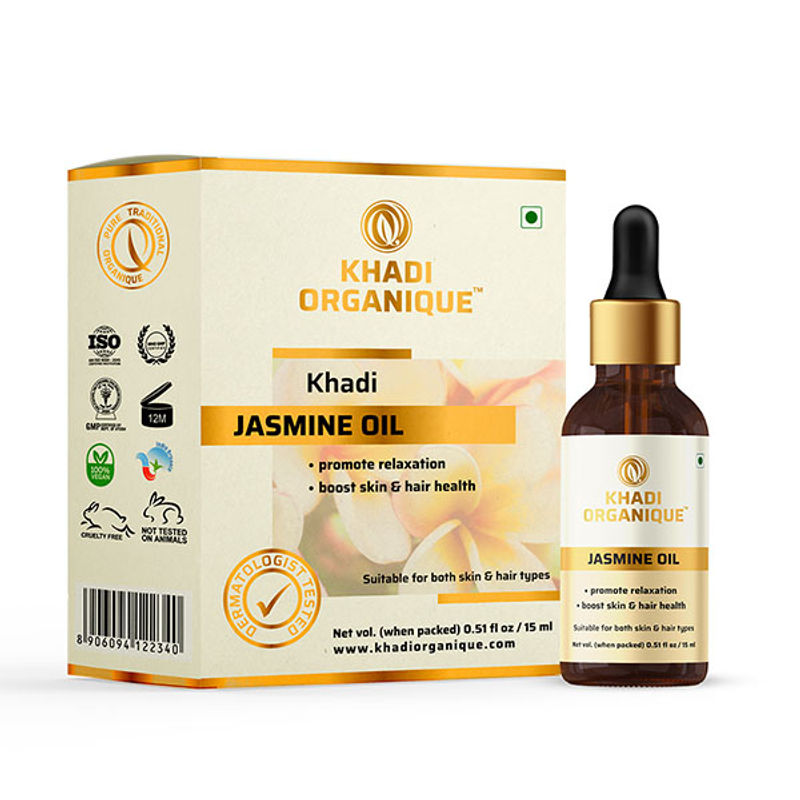

Khadi Organique
Khadi Organique Jasmine Essential Oil

Khadi Organique Jasmine Essential Oil
Khadi Organique
khadi-organique-jasmine-essential-oil
Face Oil
10085471912229
Morning or Evening?
How often will you use this product?
Notes


Highlights
WHAT IS IT?
Essential Oil with 1 ingredient
FEATURES
100% pure jasmine oil, helps to retain moisture in skin, improves skin elasticity, softens skin, promotes glowing skin, fights ageing signs, promotes healthy hair, calms nerves, aromatherapy benefits, dermatologist tested, free from parabens, sulfates, synthetic fragrance, vegan and cruelty-free
BEST FOR
sensitive
CHECKS
Parabens, Sulphates, Synthetic fragrance, Harmful chemicals
Who Is It For?
All Genders No Specific Age Range StatedWhat Does It Help With?
Brightens Scars And Stretch Marks Keeps Infections At Bay Restores And Renews Skin Firms And Tones Skin Promotes Restful Sleep Improves Skin Elasticity And Moisture Fights Signs Of AgeingBudget
Affordable (under $30)How To Use
Which routine should it be used in?
Instructions:
Key Information


What Khadi Organique Says
Product Description:
Khadi Organique Jasmine Oil has multi-therapeutic benefits - it helps to brighten the appearance of scars and stretch mark. Helps to keep infections at bay. Being rich in vitamins A and E, it restores and renews skin. Helps in aromatherapy and promotes long, restful, undisturbed sleep. This essential oil also firms and tones the skin. Features: 100% pure jasmine oil for skin and hair, helps to retain moisture in the skin, improves skin elasticity, leaves skin feeling soft and smooth, promotes glowing skin and fights signs of ageing, promotes shiny, lustrous and healthy looking hair, improves overall skin and hair health, calms nerves, relaxes the body and relieves stress, has a pleasant aroma that rejuvenates the senses and uplifts mood, can be used in aromatherapy, suitable for all skin and hair types, dermatologist tested, free from parabens, sulphates, synthetic fragrance and harmful chemicals, 100% vegan and cruelty-free.
About the Brand:
Ingredients Overview
Ingredients List
100%-pure-jasmine-oil-(jasminum-officinale)
Key Ingredients
Jasmine Oil, Vitamins A, Vitamins E
Ingredients Details
Jasmine Oil
Common Name(s): Essential oil,concentrated volatile aromatic,bioactive fragrance active
CAS Number: N/a
DESCRIPTION
What It Does: Provides aromatic sensory benefit alongside bioactive skin activity from concentrated plant volatile compounds — including antimicrobial activity (tea tree, thyme, clove), anti-inflammatory activity (lavender, chamomile), or circulatory stimulation (peppermint, rosemary).
Why It's Used: Essential oils provide authentic 'aromatherapy' narrative with genuine bioactive chemistry — the concentrated terpenoid constituents have documented biological activity in addition to olfactory benefit, justifying ingredient claims beyond pure fragrance.
How It Works: Essential oil complexity: steam distillation concentrates volatile terpenes (monoterpenes, sesquiterpenes), phenylpropanoids, and other volatiles. antimicrobial activity from terpenoid membrane disruption (terpinen-4-ol, eugenol, thymol disrupt bacterial membranes); anti-inflammatory from sesquiterpene nf-kb inhibition; sensitisation risk from electrophilic monoterpene oxides and aldehydes.
Typically Found In: Aromatherapy,bioactive skin care,fragrance
TECHNICAL DETAILS
Primary Category: Active ingredient – cosmetic active
Secondary Functions: Skin conditioning
Application Areas:

Facial Skincare

Body Care
Hair Care
Beard Care
Color Cosmetics (Makeup)
Dietary/Oral Supplements
Typical Concentration Range: 0.01%–2%
SOURCING & ETHICS
Vegan Status: Conditional - supplier confirmation required
Halal Status: Unverified - supplier confirmation required
Source Notes: Commercially produced for cosmetic use. verify vegan/halal status with supplier. [audit 2026-07-29 rev2: the record's own source_notes does not assert a non-animal origin, or instructs the reader to verify with the supplier; "yes" asserts knowledge the record does not hold. determination requires shariah-panel sign-off.]
SKIN COMPATIBILITY
Irritancy Rating: 1/5 – very low
Comedogenicity Rating: 0/5 – non-comedogenic
Sensitivity Concerns: Well-tolerated by most skin types.
Safe for Sensitive Skin: Yes
SAFETY & COMPATIBILITY
Safety Profile: Good safety profile at recommended concentrations. ewg score: 1–2.
Works Well With: Standard skincare actives
Avoid Combining With: No known significant incompatibilities
SCIENTIFIC NOTE
Essential oil concentration in cosmetics must respect ifra (international fragrance association) guidelines — each oil has category-specific maximum use levels based on skin sensitisation quantitative risk assessment (qra). tea tree oil maximum 0.5% (rinse-off), lavender oil 2% (leave-on skin) as examples.
Last Verified: 2026-03-12
Primary Sources: Cosing database,ifra standards,essential oil bioactive fragrance review