

Nykaa E retail limited
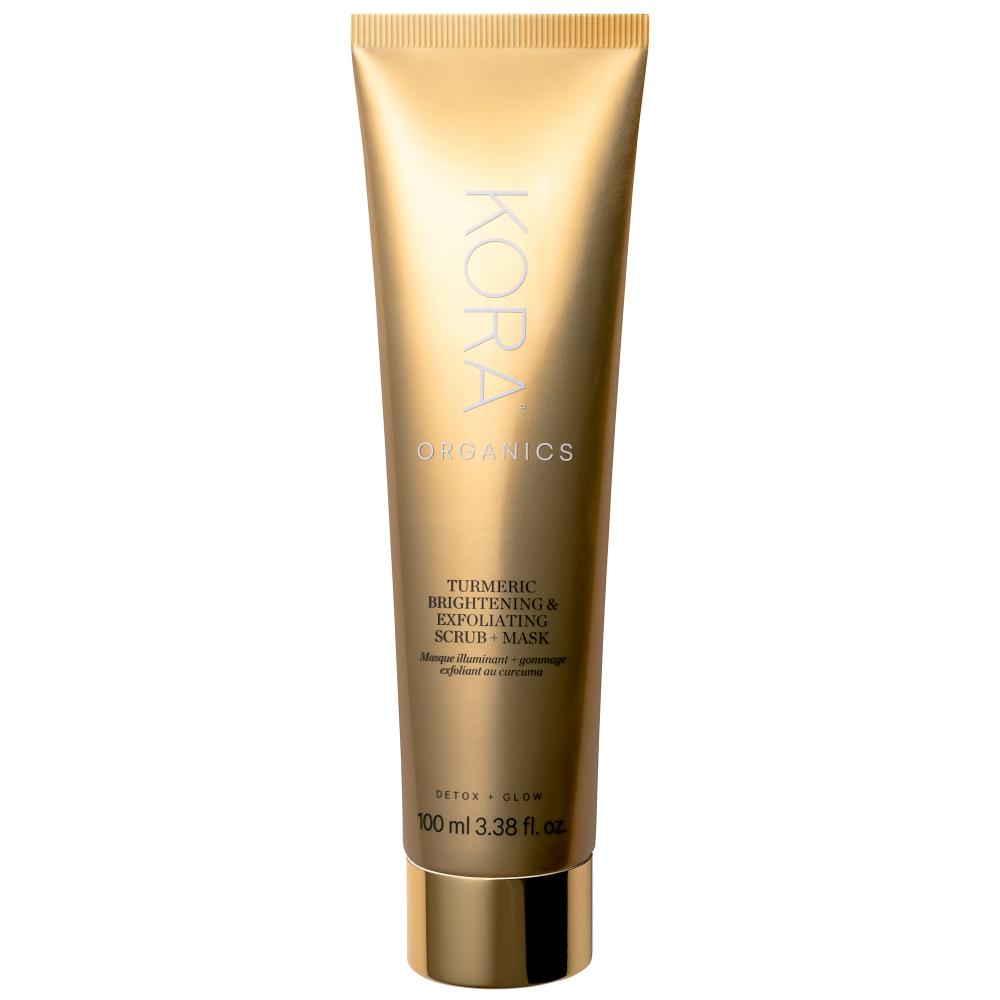
KORA ORGANICS Turmeric Brightening & Exfoliating Mask 2-in-1

KORA ORGANICS Turmeric Brightening & Exfoliating Mask 2-in-1
Nykaa E retail limited
kora-organics-turmeric-brightening-exfoliating-mask-2-in-1
Face Mask
10084795908389
Morning or Evening?
How often will you use this product?
Notes


Highlights
WHAT IS IT?
2-in-1 Brightening and Exfoliating Mask
FEATURES
Physical and chemical exfoliating treatment mask for smoother, brighter skin
BEST FOR
combination
CHECKS
Who Is It For?
Adults All GendersWhat Does It Help With?
Brightening Exfoliation Smoother SkinBudget
Professional (over $150)How To Use
Which routine should it be used in?
Instructions:
Key Information


What Nykaa E retail limited Says
Product Description:
A 2-in-1 physical and chemical exfoliating treatment mask with turmeric and rosehip for smoother, brighter skin
About the Brand:
Ingredients Overview
Ingredients List
Aloe Barbadensis (Aloe Vera) Leaf Juice*, Pumice, Glycerin, Rosa Canina Fruit *, Lactobacillus Ferment, Water/Aqua/Eau, Camellia Sinensis Leaf Powder*, Bambusa Arundinacea Stem Extract, Oryza Sativa (Rice) Extract*, Morinda Citrifolia Fruit Powder*, Lactobacillus, Rosa Canina Fruit Oil*, Sodium Levulinate, Sclerotium Gum, Populus Tremuloides Bark Extract, Carica Papaya (Papaya) Fruit Extract*, Cetearyl Alcohol , Sodium Anisate, Potassium Sorbate, Curcuma Longa (Turmeric) Root Extract*, Cocos Nucifera (Coconut) Fruit Extract, Helianthus Annuus (Sunflower) Seed Wax/Helianthus Annuus Seed Cera, Sodium Stearoyl Glutamate, Mentha Piperita (Peppermint) Flower/Leaf/Stem Oil*, Lactic Acid, Lavandula Angustifolia (Lavender) Oil, Citrus Limon (Lemon) Peel Oil, (Tapioca) Maltodextrin*, Cetearyl Glucoside, Carrageenan, Sodium Phytate , Cananga Odorata Flower Oil, Juniperus Virginiana (Cedarwood) Oil, Glucose, Leuconostoc Ferment Filtrate, Tocopherol , Soybean Peroxidase, Superoxide Dismutase, Alcohol, Limonene**, Linalool
Key Ingredients
turmeric,rosehip
Ingredients Details
Alcohol
Common Name(s): Alcohol,cosmetic active,functional ingredient
CAS Number: N/a
DESCRIPTION
What It Does: Delivers characteristic cosmetic function at recommended use concentration.
Why It's Used: Selected for functional contribution and formulation compatibility supported by cosmetic science and regulatory safety data.
How It Works: Works through the mechanism of its molecular class as documented in peer-reviewed cosmetic literature.
Typically Found In: Skin care formulations
TECHNICAL DETAILS
Primary Category: Active ingredient – cosmetic active
Secondary Functions: Skin conditioning
Application Areas:

Facial Skincare

Body Care
Hair Care
Beard Care
Color Cosmetics (Makeup)
Dietary/Oral Supplements
Typical Concentration Range: 0.1%–10%
SOURCING & ETHICS
Vegan Status: Conditional
Halal Status: Yes
Source Notes: Commercially produced for cosmetic use. verify vegan/halal status with supplier.
SKIN COMPATIBILITY
Irritancy Rating: 1/5 – very low
Comedogenicity Rating: 0/5 – non-comedogenic
Sensitivity Concerns: Well-tolerated by most skin types.
Safe for Sensitive Skin: Yes
SAFETY & COMPATIBILITY
Safety Profile: Good safety profile at recommended concentrations. ewg score: 1–2.
Works Well With: Standard skincare actives
Avoid Combining With: No known significant incompatibilities
SCIENTIFIC NOTE
Alcohol has an established safety profile within the cosmetic regulatory framework at standard use concentrations.
Last Verified: Cosing database,alcohol technical literature
Primary Sources: 2026-03-12
Bambusa Arundinacea Stem Extract
Common Name(s): Bambusa arundinacea stem extract,bambusa arundinacea stem extract,botanical extract,phytochemical active
CAS Number: N/a
DESCRIPTION
What It Does: Provides antioxidant protection from polyphenol radical scavenging, anti-inflammatory activity from terpenoid nf-kb/cox pathway inhibition, and skin conditioning from the phytochemical secondary metabolite complex.
Why It's Used: Bambusa arundinacea stem extract is selected for the characteristic secondary metabolite signature of bambusa arundinacea — whether polyphenols, terpenoids, alkaloids, or polysaccharides, the phytochemical profile provides antioxidant, anti-inflammatory, or skin conditioning benefits specific to this botanical species.
How It Works: Polyphenol catechol h-atom donation scavenges ros (rate constants 10⁶-10⁹ m⁻¹s⁻¹); terpenoids inhibit iκb kinase blocking nf-κb; flavonoids compete at cox-1/2; alkaloids modulate specific receptor targets for additional bioactivity.
Typically Found In: Botanical skin care
TECHNICAL DETAILS
Primary Category: Active ingredient – antioxidant
Secondary Functions: Free radical scavenging,anti-aging
Application Areas:
Facial Skincare
Body Care
Hair Care
Beard Care
Color Cosmetics (Makeup)
Dietary/Oral Supplements
Typical Concentration Range: 0.1%–10%
SOURCING & ETHICS
Vegan Status: Conditional
Halal Status: Conditional
Source Notes: Plant-derived extract or synthetic.
SKIN COMPATIBILITY
Irritancy Rating: 1/5 – very low
Comedogenicity Rating: 0/5 – non-comedogenic
Sensitivity Concerns: Non-irritating; well-tolerated.
Safe for Sensitive Skin: Yes
SAFETY & COMPATIBILITY
Safety Profile: Excellent safety profile. ewg score: 1.
Works Well With: Vitamin c,vitamin e,ferulic acid,spf,other antioxidants
Avoid Combining With: No significant incompatibilities
SCIENTIFIC NOTE
Standardise to marker compound for consistent bioactivity — field-grown material varies 3-10× in secondary metabolite content.
Last Verified: Cosing database,bambusa arundinacea stem extract botanical extract review
Primary Sources: 2026-03-22
Camellia Sinensis Leaf Powder
Common Name(s): Camellia sinensis leaf powder,botanical extract,phytochemical active
CAS Number: N/a
DESCRIPTION
What It Does: Provides antioxidant protection, anti-inflammatory activity, and skin conditioning.
Why It's Used: Multi-functional phytochemical profile supports concurrent skin care claims.
How It Works: Polyphenols scavenge ros, inhibit nf-kb/cox pathways, and condition skin.
Typically Found In: Botanical skin care
TECHNICAL DETAILS
Primary Category: Active ingredient – antioxidant
Secondary Functions: Free radical scavenging,anti-aging
Application Areas:
Facial Skincare
Body Care
Hair Care
Beard Care
Color Cosmetics (Makeup)
Dietary/Oral Supplements
Typical Concentration Range: 0.1%–30%
SOURCING & ETHICS
Vegan Status: Conditional
Halal Status: Conditional
Source Notes: Plant-derived extract or synthetic.
SKIN COMPATIBILITY
Irritancy Rating: 1/5 – very low
Comedogenicity Rating: 0/5 – non-comedogenic
Sensitivity Concerns: Non-irritating; well-tolerated.
Safe for Sensitive Skin: Yes
SAFETY & COMPATIBILITY
Safety Profile: Excellent safety profile. ewg score: 1.
Works Well With: Vitamin c,vitamin e,ferulic acid,spf,other antioxidants
Avoid Combining With: No significant incompatibilities
SCIENTIFIC NOTE
Plant secondary metabolites evolved for uv photoprotection and pathogen defence — directly applicable to cosmetic antioxidant and anti-inflammatory activity.
Last Verified: Cosing database,camellia sinensis leaf powder botanical review
Primary Sources: 2026-03-12
Cananga Odorata Flower Oil
Common Name(s): Cananga odorata flower oil
DESCRIPTION
What It Does: Nourishes and softens skin through its balanced fatty acid profile, while antioxidant compounds protect against oxidative skin damage.
Why It's Used: Plant oils provide physiologically compatible lipid structures that integrate into the skin barrier and deliver fat-soluble antioxidants directly to skin cells.
How It Works: Fatty acids integrate into stratum corneum lipid lamellae, reinforcing the lipid barrier. antioxidants (tocopherols, carotenoids, polyphenols) neutralize ros through electron donation or singlet oxygen quenching.
Typically Found In: Face oils,serums,moisturizers,hair treatments,body oils
TECHNICAL DETAILS
Primary Category: Plant oils
Secondary Functions: Emollient,antioxidant
Application Areas:
Facial Skincare
Body Care
Hair Care
Beard Care
Color Cosmetics (Makeup)
Dietary/Oral Supplements
Typical Concentration Range: 0.5–30%
SOURCING & ETHICS
Vegan Status: Yes
Halal Status: Yes
Source Notes: Cold-pressed or solvent-extracted plant oil; no animal components.
SKIN COMPATIBILITY
Irritancy Rating: 1
Comedogenicity Rating: 2
Sensitivity Concerns: Low sensitization potential at recommended use concentrations.
Safe for Sensitive Skin: Yes
SAFETY & COMPATIBILITY
Safety Profile: Well-characterized cosmetic ingredient with established safety profile. generally non-irritating at typical use concentrations. suitable for leave-on and rinse-off cosmetics.
Works Well With: Vitamin e,ceramides,other plant oils,squalane
Avoid Combining With: Strong oxidizers (accelerate rancidity)
SCIENTIFIC NOTE
Vegetable oils are triglyceride matrices where the fatty acid composition determines skin compatibility, barrier function, and comedogenicity. oleic acid-rich oils (>60%) soften barrier lipids and enhance penetration; linoleic acid-rich oils reinforce ceramide-poor stratum corneum; saturated fatty acid-rich oils provide occlusion without skin penetration.
Last Verified: Cosing eu database; pcpc cosmetic ingredient safety reviews; aocs plant oil composition databases; fatty acid pharmacology reviews
Primary Sources: 2025-01-15
