

Lakme
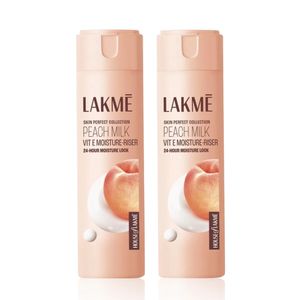
Lakme Peach Milk Vit E Light- Weight & Non-Sticky Moisturizer with 24 Hours Lock (120 ml) Pack of 2

Lakme Peach Milk Vit E Light- Weight & Non-Sticky Moisturizer with 24 Hours Lock (120 ml) Pack of 2
Lakme
lakme-peach-milk-vit-e-light-weight-non-sticky-moisturizer-with-24-hours-lock-120-ml-pack-of-2
Moisturize
10085011292453
Morning or Evening?
How often will you use this product?
Notes


Highlights
WHAT IS IT?
Moisturizer with 2 options available (120 ml Pack of 2 and 200 gm Pack of 2)
FEATURES
Light-Weight, Non-Sticky, 24 Hours Lock, Enriched with Vitamin E (for 200 gm Pack)
BEST FOR
normal
CHECKS
Who Is It For?
All Genders No Specific Age Range StatedWhat Does It Help With?
24 Hours Hydration Light MoisturizationBudget
Affordable (under $30)How To Use
Which routine should it be used in?
Instructions:
Key Information

What Lakme Says
Product Description:
Lakme Peach Milk Vit E Light Weight & NonSticky Moisturizer with 24 Hours Lock 120 ml Pack of 2
About the Brand:
Ingredients Overview
Ingredients List
Water,Parer-mum Liquidum,,Propylene Glycol,Glyceryl Stearate,Cetyl Palmitate,Octyl Hydroxystearate,Cetyl Alcohol,Cyclopentasiloxane,Perfume,Isohexadecane,Potassium Lactate,Glycerin,PEG-40 Hydrogenated Castor Oil,Trideceth-9 Pentylene Glycol Nonfat Dry Milk (Sine Adipe Lac) Prunus Persica (Peach) Kernel Oil Disodium Laureth Sulphosuccinate Dirnethicone Sodium Hydroxide Carbomer Acrylates/C10-C30 Alkyl Acrylate Crosspolymer Lactic Acid Tocopheryl Acetate Ethylhexyl Methoxy-cinnamate Disodium EDTA Panthenol Sodium PCA Sodium Ascorbyl Phosphate Tocopherol Phenoxyethanol Methyl Paraben Butyl Paraben Ethyl Paraben Propyl Paraben Alphalso methyl lonone Butylphenyl Methylpropional Citronellol Hydroxyisohexyl 3-Cyclo-hexene Carboxaldehyde Linalool CI 17200
Key Ingredients
Vitamin E
Ingredients Details
Cetyl Alcohol
Common Name(s): 1-hexadecanol,palmityl alcohol,n-cetyl alcohol
CAS Number: 36653-82-4
DESCRIPTION
What It Does: Provides c16 fatty alcohol emolliency and thickening for well-textured cosmetic emulsions.
Why It's Used: Lighter-textured fatty alcohol alternative to stearyl alcohol for creams and conditioners requiring less heavy emolliency.
How It Works: C16 chain length provides slightly lower melting point (49°c) than stearyl (60°c) giving softer, lighter emulsion texture. forms lamellar networks for thickening and stability. direct skin and hair conditioning via fatty alcohol film.
Typically Found In: Creams,hair conditioners,lotions
TECHNICAL DETAILS
Primary Category: Functional ingredient – fatty alcohol
Secondary Functions: Barrier sealing,softening
Application Areas:

Facial Skincare
Body Care
Hair Care

Beard Care
Color Cosmetics (Makeup)
Dietary/Oral Supplements
Typical Concentration Range: 1%–15%
SOURCING & ETHICS
Vegan Status: Yes – from vegetable or coconut/palm fatty acids
Halal Status: Yes
Source Notes: Plant-derived, synthetic or animal-derived. verify source.
SKIN COMPATIBILITY
Irritancy Rating: 1/5 – very low
Comedogenicity Rating: 1/5 – low; formulation-dependent
Sensitivity Concerns: Non-irritating.
Safe for Sensitive Skin: Yes
SAFETY & COMPATIBILITY
Safety Profile: Excellent safety profile. ewg score: 1.
Works Well With: Humectants,ceramides,actives as carrier
Avoid Combining With: No significant incompatibilities
SCIENTIFIC NOTE
Cetyl alcohol's c16 chain length is at the approximate thermal transition point for fatty alcohol lamellar crystallization at skin temperature (33°c). this transition (from ordered crystalline to disordered liquid phase near skin temperature) provides the characteristic 'melts on application' sensory profile that makes cetyl alcohol-containing products feel cooling and light on initial application.
Last Verified: Cosing database,cir safety assessment
Primary Sources: 2026-03-12
Cetyl Palmitate
Common Name(s): Spermaceti substitute,cetyl hexadecanoate,synthetic spermaceti
CAS Number: 0540-10-3
DESCRIPTION
What It Does: Provides spermaceti-equivalent skin conditioning as an ethical whale-free synthetic wax ester.
Why It's Used: Ethical spermaceti replacement maintaining traditional cream skin feel without animal cruelty – the synthetic version of the wax that gave historical 'cold creams' their unique skin feel.
How It Works: Wax ester of cetyl alcohol and palmitic acid provides melting point 48-52°c. semi-solid at room temperature melts on skin contact for spreadable emollient film. opacifies emulsions from crystalline light scattering.
Typically Found In: Cold creams,emollient creams,opaque lotions
TECHNICAL DETAILS
Primary Category: Functional ingredient – wax ester emollient
Secondary Functions: Barrier sealing,softening
Application Areas:
Facial Skincare
Body Care
Hair Care
Beard Care
Color Cosmetics (Makeup)
Dietary/Oral Supplements
Typical Concentration Range: 1%–10%
SOURCING & ETHICS
Vegan Status: Yes – from cetyl alcohol and palmitic acid (vegetable)
Halal Status: Yes
Source Notes: Plant-derived, synthetic or animal-derived. verify source.
SKIN COMPATIBILITY
Irritancy Rating: 1/5 – very low
Comedogenicity Rating: 1/5 – low; formulation-dependent
Sensitivity Concerns: Non-irritating.
Safe for Sensitive Skin: Yes
SAFETY & COMPATIBILITY
Safety Profile: Excellent safety profile. ewg score: 1.
Works Well With: Humectants,ceramides,actives as carrier
Avoid Combining With: No significant incompatibilities
SCIENTIFIC NOTE
Historical cold creams (galen's original 2nd-century ad formulation used beeswax and rosewater) used natural spermaceti as the key emollient until whale hunting bans. cetyl palmitate's creation as a synthetic spermaceti substitute in the 1980s maintained the traditional cold cream skin feel while enabling ethical production – one of the cosmetic industry's successful cruelty-free ingredient innovations.
Last Verified: Cosing database,cir safety assessment
Primary Sources: 2026-03-12
Cyclopentasiloxane
Common Name(s): Cyclopentasiloxane,cyclic volatile silicone,dry-touch carrier solvent
CAS Number: N/a
DESCRIPTION
What It Does: Provides a dry, weightless application vehicle that evaporates cleanly leaving actives and non-volatile silicones deposited on skin — eliminating the residual heaviness of conventional liquid carrier solvents.
Why It's Used: Cyclosiloxanes are the unique volatile silicone solvents that dissolve non-volatile silicones (dimethicone, cyclomethicone), organic uv filters, and lipophilic actives, providing the sensory-superior dry-touch application experience in premium formulations.
How It Works: Cyclosiloxane vapour pressure (d5 cyclopentasiloxane ~0.3 mmhg at 25°c) provides clean evaporation at body temperature. the cyclic ring structure provides lower boiling point than equivalent linear dimethicone, enabling faster evaporation while the ring conformation maintains the silicone's low surface energy for smooth application.
Typically Found In: Primers,antiperspirants,sunscreens
TECHNICAL DETAILS
Primary Category: Functional ingredient – emollient
Secondary Functions: Barrier sealing,softening
Application Areas:
Facial Skincare
Body Care
Hair Care
Beard Care
Color Cosmetics (Makeup)
Dietary/Oral Supplements
Typical Concentration Range: 1%–50%
SOURCING & ETHICS
Vegan Status: Yes
Halal Status: Yes
Source Notes: Plant-derived, synthetic or animal-derived. verify source.
SKIN COMPATIBILITY
Irritancy Rating: 1/5 – very low
Comedogenicity Rating: 1/5 – low; formulation-dependent
Sensitivity Concerns: Non-irritating.
Safe for Sensitive Skin: Yes
SAFETY & COMPATIBILITY
Safety Profile: Excellent safety profile. ewg score: 1.
Works Well With: Humectants,ceramides,actives as carrier
Avoid Combining With: No significant incompatibilities
SCIENTIFIC NOTE
Cyclopentasiloxane (d5) and cyclohexasiloxane (d6) are under eu regulatory review for potential environmental persistence (pbt assessment) — formulators should monitor eu regulation 2018/35 implementation for restrictions in wash-off products.
Last Verified: Cosing database,eu cyclosiloxane regulatory review
Primary Sources: 2026-03-12
Glycerin
Common Name(s): Glycerol,glycerine,1,2,3-propanetriol
CAS Number: 56-81-5
DESCRIPTION
What It Does: Glycerin pulls water from the environment and deeper skin layers into the outer skin layer (epidermis), boosting moisture levels and keeping skin soft, smooth, and plump.
Why It's Used: It is used in virtually every moisturizer, serum, and cleanser because it is highly effective at hydrating skin, is well-tolerated by all skin types, and enhances the texture and spreadability of formulations.
How It Works: As a humectant, glycerin forms hydrogen bonds with water molecules, trapping them in the skin. it also reinforces the skin barrier by integrating into lipid structures between skin cells.
Typically Found In: Moisturizers,serums,cleansers,toners,sheet masks,sunscreens,body lotions,shampoos,conditioners
TECHNICAL DETAILS
Primary Category: Humectant
Secondary Functions: Skin barrier support,emollient,solvent
Application Areas:
Facial Skincare
Body Care
Hair Care
Beard Care
Color Cosmetics (Makeup)
Dietary/Oral Supplements
Typical Concentration Range: 1%–30% (typical: 3–10%)
SOURCING & ETHICS
Vegan Status: Yes – plant-derived (coconut, soy, palm) or synthetic
Halal Status: Yes – when plant-derived or synthetic; verify source with supplier
Source Notes: Derived from plant oils via hydrolysis or saponification; synthetic versions also available. palm-derived glycerin carries sustainability concerns.
SKIN COMPATIBILITY
Irritancy Rating: 1/5 – very low; non-irritating at all standard concentrations
Comedogenicity Rating: 0/5 – non-comedogenic
Sensitivity Concerns: Extremely rare allergic reactions; generally safe for all skin types including sensitive and baby skin
Safe for Sensitive Skin: Yes
SAFETY & COMPATIBILITY
Safety Profile: Widely recognized as safe. ewg hazard score: 1. no significant concerns for irritation, sensitization, or toxicity at typical concentrations (up to 50%).
Works Well With: Hyaluronic acid,ceramides,niacinamide,panthenol,urea,peptides,retinol,ahas/bhas
Avoid Combining With: No known incompatibilities at standard concentrations
SCIENTIFIC NOTE
Glycerin is an endogenous skin component found naturally in the stratum corneum. aquaporin-3 channels in keratinocytes facilitate glycerin transport, making it integral to natural skin hydration pathways.
Last Verified: Cosing database,cir safety assessment,ewg skin deep,inci decoder
Primary Sources: 2026-03-12
