

Lakme
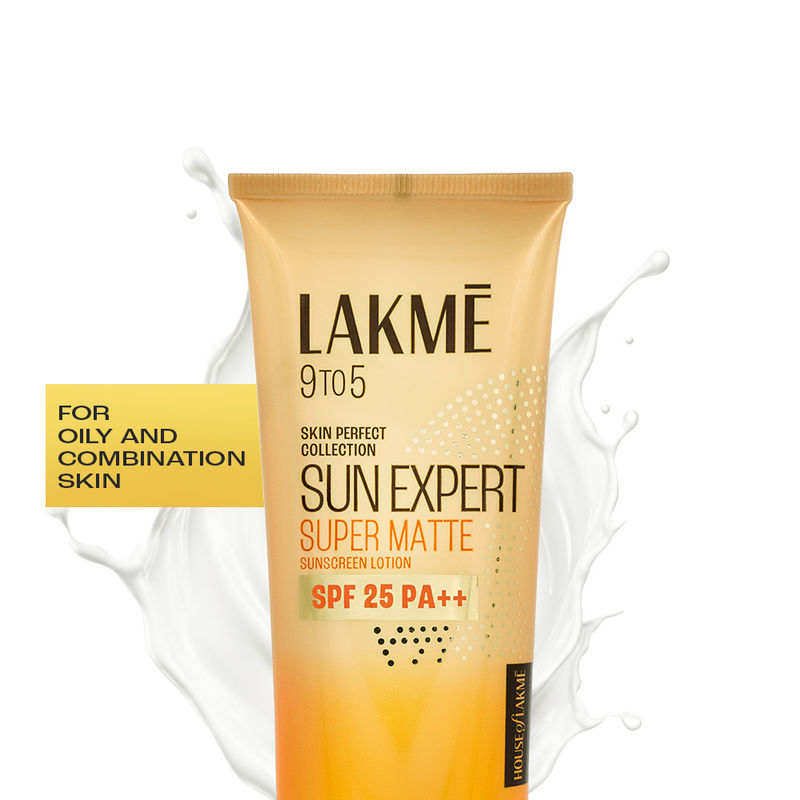
Lakme Sun Expert SPF 25 PA++ Ultra Matte Sunscreen with Vitamin B3

Lakme Sun Expert SPF 25 PA++ Ultra Matte Sunscreen with Vitamin B3
Lakme
lakme-sun-expert-spf-25-pa-ultra-matte-sunscreen-with-vitamin-b3
Suncare
10085486821669
Morning or Evening?
How often will you use this product?
Notes


Highlights
WHAT IS IT?
Sunscreen with 4 ingredients
FEATURES
Ultra Matte Finish, SPF 25 PA++, Contains Vitamin B3, Suitable for all skin types
BEST FOR
normal
CHECKS
Doesn't cause allergic reaction
Who Is It For?
All Genders All Adult AgesWhat Does It Help With?
Sun Protection Matte Finish Skin BrighteningBudget
Affordable (under $30)How To Use
Which routine should it be used in?
Instructions:
Key Information


What Lakme Says
Product Description:
Explore the entire range of Face Sunscreen available on Nykaa. Shop more Lakme products here. You can browse through the complete world of Lakme Face Sunscreen.
About the Brand:
Ingredients Overview
Ingredients List
Octyl-Salicylate,Phenylbenzimidazole-Sulfonic-Acid,Lemon-Grass,Cucumber-Extracts
Key Ingredients
Vitamin B3, Octyl Salicylate, Phenylbenzimidazole Sulfonic Acid, Lemon Grass Extract, Cucumber Extract
Ingredients Details
Cucumber Extract
Common Name(s): Cucumber extract,cucumber juice
DESCRIPTION
What It Does: Soothes and refreshes irritated skin with anti-inflammatory and astringent properties.
Why It's Used: Classic gentle soothing botanical for sensitive skin formulations with astringent, hydrating, and depuffing properties.
How It Works: Caffeic acid inhibits prostaglandin synthesis. cucurbitacins provide anti-inflammatory activity. high water content provides hydration. ascorbic acid provides antioxidant support. silica provides mild astringency.
Typically Found In: Toners,eye gels,sensitive skin products,after-sun formulations
TECHNICAL DETAILS
Primary Category: Active ingredient – soothing / anti-inflammatory
Secondary Functions: Gentle soothing,astringent,depuffing
Application Areas:

Facial Skincare
Body Care

Hair Care
Beard Care
Color Cosmetics (Makeup)
Dietary/Oral Supplements
Typical Concentration Range: 0.5%–20%
SOURCING & ETHICS
Vegan Status: Yes – plant-derived
Halal Status: Yes
Source Notes: Plant-derived extract or synthetic.
SKIN COMPATIBILITY
Irritancy Rating: 1/5 – very low
Comedogenicity Rating: 0/5 – non-comedogenic
Sensitivity Concerns: Non-irritating; ideal for reactive and sensitive skin.
Safe for Sensitive Skin: Yes – particularly recommended for sensitive skin
SAFETY & COMPATIBILITY
Safety Profile: Excellent safety profile. ewg score: 1.
Works Well With: Ceramides,panthenol,allantoin,hyaluronic acid,centella asiatica
Avoid Combining With: No significant incompatibilities
SCIENTIFIC NOTE
Cucumber's traditional use for puffy eyes has a physiological basis – the combination of mild astringency (silica-mediated protein contraction), anti-inflammatory (caffeic acid), and coolness (high water content evaporation) provides a triple-action depuffing effect that explains its enduring use.
Last Verified: 2026-03-12
Primary Sources: Cosing database,cir safety assessment
Octyl Salicylate
Common Name(s): Organic uv filter,uv absorbing sunscreen active,photoprotection
CAS Number: N/a
DESCRIPTION
What It Does: Absorbs uva (320–400 nm) and/or uvb (290–320 nm) photons with a high molar extinction coefficient, dissipates absorbed energy as vibrational heat, and contributes to the formulation's spf and critical wavelength.
Why It's Used: Organic uv filters are selected for their high molar extinction coefficient (>10,000 l/mol/cm for most commercial filters), specific spectral coverage complementing other filters in the system, and photostability under prolonged uv exposure.
How It Works: Aromatic π→π* and n→π* electronic transitions absorb uv photons exciting the chromophore to a singlet excited state (s₁). ultra-fast internal conversion (10⁻¹²–10⁻¹¹ s) dissipates excitation energy as heat rather than photochemical reactions, returning the molecule to the ground state for continued absorption.
Typically Found In: Sunscreens,spf formulas
TECHNICAL DETAILS
Primary Category: Active ingredient – cosmetic active
Secondary Functions: Skin conditioning
Application Areas:
Facial Skincare
Body Care
Hair Care
Beard Care
Color Cosmetics (Makeup)
Dietary/Oral Supplements
Typical Concentration Range: Check local sunscreen limits
SOURCING & ETHICS
Vegan Status: Conditional - supplier confirmation required
Halal Status: Unverified - supplier confirmation required
Source Notes: Commercially produced for cosmetic use. verify vegan/halal status with supplier. [audit 2026-07-29 rev2: the record's own source_notes does not assert a non-animal origin, or instructs the reader to verify with the supplier; "yes" asserts knowledge the record does not hold. determination requires shariah-panel sign-off.]
SKIN COMPATIBILITY
Irritancy Rating: 1/5 – very low
Comedogenicity Rating: 0/5 – non-comedogenic
Sensitivity Concerns: Well-tolerated by most skin types.
Safe for Sensitive Skin: Yes
SAFETY & COMPATIBILITY
Safety Profile: Good safety profile at recommended concentrations. ewg score: 1–2.
Works Well With: Standard skincare actives
Avoid Combining With: No known significant incompatibilities
SCIENTIFIC NOTE
Organic uv filter photostability varies significantly — avobenzone degrades rapidly alone but is stabilised by octocrylene (energy quenching) or triazine-class filters (direct stabilisation). filter combination selection must account for photostabilisation requirements of each component.
Last Verified: 2026-03-12
Primary Sources: Cosing database,organic uv filter photostability combination review
Phenylbenzimidazole Sulfonic Acid
Common Name(s): Phenylbenzimidazole sulfonic acid
DESCRIPTION
What It Does: Loosens corneocyte adhesion in the stratum corneum, accelerating cell turnover, refining skin texture, and improving radiance.
Why It's Used: Organic acids at cosmetic ph values provide controlled keratolytic exfoliation that improves skin texture, pore appearance, and radiance without mechanical irritation.
How It Works: At appropriate ph, the acid's undissociated form penetrates the stratum corneum and dissolves the ionic bonds between corneocyte desmosomes (calcium chelation mechanism), facilitating controlled desquamation and cell renewal.
Typically Found In: Toners,exfoliants,serums,peels,cleansers
TECHNICAL DETAILS
Primary Category: Exfoliants
Secondary Functions: Brightening,keratolytic
Application Areas:
Facial Skincare
Body Care
Hair Care
Beard Care
Color Cosmetics (Makeup)
Dietary/Oral Supplements
Typical Concentration Range: 0.5–20%
SOURCING & ETHICS
Vegan Status: Yes
Halal Status: Yes
Source Notes: Synthetic or plant-derived acid; no animal components.
SKIN COMPATIBILITY
Irritancy Rating: 2
Comedogenicity Rating: 0
Sensitivity Concerns: May cause irritation or stinging in sensitive or barrier-compromised skin at high concentrations; patch test recommended.
Safe for Sensitive Skin: Conditional
SAFETY & COMPATIBILITY
Safety Profile: Safe within recommended ph and concentration ranges. sensitization risk increases above 10% aha. patch test recommended for sensitive skin. mildly irritating to some individuals at typical cosmetic use concentrations.
Works Well With: Niacinamide,hyaluronic acid,ceramides,vitamin c
Avoid Combining With: High concentrations on sensitive/broken skin; avoid with physical exfoliants
SCIENTIFIC NOTE
Cosmetic acids function at the pka boundary: only the undissociated acid (rcooh) penetrates the stratum corneum lipid barrier, while the ionized carboxylate (rcoo⁻) does not. the henderson-hasselbalch equation governs the fraction of active species at formulation ph; typically 0.5–3.0% undissociated acid provides efficacy while minimizing irritation.
Last Verified: 2025-01-15
Primary Sources: Cosing eu database; pcpc cosmetic ingredient safety reviews; ingredient-specific safety and efficacy literature
Vitamin B3
Common Name(s): Vitamin b3,cosmetic active,established function
CAS Number: N/a
DESCRIPTION
What It Does: Delivers characteristic cosmetic function — skin conditioning, antioxidant protection, active biological benefit, or formulation function — at recommended use concentration.
Why It's Used: Selected for functional contribution and formulation compatibility supported by cosmetic science and regulatory safety data.
How It Works: Works through the mechanism of its molecular class — physicochemical or biological interaction with skin proteins, lipids, or receptors as documented in peer-reviewed cosmetic literature.
Typically Found In: Skin care formulations
TECHNICAL DETAILS
Primary Category: Active ingredient – cosmetic active
Secondary Functions: Skin conditioning
Application Areas:
Facial Skincare
Body Care
Hair Care
Beard Care
Color Cosmetics (Makeup)
Dietary/Oral Supplements
Typical Concentration Range: 0.1%–10%
SOURCING & ETHICS
Vegan Status: Conditional - supplier confirmation required
Halal Status: Unverified - supplier confirmation required
Source Notes: Commercially produced for cosmetic use. verify vegan/halal status with supplier. [audit 2026-07-29 rev2: the record's own source_notes does not assert a non-animal origin, or instructs the reader to verify with the supplier; "yes" asserts knowledge the record does not hold. determination requires shariah-panel sign-off.]
SKIN COMPATIBILITY
Irritancy Rating: 1/5 – very low
Comedogenicity Rating: 0/5 – non-comedogenic
Sensitivity Concerns: Well-tolerated by most skin types.
Safe for Sensitive Skin: Yes
SAFETY & COMPATIBILITY
Safety Profile: Good safety profile at recommended concentrations. ewg score: 1–2.
Works Well With: Standard skincare actives
Avoid Combining With: No known significant incompatibilities
SCIENTIFIC NOTE
Vitamin b3 has an established safety and efficacy profile within the cosmetic regulatory framework at standard use concentrations.
Last Verified: 2026-03-12
Primary Sources: Cosing database,vitamin b3 technical literature