

Lakme
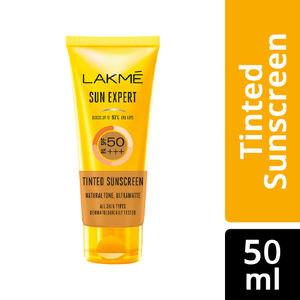
Lakme Sun Expert Tinted Sunscreen SPF 50 PA +++ | Broad spectrum UVA/B protection | Blue light protection | No White Cast | for all dry, oily, normal skin| Matte Finish | 50ml

Lakme Sun Expert Tinted Sunscreen SPF 50 PA +++ | Broad spectrum UVA/B protection | Blue light protection | No White Cast | for all dry, oily, normal skin| Matte Finish | 50ml
Lakme
lakme-sun-expert-tinted-sunscreen-spf-50-pa-broad-spectrum-uva-b-protection-blue-light-protection-no-white-cast-for-all-dry-oily-normal-skin-matte-finish-50ml
Suncare
10085487051045
Morning or Evening?
How often will you use this product?
Notes


Highlights
WHAT IS IT?
tinted sunscreen with SPF 50 and PA+++ protection, infused with cucumber and lemongrass extracts
FEATURES
Revolutionary sun protection formula, blends into skin for invisible natural finish, shields UVB and UVA rays, ultra matte, light and nonsticky, even toned look
BEST FOR
normal
CHECKS
No White Cast
Who Is It For?
All Skin Types (dry Oily Normal) Gender UnspecifiedWhat Does It Help With?
Sun Protection Prevents Sunburn Dark Spots Premature Aging Skin Darkening Even Skin ToneBudget
Affordable (under $30)How To Use
Which routine should it be used in?
Instructions:
Key Information


What Lakme Says
Product Description:
Sunscreens making your face look white and patchy Lakme Sun Expert brings to you a tinted sunscreen our revolutionary sun protection formula that blends into your skin for an invisible natural finish. SPF 50 shields up to 97 of UVB rays causing sunburn and PA shields from UVA rays that cause dark spots premature aging and skin darkening. Infused with cucumber and lemongrass extracts this ultra matte tinted sun screen feels light and nonsticky on skin and gives an even toned look this is perfect for everyday. How to use 1 Smooth on to cleansed face and exposed part of the skin 20 minutes before sun exposure. Reapply every 34 hours for maximum protection. Avoid contact with eyes. In case of eye contact rinse thoroughly with clear water. Consult a doctor if irritation persists. For complete sun care try our full regime with Lakme Sun Expert De tan Scrub to reduce tan and dark spots & Lakme Sun Expert After Sun Gel to soothe your sun exposed get a refreshed and glowing look. Lakme Sun Expert SPF 50 PA Tinted Sunscreen has natural finish It is suitable for all skin types and safe to use and is also dermatologically tested.
About the Brand:
Ingredients Overview
Ingredients List
cucumber-extract,lemongrass-extract
Key Ingredients
cucumber extract, lemongrass extract
Ingredients Details
Cucumber Extract
Common Name(s): Cucumber extract,cucumber juice
DESCRIPTION
What It Does: Soothes and refreshes irritated skin with anti-inflammatory and astringent properties.
Why It's Used: Classic gentle soothing botanical for sensitive skin formulations with astringent, hydrating, and depuffing properties.
How It Works: Caffeic acid inhibits prostaglandin synthesis. cucurbitacins provide anti-inflammatory activity. high water content provides hydration. ascorbic acid provides antioxidant support. silica provides mild astringency.
Typically Found In: Toners,eye gels,sensitive skin products,after-sun formulations
TECHNICAL DETAILS
Primary Category: Active ingredient – soothing / anti-inflammatory
Secondary Functions: Gentle soothing,astringent,depuffing
Application Areas:

Facial Skincare
Body Care

Hair Care
Beard Care
Color Cosmetics (Makeup)
Dietary/Oral Supplements
Typical Concentration Range: 0.5%–20%
SOURCING & ETHICS
Vegan Status: Yes – plant-derived
Halal Status: Yes
Source Notes: Plant-derived extract or synthetic.
SKIN COMPATIBILITY
Irritancy Rating: 1/5 – very low
Comedogenicity Rating: 0/5 – non-comedogenic
Sensitivity Concerns: Non-irritating; ideal for reactive and sensitive skin.
Safe for Sensitive Skin: Yes – particularly recommended for sensitive skin
SAFETY & COMPATIBILITY
Safety Profile: Excellent safety profile. ewg score: 1.
Works Well With: Ceramides,panthenol,allantoin,hyaluronic acid,centella asiatica
Avoid Combining With: No significant incompatibilities
SCIENTIFIC NOTE
Cucumber's traditional use for puffy eyes has a physiological basis – the combination of mild astringency (silica-mediated protein contraction), anti-inflammatory (caffeic acid), and coolness (high water content evaporation) provides a triple-action depuffing effect that explains its enduring use.
Last Verified: 2026-03-12
Primary Sources: Cosing database,cir safety assessment
Lemongrass Extract
Common Name(s): Essential oil,concentrated volatile aromatic,bioactive fragrance active
CAS Number: N/a
DESCRIPTION
What It Does: Provides aromatic sensory benefit alongside bioactive skin activity from concentrated plant volatile compounds — including antimicrobial activity (tea tree, thyme, clove), anti-inflammatory activity (lavender, chamomile), or circulatory stimulation (peppermint, rosemary).
Why It's Used: Essential oils provide authentic 'aromatherapy' narrative with genuine bioactive chemistry — the concentrated terpenoid constituents have documented biological activity in addition to olfactory benefit, justifying ingredient claims beyond pure fragrance.
How It Works: Essential oil complexity: steam distillation concentrates volatile terpenes (monoterpenes, sesquiterpenes), phenylpropanoids, and other volatiles. antimicrobial activity from terpenoid membrane disruption (terpinen-4-ol, eugenol, thymol disrupt bacterial membranes); anti-inflammatory from sesquiterpene nf-kb inhibition; sensitisation risk from electrophilic monoterpene oxides and aldehydes.
Typically Found In: Aromatherapy,bioactive skin care,fragrance
TECHNICAL DETAILS
Primary Category: Active ingredient – cosmetic active
Secondary Functions: Skin conditioning
Application Areas:
Facial Skincare
Body Care
Hair Care
Beard Care
Color Cosmetics (Makeup)
Dietary/Oral Supplements
Typical Concentration Range: 0.01%–2%
SOURCING & ETHICS
Vegan Status: Conditional - supplier confirmation required
Halal Status: Unverified - supplier confirmation required
Source Notes: Commercially produced for cosmetic use. verify vegan/halal status with supplier. [audit 2026-07-29 rev2: the record's own source_notes does not assert a non-animal origin, or instructs the reader to verify with the supplier; "yes" asserts knowledge the record does not hold. determination requires shariah-panel sign-off.]
SKIN COMPATIBILITY
Irritancy Rating: 1/5 – very low
Comedogenicity Rating: 0/5 – non-comedogenic
Sensitivity Concerns: Well-tolerated by most skin types.
Safe for Sensitive Skin: Yes
SAFETY & COMPATIBILITY
Safety Profile: Good safety profile at recommended concentrations. ewg score: 1–2.
Works Well With: Standard skincare actives
Avoid Combining With: No known significant incompatibilities
SCIENTIFIC NOTE
Essential oil concentration in cosmetics must respect ifra (international fragrance association) guidelines — each oil has category-specific maximum use levels based on skin sensitisation quantitative risk assessment (qra). tea tree oil maximum 0.5% (rinse-off), lavender oil 2% (leave-on skin) as examples.
Last Verified: 2026-03-12
Primary Sources: Cosing database,ifra standards,essential oil bioactive fragrance review