

Lakme
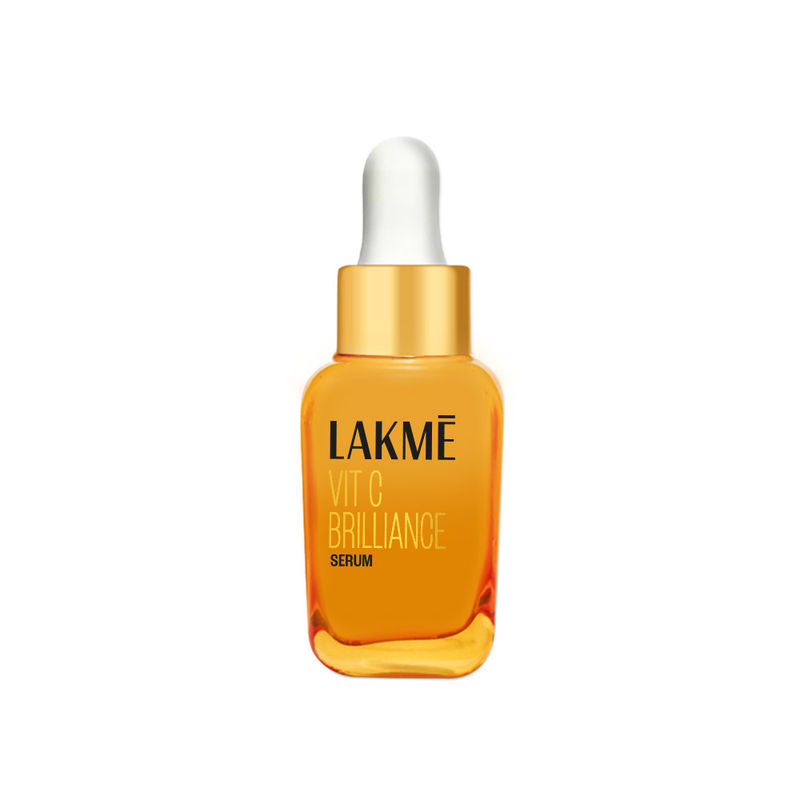
Lakme Vit C Brilliance - Serum

Lakme Vit C Brilliance - Serum
Lakme
lakme-vit-c-brilliance-serum
Serum
10084761534757
Morning or Evening?
How often will you use this product?
Notes


Highlights
WHAT IS IT?
Vitamin C Serum with Kakadu Plum Extract, ingredient count unavailable
FEATURES
Contains 100% Real Kakadu Plum Extract, brightens skin, nourishes skin, lightweight serum, fast absorption
BEST FOR
sensitive
CHECKS
No parabens, no sulphates, no silicones
Who Is It For?
All Genders Adult Age RangeWhat Does It Help With?
Brightening Nourishing Healthy Glowing SkinBudget
Affordable (under $30)How To Use
Which routine should it be used in?
Instructions:
Key Information


What Lakme Says
Product Description:
Lakme 9 to 5 Vitamin C+ Face Serum with 100% Real Kakadu Plum Extract for Nourished Skin
About the Brand:
Ingredients Overview
Ingredients List
3-O-Ethyl Ascorbic Acid, Pentylene Glycol, Propanediol, Tocopheryl Acetate, Pachyrhizus Erosus (Bengkoang) Root Extract
Key Ingredients
Vitamin C, Kakadu Plum Extract
Ingredients Details
3-o-ethyl Ascorbic Acid
Common Name(s): 3-o-ethyl ascorbic acid
DESCRIPTION
What It Does: Loosens corneocyte adhesion in the stratum corneum, accelerating cell turnover, refining skin texture, and improving radiance.
Why It's Used: Organic acids at cosmetic ph values provide controlled keratolytic exfoliation that improves skin texture, pore appearance, and radiance without mechanical irritation.
How It Works: At appropriate ph, the acid's undissociated form penetrates the stratum corneum and dissolves the ionic bonds between corneocyte desmosomes (calcium chelation mechanism), facilitating controlled desquamation and cell renewal.
Typically Found In: Toners,exfoliants,serums,peels,cleansers
TECHNICAL DETAILS
Primary Category: Exfoliants
Secondary Functions: Brightening,keratolytic
Application Areas:

Facial Skincare

Body Care
Hair Care
Beard Care
Color Cosmetics (Makeup)
Dietary/Oral Supplements
Typical Concentration Range: 0.5–20%
SOURCING & ETHICS
Vegan Status: Yes
Halal Status: Yes
Source Notes: Synthetic or plant-derived acid; no animal components.
SKIN COMPATIBILITY
Irritancy Rating: 2
Comedogenicity Rating: 0
Sensitivity Concerns: May cause irritation or stinging in sensitive or barrier-compromised skin at high concentrations; patch test recommended.
Safe for Sensitive Skin: Conditional
SAFETY & COMPATIBILITY
Safety Profile: Safe within recommended ph and concentration ranges. sensitization risk increases above 10% aha. patch test recommended for sensitive skin. mildly irritating to some individuals at typical cosmetic use concentrations.
Works Well With: Niacinamide,hyaluronic acid,ceramides,vitamin c
Avoid Combining With: High concentrations on sensitive/broken skin; avoid with physical exfoliants
SCIENTIFIC NOTE
Cosmetic acids function at the pka boundary: only the undissociated acid (rcooh) penetrates the stratum corneum lipid barrier, while the ionized carboxylate (rcoo⁻) does not. the henderson-hasselbalch equation governs the fraction of active species at formulation ph; typically 0.5–3.0% undissociated acid provides efficacy while minimizing irritation.
Last Verified: 2025-01-15
Primary Sources: Cosing eu database; pcpc cosmetic ingredient safety reviews; ingredient-specific safety and efficacy literature
Pentylene Glycol
Common Name(s): 1,2-pentanediol,pentanediol,hydrolite-5
CAS Number: 5765-44-6
DESCRIPTION
What It Does: Provides humectant moisture retention with antimicrobial preservative-boosting activity.
Why It's Used: The balanced multifunctional diol — pentylene glycol provides the ideal balance of humectancy and antimicrobial activity for clean beauty preservation systems with excellent sensory compatibility.
How It Works: C5 diol: longer chain than propylene glycol providing better antimicrobial activity but shorter than 1,2-hexanediol (slightly lower membrane activity). two oh groups provide humectant water binding. solvent for fragrances and some actives. synergistic with phenoxyethanol reducing required phenoxyethanol concentration.
Typically Found In: Clean beauty products,natural preservation systems,moisturisers
TECHNICAL DETAILS
Primary Category: Functional ingredient – multifunctional pentanediol
Secondary Functions: Tewl reduction,skin plumping
Application Areas:
Facial Skincare
Body Care
Hair Care
Beard Care
Color Cosmetics (Makeup)
Dietary/Oral Supplements
Typical Concentration Range: 0.5%–3%
SOURCING & ETHICS
Vegan Status: Yes – synthetic
Halal Status: Yes
Source Notes: Synthetic or naturally derived. excellent aqueous solubility.
SKIN COMPATIBILITY
Irritancy Rating: 1/5 – very low
Comedogenicity Rating: 0/5 – non-comedogenic
Sensitivity Concerns: Non-irritating; suitable for all skin types.
Safe for Sensitive Skin: Yes
SAFETY & COMPATIBILITY
Safety Profile: Excellent safety profile. ewg score: 1.
Works Well With: Ceramides,emollients,occlusives,glycerin,hyaluronic acid
Avoid Combining With: No significant incompatibilities
SCIENTIFIC NOTE
Pentylene glycol's position in clean beauty preservation is due to a regulatory quirk: 1,2-pentanediol is not classified as a preservative in eu cosmetics regulations (unlike phenoxyethanol which requires preservative listing), so it can provide antimicrobial activity while not requiring the 'contains preservative' designation — enabling cleaner labels in natural-positioned formulations.
Last Verified: 2026-03-12
Primary Sources: Cosing database,dsm hydrolite-5 technical data,cir safety assessment
Propanediol
Common Name(s): 1,3-propanediol,zemea,bio-propanediol
CAS Number: 504-63-2
DESCRIPTION
What It Does: Provides humectant and solvent functionality from sustainable corn-based fermentation.
Why It's Used: Bio-based propylene glycol alternative from renewable corn — propanediol provides equivalent functionality to propylene glycol with sustainable renewable feedstock and superior skin feel.
How It Works: Two oh groups provide humectant water binding. excellent solvent for fragrances, actives, and preservatives. mild antimicrobial from diol structure for preservative system boosting. renew corn fermentation origin (dupont zemea process). better skin feel than propylene glycol — less sticky.
Typically Found In: Virtually all cosmetic categories as pg alternative
TECHNICAL DETAILS
Primary Category: Functional ingredient – humectant
Secondary Functions: Tewl reduction,skin plumping
Application Areas:
Facial Skincare
Body Care
Hair Care
Beard Care
Color Cosmetics (Makeup)
Dietary/Oral Supplements
Typical Concentration Range: 1%–20%
SOURCING & ETHICS
Vegan Status: Yes – from corn sugar fermentation
Halal Status: Yes
Source Notes: Synthetic or naturally derived. excellent aqueous solubility.
SKIN COMPATIBILITY
Irritancy Rating: 1/5 – very low
Comedogenicity Rating: 0/5 – non-comedogenic
Sensitivity Concerns: Non-irritating; suitable for all skin types.
Safe for Sensitive Skin: Yes
SAFETY & COMPATIBILITY
Safety Profile: Excellent safety profile. ewg score: 1.
Works Well With: Ceramides,emollients,occlusives,glycerin,hyaluronic acid
Avoid Combining With: No significant incompatibilities
SCIENTIFIC NOTE
Propanediol's dupont tate & lyle bio products 'zemea' process ferments corn sugar to 1,3-propanediol using engineered e. coli — one of the first commercially viable bio-fermentation routes to a cosmetic diol previously made only from petroleum. the renewable route produces chemically identical 1,3-propanediol while reducing carbon footprint by approximately 40% vs petrochemical synthesis.
Last Verified: 2026-03-12
Primary Sources: Cosing database,dupont tate & lyle zemea technical data,cir safety assessment
Tocopheryl Acetate
Common Name(s): Vitamin e acetate,alpha-tocopherol acetate,dl-alpha-tocopheryl acetate
CAS Number: 7695-91-2
DESCRIPTION
What It Does: Provides stable vitamin e delivery with antioxidant activity after esterase hydrolysis in skin.
Why It's Used: The formulation-stable vitamin e — tocopheryl acetate's ester protection prevents oxidative degradation during shelf life while releasing active tocopherol in skin for equivalent biological activity.
How It Works: Acetate ester blocks the phenolic oh group responsible for oxidation and radical scavenging. skin esterases cleave acetate bond releasing free tocopherol. released tocopherol provides lipid peroxyl radical scavenging in cell membranes. also provides direct emollient and skin conditioning.
Typically Found In: Moisturisers,sunscreens,anti-aging products — extremely widespread
TECHNICAL DETAILS
Primary Category: Active ingredient – stable vitamin e ester
Secondary Functions: Free radical scavenging,anti-aging
Application Areas:
Facial Skincare
Body Care
Hair Care
Beard Care
Color Cosmetics (Makeup)
Dietary/Oral Supplements
Typical Concentration Range: 0.1%–5%
SOURCING & ETHICS
Vegan Status: Conditional – natural from vegetable oils (soy, sunflower); synthetic dl-form
Halal Status: Unverified - supplier confirmation required
Source Notes: Plant-derived extract or synthetic. [audit 2026-07-29 rev2: status downgraded on audit. determination requires shariah-panel sign-off.]
SKIN COMPATIBILITY
Irritancy Rating: 1/5 – very low
Comedogenicity Rating: 0/5 – non-comedogenic
Sensitivity Concerns: Non-irritating; well-tolerated.
Safe for Sensitive Skin: Yes
SAFETY & COMPATIBILITY
Safety Profile: The d-alpha-tocopheryl acetate (natural isomer) is biologically superior to dl-alpha-tocopheryl acetate (racemic synthetic) for skin antioxidant activity. ingredient label d- vs dl- prefix identifies natural vs synthetic origin.
Works Well With: Vitamin c,vitamin e,ferulic acid,spf,other antioxidants
Avoid Combining With: No significant incompatibilities
SCIENTIFIC NOTE
Tocopheryl acetate's conversion to active tocopherol in skin is quantitatively efficient: skin esterase activity is sufficient to cleave 60-80% of applied tocopheryl acetate within 24 hours of application. however, the conversion rate varies with skin condition (eczematous or barrier-compromised skin has reduced esterase activity), meaning tocopheryl acetate efficacy may be reduced precisely in the skin conditions that most need antioxidant support.
Last Verified: