

Living Proof
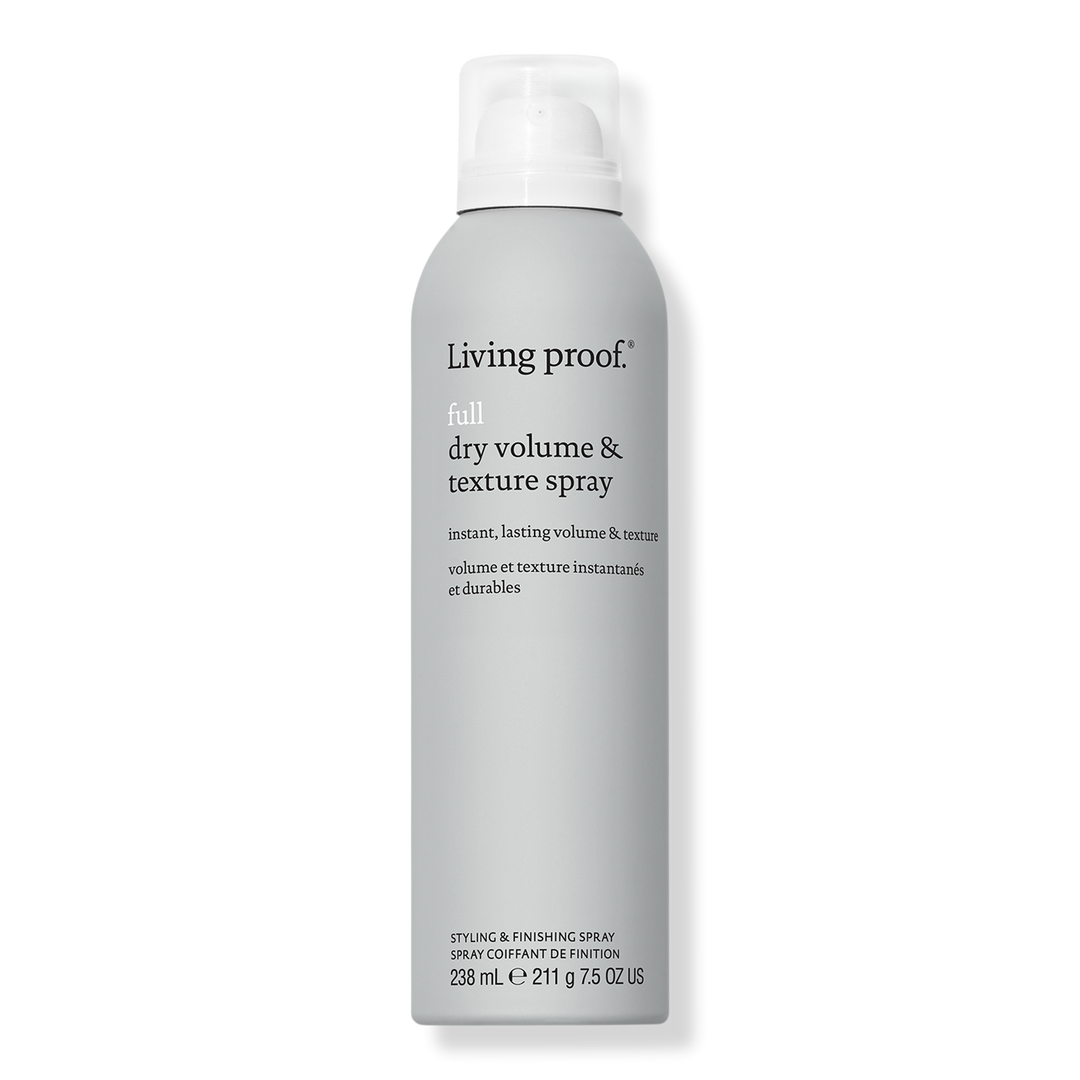
Living Proof Full Dry Volume & Texture Spray
Living Proof Full Dry Volume & Texture Spray is a versatile spray that adds volume and texture to any style for an imperfectly perfect lived-in look and feel.
Sulfate-free
Paraben-free
Color-safe
Silicone-free
Vegan
Heat Protection
Optimized for Your Environment & Lifestyle
Nykaa
In stock
Recommended

Living Proof Full Dry Volume & Texture Spray
Living Proof
living-proof-full-dry-volume-texture-spray
Styling Spray
10355431833893
Morning or Evening?
How often will you use this product?
Notes


Secure payment protection
Your Biodata Compatibility Analysis
Based on your 6 hair health indices and environmental factors
Poor Match
Significant incompatibilities
Growth Cycle Health Index
Hair Match
Hair Health Index Alignment
Optimal for OSI, SSI, DI, HSI
Ingredient Efficacy
Matching Ingredient Score
Environment Compatibility
Current UV, Air Quality & Humidity
Why This Works for Your Specific Profile
Damage Index:
Damage levels outside specified range may not benefit optimally from product formulation
Water Quality:
Wavy to coily patterns require curl-specific formulation that straight hair finds heavy or greasy
Hair:
No porosity-specific conflicts
Active Lifestyle:
Activity levels outside optimal range affect product performance and maintenance requirements
Your Hair Profile Integration
Your Hair Archetype

Density Level

Washing Frequency

Shedding Level

Oil Level
Your Hair Health Indices
Oil Secretion (OSI)
Very low oil production
Scalp Sensitivity (SSI)
Very low sensitivity
Growth Rate (CMR)
Poor metabolism rate
Damage Index (DI)
Minimal damage
Hair Strength (HSI)
Very weak strength
Softness Index (SI)
Significant improvement needed
Water & Environmental Integration

Water:


Expected Results & Timeline
Key Highlights

What is it?
Styling Spray with 13 ingredients

Who Is It For
Adults, All Genders

Budget
Rs. 3,526.44 - Rs. 7,052.88

Timeline
Immediate
Why You’ll Love It

What Does It Help With?
Adding volume and texture, Absorbing oil, Extending hairstyle longevity, Providing heat protection

Best for
Fine, flat, or thin hair types or anyone who is looking for texture or volume

Features
Delivers instant, revivable, and long-lasting volume and texture; Provides buildable, no-slip grip for increased styling versatility; Heat protection up to 410° F/210° C; Lightly absorbs oil to extend the life of your look; Instantly transforms fine, flat, or thin hair; Works on dry hair so you can use it anytime, anywhere; Formerly known as Full Dry Volume Blast; Updated valve for softer, more controlled delivery, enhanced texturizing capabilities, heat protection up to 410° F/210° C

Checks
Silicone-free, Paraben-free, Phthalate-free, Formaldehyde-free, Sulfate-free (No SLS & SLES), Cruelty-free, Vegan, Color-safe, Safe for chemically treated hair
Ingredients Overview
Ingredients List
Hydrofluorocarbon-152a, Alcohol-Denat., VP/VA-Copolymer, VA/Crotonates/Vinyl-Neodecanoate-Copolymer, Calcium-Sodium-Borosilicate, Water/Aqua/Eau, Cyclodextrin, Zeolite, Fragrance-(Parfum), Ethylcellulose, Propylene-Glycol-Dibenzoate, Aminomethyl-Propanol, Ammonium-Glycyrrhizate, Linalool, Citronellol, Citral, Limonene
Key Ingredients
Volumizing-+-Texturizing-Molecule, Blend-of-microporous-minerals-and-enzymatically-modified-starches, Hydrophobic-resins
Ingredients Details
Citral
Common Name(s): 3,7-dimethyl-2,6-octadienal,geranial+neral mix
CAS Number: 5392-40-5
DESCRIPTION
What It Does: Provides the defining intense lemon-citrus fragrance note.
Why It's Used: The lemon scent compound – citral defines the fresh lemon scent in lemon essential oil and lemongrass with potent antimicrobial activity.
How It Works: Mixture of e-isomer (geranial) and z-isomer (neral). antimicrobial via michael addition to thiol enzymes. inhibits nf-kb for anti-inflammatory activity. antioxidant via allylic aldehyde.
Typically Found In: Citrus fragrances,antibacterial products,lemon-scented cosmetics
TECHNICAL DETAILS
Primary Category: Fragrance component – lemon aldehyde
Secondary Functions: Skin conditioning
Application Areas:

Facial Skincare

Body Care
Hair Care
Beard Care
Color Cosmetics (Makeup)
Dietary/Oral Supplements
Typical Concentration Range: 0.001%–0.5%
SOURCING & ETHICS
Vegan Status: Yes – from lemon, lemongrass, melissa oils
Halal Status: Yes
Source Notes: Commercially produced for cosmetic use. verify vegan/halal status with supplier.
SKIN COMPATIBILITY
Irritancy Rating: 1/5 – very low
Comedogenicity Rating: 0/5 – non-comedogenic
Sensitivity Concerns: Well-tolerated by most skin types.
Safe for Sensitive Skin: Yes
SAFETY & COMPATIBILITY
Safety Profile: Eu cosmetics regulation: declared fragrance allergen. high sensitisation potential from alpha,beta-unsaturated aldehyde structure. ifra strict limits.
Works Well With: Standard skincare actives
Avoid Combining With: No known significant incompatibilities
SCIENTIFIC NOTE
Citral's high sensitisation potential (llna ec3 ~0.11%) is a consequence of its alpha,beta-unsaturated aldehyde structure providing a highly reactive michael acceptor for skin protein covalent binding. the e/z mixture (geranial/neral) in natural citral means both isomers contribute to the sensitisation burden – explaining why lemongrass oil (very high citral content, ~60-80%) is one of the more common essential oil allergens.
Last Verified: Cosing database,ifra standards
Primary Sources: 2026-03-12
Citronellol
Common Name(s): (r)-3,7-dimethyl-6-octen-1-ol,rhodinol
CAS Number: 106-22-9
DESCRIPTION
What It Does: Provides soft, lasting rose-floral fragrance note.
Why It's Used: Essential rose fragrance monoterpene for lasting smooth floral notes in high-quality perfumery and cosmetic fragrances.
How It Works: Allylic alcohol monoterpene provides fixative property in fragrance blends. good skin substantivity for lasting scent. softer, rounder rose note vs geraniol's fresher character. natural in rose otto at 18-34%.
Typically Found In: Rose perfumes,floral fragrances,luxury skincare
TECHNICAL DETAILS
Primary Category: Fragrance component – monoterpene alcohol
Secondary Functions: Skin conditioning
Application Areas:
Facial Skincare
Body Care
Hair Care
Beard Care
Color Cosmetics (Makeup)
Dietary/Oral Supplements
Typical Concentration Range: 0.001%–1%
SOURCING & ETHICS
Vegan Status: Yes – from rose, geranium, citronella oils
Halal Status: Yes
Source Notes: Commercially produced for cosmetic use. verify vegan/halal status with supplier.
SKIN COMPATIBILITY
Irritancy Rating: 1/5 – very low
Comedogenicity Rating: 0/5 – non-comedogenic
Sensitivity Concerns: Well-tolerated by most skin types.
Safe for Sensitive Skin: Yes
SAFETY & COMPATIBILITY
Safety Profile: Eu cosmetics regulation: declared fragrance allergen. ifra guidelines apply.
Works Well With: Standard skincare actives
Avoid Combining With: No known significant incompatibilities
SCIENTIFIC NOTE
Citronellol's r-enantiomer (natural) vs s-enantiomer (synthetic) provide meaningfully different scent character – a remarkable demonstration of chiral scent discrimination by olfactory receptors. the (r) form provides the characteristic rose note while the (s) form has a distinctly different, less pleasant character. this enantiomeric scent difference means that the biological handedness of naturally-sourced vs racemic synthetic citronellol produces perceptibly different fragrance quality.
Last Verified: Cosing database,ifra standards
Primary Sources: 2026-03-12
Cyclodextrin
Common Name(s): Bcd,cycloheptaamylose,betadex
CAS Number: 7585-39-9
DESCRIPTION
What It Does: Provides molecular encapsulation for improved solubility, stability, and controlled release of challenging cosmetic actives.
Why It's Used: Molecular encapsulation technology — beta-cyclodextrin's toroidal cavity provides a hydrophobic microenvironment for solubilising and stabilising oil-soluble actives in aqueous formulations.
How It Works: 7 glucose units in cyclic toroidal structure provide 6.0-6.5å inner cavity. hydrophobic interior complexes lipophilic guest molecules. complexation improves water solubility (guest molecule becomes water-dispersible), stability (protection from oxidation and hydrolysis), and controlled release (guest releases gradually by diffusion). outer hydrophilic face provides water compatibility.
Typically Found In: Active delivery systems,fragrance encapsulation,stability-challenged actives
TECHNICAL DETAILS
Primary Category: Functional ingredient – inclusion complex host
Secondary Functions: Skin conditioning
Application Areas:
Facial Skincare
Body Care
Hair Care
Beard Care
Color Cosmetics (Makeup)
Dietary/Oral Supplements
Typical Concentration Range: 0.1%–10%
SOURCING & ETHICS
Vegan Status: Yes – from starch (corn, potato)
Halal Status: Yes
Source Notes: Commercially produced for cosmetic use. verify vegan/halal status with supplier.
SKIN COMPATIBILITY
Irritancy Rating: 1/5 – very low
Comedogenicity Rating: 0/5 – non-comedogenic
Sensitivity Concerns: Well-tolerated by most skin types.
Safe for Sensitive Skin: Yes
SAFETY & COMPATIBILITY
Safety Profile: Good safety profile at recommended concentrations. ewg score: 1–2.
Works Well With: Standard skincare actives
Avoid Combining With: No known significant incompatibilities
SCIENTIFIC NOTE
Beta-cyclodextrin's pharmaceutical drug delivery applications (dozens of fda-approved cd-drug complexes) provide unparalleled safety and efficacy documentation for a cosmetic excipient. the same cd technology that delivers cholesterol-lowering drugs and antifungals in pharmaceutical formulations enables cosmetic actives to be delivered more effectively — a pharmaceutical innovation directly adapted to cosmetic performance enhancement.
Last Verified: Cosing database,loftsson & brewster cyclodextrin review
Primary Sources: 2026-03-12
Ethylcellulose
Common Name(s): Ec,ethocel,cellulose ethyl ether
CAS Number: 9004-57-3
DESCRIPTION
What It Does: Provides water-resistant cellulose film for sustained film formation and active encapsulation.
Why It's Used: Water-resistant cellulose film former for long-lasting topical products and active ingredient microencapsulation.
How It Works: Ethyl substitution makes cellulose hydrophobic. dissolves in organic solvents for application, depositing water-resistant film on evaporation. thermoplastic character enables heat processing. used in controlled-release applications for gradual active delivery.
Typically Found In: Long-lasting products,active encapsulation,film-coating applications
TECHNICAL DETAILS
Primary Category: Functional ingredient – cellulose film former
Secondary Functions: Skin conditioning
Application Areas:
Facial Skincare
Body Care
Hair Care
Beard Care
Color Cosmetics (Makeup)
Dietary/Oral Supplements
Typical Concentration Range: 0.1%–10%
SOURCING & ETHICS
Vegan Status: Yes – from cellulose (plant)
Halal Status: Yes
Source Notes: Commercially produced for cosmetic use. verify vegan/halal status with supplier.
SKIN COMPATIBILITY
Irritancy Rating: 1/5 – very low
Comedogenicity Rating: 0/5 – non-comedogenic
Sensitivity Concerns: Well-tolerated by most skin types.
Safe for Sensitive Skin: Yes
SAFETY & COMPATIBILITY
Safety Profile: Good safety profile at recommended concentrations. ewg score: 1–2.
Works Well With: Standard skincare actives
Avoid Combining With: No known significant incompatibilities
SCIENTIFIC NOTE
Ethylcellulose's hydrophobic character (ethyl groups replacing hydroxyl groups) is in complete contrast to its parent cellulose (highly water-soluble hec or cmc). this inversion from hydrophilic to hydrophobic demonstrates that cellulose ether chemistry can produce nearly any desired polarity by choosing the substituting group – providing a family of cellulose derivatives spanning from highly hydrophilic (cmc) to highly hydrophobic (ethylcellulose).
Last Verified: Cosing database,dow ethocel technical data,cir safety assessment
Primary Sources: 2026-03-12
Personalized Usage Instructions
How to Use
Step 1
Before each spray, shake can well
Step 2
Hold can 6-10 inches away from dry hair
Step 3
Lift a section of hair and apply root to tip
Step 4
Tousle hair with your fingers
Step 5
Repeat until desired style is achieved, shaking can between each spray
Step 1
Spray on finished styles for extra texture and hold
Step 2
Tip: Tip head sideways or upside down and spray product in small bursts throughout lengths for more texture
Medical Chemicals

Protein/Moisture
- Protein/Moisture balance
pH Level
- Acidic

Porosity Taget
- Low Porosity
Customized for Your Profile
Scalp Condtions
Oil Control
Climate Suitability
Humid, Dry, UV Protection
Clinical Claims
Frequency
Before each spray, shake can well. Hold can 6-10 inches away from dry hair. Lift a section of hair and apply root to tip. Tousle hair with your fingers. Repeat until desired style is achieved, shaking can between each spray. Spray on finished styles for extra texture and hold. Tip: Tip head sideways or upside down and spray product in small bursts throughout lengths for more texture.
Product Information

Silicone-free
Paraben-free
Phthalate-free
Formaldehyde-free
Sulfate-free (No SLS & SLES)
Cruelty-free
Vegan
Color-safe
