

L'Oréal Paris
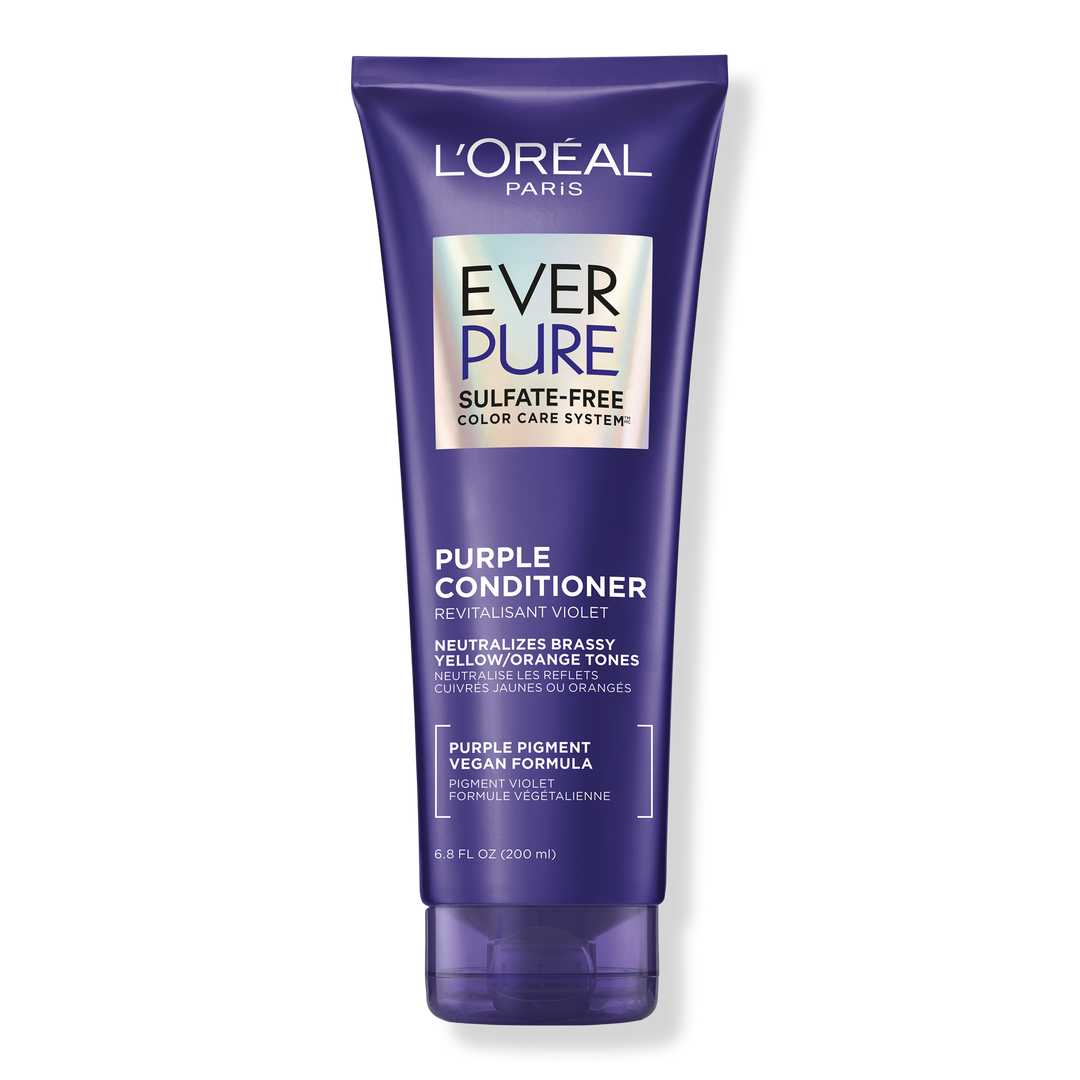
L'Oréal EverPure Sulfate-Free Purple Conditioner
L'Oréal EverPure Sulfate-Free Purple Conditioner is designed to protect color and neutralize brassy yellow and orange tones in color-treated, blonde, bleached, highlighted brown, and silver hair. Its sulfate-free, paraben-free, and vegan formula includes hibiscus and purple dye to maintain vibrant color and enhance shine.
Sulfate-free
Paraben-free
Color-safe
Vegan
2-3 times a week
Condition
Optimized for Your Environment & Lifestyle
Nykaa
In stock
Recommended

L'Oréal EverPure Sulfate-Free Purple Conditioner
L'Oréal Paris
loreal-everpure-sulfate-free-purple-conditioner
Conditioner
10355428327717
Morning or Evening?
How often will you use this product?
Notes


Secure payment protection
Your Biodata Compatibility Analysis
Based on your 6 hair health indices and environmental factors
Poor Match
Significant incompatibilities
Growth Cycle Health Index
Hair Match
Hair Health Index Alignment
Optimal for OSI, SSI, DI, HSI
Ingredient Efficacy
Matching Ingredient Score
Environment Compatibility
Current UV, Air Quality & Humidity
Why This Works for Your Specific Profile
Damage Index:
Healthy to moderately damaged hair experiences over-conditioning or protein overload causing limpness or rigidity
Water Quality:
Hair:
Closed cuticles resist product penetration causing surface buildup without internal benefits
Active Lifestyle:
High activity and frequent washing rapidly strip product benefits requiring excessive reapplication
Your Hair Profile Integration
Your Hair Archetype

Density Level

Washing Frequency

Shedding Level

Oil Level
Your Hair Health Indices
Oil Secretion (OSI)
Very low oil production
Scalp Sensitivity (SSI)
Very low sensitivity
Growth Rate (CMR)
Poor metabolism rate
Damage Index (DI)
Minimal damage
Hair Strength (HSI)
Very weak strength
Softness Index (SI)
Significant improvement needed
Water & Environmental Integration

Water:


Expected Results & Timeline
Key Highlights

What is it?
Conditioner, 6.8 oz

Who Is It For
Adults, Unisex

Budget
Rs. 1,076.54 - Rs. 2,153.08

Timeline
Immediate
Why You’ll Love It

What Does It Help With?
Color fading, Brassiness

Best for
Color-treated hair

Features
Color protection, Neutralizes brassy tones, Sulfate-free, Paraben-free, Vegan, Contains hibiscus and purple dye

Checks
Sulfate-free, Paraben-free, Vegan
Ingredients Overview
Ingredients List
Aqua/Water/Eau, Cetearyl Alcohol, Behentrimonium Chloride, Amodimethicone, Parfum/Fragrance, Isopropyl Alcohol, Phenoxyethanol, Glycerin, Benzoic Acid, Trideceth-6, CI 60730/Acid Violet 43, Potassium Hydroxide, Butylene Glycol, Linalool, Cetrimonium Chloride, Hexyl Cinnamal, Hydroxycitronellal, Sorbitol, Hibiscus Sabdariffa Flower Extract
Key Ingredients
Hibiscus Sabdariffa Flower Extract, CI 60730/Acid Violet 43
Ingredients Details
Amodimethicone
Common Name(s): Aminosilicone,amino-modified polydimethylsiloxane
CAS Number: 71750-79-3
DESCRIPTION
What It Does: Provides amino group-mediated preferential adsorption to damaged hair for targeted conditioning.
Why It's Used: Premium hair conditioning silicone – amino groups provide substantive adsorption to hair far exceeding pdms, with automatic targeting to the most damaged areas requiring conditioning.
How It Works: Amino (nh2) groups on silicone chain provide cationic character at normal ph, electrostatic adsorption to anionic hair surface. higher charge density at damaged sites increases adsorption where conditioning is most needed. si-o-si backbone provides permanent conditioning film with heat protection.
Typically Found In: Intensive conditioners,anti-frizz products,damage repair conditioners
TECHNICAL DETAILS
Primary Category: Functional ingredient – amino-functional silicone
Secondary Functions: Skin conditioning
Application Areas:

Facial Skincare
Body Care

Hair Care
Beard Care
Color Cosmetics (Makeup)
Dietary/Oral Supplements
Typical Concentration Range: 0.1%–5%
SOURCING & ETHICS
Vegan Status: Yes – synthetic
Halal Status: Yes
Source Notes: Commercially produced for cosmetic use. verify vegan/halal status with supplier.
SKIN COMPATIBILITY
Irritancy Rating: 1/5 – very low
Comedogenicity Rating: 0/5 – non-comedogenic
Sensitivity Concerns: Well-tolerated by most skin types.
Safe for Sensitive Skin: Yes
SAFETY & COMPATIBILITY
Safety Profile: Good safety profile at recommended concentrations. ewg score: 1–2.
Works Well With: Standard skincare actives
Avoid Combining With: No known significant incompatibilities
SCIENTIFIC NOTE
Amodimethicone's amino group-driven substantivity to damaged hair is dramatically greater than non-functionalized pdms. studies show amodimethicone deposits 50-200× more mass on bleach-damaged hair vs virgin hair, providing an automatic 'damage detection' conditioning system that directs the most conditioning to the hair areas that need it most.
Last Verified: Cosing database,robbins hair science,cir safety assessment
Primary Sources: 2026-03-12
Aqua/water/eau
Common Name(s): Aqua/water/eau extract
DESCRIPTION
What It Does: Provides antioxidant protection, soothing anti-inflammatory effects, and skin-conditioning benefits through plant-derived polyphenols and phytochemicals.
Why It's Used: Plant extracts concentrate bioactive phytochemicals evolved for environmental protection — uv, microbial, and oxidative stressors — that translate to skin benefits.
How It Works: Polyphenols (flavonoids, phenolic acids) inhibit nf-κb-mediated inflammatory signaling, scavenge reactive oxygen species through electron donation, and chelate pro-oxidant metal ions to reduce oxidative skin damage.
Typically Found In: Serums,toners,moisturizers,masks,essences
TECHNICAL DETAILS
Primary Category: Botanical extracts
Secondary Functions: Antioxidant,anti-inflammatory
Application Areas:
Facial Skincare
Body Care
Hair Care
Beard Care
Color Cosmetics (Makeup)
Dietary/Oral Supplements
Typical Concentration Range: 0.1–10%
SOURCING & ETHICS
Vegan Status: Yes
Halal Status: Yes
Source Notes: Plant-derived extract; no animal components.
SKIN COMPATIBILITY
Irritancy Rating: 1
Comedogenicity Rating: 0
Sensitivity Concerns: Low sensitization potential at recommended use concentrations.
Safe for Sensitive Skin: Yes
SAFETY & COMPATIBILITY
Safety Profile: Well-characterized cosmetic ingredient with established safety profile. generally non-irritating at typical use concentrations. suitable for leave-on and rinse-off cosmetics.
Works Well With: Niacinamide,hyaluronic acid,vitamin c,ceramides
Avoid Combining With: Strong oxidizing agents
SCIENTIFIC NOTE
Plant secondary metabolites (flavonoids, terpenes, phenolic acids) are biosynthesized as defense compounds against uv, herbivores, and pathogens. their anti-inflammatory activity typically derives from competitive inhibition of cox-2 and 5-lox enzymes (ic50 1–50 µm), while antioxidant activity involves single electron transfer (set) and hydrogen atom transfer (hat) mechanisms with structure-dependent rate constants.
Last Verified: Cosing eu database; pcpc cosmetic ingredient safety reviews; phytochemical and ethnobotanical literature
Primary Sources: 2025-01-15
Behentrimonium Chloride
Common Name(s): Btac,docosyltrimethylammonium chloride,quat 22
CAS Number: 17301-53-0
DESCRIPTION
What It Does: Adsorbs to hair surface for superior conditioning, detangling, and static elimination.
Why It's Used: The premium quaternary ammonium conditioner – c22 chain length provides superior substantivity and lower irritation than ctab or dcdmh at equivalent conditioning performance.
How It Works: C22 quaternary ammonium adsorbs electrostatically to negatively charged hair cuticle (damaged hair has more negative sites, more adsorption where needed). forms a positively charged film reducing inter-fiber friction for detangling. c22 chain provides superior lubricant film vs shorter-chain quats. lower irritation than c16 ctac.
Typically Found In: Conditioners,hair masks,detangling sprays
TECHNICAL DETAILS
Primary Category: Functional ingredient – quaternary ammonium conditioner
Secondary Functions: Skin conditioning
Application Areas:
Facial Skincare
Body Care
Hair Care
Beard Care
Color Cosmetics (Makeup)
Dietary/Oral Supplements
Typical Concentration Range: 0.1%–5%
SOURCING & ETHICS
Vegan Status: Yes – from behenyl (c22) fatty alcohol and trimethylamine
Halal Status: Yes
Source Notes: Commercially produced for cosmetic use. verify vegan/halal status with supplier.
SKIN COMPATIBILITY
Irritancy Rating: 2/5 – low to moderate (rinse-off)
Comedogenicity Rating: 0/5 – non-comedogenic
Sensitivity Concerns: Well-tolerated by most skin types.
Safe for Sensitive Skin: Yes
SAFETY & COMPATIBILITY
Safety Profile: Good safety profile at recommended concentrations. ewg score: 1–2.
Works Well With: Standard skincare actives
Avoid Combining With: No known significant incompatibilities
SCIENTIFIC NOTE
Behentrimonium chloride's c22 chain length is the cosmetic industry's sweet spot for quaternary ammonium conditioners – longer than ctac (c16) for better substantivity and lower rinse-off, shorter than c24+ which would be too waxy. the c22 monounsaturated variant (behentrimonium methosulfate, btms) in emulsifying wax nf is the gold standard conditioning emulsifier in leave-on conditioners.
Last Verified: Cosing database,robbins conditioning hair science,cir safety assessment
Primary Sources: 2026-03-12
Benzoic Acid
Common Name(s): Cosmetic preservative,microbial growth inhibitor,product stability agent
CAS Number: N/a
DESCRIPTION
What It Does: Prevents microbial contamination that would otherwise render water-containing cosmetics unsafe — inhibiting bacterial, fungal, and yeast growth through membrane disruption, enzyme inhibition, or metabolic interference at permitted regulatory concentrations.
Why It's Used: Preservatives are safety-critical — un-preserved water-containing cosmetics can develop dangerous microbial contamination (pseudomonas aeruginosa eye infections, s. aureus skin infections) within days. preservation is a regulatory requirement, not an optional enhancement.
How It Works: Mechanism varies by class: organic acids (benzoic, dehydroacetic) disrupt intracellular ph in bacteria and fungi by proton flux across membranes; parabens inhibit membrane-associated enzyme function; chlorhexidine disrupts bacterial and fungal membrane integrity through divalent ion chelation of membrane phospholipids.
Typically Found In: All aqueous formulations
TECHNICAL DETAILS
Primary Category: Active ingredient – cosmetic active
Secondary Functions: Skin conditioning
Application Areas:
Facial Skincare
Body Care
Hair Care
Beard Care
Color Cosmetics (Makeup)
Dietary/Oral Supplements
Typical Concentration Range: Check annex v eu limits
SOURCING & ETHICS
Vegan Status: Yes
Halal Status: Yes
Source Notes: Commercially produced for cosmetic use. verify vegan/halal status with supplier.
SKIN COMPATIBILITY
Irritancy Rating: 1/5 – very low
Comedogenicity Rating: 0/5 – non-comedogenic
Sensitivity Concerns: Well-tolerated by most skin types.
Safe for Sensitive Skin: Yes
SAFETY & COMPATIBILITY
Safety Profile: Good safety profile at recommended concentrations. ewg score: 1–2.
Works Well With: Standard skincare actives
Avoid Combining With: No known significant incompatibilities
SCIENTIFIC NOTE
Eu regulation 1223/2009 annex v lists all permitted preservatives with maximum concentrations — preservatives not listed are prohibited. formulators must verify both permitted status and maximum concentration for each market before finalising preservation systems.
Last Verified: Eu regulation 1223/2009 annex v,cosmetic preservative regulatory review
Primary Sources: 2026-03-12
Personalized Usage Instructions
How to Use
Step 1
Use 2-3 times a week after purple shampoo
Step 2
Apply generously, leave in up to 5 minutes
Step 3
Rinse
Step 4
For more intense results, gradually increase leave-in time and frequency of use
Step 5
For damaged, bleached hair, leave in 1-2 minutes
Medical Chemicals

Protein/Moisture
- Moisture
pH Level
- Acidic

Porosity Taget
- Normal Porosity
Customized for Your Profile
Scalp Condtions
Sensitive Scalp, pH Balanced
Climate Suitability
Humid, Dry
Clinical Claims
Frequency
Use 2-3 times a week after purple shampoo. Apply generously, leave in up to 5 minutes. Rinse. For more intense results, gradually increase leave-in time and frequency of use. For damaged, bleached hair, leave in 1-2 minutes.
Product Information

Sulfate-free
Paraben-free
Vegan
