

L'Oreal Paris
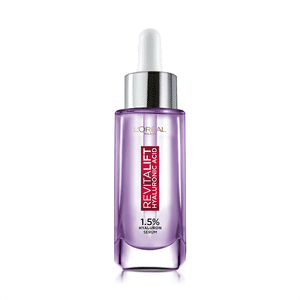
L'Oreal Paris Revitalift Serum, Hydrating and Plumping, Fast Efficacy Formula, Replumps Skin in 1H, Reduces Fine Lines, With 1.5% Micro-Epidermic Hyaluronic Acid, Validated by Dermatologists, 15ml

L'Oreal Paris Revitalift Serum, Hydrating and Plumping, Fast Efficacy Formula, Replumps Skin in 1H, Reduces Fine Lines, With 1.5% Micro-Epidermic Hyaluronic Acid, Validated by Dermatologists, 15ml
L'Oreal Paris
loreal-paris-revitalift-serum-hydrating-and-plumping-fast-efficacy-formula-replumps-skin-in-1h-reduces-fine-lines-with-1-5-micro-epidermic-hyaluronic-acid-validated-by-dermatologists-15ml
Serum
10084953260325
Morning or Evening?
How often will you use this product?
Notes


Highlights
WHAT IS IT?
Face Serum, 1.5% Hyaluronic Acid
FEATURES
Lightweight serum with 50X smaller Micro Hyaluronic Acid, Intensely hydrates, smooths and replumps skin, reduces fine lines by 60%, Paraben free, fragrance free, alcohol free formulation, suitable for all skin types including sensitive skin
BEST FOR
dry, sensitive
CHECKS
Paraben, Fragrance, Alcohol
Who Is It For?
All Genders AdultsWhat Does It Help With?
Hydration Plumping Reduces Fine Lines Radiant Smooth SkinBudget
Affordable (under $30)How To Use
Which routine should it be used in?
Instructions:
Key Information

What L'Oreal Paris Says
Product Description:
THE 1 FACE SERUM IN THE US IS IN INDIA Get YOUTHFUL RADIANT HYDRATED AND SMOOTH skin with the L'Oreal Paris Revitalift Hyaluronic Acid Serum with 1.5 Hyaluronic OUR HIGHEST CONCENTRATION OF HYALURONIC ACID in a face serum. With this lightweight and nonsticky serum get visible results and see your skin getting better day after day DERMATOLOGICALLY TESTED THE FACE SERUM IS A MUSTHAVE IN YOUR DAILY SKINCARE ROUTINE. It is suitable for all skin types and can be used daily. This face serum for women is PARABEN FREE FRAGRANCEFREE & ALCOHOLFREE. and suitable for all skin types including sensitive skin. Use daily daily along with the Hyaluronic Acid Cleanser & Hyaluronic Acid Cream for best results• A Lightweight serum with 50X smaller Micro Hyaluronic Acid• Intensely hydrates smooths and replumps skin to reduce fine lines by 60• Apply this moisturising serum daily day & night• Fragrance free paraben free alcohol free formulation• Contents 1x L'Oreal Paris Revitalift 1.5 Hyaluronic Acid Serum
Ingredients Overview
Ingredients List
AQUA / WATER, GLYCERIN, HYDROXYETHYLPIPERA ZINE ETHANE SULFONIC ACID, SODIUM HYALURONATE, PHENOXYETHANOL, PEG-60 HYDROGENATED CASTOR OIL, ASCORBYL GLUCOSIDE, CHLORPHENESIN, HYDROXYPROPYL GUAR, SODIUM ACETYLATED HYALURONATE, XANTHAN GUM, PENTYLENE GLYCOL, SECALE CEREALE SEED EXTRACT / RYE SEED EXTRACT, DIPEPTIDE DIAMINOBUTYROYL BENZYLAMIDE DIACETATE. (F.I.L. B242774/1)
Key Ingredients
Hyaluronic Acid 1.5%
Ingredients Details
Ascorbyl Glucoside
Common Name(s): Aa2g,2-o-alpha-d-glucopyranosyl-l-ascorbic acid
CAS Number: 129499-78-1
DESCRIPTION
What It Does: Provides stable gradual-release vitamin c activity for brightening and antioxidant protection.
Why It's Used: Most formulation-stable vitamin c derivative — ascorbyl glucoside remains stable in aqueous formulations where pure ascorbic acid oxidises within days, providing sustained vitamin c delivery over weeks of shelf life.
How It Works: Alpha-glucoside bond resists oxidation until cleaved by skin alpha-glucosidase enzymes. releases free l-ascorbic acid in viable epidermis. released ascorbic acid inhibits tyrosinase, stimulates collagen synthesis, and provides antioxidant activity. glucose group provides enhanced water solubility vs ascorbic acid.
Typically Found In: Stable vitamin c serums,brightening products,anti-aging
TECHNICAL DETAILS
Primary Category: Active ingredient – stable vitamin c glucoside
Secondary Functions: Tyrosinase inhibitor,collagen cofactor
Application Areas:

Facial Skincare

Body Care
Hair Care
Beard Care
Color Cosmetics (Makeup)
Dietary/Oral Supplements
Typical Concentration Range: 1%–5%
SOURCING & ETHICS
Vegan Status: Yes – enzymatic synthesis from ascorbic acid and glucose
Halal Status: Yes
Source Notes: Synthetically produced vitamin c derivative.
SKIN COMPATIBILITY
Irritancy Rating: 1/5 – very low
Comedogenicity Rating: 0/5 – non-comedogenic
Sensitivity Concerns: Non-irritating; suitable for all skin types.
Safe for Sensitive Skin: Yes
SAFETY & COMPATIBILITY
Safety Profile: Excellent safety profile. ewg score: 1.
Works Well With: Tocopherol,ferulic acid,niacinamide,spf
Avoid Combining With: No significant incompatibilities
SCIENTIFIC NOTE
Ascorbyl glucoside's stability advantage (18+ months in aqueous formulation vs days for ascorbic acid) arises from the glucose group's steric protection of ascorbic acid's c2 enediol that is the primary oxidation site. glucosidase cleavage in skin removes this protection in situ, releasing active ascorbic acid only where enzymatic activity exists — providing both formulation stability and bioactivation where needed.
Last Verified: Cosing database,yamamoto et al. ascorbyl glucoside stability study
Primary Sources: 2026-03-12
Chlorphenesin
Common Name(s): 3-(4-chlorophenoxy)-1,2-propanediol,globacid
CAS Number: 104-29-0
DESCRIPTION
What It Does: Provides gram-negative focused preservation complementary to phenoxyethanol for comprehensive spectrum coverage.
Why It's Used: Phenoxyethanol complement — chlorphenesin's gram-negative and antifungal coverage complements phenoxyethanol's gram-positive activity for full-spectrum preservation at lower individual concentrations.
How It Works: 4-chlorophenol ether glycol disrupts bacterial and fungal membranes. strong gram-negative activity (pseudomonas, e. coli). good candida antifungal activity. used with phenoxyethanol for synergistic broad-spectrum coverage. ph stable 3-9.
Typically Found In: Comprehensive preservation systems,baby products (low concentration)
TECHNICAL DETAILS
Primary Category: Functional ingredient – glycerol ether preservative
Secondary Functions: Skin conditioning
Application Areas:
Facial Skincare
Body Care
Hair Care
Beard Care
Color Cosmetics (Makeup)
Dietary/Oral Supplements
Typical Concentration Range: 0.1%–0.3%
SOURCING & ETHICS
Vegan Status: Yes – synthetic
Halal Status: Yes
Source Notes: Commercially produced for cosmetic use. verify vegan/halal status with supplier.
SKIN COMPATIBILITY
Irritancy Rating: 1/5 – very low
Comedogenicity Rating: 0/5 – non-comedogenic
Sensitivity Concerns: Well-tolerated by most skin types.
Safe for Sensitive Skin: Yes
SAFETY & COMPATIBILITY
Safety Profile: Eu max 0.3% cosmetics. good safety profile. synergistic combination with phenoxyethanol (0.3% pe + 0.1% chlorphenesin often equivalent to 1% pe alone).
Works Well With: Standard skincare actives
Avoid Combining With: No known significant incompatibilities
SCIENTIFIC NOTE
Chlorphenesin + phenoxyethanol synergy operates through a classic spectrum-filling combination: phenoxyethanol provides strong gram-positive antimicrobial activity while chlorphenesin provides gram-negative and antifungal coverage. the combination's minimum inhibitory concentration sum is subadditive (provides equivalent preservation at combined concentrations below what either alone would require) — textbook pharmacological synergy enabling lower total preservative load.
Last Verified: Cosing database,eu preservative annex v,cir safety assessment
Primary Sources: 2026-03-12
Glycerin
Common Name(s): Glycerol,glycerine,1,2,3-propanetriol
CAS Number: 56-81-5
DESCRIPTION
What It Does: Glycerin pulls water from the environment and deeper skin layers into the outer skin layer (epidermis), boosting moisture levels and keeping skin soft, smooth, and plump.
Why It's Used: It is used in virtually every moisturizer, serum, and cleanser because it is highly effective at hydrating skin, is well-tolerated by all skin types, and enhances the texture and spreadability of formulations.
How It Works: As a humectant, glycerin forms hydrogen bonds with water molecules, trapping them in the skin. it also reinforces the skin barrier by integrating into lipid structures between skin cells.
Typically Found In: Moisturizers,serums,cleansers,toners,sheet masks,sunscreens,body lotions,shampoos,conditioners
TECHNICAL DETAILS
Primary Category: Humectant
Secondary Functions: Skin barrier support,emollient,solvent
Application Areas:
Facial Skincare
Body Care
Hair Care
Beard Care
Color Cosmetics (Makeup)
Dietary/Oral Supplements
Typical Concentration Range: 1%–30% (typical: 3–10%)
SOURCING & ETHICS
Vegan Status: Yes – plant-derived (coconut, soy, palm) or synthetic
Halal Status: Yes – when plant-derived or synthetic; verify source with supplier
Source Notes: Derived from plant oils via hydrolysis or saponification; synthetic versions also available. palm-derived glycerin carries sustainability concerns.
SKIN COMPATIBILITY
Irritancy Rating: 1/5 – very low; non-irritating at all standard concentrations
Comedogenicity Rating: 0/5 – non-comedogenic
Sensitivity Concerns: Extremely rare allergic reactions; generally safe for all skin types including sensitive and baby skin
Safe for Sensitive Skin: Yes
SAFETY & COMPATIBILITY
Safety Profile: Widely recognized as safe. ewg hazard score: 1. no significant concerns for irritation, sensitization, or toxicity at typical concentrations (up to 50%).
Works Well With: Hyaluronic acid,ceramides,niacinamide,panthenol,urea,peptides,retinol,ahas/bhas
Avoid Combining With: No known incompatibilities at standard concentrations
SCIENTIFIC NOTE
Glycerin is an endogenous skin component found naturally in the stratum corneum. aquaporin-3 channels in keratinocytes facilitate glycerin transport, making it integral to natural skin hydration pathways.
Last Verified: Cosing database,cir safety assessment,ewg skin deep,inci decoder
Primary Sources: 2026-03-12
Hydroxypropyl Guar
Common Name(s): Hpg,hydroxypropyl guar gum
CAS Number: 39421-75-5
DESCRIPTION
What It Does: Provides non-ionic guar-derived thickening compatible with all surfactant charge types.
Why It's Used: Non-ionic alternative to cationic guar for clear, surfactant-compatible thickening in natural formulations without cationic buildup concerns.
How It Works: Hydroxypropyl substitution disrupts guar crystallinity enabling water solubility. non-ionic eliminates cationic deposition concerns. associates with surfactant micelles for viscosity building. lower cation demand vs cationic guar.
Typically Found In: Clear shampoos,body washes,transparent gel products
TECHNICAL DETAILS
Primary Category: Functional ingredient – non-ionic guar derivative
Secondary Functions: Tewl reduction,skin plumping
Application Areas:
Facial Skincare
Body Care
Hair Care
Beard Care
Color Cosmetics (Makeup)
Dietary/Oral Supplements
Typical Concentration Range: 0.1%–1.5%
SOURCING & ETHICS
Vegan Status: Yes – from cyamopsis tetragonoloba
Halal Status: Yes
Source Notes: Synthetic or naturally derived. excellent aqueous solubility.
SKIN COMPATIBILITY
Irritancy Rating: 1/5 – very low
Comedogenicity Rating: 0/5 – non-comedogenic
Sensitivity Concerns: Non-irritating; suitable for all skin types.
Safe for Sensitive Skin: Yes
SAFETY & COMPATIBILITY
Safety Profile: Excellent safety profile. ewg score: 1.
Works Well With: Ceramides,emollients,occlusives,glycerin,hyaluronic acid
Avoid Combining With: No significant incompatibilities
SCIENTIFIC NOTE
Hydroxypropyl guar's thickening mechanism in surfactant systems involves polymer-micelle network formation: the guar backbone associates with sds or other anionic surfactant micelles via hydrophobic interactions, creating a polymer-bridged micellar network that dramatically increases viscosity without requiring high polymer concentrations.
Last Verified: Cosing database,solvay hpg technical data,cir safety assessment
Primary Sources: 2026-03-12
