

Lotus Botanicals
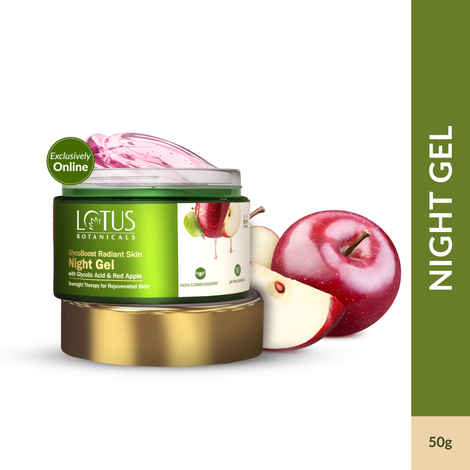
Lotus Botanicals GlycoBoost Radiant Skin Night Gel with Glycolic Acid & Red Apple - 50 gm

Lotus Botanicals GlycoBoost Radiant Skin Night Gel with Glycolic Acid & Red Apple - 50 gm
Lotus Botanicals
lotus-botanicals-glycoboost-radiant-skin-night-gel-with-glycolic-acid-red-apple-50-gm
Moisturize
10085483544869
Morning or Evening?
How often will you use this product?
Notes


Highlights
WHAT IS IT?
Night Gel with 2 main key ingredients
FEATURES
Overnight skin renewal, fades blemishes and acne scars, promotes skin lightening, smoothens skin, reduces fine lines and wrinkles
BEST FOR
all skin types
CHECKS
Free from parabens and sulfates
Who Is It For?
All Genders No Specific Age Range MentionedWhat Does It Help With?
Blemishes Acne Scars Skin Lightening Fine Lines Wrinkles Skin RenewalBudget
Affordable (under ₹30 Equivalent But Here Price Is ₹382 Inr So Mid-range ($30-$75) Approximation)How To Use
Which routine should it be used in?
Instructions:
Key Information


What Lotus Botanicals Says
Product Description:
Lotus Botanicals GlycoBoost Radiant Skin Night Gel with Glycolic Acid & Red Apple enriched with the dynamic duo of Glycolic Acid and Red Apple Extract is your solution to unlocking the full potential of your skin while you sleep. Harnessing the power of natural ingredients this transformative skincare product offers a range of benefits including addressing blemishes acne scars promoting skin lightening and overall skin improvement.Glycolic Acid a key ingredient works diligently to exfoliate the skin' surface effectively reducing the appearance of blemishes and the scarring they leave behind. It also promotes collagen production and speed up cell turnover. This leads to a refined smoother and more youthfullooking skin surface reducing the appearance of fine lines and wrinkles.The inclusion of Red Apple Extract which is rich in natural AHAs makes this night gel a powerful tool for skin lightening. Lotus Botanicals GlycoBoost Radiant Skin Night Gel is suitable for all skin types and is free from harsh chemicals like parabens and sulphtes. Incorporate it into your nightly skincare routine and let it work its magic as you sleep.
About the Brand:
Ingredients Overview
Ingredients List
Key Ingredients
Glycolic Acid, Red Apple Extract
Ingredients Details
Glycolic Acid
Common Name(s): Hydroxyacetic acid,2-hydroxyacetic acid
CAS Number: 79-14-1
DESCRIPTION
What It Does: Provides maximum aha efficacy from the smallest most penetrating alpha-hydroxy acid.
Why It's Used: The most potent aha — glycolic acid's smallest molecular size provides the deepest penetration and highest efficacy of any alpha-hydroxy acid for exfoliation and anti-aging.
How It Works: Smallest aha (mw 76) provides deepest stratum corneum penetration. disrupts corneodesmosomes reducing cohesion. stimulates fibroblast collagen i and iii synthesis. efficacy is ph-dependent — free acid fraction determines activity.
Typically Found In: Chemical peels,body lotions,anti-aging serums,exfoliating toners
TECHNICAL DETAILS
Primary Category: Active ingredient – primary aha
Secondary Functions: Brightening,collagen stimulation
Application Areas:

Facial Skincare
Body Care

Hair Care
Beard Care
Color Cosmetics (Makeup)
Dietary/Oral Supplements
Typical Concentration Range: 1%–10% cosmetic; higher professional
SOURCING & ETHICS
Vegan Status: Yes – synthetic or fermentation-derived
Halal Status: Yes
Source Notes: Fermentation-derived or synthetic. ph must be ≤4.0 for aha activity.
SKIN COMPATIBILITY
Irritancy Rating: 2/5 – low to moderate
Comedogenicity Rating: 0/5 – non-comedogenic
Sensitivity Concerns: Photosensitizing – mandatory spf use. start at low frequency.
Safe for Sensitive Skin: Use with caution – spf required
SAFETY & COMPATIBILITY
Safety Profile: Eu cosmetics: max 10% leave-on, ph ≥3.5, mandatory sun protection advisory. professional peel concentrations regulated separately.
Works Well With: Niacinamide,ceramides,hyaluronic acid,spf
Avoid Combining With: Retinol in same step; multiple exfoliants simultaneously
SCIENTIFIC NOTE
Glycolic acid's ph-dependent efficacy is critical: at ph 3.0 ~100% is in the free acid (membrane-permeable) form; at ph 3.5 ~70%; at ph 4.0 ~50%. the eu ph ≥3.5 requirement reduces free acid proportion, lowering efficacy but also reducing irritation — why professional peel concentrations at lower ph are far more active than equivalent cosmetic concentrations.
Last Verified: Cosing database,eu aha guidelines,cir safety assessment
Primary Sources: 2026-03-12
