
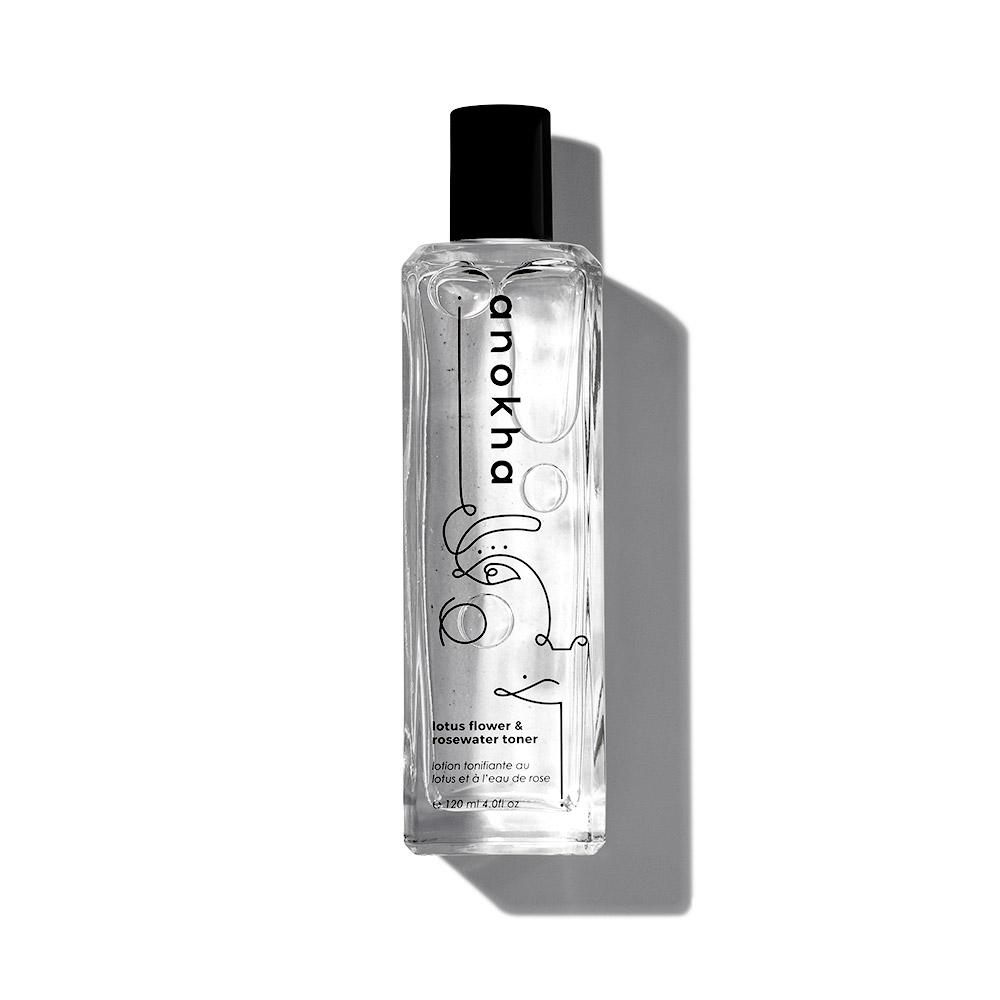

anokha
lotus flower & rosewater toner

lotus flower & rosewater toner
anokha
lotus-flower-rosewater-toner
Tone
9706845765925
Morning or Evening?
How often will you use this product?
Notes


Highlights
WHAT IS IT?
Toner with 9 ingredients
FEATURES
100% natural, vegan, cruelty-free, physician-formulated, clinically-tested, allergy-tested, pH balanced
BEST FOR
All skin types, especially sensitive skin
CHECKS
Free of harsh chemicals, artificial fragrances, toxic preservatives, parabens, sulfates
Who Is It For?
Adults Both Women And MenWhat Does It Help With?
Balancing Skin Reducing Excess Oil Soothing Redness And IrritationBudget
Mid-rangeHow To Use
Which routine should it be used in?
Instructions:
Key Information


What anokha Says
Product Description:
A balancing toner made with botanical extracts of rosewater, lotus flower, Centella asiatica, and burdock root to cleanse and tone your skin. Balanced skin, bottled. 100% natural, vegan, cruelty-free, physician-formulated, clinically-tested, allergy-tested. pH balanced at 5.0-5.5.
About the Brand:
Ingredients Overview
Ingredients List
water/aqua/eau, Rosa damascena (rose) water, sodium PCA, propanediol, Arctium lappa (burdock root) extract, Nelumbo nucifera (lotus) extract, Centella asiatica (gotu kola) extract, gluconolactone, sodium benzoate
Key Ingredients
Rosa damascena (rose) water, Arctium lappa (burdock root) extract, Nelumbo nucifera (lotus) extract, Centella asiatica (gotu kola) extract
Ingredients Details
Arctium Lappa Burdock Root Extract
Common Name(s): Arctium lappa burdock root extract extract
DESCRIPTION
What It Does: Provides antioxidant protection, soothing anti-inflammatory effects, and skin-conditioning benefits through plant-derived polyphenols and phytochemicals.
Why It's Used: Plant extracts concentrate bioactive phytochemicals evolved for environmental protection — uv, microbial, and oxidative stressors — that translate to skin benefits.
How It Works: Polyphenols (flavonoids, phenolic acids) inhibit nf-κb-mediated inflammatory signaling, scavenge reactive oxygen species through electron donation, and chelate pro-oxidant metal ions to reduce oxidative skin damage.
Typically Found In: Serums,toners,moisturizers,masks,essences
TECHNICAL DETAILS
Primary Category: Botanical extracts
Secondary Functions: Antioxidant,anti-inflammatory
Application Areas:

Facial Skincare

Body Care
Hair Care
Beard Care
Color Cosmetics (Makeup)
Dietary/Oral Supplements
Typical Concentration Range: 0.1–10%
SOURCING & ETHICS
Vegan Status: Yes
Halal Status: Yes
Source Notes: Plant-derived extract; no animal components.
SKIN COMPATIBILITY
Irritancy Rating: 1899-12-31 00:00:00 -0800
Sensitivity Concerns: Low sensitization potential at recommended use concentrations.
Safe for Sensitive Skin: Yes
SAFETY & COMPATIBILITY
Safety Profile: Well-characterized cosmetic ingredient with established safety profile. generally non-irritating at typical use concentrations. suitable for leave-on and rinse-off cosmetics.
Works Well With: Niacinamide,hyaluronic acid,vitamin c,ceramides
Avoid Combining With: Strong oxidizing agents
SCIENTIFIC NOTE
Plant secondary metabolites (flavonoids, terpenes, phenolic acids) are biosynthesized as defense compounds against uv, herbivores, and pathogens. their anti-inflammatory activity typically derives from competitive inhibition of cox-2 and 5-lox enzymes (ic50 1–50 µm), while antioxidant activity involves single electron transfer (set) and hydrogen atom transfer (hat) mechanisms with structure-dependent rate constants.
Last Verified: Cosing eu database; pcpc cosmetic ingredient safety reviews; phytochemical and ethnobotanical literature
Primary Sources: 2025-01-15
Centella Asiatica Gotu Kola Extract
Common Name(s): Centella asiatica gotu kola extract extract
DESCRIPTION
What It Does: Provides antioxidant protection, soothing anti-inflammatory effects, and skin-conditioning benefits through plant-derived polyphenols and phytochemicals.
Why It's Used: Plant extracts concentrate bioactive phytochemicals evolved for environmental protection — uv, microbial, and oxidative stressors — that translate to skin benefits.
How It Works: Polyphenols (flavonoids, phenolic acids) inhibit nf-κb-mediated inflammatory signaling, scavenge reactive oxygen species through electron donation, and chelate pro-oxidant metal ions to reduce oxidative skin damage.
Typically Found In: Serums,toners,moisturizers,masks,essences
TECHNICAL DETAILS
Primary Category: Botanical extracts
Secondary Functions: Antioxidant,anti-inflammatory
Application Areas:
Facial Skincare
Body Care
Hair Care
Beard Care
Color Cosmetics (Makeup)
Dietary/Oral Supplements
Typical Concentration Range: 0.1–10%
SOURCING & ETHICS
Vegan Status: Yes
Halal Status: Yes
Source Notes: Plant-derived extract; no animal components.
SKIN COMPATIBILITY
Irritancy Rating: 1899-12-31 00:00:00 -0800
Sensitivity Concerns: Low sensitization potential at recommended use concentrations.
Safe for Sensitive Skin: Yes
SAFETY & COMPATIBILITY
Safety Profile: Well-characterized cosmetic ingredient with established safety profile. generally non-irritating at typical use concentrations. suitable for leave-on and rinse-off cosmetics.
Works Well With: Niacinamide,hyaluronic acid,vitamin c,ceramides
Avoid Combining With: Strong oxidizing agents
SCIENTIFIC NOTE
Plant secondary metabolites (flavonoids, terpenes, phenolic acids) are biosynthesized as defense compounds against uv, herbivores, and pathogens. their anti-inflammatory activity typically derives from competitive inhibition of cox-2 and 5-lox enzymes (ic50 1–50 µm), while antioxidant activity involves single electron transfer (set) and hydrogen atom transfer (hat) mechanisms with structure-dependent rate constants.
Last Verified: Cosing eu database; pcpc cosmetic ingredient safety reviews; phytochemical and ethnobotanical literature
Primary Sources: 2025-01-15
Gluconolactone
Common Name(s): D-gluconolactone,delta-gluconolactone
CAS Number: 90-80-2
DESCRIPTION
What It Does: Provides the gentlest chemical exfoliation with simultaneous antioxidant, moisture retention, and barrier support.
Why It's Used: Preferred exfoliant for rosacea, eczema, sensitive skin, and post-procedure recovery where standard ahas cause unacceptable irritation.
How It Works: Hydrolyzes slowly on skin surface to gluconic acid providing gentle exfoliation. multiple hydroxyl groups enable water binding (humectant) and metal chelation (antioxidant).
Typically Found In: Sensitive skin exfoliants,rosacea treatments,eczema care,post-procedure recovery
TECHNICAL DETAILS
Primary Category: Active ingredient – polyhydroxy acid (pha)
Secondary Functions: Gentle exfoliation,antioxidant,humectant
Application Areas:
Facial Skincare
Body Care
Hair Care
Beard Care
Color Cosmetics (Makeup)
Dietary/Oral Supplements
Typical Concentration Range: 5%–15%
SOURCING & ETHICS
Vegan Status: Yes – fermentation or synthetic
Halal Status: Yes
Source Notes: Fermentation-derived from glucose or synthetic. among the safest chemical exfoliants available.
SKIN COMPATIBILITY
Irritancy Rating: 1/5 – very low
Comedogenicity Rating: 0/5 – non-comedogenic
Sensitivity Concerns: No photosensitization; no stinging; suitable for very sensitive skin.
Safe for Sensitive Skin: Yes – ideal for sensitive, reactive, rosacea, and eczema-prone skin; no photosensitization
SAFETY & COMPATIBILITY
Safety Profile: Exceptional safety profile. no photosensitization. ewg score: 1.
Works Well With: Ceramides,niacinamide,hyaluronic acid,soothing actives
Avoid Combining With: No significant incompatibilities
SCIENTIFIC NOTE
Phas have molecular weights 2–3× larger than ahas, limiting penetration to superficial layers. combined humectant and antioxidant properties make them uniquely well-tolerated while providing meaningful exfoliation.
Last Verified: Cosing database,green & yu (2003) pha review,cir safety assessment
Primary Sources: 2026-03-12
Propanediol
Common Name(s): 1,3-propanediol,zemea,bio-propanediol
CAS Number: 504-63-2
DESCRIPTION
What It Does: Provides humectant and solvent functionality from sustainable corn-based fermentation.
Why It's Used: Bio-based propylene glycol alternative from renewable corn — propanediol provides equivalent functionality to propylene glycol with sustainable renewable feedstock and superior skin feel.
How It Works: Two oh groups provide humectant water binding. excellent solvent for fragrances, actives, and preservatives. mild antimicrobial from diol structure for preservative system boosting. renew corn fermentation origin (dupont zemea process). better skin feel than propylene glycol — less sticky.
Typically Found In: Virtually all cosmetic categories as pg alternative
TECHNICAL DETAILS
Primary Category: Functional ingredient – humectant
Secondary Functions: Tewl reduction,skin plumping
Application Areas:
Facial Skincare
Body Care
Hair Care
Beard Care
Color Cosmetics (Makeup)
Dietary/Oral Supplements
Typical Concentration Range: 1%–20%
SOURCING & ETHICS
Vegan Status: Yes – from corn sugar fermentation
Halal Status: Yes
Source Notes: Synthetic or naturally derived. excellent aqueous solubility.
SKIN COMPATIBILITY
Irritancy Rating: 1/5 – very low
Comedogenicity Rating: 0/5 – non-comedogenic
Sensitivity Concerns: Non-irritating; suitable for all skin types.
Safe for Sensitive Skin: Yes
SAFETY & COMPATIBILITY
Safety Profile: Excellent safety profile. ewg score: 1.
Works Well With: Ceramides,emollients,occlusives,glycerin,hyaluronic acid
Avoid Combining With: No significant incompatibilities
SCIENTIFIC NOTE
Propanediol's dupont tate & lyle bio products 'zemea' process ferments corn sugar to 1,3-propanediol using engineered e. coli — one of the first commercially viable bio-fermentation routes to a cosmetic diol previously made only from petroleum. the renewable route produces chemically identical 1,3-propanediol while reducing carbon footprint by approximately 40% vs petrochemical synthesis.
Last Verified: Cosing database,dupont tate & lyle zemea technical data,cir safety assessment
Primary Sources: 2026-03-12
