
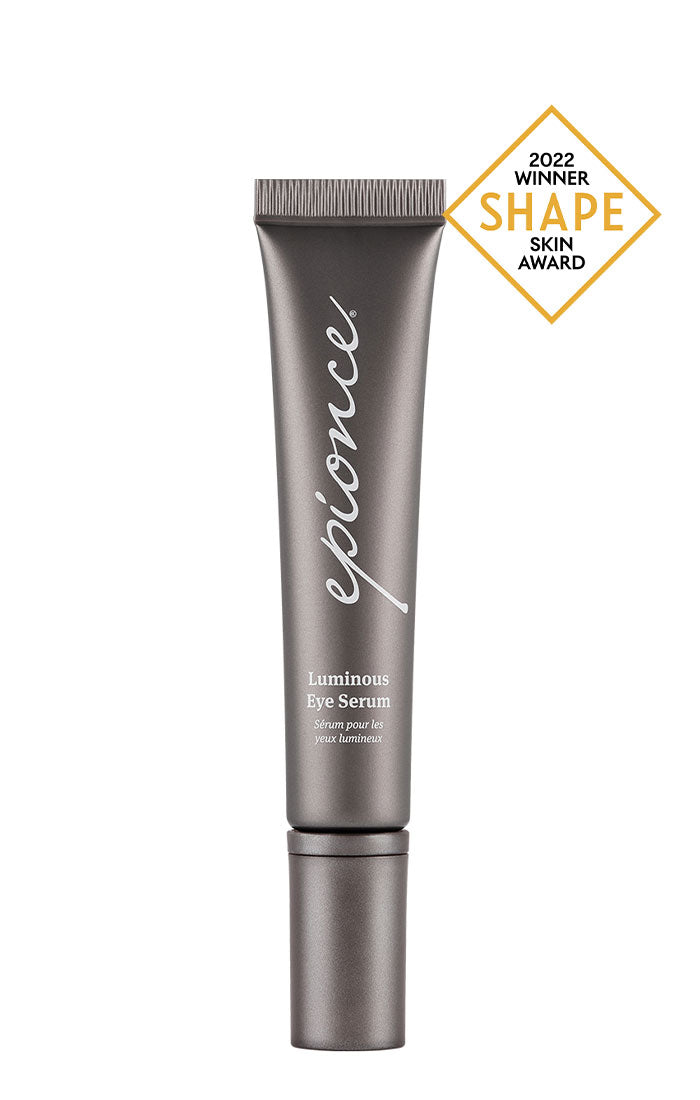

Epionce
Luminous Eye Serum

Luminous Eye Serum
Epionce
luminous-eye-serum
Eyecare
9706808148261
Morning or Evening?
How often will you use this product?
Notes


Highlights
WHAT IS IT?
Eye serum with multiple botanical ingredients
FEATURES
Silky, hydrating formula; Brightens and smooths eye area; Clinically proven to reduce puffiness, dark circles, fine lines, wrinkles and droopiness
BEST FOR
All Skin Types
CHECKS
Free of parabens, sulfates, fragrance
Who Is It For?
For Adults (men And Women)What Does It Help With?
Puffiness Dark Circles Fine Lines Wrinkles Droopiness Around EyesBudget
PremiumHow To Use
Which routine should it be used in?
Instructions:
Key Information


What Epionce Says
Product Description:
Luminous Eye Serum is a silky, hydrating eye serum formulated with powerful yet gentle botanicals to brighten and smooth the eye area for a more awake, refreshed and youthful-looking appearance. It is clinically proven to diminish the visible appearance of puffiness, dark circles, fine lines, wrinkles and droopiness safely and without irritation. Botanicals such as Watermelon, Astragalus and Cacao combine with algae extracts to reveal more youthful, revitalized eyes.
About the Brand:
Ingredients Overview
Ingredients List
Water (Aqua), Propanediol, Glycerin, Caprylic/Capric Triglyceride, Hydroxyethyl Acrylate/Sodium Acryloyldimethyl Taurate Copolymer, Sea Water (Maris Aqua), Acetyl Tetrapeptide-5, Astragalus Membranaceus Root Extract, Avena Sativa (Oat) Bran Extract, Bentonite, Bis(Cyano Butylacetate) Anthracenediylidene, Butylene Glycol, Caprylyl Glycol, Carthamus Tinctorius (Safflower) Seed Extract, Chlorella Vulgaris Extract, Citric Acid, Citrullus Lanatus (Watermelon) Fruit Extract, Citrus Aurantium Dulcis (Orange) Peel Extract, Ethylhexylglycerin, Fucus Vesiculosus Extract, Glucose, Hexylene Glycol, Hydrated Silica, Hydrolyzed Algin, Hydrolyzed Pea Protein, Hydrolyzed Rhodophyceae Extract, Lactic Acid, Lecithin, Lens Esculenta (Lentil) Fruit Extract, Olive Oil Decyl Esters, Phenoxyethanol, Potassium Sorbate, Pullulan, Pyrus Malus (Apple) Fruit Extract, Saccharide Isomerate, Schinus Molle Extract, Sea Salt (Maris Sal), Silica, Sodium Benzoate, Sodium Chloride, Sodium Lactate, Sodium PCA, Sodium Succinate, Spilanthes Acmella Flower/Leaf/Stem Extract, Squalene, Sucrose, Theobroma Cacao (Cocoa) Seed Extract, Tocopherol, Ubiquinone, Xanthan Gum
Key Ingredients
Watermelon, Astragalus, Cacao, algae extracts
Ingredients Details
Acetyl Tetrapeptide-5
Common Name(s): Eyeseryl,ac-beta-ala-his-ser-his
CAS Number: 820959-17-9
DESCRIPTION
What It Does: Reduces periorbital puffiness and edema by limiting hyaluronan accumulation and improving vascular integrity.
Why It's Used: Targeted eye peptide for comprehensive under-eye treatment addressing puffiness, dark circles, and loss of firmness through multiple complementary mechanisms.
How It Works: Inhibits hyaluronan-protein cross-linking that causes excessive water retention (edema) under eyes. also reduces vascular permeability and improves lymphatic drainage. anti-glycation activity reduces skin stiffness.
Typically Found In: Eye creams,under-eye serums,anti-puffiness products
TECHNICAL DETAILS
Primary Category: Active ingredient – eyeseryl eye peptide
Secondary Functions: Anti-edema,dark circle reduction,eye firmness
Application Areas:

Facial Skincare

Body Care
Hair Care
Beard Care
Color Cosmetics (Makeup)
Dietary/Oral Supplements
Typical Concentration Range: 50–500 ppm
SOURCING & ETHICS
Vegan Status: Conditional - supplier confirmation required
Halal Status: Unverified - supplier confirmation required
Source Notes: Spps synthesis. commercially available as eyeseryl (lipotec). [audit 2026-07-29 rev2: the record's own source_notes does not assert a non-animal origin, or instructs the reader to verify with the supplier; "yes" asserts knowledge the record does not hold. determination requires shariah-panel sign-off.]
SKIN COMPATIBILITY
Irritancy Rating: 1/5 – very low
Comedogenicity Rating: 0/5 – non-comedogenic
Sensitivity Concerns: Non-irritating; suitable for all skin types.
Safe for Sensitive Skin: Yes
SAFETY & COMPATIBILITY
Safety Profile: Exceptional safety profile. ewg score: 1.
Works Well With: Hyaluronic acid,ceramides,retinol,vitamin c,niacinamide
Avoid Combining With: Avoid mixing with high-concentration ahas at same ph (may hydrolyze peptide bonds)
SCIENTIFIC NOTE
Under-eye puffiness is driven by hyaluronan accumulation (water binding) and impaired lymphatic drainage. eyeseryl's inhibition of ha-protein crosslinking reduces the osmotic water-trapping capacity of the extracellular matrix, providing a mechanistically unique anti-puffiness approach.
Last Verified: 2026-03-12
Primary Sources: Cosing database,lipotec eyeseryl technical data,clinical study journal of cosmetic dermatology
Astragalus Membranaceus Root Extract
Common Name(s): Astragalus membranaceus root extract
DESCRIPTION
What It Does: Provides antioxidant protection, soothing anti-inflammatory effects, and skin-conditioning benefits through plant-derived polyphenols and phytochemicals.
Why It's Used: Plant extracts concentrate bioactive phytochemicals evolved for environmental protection — uv, microbial, and oxidative stressors — that translate to skin benefits.
How It Works: Polyphenols (flavonoids, phenolic acids) inhibit nf-κb-mediated inflammatory signaling, scavenge reactive oxygen species through electron donation, and chelate pro-oxidant metal ions to reduce oxidative skin damage.
Typically Found In: Serums,toners,moisturizers,masks,essences
TECHNICAL DETAILS
Primary Category: Botanical extracts
Secondary Functions: Antioxidant,anti-inflammatory
Application Areas:
Facial Skincare
Body Care
Hair Care
Beard Care
Color Cosmetics (Makeup)
Dietary/Oral Supplements
Typical Concentration Range: 0.1–10%
SOURCING & ETHICS
Vegan Status: Yes
Halal Status: Yes
Source Notes: Plant-derived extract; no animal components.
SKIN COMPATIBILITY
Irritancy Rating: 1
Comedogenicity Rating: 0
Sensitivity Concerns: Low sensitization potential at recommended use concentrations.
Safe for Sensitive Skin: Yes
SAFETY & COMPATIBILITY
Safety Profile: Well-characterized cosmetic ingredient with established safety profile. generally non-irritating at typical use concentrations. suitable for leave-on and rinse-off cosmetics.
Works Well With: Niacinamide,hyaluronic acid,vitamin c,ceramides
Avoid Combining With: Strong oxidizing agents
SCIENTIFIC NOTE
Plant secondary metabolites (flavonoids, terpenes, phenolic acids) are biosynthesized as defense compounds against uv, herbivores, and pathogens. their anti-inflammatory activity typically derives from competitive inhibition of cox-2 and 5-lox enzymes (ic50 1–50 µm), while antioxidant activity involves single electron transfer (set) and hydrogen atom transfer (hat) mechanisms with structure-dependent rate constants.
Last Verified: 2025-01-15
Primary Sources: Cosing eu database; pcpc cosmetic ingredient safety reviews; phytochemical and ethnobotanical literature
Avena Sativa Oat Bran Extract
Common Name(s): Avena sativa oat bran extract extract
DESCRIPTION
What It Does: Provides antioxidant protection, soothing anti-inflammatory effects, and skin-conditioning benefits through plant-derived polyphenols and phytochemicals.
Why It's Used: Plant extracts concentrate bioactive phytochemicals evolved for environmental protection — uv, microbial, and oxidative stressors — that translate to skin benefits.
How It Works: Polyphenols (flavonoids, phenolic acids) inhibit nf-κb-mediated inflammatory signaling, scavenge reactive oxygen species through electron donation, and chelate pro-oxidant metal ions to reduce oxidative skin damage.
Typically Found In: Serums,toners,moisturizers,masks,essences
TECHNICAL DETAILS
Primary Category: Botanical extracts
Secondary Functions: Antioxidant,anti-inflammatory
Application Areas:
Facial Skincare
Body Care
Hair Care
Beard Care
Color Cosmetics (Makeup)
Dietary/Oral Supplements
Typical Concentration Range: 0.1–10%
SOURCING & ETHICS
Vegan Status: Yes
Halal Status: Yes
Source Notes: Plant-derived extract; no animal components.
SKIN COMPATIBILITY
Irritancy Rating: 1899-12-31 00:00:00 -0800
Sensitivity Concerns: Low sensitization potential at recommended use concentrations.
Safe for Sensitive Skin: Yes
SAFETY & COMPATIBILITY
Safety Profile: Well-characterized cosmetic ingredient with established safety profile. generally non-irritating at typical use concentrations. suitable for leave-on and rinse-off cosmetics.
Works Well With: Niacinamide,hyaluronic acid,vitamin c,ceramides
Avoid Combining With: Strong oxidizing agents
SCIENTIFIC NOTE
Plant secondary metabolites (flavonoids, terpenes, phenolic acids) are biosynthesized as defense compounds against uv, herbivores, and pathogens. their anti-inflammatory activity typically derives from competitive inhibition of cox-2 and 5-lox enzymes (ic50 1–50 µm), while antioxidant activity involves single electron transfer (set) and hydrogen atom transfer (hat) mechanisms with structure-dependent rate constants.
Last Verified: 2025-01-15
Primary Sources: Cosing eu database; pcpc cosmetic ingredient safety reviews; phytochemical and ethnobotanical literature
Bentonite
Common Name(s): Montmorillonite,volcanic ash clay,swelling clay
CAS Number: 1302-78-9
DESCRIPTION
What It Does: Provides thixotropic clay gellation and deep oil absorption from swelling smectite clay.
Why It's Used: Strongest adsorbing clay for deep cleansing masks – bentonite's high cation exchange capacity and swelling capacity provide the deepest oil and toxin adsorption of common cosmetic clays.
How It Works: Montmorillonite 2:1 layered silicate swells up to 15× in water via interlayer water absorption. very high cation exchange capacity (cec: 80-150 meq/100g) provides exceptional adsorption of cations, oils, and toxins. thixotropic gel provides 'mask that hardens' sensory experience.
Typically Found In: Clay masks,deep cleansing products,detoxifying formulas
TECHNICAL DETAILS
Primary Category: Functional ingredient – swelling clay mineral
Secondary Functions: Skin conditioning
Application Areas:
Facial Skincare
Body Care
Hair Care
Beard Care
Color Cosmetics (Makeup)
Dietary/Oral Supplements
Typical Concentration Range: 1%–25%
SOURCING & ETHICS
Vegan Status: Conditional - supplier confirmation required
Halal Status: Unverified - supplier confirmation required
Source Notes: Commercially produced for cosmetic use. verify vegan/halal status with supplier. [audit 2026-07-29 rev2: the record's own source_notes does not assert a non-animal origin, or instructs the reader to verify with the supplier; "yes" asserts knowledge the record does not hold. determination requires shariah-panel sign-off.]
SKIN COMPATIBILITY
Irritancy Rating: 1/5 – very low
Comedogenicity Rating: 0/5 – non-comedogenic
Sensitivity Concerns: Well-tolerated by most skin types.
Safe for Sensitive Skin: Yes
SAFETY & COMPATIBILITY
Safety Profile: Good safety profile at recommended concentrations. ewg score: 1–2.
Works Well With: Standard skincare actives
Avoid Combining With: No known significant incompatibilities
SCIENTIFIC NOTE
Bentonite's extraordinary swelling (up to 15× dry volume) arises from its 2:1 layer structure: sodium bentonite's inter-layer sodium cations attract very thick water shells, forcing the silicate layers apart by electrostatic repulsion. calcium bentonite swells only 2-3× by comparison, explaining why sodium-exchanged bentonite is the industrial standard for swelling applications.
Last Verified: 2026-03-12
Primary Sources: Cosing database,cir safety assessment