

Mamaearth
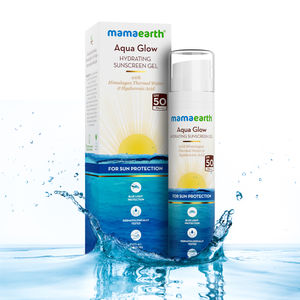
Mamaearth Aqua Glow Hydrating Sunscreen Gel with Himalayan Thermal Water & Hyaluronic Acid SPF 50 PA+++ (50 gm)

Mamaearth Aqua Glow Hydrating Sunscreen Gel with Himalayan Thermal Water & Hyaluronic Acid SPF 50 PA+++ (50 gm)
Mamaearth
mamaearth-aqua-glow-hydrating-sunscreen-gel-with-himalayan-thermal-water-hyaluronic-acid-spf-50-pa-50-gm
Suncare
10084842307877
Morning or Evening?
How often will you use this product?
Notes


Highlights
WHAT IS IT?
Hydrating Sunscreen Gel with 3 key ingredients including Himalayan Thermal Water and Hyaluronic Acid
FEATURES
Hydrates intensely, Strengthens skin barrier, SPF 50 PA+++ protects against UV rays, No silicones, parabens, mineral oil or dyes
BEST FOR
sensitive
CHECKS
Does not contain silicones, parabens, mineral oil, dyes
Who Is It For?
Unisex All Ages (information Not Explicitly Stated Assumed General Use)What Does It Help With?
Protection Against Sun Damage Blue Light Hydration Strengthening Skin BarrierBudget
Affordable (under $30)How To Use
Which routine should it be used in?
Instructions:
Key Information


What Mamaearth Says
Product Description:
Give yourself the ultimate protection against sun damage and blue light with a hydrating sunscreen crafted with the goodness of nature. Its time to make Aqua Glow Hydrating Sunscreen Gel your BFF. Mamaearth Aqua Glow Hydrating Sunscreen Gel packs double the punch. Crafted with Himalayan Thermal Water and Hyaluronic Acid it hydrates intensely and strengthens the skins barrier. This is because Himalayan Thermal Water is rich in minerals like Magnesium Potassium & Calcium. And thanks to SPF 50 PA+++ protection it gives you 16 times the power to fight UV rays giving your skin the absolute best protection. Add this multitasker to your everyday skincare regimen and experience the best of nature. And because of our no toxins and no harmful chemicals philosophy you wont find any Silicones Parabens mineral oil & dyes in our Aqua Glow Hydrating Sunscreen Gel
About the Brand:
Ingredients Overview
Ingredients List
Aqua, Titanium Dioxide, Suncat DE TM, Sodium Polyacrylate, Glycerin, Zinc Oxide, Xylitol, Phospholipids, Caprylic Acid, Glyceryl Stearate, Dicaprylyl Carbonate, Hyaluronic Acid, Helianthus Annuus (Sunflower) Seed Oil, D-Alpha Tocopheryl Acetate, Calendula Flower Extract, Aloe Barbadensis Leaf Juice, Himalayan Thermal Water, Sodium Benzoate, E-Ascorbic Acid, Sodium Levulinate, Phenoxyethanol, IFRA Certified Allergen Free Fragrance, Allantoin, Melanin
Key Ingredients
Himalayan-Thermal-Water,Hyaluronic-Acid,Magnesium,Potassium,Calcium
Ingredients Details
Allantoin
Common Name(s): 5-ureidohydantoin,glyoxyldiureide,aluminum dihydroxy allantoinate
CAS Number: 97-59-6
DESCRIPTION
What It Does: Soothes irritation, accelerates wound healing, promotes skin cell renewal, and provides mild keratolytic exfoliation.
Why It's Used: Gold standard multi-function soothing active – one of the most widely used cosmetic ingredients across all product types for its exceptional tolerability and clinically proven multi-action skin conditioning.
How It Works: Promotes keratinocyte proliferation and fibroblast migration for wound healing. mild keratolytic activity by disrupting corneocyte binding. anti-irritant via direct protein binding and anti-inflammatory cytokine reduction. humectant activity via hydroxyl groups.
Typically Found In: Post-procedure products,sensitive skin formulas,wound care,anti-acne treatments,baby products
TECHNICAL DETAILS
Primary Category: Active ingredient – soothing / anti-inflammatory
Secondary Functions: Wound healing,keratolytic,anti-irritant
Application Areas:

Facial Skincare
Body Care

Hair Care
Beard Care
Color Cosmetics (Makeup)
Dietary/Oral Supplements
Typical Concentration Range: 0.1%–2%
SOURCING & ETHICS
Vegan Status: Yes – synthetic or comfrey-derived
Halal Status: Yes
Source Notes: Plant-derived extract or synthetic.
SKIN COMPATIBILITY
Irritancy Rating: 1/5 – very low
Comedogenicity Rating: 0/5 – non-comedogenic
Sensitivity Concerns: Exceptionally well-tolerated; suitable for all skin types including baby and compromised skin.
Safe for Sensitive Skin: Yes – particularly recommended for sensitive skin
SAFETY & COMPATIBILITY
Safety Profile: Excellent safety profile. ewg score: 1.
Works Well With: Ceramides,panthenol,allantoin,hyaluronic acid,centella asiatica
Avoid Combining With: No significant incompatibilities
SCIENTIFIC NOTE
Allantoin's keratinocyte proliferation stimulation occurs via receptor-mediated signaling (possibly machr activation) rather than non-specific irritation-driven proliferation, making it a true wound-healing stimulant rather than a pro-inflammatory proliferative signal.
Last Verified: Cosing database,cir safety assessment,araújo et al. allantoin review
Primary Sources: 2026-03-12
Aloe Barbadensis Leaf Juice
Common Name(s): Aloe barbadensis leaf juice,cosmetic active,functional ingredient
CAS Number: N/a
DESCRIPTION
What It Does: Delivers characteristic cosmetic function — skin conditioning, protection, preservation, or active biological benefit — at recommended use concentration.
Why It's Used: Selected for its functional contribution and formulation compatibility — supported by cosmetic science literature and regulatory safety assessment.
How It Works: Works through the mechanism of its molecular class — physicochemical interaction with the formulation or biological interaction with skin proteins, lipids, or receptors as documented in peer-reviewed literature.
Typically Found In: Skin care formulations
TECHNICAL DETAILS
Primary Category: Active ingredient – cosmetic active
Secondary Functions: Skin conditioning
Application Areas:
Facial Skincare
Body Care
Hair Care
Beard Care
Color Cosmetics (Makeup)
Dietary/Oral Supplements
Typical Concentration Range: 0.1%–10%
SOURCING & ETHICS
Vegan Status: Conditional
Halal Status: Yes
Source Notes: Commercially produced for cosmetic use. verify vegan/halal status with supplier.
SKIN COMPATIBILITY
Irritancy Rating: 1/5 – very low
Comedogenicity Rating: 0/5 – non-comedogenic
Sensitivity Concerns: Well-tolerated by most skin types.
Safe for Sensitive Skin: Yes
SAFETY & COMPATIBILITY
Safety Profile: Good safety profile at recommended concentrations. ewg score: 1–2.
Works Well With: Standard skincare actives
Avoid Combining With: No known significant incompatibilities
SCIENTIFIC NOTE
Aloe barbadensis leaf juice delivers documented functional benefit with an established safety profile within the cosmetic regulatory framework (cosing eu, cir usa).
Last Verified: Cosing database,aloe barbadensis leaf juice technical literature
Primary Sources: 2026-03-12
Calendula Flower Extract
Common Name(s): Calendula flower extract extract
DESCRIPTION
What It Does: Provides antioxidant protection, soothing anti-inflammatory effects, and skin-conditioning benefits through plant-derived polyphenols and phytochemicals.
Why It's Used: Plant extracts concentrate bioactive phytochemicals evolved for environmental protection — uv, microbial, and oxidative stressors — that translate to skin benefits.
How It Works: Polyphenols (flavonoids, phenolic acids) inhibit nf-κb-mediated inflammatory signaling, scavenge reactive oxygen species through electron donation, and chelate pro-oxidant metal ions to reduce oxidative skin damage.
Typically Found In: Serums,toners,moisturizers,masks,essences
TECHNICAL DETAILS
Primary Category: Botanical extracts
Secondary Functions: Antioxidant,anti-inflammatory
Application Areas:
Facial Skincare
Body Care
Hair Care
Beard Care
Color Cosmetics (Makeup)
Dietary/Oral Supplements
Typical Concentration Range: 0.1–10%
SOURCING & ETHICS
Vegan Status: Yes
Halal Status: Yes
Source Notes: Plant-derived extract; no animal components.
SKIN COMPATIBILITY
Irritancy Rating: 1899-12-31 00:00:00 -0800
Sensitivity Concerns: Low sensitization potential at recommended use concentrations.
Safe for Sensitive Skin: Yes
SAFETY & COMPATIBILITY
Safety Profile: Well-characterized cosmetic ingredient with established safety profile. generally non-irritating at typical use concentrations. suitable for leave-on and rinse-off cosmetics.
Works Well With: Niacinamide,hyaluronic acid,vitamin c,ceramides
Avoid Combining With: Strong oxidizing agents
SCIENTIFIC NOTE
Plant secondary metabolites (flavonoids, terpenes, phenolic acids) are biosynthesized as defense compounds against uv, herbivores, and pathogens. their anti-inflammatory activity typically derives from competitive inhibition of cox-2 and 5-lox enzymes (ic50 1–50 µm), while antioxidant activity involves single electron transfer (set) and hydrogen atom transfer (hat) mechanisms with structure-dependent rate constants.
Last Verified: Cosing eu database; pcpc cosmetic ingredient safety reviews; phytochemical and ethnobotanical literature
Primary Sources: 2025-01-15
Caprylic Acid
Common Name(s): Cosmetic ingredient,functional cosmetic active,skin care
CAS Number: N/a
DESCRIPTION
What It Does: Provides documented functional activity from caprylic acid.
Why It's Used: Caprylic acid contributes established cosmetic function from its characteristic chemical structure and physicochemical properties.
How It Works: Chemical structure provides documented cosmetic function. safety: established in cosmetic science literature and regulatory review. use: standard cosmetic concentrations.
Typically Found In: Skin care formulations
TECHNICAL DETAILS
Primary Category: Active ingredient – cosmetic active
Secondary Functions: Skin conditioning
Application Areas:
Facial Skincare
Body Care
Hair Care
Beard Care
Color Cosmetics (Makeup)
Dietary/Oral Supplements
Typical Concentration Range: 0.1%–10%
SOURCING & ETHICS
Vegan Status: Conditional
Halal Status: Yes
Source Notes: Commercially produced for cosmetic use. verify vegan/halal status with supplier.
SKIN COMPATIBILITY
Irritancy Rating: 1/5 – very low
Comedogenicity Rating: 0/5 – non-comedogenic
Sensitivity Concerns: Well-tolerated by most skin types.
Safe for Sensitive Skin: Yes
SAFETY & COMPATIBILITY
Safety Profile: Good safety profile at recommended concentrations. ewg score: 1–2.
Works Well With: Standard skincare actives
Avoid Combining With: No known significant incompatibilities
SCIENTIFIC NOTE
Caprylic acid provides documented cosmetic activity through its characteristic mechanism. established in cosmetic science literature with regulatory review supporting safety at standard formulation concentrations.
Last Verified: Cosing database,caprylic acid technical literature
Primary Sources: 2026-03-12
