

Mamaearth
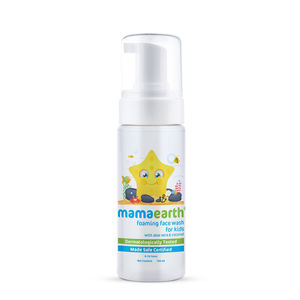
Mamaearth Foaming Face Wash With Aloe Vera & Coconut For Gentle Cleansing - 150 ml

Mamaearth Foaming Face Wash With Aloe Vera & Coconut For Gentle Cleansing - 150 ml
Mamaearth
mamaearth-foaming-face-wash-with-aloe-vera-coconut-for-gentle-cleansing-150-ml
Cleanse
10084939825445
Morning or Evening?
How often will you use this product?
Notes


Highlights
WHAT IS IT?
Face Wash, Contains Aloe Vera and Coconut
FEATURES
Gentle cleansing, Nourishes delicate skin, Made Safe Certified, pH balanced, Tear-free, Soap-free, Contains Aloe Vera, Coconut, Calendula, Lavender, No Silicones, Parabens, Mineral Oil or Dyes
BEST FOR
sensitive
CHECKS
Silicones, Parabens, Mineral oil, Dyes
Who Is It For?
Kids Both Genders All AgesWhat Does It Help With?
Cleanses Dirt & Grime Keeps Harmful Bacteria At Bay Moisturizes & Nourishes Delicate SkinBudget
Affordable (under $30)How To Use
Which routine should it be used in?
Instructions:
Key Information


What Mamaearth Says
Product Description:
Hi Im Mamaearth Foaming Face Wash for Kids & Im here to gently cleanse & nourish your little one's skin. With my superpowers I wash away dirt & grime keeping harmful bacteria at bay. Im Made Safe Certified & contain the goodness of Aloe Vera & Coconut which provide deep moisturization & nourishment to your childs delicate skin. Formulated with a pHbalanced tearfree & soapfree formula I also bring the soothing benefits of Calendula & Lavender. And because of Mamaearths no toxins philosophy you wont find any Silicones Parabens mineral oil & dyes.
About the Brand:
Ingredients Overview
Ingredients List
Aqua, Cocamidopropyl Betaine, Sodium Cocoamphoacetate, Disodium Cocoamphodiacetate, Decyl Glucoside, Sodium Lauroyl Sarcosinate, Glycerin, Aloe Vera Extract, Coconut Extract, Calendula Extract, Sodium PCA, Sodium Benzoate, D-Panthenol, Cucumber Extract, Potassium Sorbate, Lavender Oil, Citric Acid and Sodium Gluconate
Key Ingredients
Aloe Vera,Coconut,Calendula,Lavender
Ingredients Details
Calendula Extract
Common Name(s): Pot marigold extract,calendula extract
CAS Number: 84776-23-8
DESCRIPTION
What It Does: Heals wounds, reduces inflammation, and soothes irritated skin through faradiol triterpenoid and flavonoid activity.
Why It's Used: Clinically proven traditional wound healing botanical with anti-inflammatory activity comparable to prescription diclofenac in some studies for skin wounds.
How It Works: Faradiol esters inhibit cox-1/cox-2 providing anti-inflammatory activity. polysaccharides promote fibroblast and keratinocyte proliferation. isorhamnetin and narcissin flavonoids provide antioxidant protection. oleanolic acid provides antimicrobial activity.
Typically Found In: Wound healing products,baby products,sensitive skin,post-procedure care
TECHNICAL DETAILS
Primary Category: Active ingredient – soothing / anti-inflammatory
Secondary Functions: Faradiol triterpenoid anti-inflammatory,wound healing
Application Areas:

Facial Skincare
Body Care

Hair Care
Beard Care
Color Cosmetics (Makeup)
Dietary/Oral Supplements
Typical Concentration Range: 0.1%–5%
SOURCING & ETHICS
Vegan Status: Yes – calendula officinalis flower-derived
Halal Status: Yes
Source Notes: Plant-derived extract or synthetic.
SKIN COMPATIBILITY
Irritancy Rating: 1/5 – very low
Comedogenicity Rating: 0/5 – non-comedogenic
Sensitivity Concerns: Non-irritating; ideal for reactive and sensitive skin.
Safe for Sensitive Skin: Yes – particularly recommended for sensitive skin
SAFETY & COMPATIBILITY
Safety Profile: Excellent safety profile. ewg score: 1.
Works Well With: Ceramides,panthenol,allantoin,hyaluronic acid,centella asiatica
Avoid Combining With: No significant incompatibilities
SCIENTIFIC NOTE
Faradiol monoester and diester triterpenoids are among the most potent naturally occurring cox inhibitors – ic50 values comparable to indomethacin (a prescription nsaid) for cox-2 inhibition. this explains calendula's clinically observed anti-inflammatory potency exceeding expectations for a cosmetic ingredient.
Last Verified: Cosing database,preethi & kuttan calendula anti-inflammatory study,cir safety assessment
Primary Sources: 2026-03-12
Cocamidopropyl Betaine
Common Name(s): Capb,cocoamidopropyl betaine,coconut betaine
CAS Number: 61789-40-0
DESCRIPTION
What It Does: Boosts foam, enhances mildness, and conditions skin and hair when combined with primary surfactants.
Why It's Used: The standard foam booster and mildness enhancer in virtually all shampoos, body washes, and facial cleansers – provides synergistic mildness improvement with anionic surfactants.
How It Works: Amphoteric (zwitterionic) character provides positive charge interaction with hair keratin for antistatic conditioning. reduces irritation of co-formulated anionic surfactants via ionic complex formation. foam stabilization via bilayer reinforcement in foam lamellae.
Typically Found In: Shampoos,body washes,facial cleansers,baby products
TECHNICAL DETAILS
Primary Category: Functional ingredient – amphoteric surfactant
Secondary Functions: Skin conditioning
Application Areas:
Facial Skincare
Body Care
Hair Care
Beard Care
Color Cosmetics (Makeup)
Dietary/Oral Supplements
Typical Concentration Range: 2%–15%
SOURCING & ETHICS
Vegan Status: Yes – from coconut fatty acids and dimethylaminopropylamine
Halal Status: Yes
Source Notes: Commercially produced for cosmetic use. verify vegan/halal status with supplier.
SKIN COMPATIBILITY
Irritancy Rating: 1/5 – very low
Comedogenicity Rating: 0/5 – non-comedogenic
Sensitivity Concerns: Well-tolerated by most skin types.
Safe for Sensitive Skin: Yes
SAFETY & COMPATIBILITY
Safety Profile: Good safety profile at recommended concentrations. ewg score: 1–2.
Works Well With: Standard skincare actives
Avoid Combining With: No known significant incompatibilities
SCIENTIFIC NOTE
Capb's mildness-enhancing synergy with sls has a molecular mechanism: capb's positive imidazoline head group forms an ion pair complex with sls's anionic sulfate group, reducing sls's free monomer concentration (the irritation-causing species) without significantly reducing micelle-forming capacity (the cleansing species).
Last Verified: Cosing database,ananthapadmanabhan surfactant review,cir safety assessment
Primary Sources: 2026-03-12
Cucumber Extract
Common Name(s): Cucumber extract,cucumber juice
DESCRIPTION
What It Does: Soothes and refreshes irritated skin with anti-inflammatory and astringent properties.
Why It's Used: Classic gentle soothing botanical for sensitive skin formulations with astringent, hydrating, and depuffing properties.
How It Works: Caffeic acid inhibits prostaglandin synthesis. cucurbitacins provide anti-inflammatory activity. high water content provides hydration. ascorbic acid provides antioxidant support. silica provides mild astringency.
Typically Found In: Toners,eye gels,sensitive skin products,after-sun formulations
TECHNICAL DETAILS
Primary Category: Active ingredient – soothing / anti-inflammatory
Secondary Functions: Gentle soothing,astringent,depuffing
Application Areas:
Facial Skincare
Body Care
Hair Care
Beard Care
Color Cosmetics (Makeup)
Dietary/Oral Supplements
Typical Concentration Range: 0.5%–20%
SOURCING & ETHICS
Vegan Status: Yes – plant-derived
Halal Status: Yes
Source Notes: Plant-derived extract or synthetic.
SKIN COMPATIBILITY
Irritancy Rating: 1/5 – very low
Comedogenicity Rating: 0/5 – non-comedogenic
Sensitivity Concerns: Non-irritating; ideal for reactive and sensitive skin.
Safe for Sensitive Skin: Yes – particularly recommended for sensitive skin
SAFETY & COMPATIBILITY
Safety Profile: Excellent safety profile. ewg score: 1.
Works Well With: Ceramides,panthenol,allantoin,hyaluronic acid,centella asiatica
Avoid Combining With: No significant incompatibilities
SCIENTIFIC NOTE
Cucumber's traditional use for puffy eyes has a physiological basis – the combination of mild astringency (silica-mediated protein contraction), anti-inflammatory (caffeic acid), and coolness (high water content evaporation) provides a triple-action depuffing effect that explains its enduring use.
Last Verified: Cosing database,cir safety assessment
Primary Sources: 2026-03-12
D-panthenol
Common Name(s): D-panthenol,b-vitamin skin active,multi-benefit conditioning
CAS Number: N/a
DESCRIPTION
What It Does: Provides the specific b-vitamin's characteristic skin and hair benefits: brightening and barrier reinforcement (niacinamide), keratin structural support (biotin), deep conditioning humectancy (panthenol).
Why It's Used: B-vitamins operate through fundamental cellular biochemistry pathways — nad⁺ for niacinamide, carboxylase cofactor for biotin, coa synthesis for panthenol — providing multi-benefit activity from essential metabolic chemistry.
How It Works: Acts as coenzyme or substrate in essential metabolic pathways: niacinamide → nad⁺/nadp⁺ → ceramide synthesis, melanosome transfer inhibition; biotin → carboxylase → fatty acid synthesis for ceramide; panthenol → pantothenic acid → coa → lipid metabolism.
Typically Found In: Multi-function skin care,b-vitamin formulas
TECHNICAL DETAILS
Primary Category: Active ingredient – vitamin b complex
Secondary Functions: Antioxidant cofactor,metabolic support
Application Areas:
Facial Skincare
Body Care
Hair Care
Beard Care
Color Cosmetics (Makeup)
Dietary/Oral Supplements
Typical Concentration Range: 0.1%–10%
SOURCING & ETHICS
Vegan Status: Yes
Halal Status: Yes
Source Notes: Synthetically produced for cosmetic use.
SKIN COMPATIBILITY
Irritancy Rating: 1/5 – very low
Comedogenicity Rating: 0/5 – non-comedogenic
Sensitivity Concerns: Non-irritating; excellent tolerability.
Safe for Sensitive Skin: Yes
SAFETY & COMPATIBILITY
Safety Profile: Excellent safety profile. ewg score: 1.
Works Well With: Other b vitamins,niacinamide,antioxidant complexes
Avoid Combining With: No significant incompatibilities
SCIENTIFIC NOTE
B-vitamins are water-soluble, non-irritating, and well-tolerated across all skin types — providing clinical efficacy with an exceptional safety profile from their essential nutrient status.
Last Verified: Cosing database,d-panthenol b-vitamin skin review
Primary Sources: 2026-03-12
