

Mamaearth
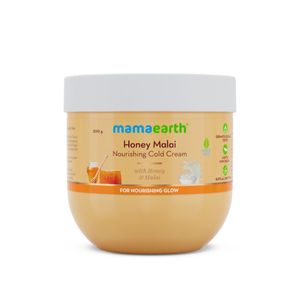
Mamaearth Honey Malai Cold Cream with Honey & Malai For Nourishing Glow - 200 gm

Mamaearth Honey Malai Cold Cream with Honey & Malai For Nourishing Glow - 200 gm
Mamaearth
mamaearth-honey-malai-cold-cream-with-honey-malai-for-nourishing-glow-200-gm
Moisturize
10084846928165
Morning or Evening?
How often will you use this product?
Notes


Highlights
WHAT IS IT?
Cold Cream, 2 main natural ingredients (Honey, Malai)
FEATURES
Locks moisture, Non-greasy, Adds healthy milky glow, Butter soft smooth skin, Made Safe Certified, Free from harmful chemicals and toxins
BEST FOR
dry
CHECKS
Free of harmful chemicals and toxins
Who Is It For?
What Does It Help With?
Nourishing Glow Hydration DrynessBudget
Affordable (under $30)How To Use
Which routine should it be used in?
Instructions:
Key Information


What Mamaearth Says
Product Description:
Theres no better glow combo than Honey & Malai Bringing back the ageold skincare secret we present to you Mamaearth Honey Malai Cold Cream. And no its not greasy or heavy like regular cold creams. Crafted with the natural goodness of Honey a powerful humectant the cold cream locks moisture into your skin keeping dryness at bay. Also packed with the richness of Malai the cold cream adds a healthy milky glow to your skin resulting in buttery soft smooth and radiant skin All this without the heaviness and stickiness. That&aposs not all Mamaearth Honey Malai Cold Cream is Made Safe Certified which means it is free of harmful chemicals and toxins.
About the Brand:
Ingredients Overview
Ingredients List
Aqua, Coconut Oil, Caprylic/Capric/Triglyceride, Almond Oil, Cetostearyl Alcohol, Stearic Acid, Glyceryl Monostearate, Cetearyl Olivate, Sorbitan Olivate, Shea Butter, Cocoa Butter, Natural Squalene, Bees Wax, Propanediol, Glycerin, Xylitol, DiCaprylyl Carbonate, Aloe Vera Extract, Niacinamide, Milk Protein Extract (Malai), Honey, Vitamin C, Xanthan Gum, Ethylhexylglycerin, Potassium Sorbate, Sodium Phytate, IFRA Certified Allergen Free Fragrance, C.I. 47005 & C.I. 15985
Key Ingredients
Honey, Malai
Ingredients Details
Almond Oil
Common Name(s): Almond oil,botanical carrier oil,emollient fatty acid delivery
CAS Number: N/a
DESCRIPTION
What It Does: Softens and conditions skin by integrating into sc lipid bilayers, delivers essential fatty acids (oleic, linoleic, linolenic) for barrier lipid synthesis, and provides rich, non-stripping moisturisation.
Why It's Used: Natural carrier oils provide the closest compositional match to endogenous sc lipids, delivering emolliency through genuine barrier integration rather than simple surface occlusion.
How It Works: Fatty acid triglycerides partition into sc lipid bilayers — oleic acid (c18:1) provides fluid, emollient integration; linoleic acid (c18:2) acts as essential ceramide precursor; saturated fatty acids provide more occlusive barrier reinforcement.
Typically Found In: Moisturisers,facial oils,natural skin care
TECHNICAL DETAILS
Primary Category: Functional ingredient – emollient
Secondary Functions: Barrier sealing,softening
Application Areas:

Facial Skincare
Body Care
Hair Care

Beard Care
Color Cosmetics (Makeup)
Dietary/Oral Supplements
Typical Concentration Range: 1%–100%
SOURCING & ETHICS
Vegan Status: Conditional
Halal Status: Yes
Source Notes: Plant-derived, synthetic or animal-derived. verify source.
SKIN COMPATIBILITY
Irritancy Rating: 1/5 – very low
Comedogenicity Rating: 1/5 – low; formulation-dependent
Sensitivity Concerns: Non-irritating.
Safe for Sensitive Skin: Yes
SAFETY & COMPATIBILITY
Safety Profile: Excellent safety profile. ewg score: 1.
Works Well With: Humectants,ceramides,actives as carrier
Avoid Combining With: No significant incompatibilities
SCIENTIFIC NOTE
Essential fatty acids — linoleic (c18:2, n-6) and α-linolenic (c18:3, n-3) acids — cannot be synthesised by the body; topical delivery through carrier oils provides direct substrate for ceramide and eicosanoid biosynthesis in the epidermis.
Last Verified: Cosing database,almond oil carrier oil botanical review
Primary Sources: 2026-03-12
Bees Wax
Common Name(s): Bees wax
DESCRIPTION
What It Does: Provides antioxidant protection, soothing anti-inflammatory effects, and skin-conditioning benefits through plant-derived polyphenols and phytochemicals.
Why It's Used: Plant extracts concentrate bioactive phytochemicals evolved for environmental protection — uv, microbial, and oxidative stressors — that translate to skin benefits.
How It Works: Polyphenols (flavonoids, phenolic acids) inhibit nf-κb-mediated inflammatory signaling, scavenge reactive oxygen species through electron donation, and chelate pro-oxidant metal ions to reduce oxidative skin damage.
Typically Found In: Lipsticks,balms,creams,deodorants
TECHNICAL DETAILS
Primary Category: Waxes
Secondary Functions: Emollient,film former
Application Areas:
Facial Skincare
Body Care
Hair Care
Beard Care
Color Cosmetics (Makeup)
Dietary/Oral Supplements
Typical Concentration Range: 1–40%
SOURCING & ETHICS
Vegan Status: No
Halal Status: Conditional
Source Notes: Contains animal-derived components (bees wax...); not suitable for vegan formulations.
SKIN COMPATIBILITY
Irritancy Rating: 1899-12-31 00:00:00 -0800
Comedogenicity Rating: 1899-12-31 00:00:00 -0800
Sensitivity Concerns: Low sensitization potential at recommended use concentrations.
Safe for Sensitive Skin: Conditional
SAFETY & COMPATIBILITY
Safety Profile: Well-characterized cosmetic ingredient with established safety profile. generally non-irritating at typical use concentrations. suitable for leave-on and rinse-off cosmetics.
Works Well With: Other waxes,emollients,pigments
Avoid Combining With: Strongly alkaline conditions
SCIENTIFIC NOTE
Plant secondary metabolites (flavonoids, terpenes, phenolic acids) are biosynthesized as defense compounds against uv, herbivores, and pathogens. their anti-inflammatory activity typically derives from competitive inhibition of cox-2 and 5-lox enzymes (ic50 1–50 µm), while antioxidant activity involves single electron transfer (set) and hydrogen atom transfer (hat) mechanisms with structure-dependent rate constants.
Last Verified: Cosing eu database; pcpc cosmetic ingredient safety reviews; ingredient-specific safety and efficacy literature
Primary Sources: 2025-01-15
Cetearyl Olivate
Common Name(s): Nonionic emulsifier,o/w surfactant,emulsion stabiliser
CAS Number: N/a
DESCRIPTION
What It Does: Stabilises o/w emulsions by forming a molecular monolayer at the oil-water interface, provides co-emulsification synergy with other emulsifiers, and contributes to emulsion texture through interfacial film properties.
Why It's Used: Nonionic emulsifiers are preferred for sensitive skin and ph-extreme formulations — no ionic charge means no electrostatic interaction with skin proteins, no ph-dependent function loss, and compatibility with both anionic and cationic co-ingredients.
How It Works: Hlb determines emulsion type: hlb 8–12 for o/w emulsification; hlb 3–6 for w/o. the peg or glycoside head group provides hydrophilicity while the c16–c18 fatty chain provides lipophilicity. at the o/w interface, nonionic emulsifiers form a mixed monolayer reducing interfacial tension from ~35 mn/m (clean oil-water) to 5–10 mn/m, providing thermodynamic stabilisation.
Typically Found In: Creams,lotions,o/w emulsions
TECHNICAL DETAILS
Primary Category: Active ingredient – cosmetic active
Secondary Functions: Skin conditioning
Application Areas:
Facial Skincare
Body Care
Hair Care
Beard Care
Color Cosmetics (Makeup)
Dietary/Oral Supplements
Typical Concentration Range: 1%–10%
SOURCING & ETHICS
Vegan Status: Conditional
Halal Status: Yes
Source Notes: Commercially produced for cosmetic use. verify vegan/halal status with supplier.
SKIN COMPATIBILITY
Irritancy Rating: 1/5 – very low
Comedogenicity Rating: 0/5 – non-comedogenic
Sensitivity Concerns: Well-tolerated by most skin types.
Safe for Sensitive Skin: Yes
SAFETY & COMPATIBILITY
Safety Profile: Good safety profile at recommended concentrations. ewg score: 1–2.
Works Well With: Standard skincare actives
Avoid Combining With: No known significant incompatibilities
SCIENTIFIC NOTE
Mixed emulsifier systems (e.g., glyceryl stearate + peg-100 stearate, or cetearyl glucoside + cetearyl alcohol) provide better emulsion stability than single emulsifiers — synergistic packing of different molecular geometries creates a more cohesive, mechanically robust interfacial film.
Last Verified: Cosing database,nonionic emulsifier hlb system review
Primary Sources: 2026-03-12
Cocoa Butter
Common Name(s): Cocoa butter,cacao butter
CAS Number: 8002-31-1
DESCRIPTION
What It Does: Provides hard-setting occlusive emolliency for body butters and lip balms with skin conditioning stearic acid.
Why It's Used: Classic body care and lip balm solid butter providing strong occlusive moisture retention with the iconic cocoa scent and stable solid-at-room-temperature consistency.
How It Works: High stearic (32-36%) and palmitic (25-30%) acid content provides hard, brittle texture with high melting point (34-38°c). solid at room temperature, melts at body contact for on-skin application. occlusive barrier film reduces tewl. natural polyphenols provide antioxidant activity.
Typically Found In: Body butters,lip balms,hard lotions,soap,cosmetics
TECHNICAL DETAILS
Primary Category: Functional ingredient – emollient
Secondary Functions: Occlusive barrier,hard butter texture,natural aroma
Application Areas:
Facial Skincare
Body Care
Hair Care
Beard Care
Color Cosmetics (Makeup)
Dietary/Oral Supplements
Typical Concentration Range: 1%–100%
SOURCING & ETHICS
Vegan Status: Yes – from theobroma cacao seeds
Halal Status: Yes
Source Notes: Expeller or cold-pressed from roasted cacao beans. natural cocoa butter retains aroma; deodorized available for unscented formulas. very shelf stable (shelf life 3-5 years).
SKIN COMPATIBILITY
Irritancy Rating: 1/5 – very low
Comedogenicity Rating: 4/5 – comedogenic; avoid on acne-prone face
Sensitivity Concerns: Non-irritating.
Safe for Sensitive Skin: Yes
SAFETY & COMPATIBILITY
Safety Profile: Excellent safety profile. ewg score: 1.
Works Well With: Humectants,ceramides,actives as carrier
Avoid Combining With: No significant incompatibilities
SCIENTIFIC NOTE
Cocoa butter is one of the few naturally occurring fats with a sharp melting point transition (34-38°c) just below body temperature, providing solid-at-room-temperature stability while melting completely and uniformly on skin contact. this unique thermal transition gives body butters and lip balms their characteristic texture and application.
Last Verified: Cosing database,cir safety assessment
Primary Sources: 2026-03-12
