

Mamaearth
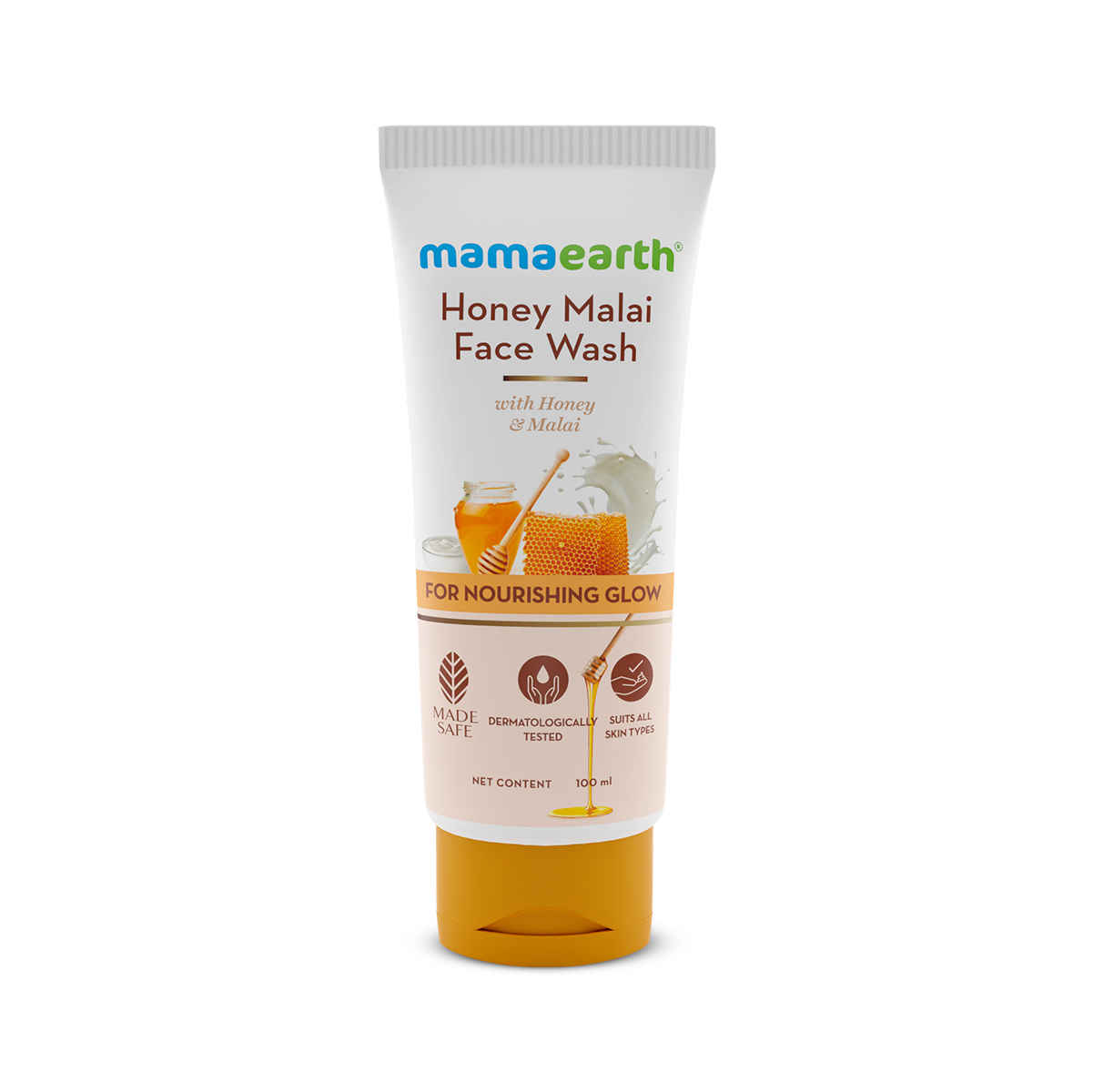
Mamaearth Honey Malai Face Wash with Honey & Malai For Nourishing Glow - 100 ml

Mamaearth Honey Malai Face Wash with Honey & Malai For Nourishing Glow - 100 ml
Mamaearth
mamaearth-honey-malai-face-wash-with-honey-malai-for-nourishing-glow-100-ml
Cleanse
10084769399077
Morning or Evening?
How often will you use this product?
Notes


Highlights
WHAT IS IT?
Face wash product enriched with natural ingredients (Honey & Malai)
FEATURES
Gentle cleansing, deeply nourishes skin, combats dryness, flaky skin & dullness, adds a healthy glow, light creamy texture, antibacterial, anti-inflammatory and antioxidant properties, deeply moisturizes skin
BEST FOR
sensitive
CHECKS
Free of toxins and harmful chemicals
Who Is It For?
What Does It Help With?
Dryness Flaky Skin Dullness Nourishing And Moisturizing Skin For GlowBudget
Mid-range ($30-$75)How To Use
Which routine should it be used in?
Instructions:
Key Information


What Mamaearth Says
Product Description:
Weve bottled up your favorite traditional skincare recipe for nourished & glowing skin. Introducing Mamaearth Honey Malai Face Wash which is enriched with the natural goodness of Honey & Malai that gently cleanses & deeply nourishes your skin. This creamy face wash has a light creamy texture and helps combat dryness flaky skin & dullness and adds a healthy glow to your skin leaving it buttery smooth & soft. Honey is packed with antiinflammatory antibacterial & antioxidant properties that keep the skin nourished while Malai deeply moisturizes your skin resulting in glowing and healthier skin. Wait theres more Mamaearth Honey Malai Face Wash is also Made Safe Certified which means it is free of toxins and harmful chemicals and is infused with natures goodness
About the Brand:
Ingredients Overview
Ingredients List
Aqua, Stearic Acid, Cocamidopropyl Betaine, Glycerin, Caprylyl/Capryl Glucoside, Sodium Methyl Cocoyl Taurate, Sodium Lauroyl Sarcosinate, Ethylene Glycol Distearate, Lauric Acid, Potassium Hydroxide, Coconut Oil, Myristic Acid, Polysorbate 20, Glyceryl Stearate SE, Polyquaternium-7, D-Panthenol, Phenoxyethanol, Ethylhexylglycerin, Honey Extract, Malai (Milk Cream), IFRA Certified Allergen Free Fragrance, Acrylates/Beheneth-25 Methacrylate Copolymer, Titanium Dioxide, Xanthan Gum, Vitamin E, Sodium Hydroxide, Niacinamide, Disodium EDTA, Tinogard® TT, CI 19140, CI15985 & CI 47005 (Food Grade Colors)
Key Ingredients
Honey,Malai
Ingredients Details
Acrylates/beheneth-25 Methacrylate Copolymer
Common Name(s): Acrylates/beheneth-25 methacrylate copolymer
DESCRIPTION
What It Does: Delivers targeted skin-conditioning or bioactive benefits through a specific mechanism of action suited to the formulation's intended purpose.
Why It's Used: Specialty actives address specific skin concerns through targeted molecular mechanisms, providing efficacy beyond what base formulation ingredients alone can achieve.
How It Works: The bioactive compound interacts with specific molecular targets in skin cells or the extracellular matrix — enzymes, receptors, structural proteins, or signaling molecules — triggering beneficial biological responses.
Typically Found In: Serums,treatments,moisturizers,specialty products
TECHNICAL DETAILS
Primary Category: Specialty actives
Secondary Functions: Skin-conditioning,anti-aging
Application Areas:

Facial Skincare

Body Care
Hair Care
Beard Care
Color Cosmetics (Makeup)
Dietary/Oral Supplements
Typical Concentration Range: 0.01–5%
SOURCING & ETHICS
Vegan Status: Yes
Halal Status: Yes
Source Notes: Specialty active ingredient; check individual sourcing for vegan status.
SKIN COMPATIBILITY
Irritancy Rating: 1
Comedogenicity Rating: 0
Sensitivity Concerns: Low sensitization potential at recommended use concentrations.
Safe for Sensitive Skin: Yes
SAFETY & COMPATIBILITY
Safety Profile: Well-characterized cosmetic ingredient with established safety profile. generally non-irritating at typical use concentrations. suitable for leave-on and rinse-off cosmetics.
Works Well With: Niacinamide,hyaluronic acid,vitamin c,peptides
Avoid Combining With: Incompatible with oxidizing agents; check ph stability
SCIENTIFIC NOTE
Specialty actives typically work through enzyme inhibition (e.g., tyrosinase inhibition for brightening, mmp inhibition for anti-aging), receptor activation (e.g., retinoid receptors, ppar-γ for barrier genes), or transcription factor modulation (e.g., nrf2 for antioxidant gene upregulation). structure-activity relationships determine potency and selectivity.
Last Verified: Cosing eu database; pcpc cosmetic ingredient safety reviews; ingredient-specific safety and efficacy literature
Primary Sources: 2025-01-15
Caprylyl/capryl Glucoside
Common Name(s): C8-c10 apg,light cleansing glucoside,natural light cleanser
CAS Number: N/a
DESCRIPTION
What It Does: Provides the lightest apg mild cleansing for facial and micellar applications.
Why It's Used: Light facial apg cleanser — c8-c10 short chain apg provides the mildest, lightest-rinse apg cleansing suited for everyday facial washing and micellar water formulation where heavier c12-c16 apgs leave residue.
How It Works: Caprylyl (c8) + capryl (c10) glucose glucoside: short chain apg. very gentle: non-ionic + short chain. very fast rinse: short chain high solubility. micellar: compatible as non-ionic surfactant. cosmos. minimal skin feel.
Typically Found In: Micellar water,gentle facial cleanser,daily cosmos wash
TECHNICAL DETAILS
Primary Category: Active ingredient – cosmetic active
Secondary Functions: Skin conditioning
Application Areas:
Facial Skincare
Body Care
Hair Care
Beard Care
Color Cosmetics (Makeup)
Dietary/Oral Supplements
Typical Concentration Range: 2%–15%
SOURCING & ETHICS
Vegan Status: Yes – from c8-c10 alcohols + glucose
Halal Status: Yes
Source Notes: Commercially produced for cosmetic use. verify vegan/halal status with supplier.
SKIN COMPATIBILITY
Irritancy Rating: 1/5 – very low
Comedogenicity Rating: 0/5 – non-comedogenic
Sensitivity Concerns: Well-tolerated by most skin types.
Safe for Sensitive Skin: Yes
SAFETY & COMPATIBILITY
Safety Profile: Good safety profile at recommended concentrations. ewg score: 1–2.
Works Well With: Standard skincare actives
Avoid Combining With: No known significant incompatibilities
SCIENTIFIC NOTE
C8-c10 apg lighter rinse vs c12-c16 from cmc differences: shorter chain apgs have higher cmc (critical micelle concentration) → less tendency to remain on skin post-rinse as micelles vs monomer ratio favours monomer at post-rinse dilution. this higher cmc means c8-c10 apg leaves less surfactant residue on skin post-rinsing vs longer chain apgs, providing the faster 'clean rinse' sensation.
Last Verified: Cosing database,short-chain apg technical literature
Primary Sources: 2026-03-12
Ci 19140
Common Name(s): Ci 19140,approved cosmetic colorant,fd&c yellow 5 pigment
CAS Number: N/a
DESCRIPTION
What It Does: Provides colour in cosmetic formulations within permitted application areas (eye, lip, or general) as specified per ci 19140 in fda 21 cfr 73/74 and eu annex iv.
Why It's Used: Regulatory compliance requires verifying permitted use category (fd&c, d&c, ext. d&c) and approved application area for each target market before formulating.
How It Works: Colour from electronic transitions in the chromophore structure — metal d-orbital transitions (inorganic pigments) or π→π* transitions (organic chromophores) absorb specific visible wavelengths providing the perceived complementary colour.
Typically Found In: Colour cosmetics
TECHNICAL DETAILS
Primary Category: Active ingredient – mineral / metal active
Secondary Functions: Antimicrobial,sebum regulation,antioxidant enzyme cofactor
Application Areas:
Facial Skincare
Body Care
Hair Care
Beard Care
Color Cosmetics (Makeup)
Dietary/Oral Supplements
Typical Concentration Range: Per fda/eu permitted list
SOURCING & ETHICS
Vegan Status: Conditional
Halal Status: Conditional
Source Notes: Mineral/inorganic compound. cosmetic or pharmaceutical grade.
SKIN COMPATIBILITY
Irritancy Rating: 1/5 – very low
Comedogenicity Rating: 0/5 – non-comedogenic
Sensitivity Concerns: Non-irritating at recommended concentrations.
Safe for Sensitive Skin: Yes at recommended concentrations
SAFETY & COMPATIBILITY
Safety Profile: Excellent safety profile at cosmetic concentrations. ewg score: 1–2.
Works Well With: Niacinamide,salicylic acid,other actives
Avoid Combining With: No significant incompatibilities at standard concentrations
SCIENTIFIC NOTE
Us fda requires batch certification per lot; eu annex iv restricts by product type. both markets require verifying the specific permitted use category for each colorant.
Last Verified: Fda 21 cfr 73/74,eu annex iv cosmetic colorant
Primary Sources: 2026-03-12
Cocamidopropyl Betaine
Common Name(s): Capb,cocoamidopropyl betaine,coconut betaine
CAS Number: 61789-40-0
DESCRIPTION
What It Does: Boosts foam, enhances mildness, and conditions skin and hair when combined with primary surfactants.
Why It's Used: The standard foam booster and mildness enhancer in virtually all shampoos, body washes, and facial cleansers – provides synergistic mildness improvement with anionic surfactants.
How It Works: Amphoteric (zwitterionic) character provides positive charge interaction with hair keratin for antistatic conditioning. reduces irritation of co-formulated anionic surfactants via ionic complex formation. foam stabilization via bilayer reinforcement in foam lamellae.
Typically Found In: Shampoos,body washes,facial cleansers,baby products
TECHNICAL DETAILS
Primary Category: Functional ingredient – amphoteric surfactant
Secondary Functions: Skin conditioning
Application Areas:
Facial Skincare
Body Care
Hair Care
Beard Care
Color Cosmetics (Makeup)
Dietary/Oral Supplements
Typical Concentration Range: 2%–15%
SOURCING & ETHICS
Vegan Status: Yes – from coconut fatty acids and dimethylaminopropylamine
Halal Status: Yes
Source Notes: Commercially produced for cosmetic use. verify vegan/halal status with supplier.
SKIN COMPATIBILITY
Irritancy Rating: 1/5 – very low
Comedogenicity Rating: 0/5 – non-comedogenic
Sensitivity Concerns: Well-tolerated by most skin types.
Safe for Sensitive Skin: Yes
SAFETY & COMPATIBILITY
Safety Profile: Good safety profile at recommended concentrations. ewg score: 1–2.
Works Well With: Standard skincare actives
Avoid Combining With: No known significant incompatibilities
SCIENTIFIC NOTE
Capb's mildness-enhancing synergy with sls has a molecular mechanism: capb's positive imidazoline head group forms an ion pair complex with sls's anionic sulfate group, reducing sls's free monomer concentration (the irritation-causing species) without significantly reducing micelle-forming capacity (the cleansing species).
Last Verified: Cosing database,ananthapadmanabhan surfactant review,cir safety assessment
Primary Sources: 2026-03-12
