

Nykaa E retail limited
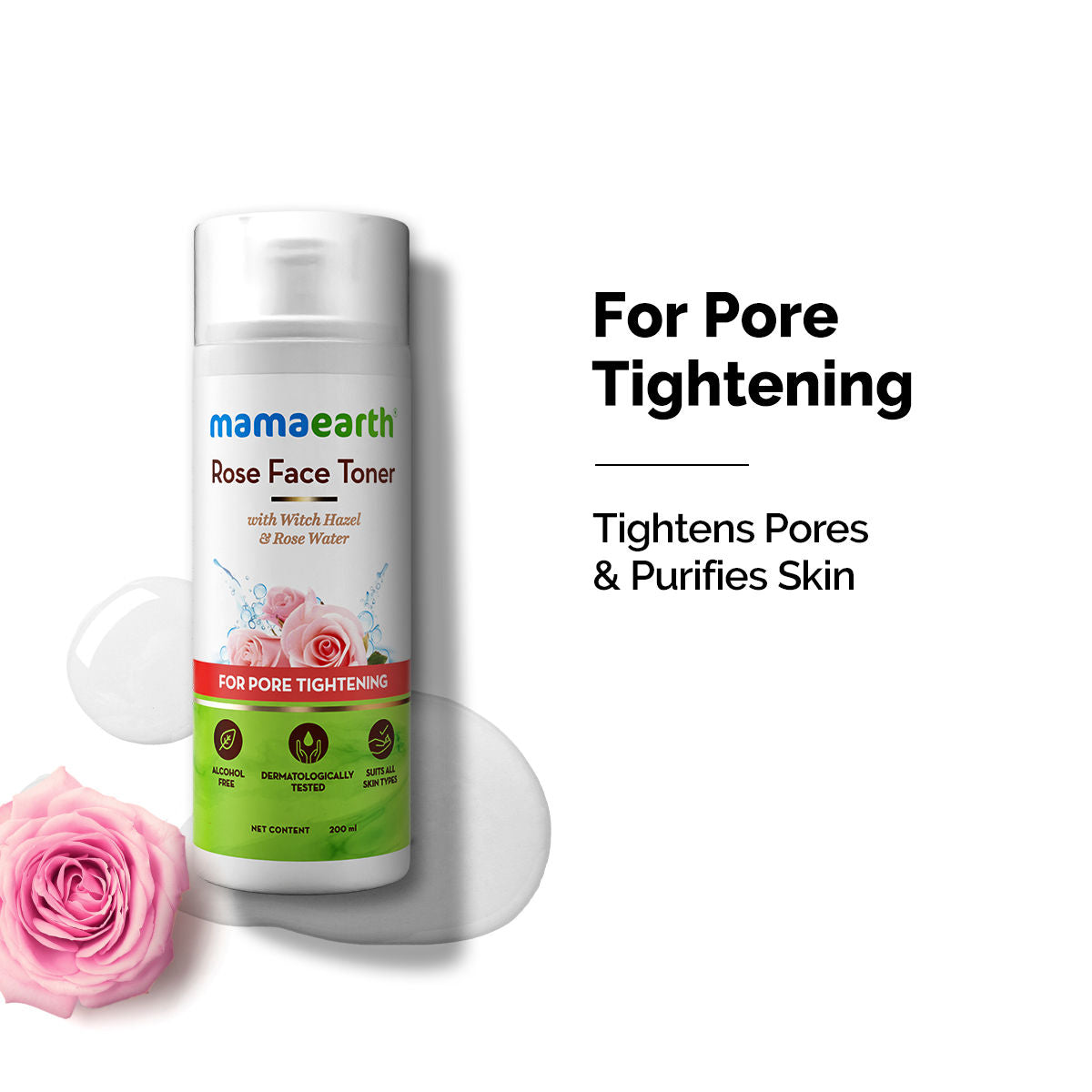
Mamaearth Rose Water Face Toner with Witch Hazel and Rose Water for Pore Tightening (200ml)

Mamaearth Rose Water Face Toner with Witch Hazel and Rose Water for Pore Tightening (200ml)
Nykaa E retail limited
mamaearth-rose-water-face-toner-with-witch-hazel-and-rose-water-for-pore-tightening-200ml
Tone
10084913283365
Morning or Evening?
How often will you use this product?
Notes


Highlights
WHAT IS IT?
Rose Water Face Toner
FEATURES
Pore Tightening
BEST FOR
CHECKS
Who Is It For?
What Does It Help With?
Pore TighteningBudget
Affordable (under $30)How To Use
Which routine should it be used in?
Instructions:
Key Information

About the Brand:
Ingredients Overview
Ingredients List
Aqua, Glycerin, Witch Hazel Extract, Rose Water, Rose Petal Extract, Aloe Vera Juice, Cucumber Extract, Grapefruit Peel Extract, Grapefruit Seed Extract, Sodium Benzoate, Potassium Sorbate & IFRA Certified Allergen-Free Fragrance
Key Ingredients
witch hazel, rose water
Ingredients Details
Cucumber Extract
Common Name(s): Cucumber extract,cucumber juice
DESCRIPTION
What It Does: Soothes and refreshes irritated skin with anti-inflammatory and astringent properties.
Why It's Used: Classic gentle soothing botanical for sensitive skin formulations with astringent, hydrating, and depuffing properties.
How It Works: Caffeic acid inhibits prostaglandin synthesis. cucurbitacins provide anti-inflammatory activity. high water content provides hydration. ascorbic acid provides antioxidant support. silica provides mild astringency.
Typically Found In: Toners,eye gels,sensitive skin products,after-sun formulations
TECHNICAL DETAILS
Primary Category: Active ingredient – soothing / anti-inflammatory
Secondary Functions: Gentle soothing,astringent,depuffing
Application Areas:

Facial Skincare
Body Care

Hair Care
Beard Care
Color Cosmetics (Makeup)
Dietary/Oral Supplements
Typical Concentration Range: 0.5%–20%
SOURCING & ETHICS
Vegan Status: Yes – plant-derived
Halal Status: Yes
Source Notes: Plant-derived extract or synthetic.
SKIN COMPATIBILITY
Irritancy Rating: 1/5 – very low
Comedogenicity Rating: 0/5 – non-comedogenic
Sensitivity Concerns: Non-irritating; ideal for reactive and sensitive skin.
Safe for Sensitive Skin: Yes – particularly recommended for sensitive skin
SAFETY & COMPATIBILITY
Safety Profile: Excellent safety profile. ewg score: 1.
Works Well With: Ceramides,panthenol,allantoin,hyaluronic acid,centella asiatica
Avoid Combining With: No significant incompatibilities
SCIENTIFIC NOTE
Cucumber's traditional use for puffy eyes has a physiological basis – the combination of mild astringency (silica-mediated protein contraction), anti-inflammatory (caffeic acid), and coolness (high water content evaporation) provides a triple-action depuffing effect that explains its enduring use.
Last Verified: Cosing database,cir safety assessment
Primary Sources: 2026-03-12
Glycerin
Common Name(s): Glycerol,glycerine,1,2,3-propanetriol
CAS Number: 56-81-5
DESCRIPTION
What It Does: Glycerin pulls water from the environment and deeper skin layers into the outer skin layer (epidermis), boosting moisture levels and keeping skin soft, smooth, and plump.
Why It's Used: It is used in virtually every moisturizer, serum, and cleanser because it is highly effective at hydrating skin, is well-tolerated by all skin types, and enhances the texture and spreadability of formulations.
How It Works: As a humectant, glycerin forms hydrogen bonds with water molecules, trapping them in the skin. it also reinforces the skin barrier by integrating into lipid structures between skin cells.
Typically Found In: Moisturizers,serums,cleansers,toners,sheet masks,sunscreens,body lotions,shampoos,conditioners
TECHNICAL DETAILS
Primary Category: Humectant
Secondary Functions: Skin barrier support,emollient,solvent
Application Areas:
Facial Skincare
Body Care
Hair Care
Beard Care
Color Cosmetics (Makeup)
Dietary/Oral Supplements
Typical Concentration Range: 1%–30% (typical: 3–10%)
SOURCING & ETHICS
Vegan Status: Yes – plant-derived (coconut, soy, palm) or synthetic
Halal Status: Yes – when plant-derived or synthetic; verify source with supplier
Source Notes: Derived from plant oils via hydrolysis or saponification; synthetic versions also available. palm-derived glycerin carries sustainability concerns.
SKIN COMPATIBILITY
Irritancy Rating: 1/5 – very low; non-irritating at all standard concentrations
Comedogenicity Rating: 0/5 – non-comedogenic
Sensitivity Concerns: Extremely rare allergic reactions; generally safe for all skin types including sensitive and baby skin
Safe for Sensitive Skin: Yes
SAFETY & COMPATIBILITY
Safety Profile: Widely recognized as safe. ewg hazard score: 1. no significant concerns for irritation, sensitization, or toxicity at typical concentrations (up to 50%).
Works Well With: Hyaluronic acid,ceramides,niacinamide,panthenol,urea,peptides,retinol,ahas/bhas
Avoid Combining With: No known incompatibilities at standard concentrations
SCIENTIFIC NOTE
Glycerin is an endogenous skin component found naturally in the stratum corneum. aquaporin-3 channels in keratinocytes facilitate glycerin transport, making it integral to natural skin hydration pathways.
Last Verified: Cosing database,cir safety assessment,ewg skin deep,inci decoder
Primary Sources: 2026-03-12
Grapefruit Peel Extract
Common Name(s): Grapefruit peel extract,botanical extract,phytochemical active
CAS Number: N/a
DESCRIPTION
What It Does: Provides antioxidant protection, anti-inflammatory activity, and skin conditioning.
Why It's Used: Multi-functional phytochemical profiles support concurrent skin care claims with authentic botanical heritage.
How It Works: Polyphenols scavenge ros, inhibit nf-kb/cox pathways, and condition skin through phytochemical interactions.
Typically Found In: Botanical skin care
TECHNICAL DETAILS
Primary Category: Active ingredient – antioxidant
Secondary Functions: Free radical scavenging,anti-aging
Application Areas:
Facial Skincare
Body Care
Hair Care
Beard Care
Color Cosmetics (Makeup)
Dietary/Oral Supplements
Typical Concentration Range: 0.1%–30%
SOURCING & ETHICS
Vegan Status: Conditional
Halal Status: Conditional
Source Notes: Plant-derived extract or synthetic.
SKIN COMPATIBILITY
Irritancy Rating: 1/5 – very low
Comedogenicity Rating: 0/5 – non-comedogenic
Sensitivity Concerns: Non-irritating; well-tolerated.
Safe for Sensitive Skin: Yes
SAFETY & COMPATIBILITY
Safety Profile: Excellent safety profile. ewg score: 1.
Works Well With: Vitamin c,vitamin e,ferulic acid,spf,other antioxidants
Avoid Combining With: No significant incompatibilities
SCIENTIFIC NOTE
Plant secondary metabolites evolved for uv photoprotection and pathogen defence — directly applicable to cosmetic antioxidant and anti-inflammatory activity in human skin.
Last Verified: Cosing database,grapefruit peel extract botanical review
Primary Sources: 2026-03-12
Grapefruit Seed Extract
Common Name(s): Grapefruit seed extract,gse
CAS Number: 90045-43-5
DESCRIPTION
What It Does: Provides grapefruit seed-derived flavonoids and bioflavonoids for antioxidant and antimicrobial activity.
Why It's Used: Natural botanical antioxidant from grapefruit seeds with claimed antimicrobial activity – widely used in natural beauty formulations.
How It Works: Hesperidin and naringenin flavonoids provide antioxidant and anti-inflammatory activity. limonoids provide mild antimicrobial activity. citric acid provides mild keratolytic activity and ph lowering.
Typically Found In: Natural antioxidant products,natural preservative systems,clean beauty
TECHNICAL DETAILS
Primary Category: Active ingredient – antioxidant
Secondary Functions: Free radical scavenging,anti-aging
Application Areas:
Facial Skincare
Body Care
Hair Care
Beard Care
Color Cosmetics (Makeup)
Dietary/Oral Supplements
Typical Concentration Range: 0.1%–5%
SOURCING & ETHICS
Vegan Status: Yes – from citrus paradisi seeds
Halal Status: Yes
Source Notes: Commercial gse's antimicrobial activity has been attributed in studies to synthetic preservative contaminants (benzalkonium chloride, triclosan) rather than natural grapefruit components. high-quality authentic gse without synthetic additives should be verified with full-panel analytical testing.
SKIN COMPATIBILITY
Irritancy Rating: 2/5 – low to moderate; potential citrus sensitization
Comedogenicity Rating: 0/5 – non-comedogenic
Sensitivity Concerns: Citrus sensitizer – patch test recommended for citrus-sensitive individuals.
Safe for Sensitive Skin: Yes
SAFETY & COMPATIBILITY
Safety Profile: Excellent safety profile. ewg score: 1.
Works Well With: Vitamin c,vitamin e,ferulic acid,spf,other antioxidants
Avoid Combining With: No significant incompatibilities
SCIENTIFIC NOTE
Grapefruit seed extract's controversial antimicrobial activity claim was investigated in multiple analytical studies finding that authentic polyphenol-based gse has minimal antimicrobial activity, while commercially available gse products showing antimicrobial activity contained undeclared synthetic preservatives. this highlights the importance of analytical verification for natural preservatives sold on antimicrobial claims.
Last Verified: Cosing database,sakamoto et al. gse controversy study
Primary Sources: 2026-03-12
