

Mamaearth
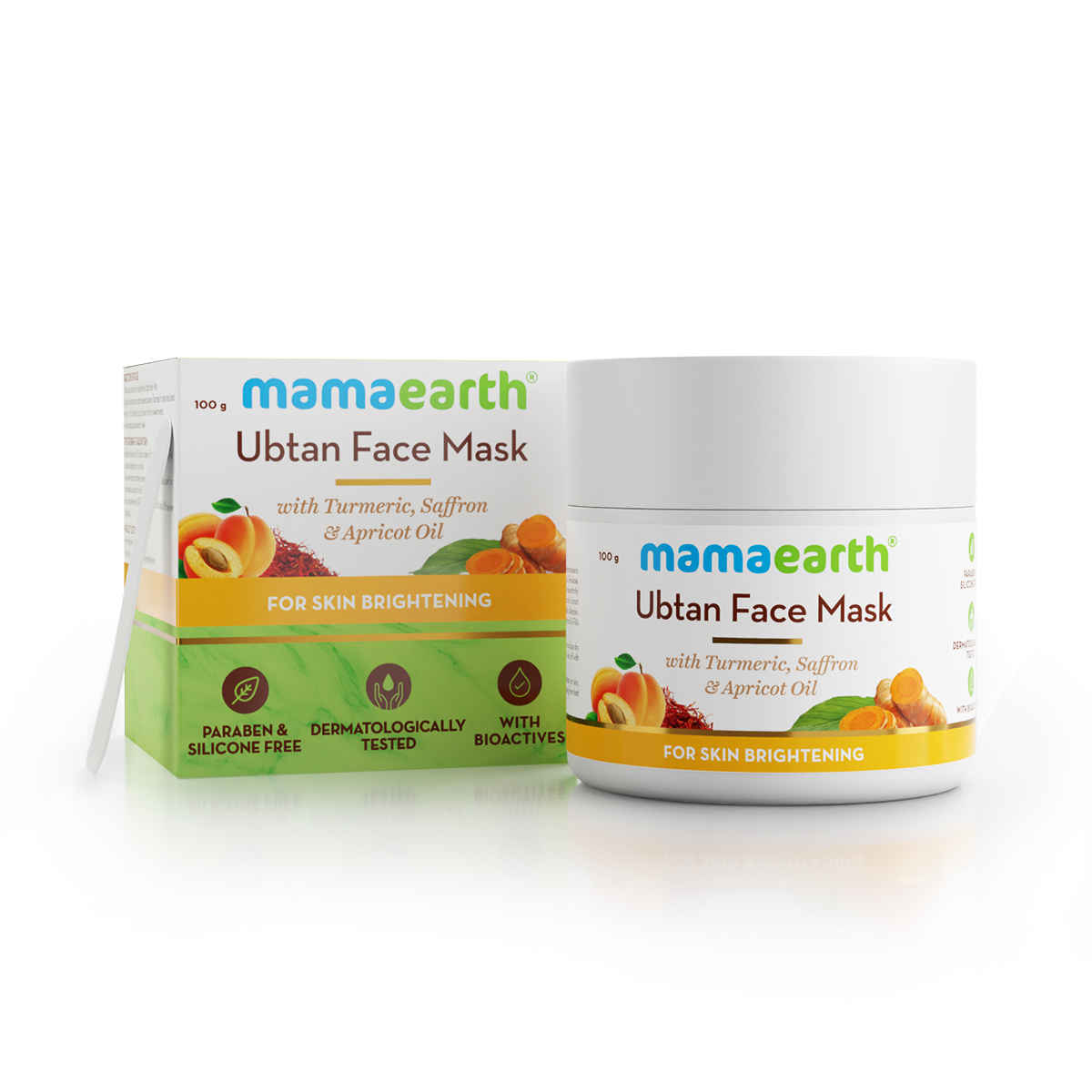
Mamaearth Ubtan Face Mask with Saffron and Turmeric for Skin Brightening and Tan Removal - 100 gm

Mamaearth Ubtan Face Mask with Saffron and Turmeric for Skin Brightening and Tan Removal - 100 gm
Mamaearth
mamaearth-ubtan-face-mask-with-saffron-and-turmeric-for-skin-brightening-and-tan-removal-100-gm
Face Mask
10084940939557
Morning or Evening?
How often will you use this product?
Notes


Highlights
WHAT IS IT?
Face Mask with Saffron and Turmeric
FEATURES
Fresh bright look, Lighter skin tone, Clears spots, Firms and tones skin, Soothes and slows down ageing, Protects skin cells from free radicals, Dermatologically tested, Hypoallergenic
BEST FOR
sensitive
CHECKS
Does not contain SLES, sulfates, phthalates and artificial fragrances
Who Is It For?
All Genders All AgesWhat Does It Help With?
Fairness Tanning Glowing SkinBudget
Mid-range ($30-$75)How To Use
Which routine should it be used in?
Instructions:
Key Information


What Mamaearth Says
Product Description:
Ubtan Face Mask by Mamaearth will give your face a fresh bright look and help you achieve a lighter skin tone. Saffron is known to clear spots and lighten the skin tone which helps in enhancing skin complexion. Apricot oil firms and tones skin & due to Vitamin A and E present in it, it also soothes and slows down the ageing process. Antioxidants in turmeric protect the skin cells from free radical damage and lighten the skin tone. Dermatologically tested & hypoallergenic, it does not contain any harmful chemicals like SLES, sulfates, phthalates and artificial fragrances
About the Brand:
Ingredients Overview
Ingredients List
Aqua, Cetostearyl Alcohol, Cetearyl Olivate, Sorbitan Olivate, Kokum Butter, Apricot Oil, Kaolin, Magnesium Carbonate, Titanium Dioxide, Betonite, Magnesium Aliminium Silicate, Turmeric, Mulberry Extract, Cucumber Extract, Papaya Extract, Basil Oil, Peppermint Oil, Eucalyptus Oil, Chamomile Extract, Sodium Ascorbyl Phosphate, Glycolic Acid, Citric Acid, Saffron Oil, Potassium Sorbate, Hydroxycinnamic Acid, Propylene Glycol Dibenzoate
Key Ingredients
Saffron, Turmeric, Apricot Oil, Vitamin A, Vitamin E
Ingredients Details
Cetearyl Olivate
Common Name(s): Nonionic emulsifier,o/w surfactant,emulsion stabiliser
CAS Number: N/a
DESCRIPTION
What It Does: Stabilises o/w emulsions by forming a molecular monolayer at the oil-water interface, provides co-emulsification synergy with other emulsifiers, and contributes to emulsion texture through interfacial film properties.
Why It's Used: Nonionic emulsifiers are preferred for sensitive skin and ph-extreme formulations — no ionic charge means no electrostatic interaction with skin proteins, no ph-dependent function loss, and compatibility with both anionic and cationic co-ingredients.
How It Works: Hlb determines emulsion type: hlb 8–12 for o/w emulsification; hlb 3–6 for w/o. the peg or glycoside head group provides hydrophilicity while the c16–c18 fatty chain provides lipophilicity. at the o/w interface, nonionic emulsifiers form a mixed monolayer reducing interfacial tension from ~35 mn/m (clean oil-water) to 5–10 mn/m, providing thermodynamic stabilisation.
Typically Found In: Creams,lotions,o/w emulsions
TECHNICAL DETAILS
Primary Category: Active ingredient – cosmetic active
Secondary Functions: Skin conditioning
Application Areas:

Facial Skincare

Body Care
Hair Care
Beard Care
Color Cosmetics (Makeup)
Dietary/Oral Supplements
Typical Concentration Range: 1%–10%
SOURCING & ETHICS
Vegan Status: Conditional - supplier confirmation required
Halal Status: Unverified - supplier confirmation required
Source Notes: Commercially produced for cosmetic use. verify vegan/halal status with supplier. [audit 2026-07-29 rev2: the record's own source_notes does not assert a non-animal origin, or instructs the reader to verify with the supplier; "yes" asserts knowledge the record does not hold. determination requires shariah-panel sign-off.]
SKIN COMPATIBILITY
Irritancy Rating: 1/5 – very low
Comedogenicity Rating: 0/5 – non-comedogenic
Sensitivity Concerns: Well-tolerated by most skin types.
Safe for Sensitive Skin: Yes
SAFETY & COMPATIBILITY
Safety Profile: Good safety profile at recommended concentrations. ewg score: 1–2.
Works Well With: Standard skincare actives
Avoid Combining With: No known significant incompatibilities
SCIENTIFIC NOTE
Mixed emulsifier systems (e.g., glyceryl stearate + peg-100 stearate, or cetearyl glucoside + cetearyl alcohol) provide better emulsion stability than single emulsifiers — synergistic packing of different molecular geometries creates a more cohesive, mechanically robust interfacial film.
Last Verified: 2026-03-12
Primary Sources: Cosing database,nonionic emulsifier hlb system review
Citric Acid
Common Name(s): Lemon acid,2-hydroxypropane-1,2,3-tricarboxylic acid
CAS Number: 77-92-9
DESCRIPTION
What It Does: Adjusts ph to optimal ranges, chelates destabilizing metal ions, provides mild exfoliation at higher concentrations.
Why It's Used: Universal cosmetic ph adjuster and chelating agent. aha exfoliant activity is secondary.
How It Works: As ph adjuster, donates protons. as chelating agent, three carboxylic groups bind divalent metals (ca²⁺, mg²⁺, fe²⁺) preventing oxidative degradation.
Typically Found In: Nearly all cosmetic formulations,brightening products,exfoliants
TECHNICAL DETAILS
Primary Category: Active ingredient – alpha hydroxy acid (aha)
Secondary Functions: Chelating agent,ph adjustment,preservation enhancement
Application Areas:
Facial Skincare
Body Care
Hair Care
Beard Care
Color Cosmetics (Makeup)
Dietary/Oral Supplements
Typical Concentration Range: 0.1%–10%
SOURCING & ETHICS
Vegan Status: Yes – synthetic or fermentation-derived
Halal Status: Yes
Source Notes: Produced by fermentation of sugars by aspergillus niger. gras (e330). most abundant organic acid in citrus.
SKIN COMPATIBILITY
Irritancy Rating: 1/5 – very low at low concentrations; 2/5 at exfoliant concentrations
Comedogenicity Rating: 0/5 – non-comedogenic
Sensitivity Concerns: Photosensitizing – mandatory spf use. start at low frequency.
Safe for Sensitive Skin: Use with caution – spf required
SAFETY & COMPATIBILITY
Safety Profile: Safe at otc concentrations. eu: ≤10% leave-on at ph ≥3.5. mandatory spf advisory.
Works Well With: Niacinamide,ceramides,hyaluronic acid,spf
Avoid Combining With: Retinol in same step; multiple exfoliants simultaneously
SCIENTIFIC NOTE
Three carboxylic acid groups provide multiple proton donation sites and stronger chelation than monocarboxylic ahas. this makes citric acid the preferred cosmetic chelating agent alongside edta.
Last Verified: 2026-03-12
Primary Sources: Cosing database,cir safety assessment,ewg skin deep
Cucumber Extract
Common Name(s): Cucumber extract,cucumber juice
DESCRIPTION
What It Does: Soothes and refreshes irritated skin with anti-inflammatory and astringent properties.
Why It's Used: Classic gentle soothing botanical for sensitive skin formulations with astringent, hydrating, and depuffing properties.
How It Works: Caffeic acid inhibits prostaglandin synthesis. cucurbitacins provide anti-inflammatory activity. high water content provides hydration. ascorbic acid provides antioxidant support. silica provides mild astringency.
Typically Found In: Toners,eye gels,sensitive skin products,after-sun formulations
TECHNICAL DETAILS
Primary Category: Active ingredient – soothing / anti-inflammatory
Secondary Functions: Gentle soothing,astringent,depuffing
Application Areas:
Facial Skincare
Body Care
Hair Care
Beard Care
Color Cosmetics (Makeup)
Dietary/Oral Supplements
Typical Concentration Range: 0.5%–20%
SOURCING & ETHICS
Vegan Status: Yes – plant-derived
Halal Status: Yes
Source Notes: Plant-derived extract or synthetic.
SKIN COMPATIBILITY
Irritancy Rating: 1/5 – very low
Comedogenicity Rating: 0/5 – non-comedogenic
Sensitivity Concerns: Non-irritating; ideal for reactive and sensitive skin.
Safe for Sensitive Skin: Yes – particularly recommended for sensitive skin
SAFETY & COMPATIBILITY
Safety Profile: Excellent safety profile. ewg score: 1.
Works Well With: Ceramides,panthenol,allantoin,hyaluronic acid,centella asiatica
Avoid Combining With: No significant incompatibilities
SCIENTIFIC NOTE
Cucumber's traditional use for puffy eyes has a physiological basis – the combination of mild astringency (silica-mediated protein contraction), anti-inflammatory (caffeic acid), and coolness (high water content evaporation) provides a triple-action depuffing effect that explains its enduring use.
Last Verified: 2026-03-12
Primary Sources: Cosing database,cir safety assessment
Eucalyptus Oil
Common Name(s): Eucalyptus oil,blue gum oil,camphor eucalyptus
CAS Number: 8000-48-4
DESCRIPTION
What It Does: Provides eucalyptol anti-inflammatory and antimicrobial activity with characteristic camphoraceous clean scent.
Why It's Used: The respiratory wellness essential oil – eucalyptus oil's 1,8-cineole provides clinically validated mucolytic and bronchodilatory activity for respiratory symptom relief in topical chest rubs.
How It Works: 1,8-cineole (eucalyptol, 55-80%) activates trpm8 (cooling) and inhibits leukotriene synthesis (anti-inflammatory). antimicrobial via cineole membrane permeabilisation. mucolytic via mucus hydration improvement.
Typically Found In: Cooling products,respiratory relief,scalp treatments,men's grooming
TECHNICAL DETAILS
Primary Category: Active ingredient – soothing / anti-inflammatory
Secondary Functions: Redness reduction,anti-inflammatory,calming
Application Areas:
Facial Skincare
Body Care
Hair Care
Beard Care
Color Cosmetics (Makeup)
Dietary/Oral Supplements
Typical Concentration Range: 0.001%–2%
SOURCING & ETHICS
Vegan Status: Yes – from eucalyptus globulus leaves
Halal Status: Yes
Source Notes: Plant-derived extract or synthetic.
SKIN COMPATIBILITY
Irritancy Rating: 1/5 – very low
Comedogenicity Rating: 0/5 – non-comedogenic
Sensitivity Concerns: Non-irritating; ideal for reactive and sensitive skin.
Safe for Sensitive Skin: Yes – particularly recommended for sensitive skin
SAFETY & COMPATIBILITY
Safety Profile: Eu: avoid near eyes and face of infants/children under 2 due to trpv1/trpm8 stimulation. toxic if ingested.
Works Well With: Ceramides,panthenol,allantoin,hyaluronic acid,centella asiatica
Avoid Combining With: No significant incompatibilities
SCIENTIFIC NOTE
1,8-cineole's mucolytic mechanism involves penetration through bronchial epithelium membranes and direct activation of mucociliary transport (increased cilia beat frequency and mucus hydration). clinical studies for orally dosed cineole in bronchitis show equivalent efficacy to pharmaceutical mucolytics – one of the best-characterised pharmacological mechanisms for a fragrance compound's therapeutic effect.
Last Verified: 2026-03-12
Primary Sources: Cosing database,ifra standards,juergens et al. cineole anti-inflammatory study