

Nykaa E retail limited
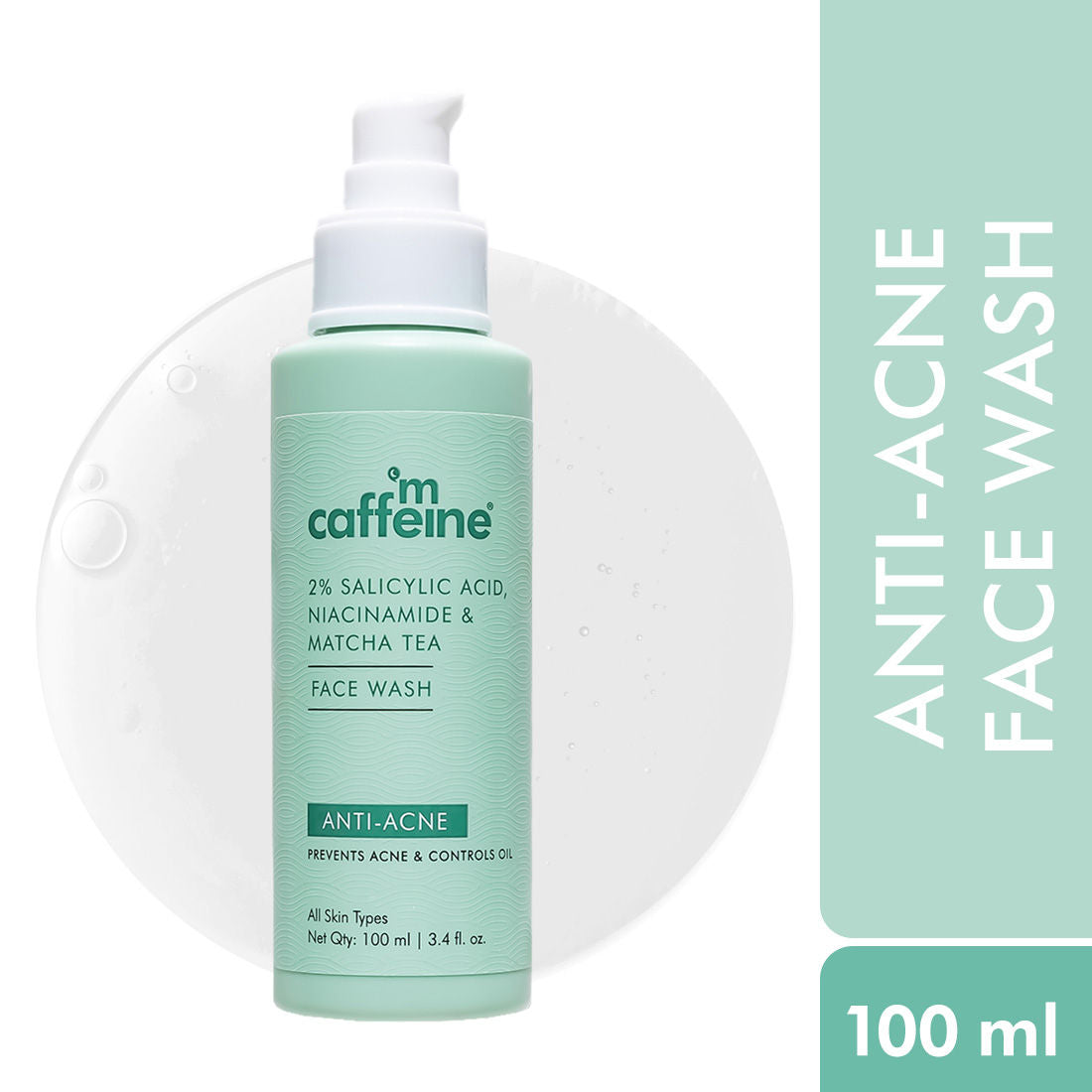
MCaffeine 2% Salicylic Acid Anti Acne Face Wash With Niacinamide & Matcha Tea, For Oil Control

MCaffeine 2% Salicylic Acid Anti Acne Face Wash With Niacinamide & Matcha Tea, For Oil Control
Nykaa E retail limited
mcaffeine-2-salicylic-acid-anti-acne-face-wash-with-niacinamide-matcha-tea-for-oil-control
Cleanse
10084964401445
Morning or Evening?
How often will you use this product?
Notes


Highlights
WHAT IS IT?
Face Wash with 2% Salicylic Acid and Niacinamide
FEATURES
Anti-acne, Oil control properties
BEST FOR
oily
CHECKS
Who Is It For?
All Ages With Oily Acne-prone SkinWhat Does It Help With?
Acne Control Oil ControlBudget
Affordable (under $30)How To Use
Which routine should it be used in?
Instructions:
Key Information


What Nykaa E retail limited Says
Product Description:
Face wash with 2% Salicylic Acid, Niacinamide, and Matcha Tea for oil control and acne treatment
About the Brand:
Ingredients Overview
Ingredients List
Aqua (Water), Decyl Glucoside, Caprylyl/capryl Glucoside, Glycerin, Salicylic Acid, Niacinamide, Trehalose, Camellia Sinensis (Matcha Tea) Leaf Extract, Xanthan Gum, Sodium Hydroxide, Capryloyl Glycine, Undecylenoyl Glycine, Phenoxyethanol, Benzoic Acid
Key Ingredients
Salicylic Acid 2%, Niacinamide, Matcha Tea
Ingredients Details
Benzoic Acid
Common Name(s): Cosmetic preservative,microbial growth inhibitor,product stability agent
CAS Number: N/a
DESCRIPTION
What It Does: Prevents microbial contamination that would otherwise render water-containing cosmetics unsafe — inhibiting bacterial, fungal, and yeast growth through membrane disruption, enzyme inhibition, or metabolic interference at permitted regulatory concentrations.
Why It's Used: Preservatives are safety-critical — un-preserved water-containing cosmetics can develop dangerous microbial contamination (pseudomonas aeruginosa eye infections, s. aureus skin infections) within days. preservation is a regulatory requirement, not an optional enhancement.
How It Works: Mechanism varies by class: organic acids (benzoic, dehydroacetic) disrupt intracellular ph in bacteria and fungi by proton flux across membranes; parabens inhibit membrane-associated enzyme function; chlorhexidine disrupts bacterial and fungal membrane integrity through divalent ion chelation of membrane phospholipids.
Typically Found In: All aqueous formulations
TECHNICAL DETAILS
Primary Category: Active ingredient – cosmetic active
Secondary Functions: Skin conditioning
Application Areas:

Facial Skincare

Body Care
Hair Care
Beard Care
Color Cosmetics (Makeup)
Dietary/Oral Supplements
Typical Concentration Range: Check annex v eu limits
SOURCING & ETHICS
Vegan Status: Conditional - supplier confirmation required
Halal Status: Unverified - supplier confirmation required
Source Notes: Commercially produced for cosmetic use. verify vegan/halal status with supplier. [audit 2026-07-29 rev2: the record's own source_notes does not assert a non-animal origin, or instructs the reader to verify with the supplier; "yes" asserts knowledge the record does not hold. determination requires shariah-panel sign-off.]
SKIN COMPATIBILITY
Irritancy Rating: 1/5 – very low
Comedogenicity Rating: 0/5 – non-comedogenic
Sensitivity Concerns: Well-tolerated by most skin types.
Safe for Sensitive Skin: Yes
SAFETY & COMPATIBILITY
Safety Profile: Good safety profile at recommended concentrations. ewg score: 1–2.
Works Well With: Standard skincare actives
Avoid Combining With: No known significant incompatibilities
SCIENTIFIC NOTE
Eu regulation 1223/2009 annex v lists all permitted preservatives with maximum concentrations — preservatives not listed are prohibited. formulators must verify both permitted status and maximum concentration for each market before finalising preservation systems.
Last Verified: 2026-03-12
Primary Sources: Eu regulation 1223/2009 annex v,cosmetic preservative regulatory review
Capryloyl Glycine
Common Name(s): N-capryloyl glycine,dermosoft gmcy
CAS Number: 14246-53-8
DESCRIPTION
What It Does: Provides antimicrobial and sebum-regulating activity from naturally-derived caprylic acid-glycine conjugate.
Why It's Used: Natural multifunctional antimicrobial — capryloyl glycine's anti-seborrheic and antimicrobial dual action provides comprehensive oily skin and anti-dandruff benefits from a single naturally-sourced ingredient.
How It Works: Acyl glycine conjugate provides antimicrobial via fatty acid membrane disruption mechanism. inhibits lipase enzyme reducing sebum fatty acid liberation (sebum regulation). mild surfactant from carboxylate head group. anti-dandruff via malassezia inhibition.
Typically Found In: Anti-seborrheic products,natural antimicrobials,anti-dandruff
TECHNICAL DETAILS
Primary Category: Functional ingredient – acyl amino acid surfactant/preservative
Secondary Functions: Skin conditioning
Application Areas:
Facial Skincare
Body Care
Hair Care
Beard Care
Color Cosmetics (Makeup)
Dietary/Oral Supplements
Typical Concentration Range: 0.5%–2%
SOURCING & ETHICS
Vegan Status: Conditional - feedstock declaration required
Halal Status: Unverified - feedstock declaration required (plant, animal and petrochemical routes all exist)
Source Notes: Commercially produced for cosmetic use. verify vegan/halal status with supplier. [audit 2026-07-29 rev2: origin-dependent: the same inci exists in plant, animal and petrochemical versions and the name does not discriminate. determination requires shariah-panel sign-off.]
SKIN COMPATIBILITY
Irritancy Rating: 1/5 – very low
Comedogenicity Rating: 0/5 – non-comedogenic
Sensitivity Concerns: Well-tolerated by most skin types.
Safe for Sensitive Skin: Yes
SAFETY & COMPATIBILITY
Safety Profile: Good safety profile at recommended concentrations. ewg score: 1–2.
Works Well With: Standard skincare actives
Avoid Combining With: No known significant incompatibilities
SCIENTIFIC NOTE
Capryloyl glycine's sebum regulation via lipase inhibition mirrors the same mechanism as triethyl citrate and ethylhexylglycerin — convergent mechanism discovery across structurally diverse ingredient classes. the parallel lipase inhibition by ester-based (triethyl citrate), ether-based (ethylhexylglycerin), and amide-based (capryloyl glycine) compounds validates lipase inhibition as a universally accessible target for sebum control through multiple chemical approaches.
Last Verified: 2026-03-12
Primary Sources: Cosing database,schülke dermosoft gmcy technical data
Caprylyl/capryl Glucoside
Common Name(s): C8-c10 apg,light cleansing glucoside,natural light cleanser
CAS Number: N/a
DESCRIPTION
What It Does: Provides the lightest apg mild cleansing for facial and micellar applications.
Why It's Used: Light facial apg cleanser — c8-c10 short chain apg provides the mildest, lightest-rinse apg cleansing suited for everyday facial washing and micellar water formulation where heavier c12-c16 apgs leave residue.
How It Works: Caprylyl (c8) + capryl (c10) glucose glucoside: short chain apg. very gentle: non-ionic + short chain. very fast rinse: short chain high solubility. micellar: compatible as non-ionic surfactant. cosmos. minimal skin feel.
Typically Found In: Micellar water,gentle facial cleanser,daily cosmos wash
TECHNICAL DETAILS
Primary Category: Active ingredient – cosmetic active
Secondary Functions: Skin conditioning
Application Areas:
Facial Skincare
Body Care
Hair Care
Beard Care
Color Cosmetics (Makeup)
Dietary/Oral Supplements
Typical Concentration Range: 2%–15%
SOURCING & ETHICS
Vegan Status: Conditional - supplier confirmation required
Halal Status: Unverified - supplier confirmation required
Source Notes: Commercially produced for cosmetic use. verify vegan/halal status with supplier. [audit 2026-07-29 rev2: the record's own source_notes does not assert a non-animal origin, or instructs the reader to verify with the supplier; "yes" asserts knowledge the record does not hold. determination requires shariah-panel sign-off.]
SKIN COMPATIBILITY
Irritancy Rating: 1/5 – very low
Comedogenicity Rating: 0/5 – non-comedogenic
Sensitivity Concerns: Well-tolerated by most skin types.
Safe for Sensitive Skin: Yes
SAFETY & COMPATIBILITY
Safety Profile: Good safety profile at recommended concentrations. ewg score: 1–2.
Works Well With: Standard skincare actives
Avoid Combining With: No known significant incompatibilities
SCIENTIFIC NOTE
C8-c10 apg lighter rinse vs c12-c16 from cmc differences: shorter chain apgs have higher cmc (critical micelle concentration) → less tendency to remain on skin post-rinse as micelles vs monomer ratio favours monomer at post-rinse dilution. this higher cmc means c8-c10 apg leaves less surfactant residue on skin post-rinsing vs longer chain apgs, providing the faster 'clean rinse' sensation.
Last Verified: 2026-03-12
Primary Sources: Cosing database,short-chain apg technical literature
Decyl Glucoside
Common Name(s): Capryl glucoside,apg surfactant,alkyl polyglucoside
CAS Number: 68515-73-1
DESCRIPTION
What It Does: Provides gentle non-ionic cleansing from natural glucose-derived surfactant chemistry.
Why It's Used: Leading natural-origin surfactant for green/natural formulations requiring gentle, non-ionic cleansing with excellent biodegradability credentials.
How It Works: Non-ionic surfactant with glucoside headgroup and decyl (c10) chain provides mild cleansing via micelle formation. non-ionic character provides lower irritation potential than anionic surfactants. fully biodegradable and from renewable sources.
Typically Found In: Natural cleansers,baby products,green beauty formulas,scalp cleansers
TECHNICAL DETAILS
Primary Category: Functional ingredient – alkyl glucoside surfactant
Secondary Functions: Skin conditioning
Application Areas:
Facial Skincare
Body Care
Hair Care
Beard Care
Color Cosmetics (Makeup)
Dietary/Oral Supplements
Typical Concentration Range: 2%–20%
SOURCING & ETHICS
Vegan Status: Conditional - supplier confirmation required
Halal Status: Unverified - supplier confirmation required
Source Notes: Commercially produced for cosmetic use. verify vegan/halal status with supplier. [audit 2026-07-29 rev2: the record's own source_notes does not assert a non-animal origin, or instructs the reader to verify with the supplier; "yes" asserts knowledge the record does not hold. determination requires shariah-panel sign-off.]
SKIN COMPATIBILITY
Irritancy Rating: 1/5 – very low
Comedogenicity Rating: 0/5 – non-comedogenic
Sensitivity Concerns: Well-tolerated by most skin types.
Safe for Sensitive Skin: Yes
SAFETY & COMPATIBILITY
Safety Profile: Good safety profile at recommended concentrations. ewg score: 1–2.
Works Well With: Standard skincare actives
Avoid Combining With: No known significant incompatibilities
SCIENTIFIC NOTE
Alkyl glucosides' (apgs) non-ionic character means they have no electrical charge that could interact with skin surface proteins and phospholipids – a key reason for their exceptional mildness. ionic surfactants (sulfates, carboxylates) bind to positively charged protein lysine/arginine residues causing denaturation; apgs have no such binding affinity.
Last Verified: 2026-03-12
Primary Sources: Cosing database,cir safety assessment