

TenO' Clock Naturals PVT.
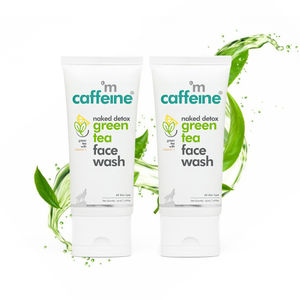
mCaffeine Green Tea Face Wash Pack of 2 (50ml)

mCaffeine Green Tea Face Wash Pack of 2 (50ml)
TenO' Clock Naturals PVT.
mcaffeine-green-tea-face-wash-pack-of-2-50ml
Cleanse
10084937564453
Morning or Evening?
How often will you use this product?
Notes


Highlights
WHAT IS IT?
Face Wash with multiple active ingredients (Green Tea, Vitamin C, Hyaluronic Acid, Caffeine)
FEATURES
Detoxifies skin, removes dirt and impurities, fights free radicals, anti-inflammatory, tones and soothes skin, hydrates and conditions skin, gentle foaming formula, dermatologically tested, pH balanced, paraben-free, suitable for all skin types
BEST FOR
all skin types
CHECKS
Free from SLS, SLES, Silicones, Paraben
Who Is It For?
Mature Skin All Genders No Specific Age Range MentionedWhat Does It Help With?
Skin Impurities Dark Spots Fights Free Radicals Tones Skin HydratesBudget
Affordable (under $30)How To Use
Which routine should it be used in?
Instructions:
Key Information

What TenO' Clock Naturals PVT. Says
Product Description:
The escape for your face is here - the mCaffeine Naked Detox Green Tea Face Wash. Enriched with Green Tea, this face wash will help you achieve the perfect detox for your face after a long day or before you head out. It not only will remove all the dirt and impurities from the face but also fight free radicals as it is rich in antioxidants. Bask in the relaxing & calming aroma of this face wash as you apply it to replenish your skin. At the heart of this face wash is Green tea which is rich in antioxidants that fight free radicals. The green tea in this face wash also has anti-inflammatory effects. An addition to the remarkable properties of Green Tea is that it is a natural source of Caffeine. The caffeine in green tea tones & soothes the skin and gives a healthy glow. This face wash also has Vitamin C which reverses the effects of the damage caused by the harmful rays of the sun; while relieving dark spots. The Hyaluronic Acid in the face wash hydrates and conditions the skin. The gentle foaming formula is free from SLS, SLES, and Silicones. Not only this, the face wash is dermatologically tested, Paraben-free and pH balanced for taking gentle yet effective care of your skin. Designed to suit all skin types, the mCaffeine Naked Detox Green Tea Face Wash is ideal for a deep cleanse every day. Add it to your morning and evening face care regime for a quick burst of freshness.
About the Brand:
Ingredients Overview
Ingredients List
Aqua, Sodium Lauroyl Sarcosinate, Acrylate Copolymer, Aqua, Sodium Hydroxide, Cocamidopropyl betaine, Sodium Cocoyl Apple Amino Acid, Phenoxyethanol & Ethylhexylglycerin, Green Tea Extract, Perfume, Xylitylglucoside (and) Anhydroxylitol (and) Xylitol, Glycolic Acid, Capryloyl Glycine (and) Sarcosine (and) Cinnamomum, Zeylanicum Bark Extract, Perfume, Magnesium Ascorbyl Phosphate (Vitamin C) , Caffeine, Disodium Dihydrogen Ethylenediaminetetraacetate, Hyaluronic Acid, Color
Key Ingredients
Green Tea, Vitamin C, Hyaluronic Acid, Caffeine
Ingredients Details
Caffeine
Common Name(s): Caffeine,methylxanthine anti-cellulite,antioxidant vasoactive
CAS Number: N/a
DESCRIPTION
What It Does: Stimulates lipolysis in adipocytes by inhibiting phosphodiesterase (preventing camp breakdown), reduces eye puffiness through vasoconstriction of periorbital capillaries, and provides antioxidant dna repair stimulation for photoprotective benefit.
Why It's Used: The only cosmetic active with a well-defined mechanism for anti-cellulite claims — phosphodiesterase inhibition elevating adipocyte camp is the documented biochemical pathway, providing mechanism-based efficacy substantiation superior to most slimming actives.
How It Works: Caffeine inhibits phosphodiesterase (pde3, pde4) preventing camp hydrolysis → elevated camp activates protein kinase a → phosphorylates hormone-sensitive lipase → lipolysis of triglycerides in adipocytes. for eye puffiness: caffeine's adenosine receptor antagonism reduces prostaglandin-mediated capillary dilation in periorbital tissue, reducing fluid accumulation.
Typically Found In: Anti-cellulite,eye creams,antioxidant products
TECHNICAL DETAILS
Primary Category: Active ingredient – antioxidant
Secondary Functions: Free radical scavenging,anti-aging
Application Areas:

Facial Skincare
Body Care

Hair Care
Beard Care
Color Cosmetics (Makeup)
Dietary/Oral Supplements
Typical Concentration Range: 0.1%–3%
SOURCING & ETHICS
Vegan Status: Yes
Halal Status: Yes
Source Notes: Plant-derived extract or synthetic.
SKIN COMPATIBILITY
Irritancy Rating: 1/5 – very low
Comedogenicity Rating: 0/5 – non-comedogenic
Sensitivity Concerns: Non-irritating; well-tolerated.
Safe for Sensitive Skin: Yes
SAFETY & COMPATIBILITY
Safety Profile: Excellent safety profile. ewg score: 1.
Works Well With: Vitamin c,vitamin e,ferulic acid,spf,other antioxidants
Avoid Combining With: No significant incompatibilities
SCIENTIFIC NOTE
Caffeine has one of the highest sc penetration rates of any cosmetic active (logp -0.07, mw 194 da) — the combination of small size and moderate logp providing excellent aqueous solubility with sufficient sc lipid partitioning for effective transdermal delivery to adipose tissue.
Last Verified: Cosing database,caffeine pde inhibitor anti-cellulite lipolysis review
Primary Sources: 2026-03-12
Cocamidopropyl Betaine
Common Name(s): Capb,cocoamidopropyl betaine,coconut betaine
CAS Number: 61789-40-0
DESCRIPTION
What It Does: Boosts foam, enhances mildness, and conditions skin and hair when combined with primary surfactants.
Why It's Used: The standard foam booster and mildness enhancer in virtually all shampoos, body washes, and facial cleansers – provides synergistic mildness improvement with anionic surfactants.
How It Works: Amphoteric (zwitterionic) character provides positive charge interaction with hair keratin for antistatic conditioning. reduces irritation of co-formulated anionic surfactants via ionic complex formation. foam stabilization via bilayer reinforcement in foam lamellae.
Typically Found In: Shampoos,body washes,facial cleansers,baby products
TECHNICAL DETAILS
Primary Category: Functional ingredient – amphoteric surfactant
Secondary Functions: Skin conditioning
Application Areas:
Facial Skincare
Body Care
Hair Care
Beard Care
Color Cosmetics (Makeup)
Dietary/Oral Supplements
Typical Concentration Range: 2%–15%
SOURCING & ETHICS
Vegan Status: Yes – from coconut fatty acids and dimethylaminopropylamine
Halal Status: Yes
Source Notes: Commercially produced for cosmetic use. verify vegan/halal status with supplier.
SKIN COMPATIBILITY
Irritancy Rating: 1/5 – very low
Comedogenicity Rating: 0/5 – non-comedogenic
Sensitivity Concerns: Well-tolerated by most skin types.
Safe for Sensitive Skin: Yes
SAFETY & COMPATIBILITY
Safety Profile: Good safety profile at recommended concentrations. ewg score: 1–2.
Works Well With: Standard skincare actives
Avoid Combining With: No known significant incompatibilities
SCIENTIFIC NOTE
Capb's mildness-enhancing synergy with sls has a molecular mechanism: capb's positive imidazoline head group forms an ion pair complex with sls's anionic sulfate group, reducing sls's free monomer concentration (the irritation-causing species) without significantly reducing micelle-forming capacity (the cleansing species).
Last Verified: Cosing database,ananthapadmanabhan surfactant review,cir safety assessment
Primary Sources: 2026-03-12
Glycolic Acid
Common Name(s): Hydroxyacetic acid,2-hydroxyacetic acid
CAS Number: 79-14-1
DESCRIPTION
What It Does: Provides maximum aha efficacy from the smallest most penetrating alpha-hydroxy acid.
Why It's Used: The most potent aha — glycolic acid's smallest molecular size provides the deepest penetration and highest efficacy of any alpha-hydroxy acid for exfoliation and anti-aging.
How It Works: Smallest aha (mw 76) provides deepest stratum corneum penetration. disrupts corneodesmosomes reducing cohesion. stimulates fibroblast collagen i and iii synthesis. efficacy is ph-dependent — free acid fraction determines activity.
Typically Found In: Chemical peels,body lotions,anti-aging serums,exfoliating toners
TECHNICAL DETAILS
Primary Category: Active ingredient – primary aha
Secondary Functions: Brightening,collagen stimulation
Application Areas:
Facial Skincare
Body Care
Hair Care
Beard Care
Color Cosmetics (Makeup)
Dietary/Oral Supplements
Typical Concentration Range: 1%–10% cosmetic; higher professional
SOURCING & ETHICS
Vegan Status: Yes – synthetic or fermentation-derived
Halal Status: Yes
Source Notes: Fermentation-derived or synthetic. ph must be ≤4.0 for aha activity.
SKIN COMPATIBILITY
Irritancy Rating: 2/5 – low to moderate
Comedogenicity Rating: 0/5 – non-comedogenic
Sensitivity Concerns: Photosensitizing – mandatory spf use. start at low frequency.
Safe for Sensitive Skin: Use with caution – spf required
SAFETY & COMPATIBILITY
Safety Profile: Eu cosmetics: max 10% leave-on, ph ≥3.5, mandatory sun protection advisory. professional peel concentrations regulated separately.
Works Well With: Niacinamide,ceramides,hyaluronic acid,spf
Avoid Combining With: Retinol in same step; multiple exfoliants simultaneously
SCIENTIFIC NOTE
Glycolic acid's ph-dependent efficacy is critical: at ph 3.0 ~100% is in the free acid (membrane-permeable) form; at ph 3.5 ~70%; at ph 4.0 ~50%. the eu ph ≥3.5 requirement reduces free acid proportion, lowering efficacy but also reducing irritation — why professional peel concentrations at lower ph are far more active than equivalent cosmetic concentrations.
Last Verified: Cosing database,eu aha guidelines,cir safety assessment
Primary Sources: 2026-03-12
Hyaluronic Acid
Common Name(s): Ha,sodium hyaluronate (salt form),hyaluronan,d-glucuronic acid-n-acetyl-d-glucosamine polymer
CAS Number: 9004-61-9
DESCRIPTION
What It Does: Hyaluronic acid draws and locks moisture into the skin at multiple depths (surface and deeper layers depending on molecular weight), creating a plumping, smoothing, and hydrating effect.
Why It's Used: It is used because it is endogenous to human skin, making it exceptionally biocompatible and non-irritating. its unparalleled moisture-binding capacity makes it the most effective hydrating ingredient available.
How It Works: Ha binds water molecules through its many hydroxyl and carboxyl groups, creating a gel-like matrix. high molecular weight ha (>500 kda) hydrates the skin surface; low molecular weight ha (<50 kda) penetrates deeper to provide interior hydration.
Typically Found In: Serums,moisturizers,sheet masks,toners,eye creams,lip treatments,dermal fillers (injectable)
TECHNICAL DETAILS
Primary Category: Active ingredient – humectant/hydrator
Secondary Functions: Barrier repair,plumping,anti-aging
Application Areas:
Facial Skincare
Body Care
Hair Care
Beard Care
Color Cosmetics (Makeup)
Dietary/Oral Supplements
Typical Concentration Range: 0.1%–2% (effective at very low concentrations; multi-weight ha provides superior results)
SOURCING & ETHICS
Vegan Status: Yes – biotechnology-derived (microbial fermentation of streptococcus equi or b. subtilis); vegan-certified versions widely available
Halal Status: Yes
Source Notes: Originally extracted from rooster combs; now predominantly produced via biotechnology (bacterial fermentation), which is vegan and more sustainable.
SKIN COMPATIBILITY
Irritancy Rating: 1/5 – very low; one of the gentlest skincare ingredients known
Comedogenicity Rating: 0/5 – non-comedogenic
Sensitivity Concerns: In very dry environments, high-molecular-weight ha on the surface can potentially draw moisture out of the skin if not sealed with an occlusive. apply to damp skin and seal with moisturizer.
Safe for Sensitive Skin: Yes – ideal for all skin types including rosacea, eczema, and post-procedure skin
SAFETY & COMPATIBILITY
Safety Profile: Exceptional safety profile. endogenous molecule – no toxicity concerns. ewg hazard score: 1. safe during pregnancy.
Works Well With: Virtually all ingredients; especially ceramides,glycerin,peptides,retinol (reduces irritation),niacinamide,vitamin c
Avoid Combining With: No significant incompatibilities; high concentrations of alcohol in a formula may reduce its efficacy
SCIENTIFIC NOTE
Hyaluronic acid naturally degrades in skin (half-life ~1–2 days). the skin produces it endogenously, but production decreases with age. multi-molecular-weight ha formulas provide hydration at both surface and deeper skin levels.
Last Verified: Cosing database,cir safety assessment,papakonstantinou et al. (2012) dermato-endocrinology
Primary Sources: 2026-03-12
