

Medicube
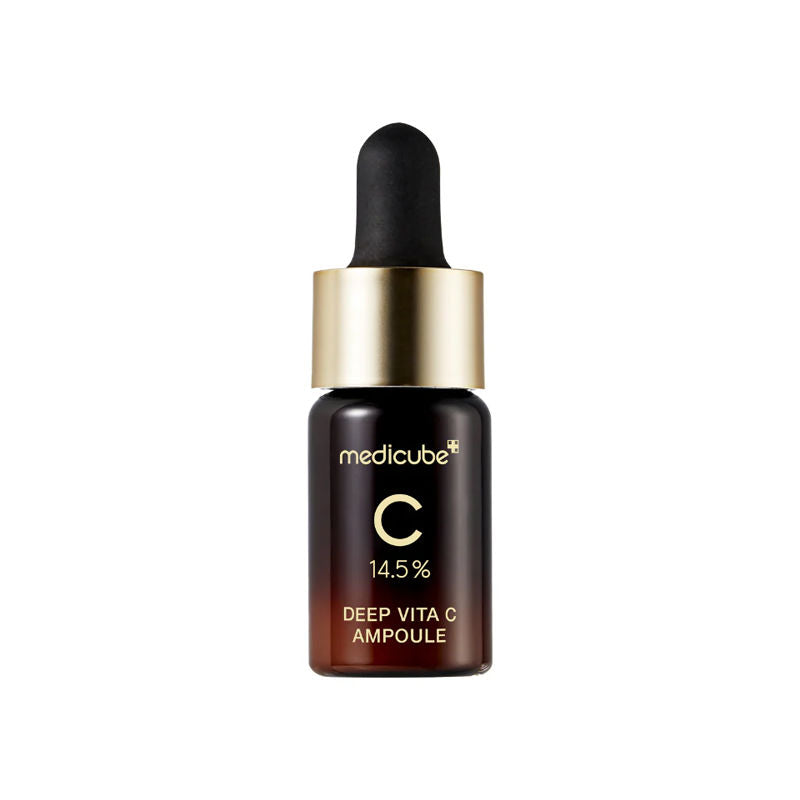
Medicube Deep Vita C Ampoule

Medicube Deep Vita C Ampoule
Medicube
medicube-deep-vita-c-ampoule
Serum
10084736237861
Morning or Evening?
How often will you use this product?
Notes


Highlights
WHAT IS IT?
Ampoule serum with high concentration vitamin C
FEATURES
Reduces dark spots and hyperpigmentation, High concentration of vitamin C brightens skin and evens tone, Antioxidant properties protect skin from environmental stress and aging, Promotes collagen synthesis for improved elasticity and firmness, Reduces fine lines and wrinkles for smoother, plumper skin
BEST FOR
normal
CHECKS
No harmful additives, fragrance present but tag Fragrance-free used as ingredient in low amount
Who Is It For?
All Genders Suitable For All Skin TypesWhat Does It Help With?
Dark Spots Hyperpigmentation Uneven Skin Tone Fine Lines Wrinkles Skin Elasticity And FirmnessBudget
Premium ($76-$150)How To Use
Which routine should it be used in?
Instructions:
Key Information


What Medicube Says
Product Description:
Medicube Deep Vita C Ampoule 2.0 is a potent skincare treatment designed to brighten and rejuvenate the skin. Packed with high-concentration vitamin C, this ampoule targets dark spots, hyperpigmentation, and uneven skin tone, leaving the complexion radiant and clear. The formula helps to reduce the appearance of fine lines and wrinkles while providing powerful antioxidant protection against environmental stressors. Each ampoule contains a concentrated dose of vitamin C, which penetrates deeply into the skin to promote collagen production, improve skin elasticity, and enhance overall skin texture. The lightweight, fast-absorbing texture makes it easy to incorporate into any skincare routine, whether as a targeted treatment or as part of your daily regimen. Ideal for all skin types, particularly those seeking to brighten and revitalize their skin, Deep Vita C Ampoule 2.0 delivers a glowing, youthful complexion. With consistent use, it helps achieve smoother, firmer, and more luminous skin.
About the Brand:
Ingredients Overview
Ingredients List
Water,Ascorbic-Acid,Butylene-Glycol,Dipropylene-Glycol,Propanediol,Dicaprylyl-Carbonate,Propylene-Glycol-Dicaprylate-Dicaprate,Diisopropyl-sebacate,Polysorbate-60,Glutathione,Glycerin,alpha-bisabolol,Glyceryl-Stearate,Panthenol,Citric-Acid,Chitosan,Pullulan,Sodium-Gluconate,Sodium-Hyaluronate,Helianthus-Annuus-Seed-Oil,Dimethicone,Disodium-EDTA,Ethylhexyl-Methoxycinnamate,Guar-Hydroxypropyltrimonium-Chloride,Sodium-Metabisulfite,Tris-Tetramethylhydroxypiperidinol-Citrate,Xanthan-Gum,Cyclopentasiloxane,Dimethicone-Vinyl-Dimethicone-Crosspolymer,Phaseolus-Radiatus-Seed-Extract,Citrus-Paradisi-Fruit-Extract,Opuntia-Ficus-Indica-Fruit-Extract,Myrciaria-Dubia-Fruit-Extract,Beta-Carotene,Daucus-Carota-Sativa-Seed-Oil,Curcuma-Longa-Root-Extract,Terminalia-Ferdinandiana-Fruit-Extract,Beta-Glucan,Betula-Platyphylla-Japonica-Bark-Extract,Ethylhexylglycerin,Rumex-Crispus-Root-Extract,Sodium-Hydroxide,Fragrance,Linalool,Limonene,1-2-Hexanediol
Key Ingredients
Ascorbic Acid, Glutathione, Sodium Hyaluronate, Panthenol
Ingredients Details
1-2-hexanediol
Common Name(s): 1-2-hexanediol,cosmetic active,functional ingredient
CAS Number: N/a
DESCRIPTION
What It Does: Delivers characteristic cosmetic function at recommended use concentration.
Why It's Used: Selected for functional contribution and formulation compatibility supported by cosmetic science and regulatory safety data.
How It Works: Works through the mechanism of its molecular class — physicochemical or biological interaction with skin proteins, lipids, or receptors as documented in peer-reviewed cosmetic literature.
Typically Found In: Skin care formulations
TECHNICAL DETAILS
Primary Category: Active ingredient – cosmetic active
Secondary Functions: Skin conditioning
Application Areas:

Facial Skincare

Body Care
Hair Care
Beard Care
Color Cosmetics (Makeup)
Dietary/Oral Supplements
Typical Concentration Range: 0.1%–10%
SOURCING & ETHICS
Vegan Status: Conditional - supplier confirmation required
Halal Status: Unverified - supplier confirmation required
Source Notes: Commercially produced for cosmetic use. verify vegan/halal status with supplier. [audit 2026-07-29 rev2: the record's own source_notes does not assert a non-animal origin, or instructs the reader to verify with the supplier; "yes" asserts knowledge the record does not hold. determination requires shariah-panel sign-off.]
SKIN COMPATIBILITY
Irritancy Rating: 1/5 – very low
Comedogenicity Rating: 0/5 – non-comedogenic
Sensitivity Concerns: Well-tolerated by most skin types.
Safe for Sensitive Skin: Yes
SAFETY & COMPATIBILITY
Safety Profile: Good safety profile at recommended concentrations. ewg score: 1–2.
Works Well With: Standard skincare actives
Avoid Combining With: No known significant incompatibilities
SCIENTIFIC NOTE
1-2-hexanediol has an established safety and efficacy profile within the cosmetic regulatory framework at standard use concentrations.
Last Verified: 2026-03-12
Primary Sources: Cosing database,1-2-hexanediol technical literature
Beta-carotene
Common Name(s): Provitamin a,all-trans-beta-carotene
CAS Number: 7235-40-7
DESCRIPTION
What It Does: Neutralizes free radicals, provides photoprotection support, conditions skin, and imparts healthy skin tone.
Why It's Used: Natural antioxidant, skin conditioning, and natural colorant with additional provitamin a activity.
How It Works: Quenches singlet oxygen and free radicals. enzymatic cleavage yields retinal. accumulates in stratum corneum for photoprotective antioxidant defense.
Typically Found In: Self-tanners,sunscreens,natural colorants,anti-aging formulations
TECHNICAL DETAILS
Primary Category: Active ingredient – vitamin a derivative
Secondary Functions: Uv protection support,natural colorant,vitamin a precursor
Application Areas:
Facial Skincare
Body Care
Hair Care
Beard Care
Color Cosmetics (Makeup)
Dietary/Oral Supplements
Typical Concentration Range: 0.01%–1%
SOURCING & ETHICS
Vegan Status: Conditional - supplier confirmation required
Halal Status: Unverified - supplier confirmation required
Source Notes: Derived from dunaliella salina algae, carrot oil, or synthesized. algae-derived most sustainable. [audit 2026-07-29 rev2: the record's own source_notes does not assert a non-animal origin, or instructs the reader to verify with the supplier; "yes" asserts knowledge the record does not hold. determination requires shariah-panel sign-off.]
SKIN COMPATIBILITY
Irritancy Rating: 1/5 – very low
Comedogenicity Rating: 0/5 – non-comedogenic
Sensitivity Concerns: Very well-tolerated; high concentrations may impart orange tint.
Safe for Sensitive Skin: Yes
SAFETY & COMPATIBILITY
Safety Profile: Safe at cosmetic concentrations. use spf. avoid during pregnancy. ewg score: 2.
Works Well With: Niacinamide,ceramides,hyaluronic acid,spf,tocopherol
Avoid Combining With: No significant incompatibilities
SCIENTIFIC NOTE
Beta-carotene accumulates in the stratum corneum and provides measurable photoprotection against uv-induced oxidative stress when applied topically. not a replacement for uv filters.
Last Verified: 2026-03-12
Primary Sources: Cosing database,cir safety assessment,stahl & sies carotenoid review
Beta-glucan
Common Name(s): Beta-1,3/1,6-glucan,yeast beta-glucan,oat beta-glucan
CAS Number: 9041-22-9
DESCRIPTION
What It Does: Reduces inflammation, deeply hydrates, stimulates collagen synthesis, accelerates wound healing.
Why It's Used: Used in anti-aging, sensitive skin, post-procedure, and eczema care for multi-action anti-inflammatory, moisturizing, and regenerative benefits.
How It Works: Binds to dectin-1 and cr3 receptors on macrophages and keratinocytes activating tgf-beta and collagen synthesis pathways. also activates macrophage phagocytosis for wound healing. humectant from polysaccharide hydroxyl groups.
Typically Found In: Anti-aging serums,sensitive skin products,post-procedure care,eczema treatments
TECHNICAL DETAILS
Primary Category: Active ingredient – polysaccharide / immunomodulator
Secondary Functions: Immunomodulator,wound healing,collagen stimulation
Application Areas:
Facial Skincare
Body Care
Hair Care
Beard Care
Color Cosmetics (Makeup)
Dietary/Oral Supplements
Typical Concentration Range: 0.1%–5%
SOURCING & ETHICS
Vegan Status: Conditional - supplier confirmation required
Halal Status: Unverified - supplier confirmation required
Source Notes: Derived from saccharomyces cerevisiae yeast (1,3/1,6-linked) or avena sativa oats (1,3/1,4-linked). molecular weight affects penetration – lower mw for skin penetration vs high mw for surface hydration. [audit 2026-07-29 rev2: the record's own source_notes does not assert a non-animal origin, or instructs the reader to verify with the supplier; "yes" asserts knowledge the record does not hold. determination requires shariah-panel sign-off.]
SKIN COMPATIBILITY
Irritancy Rating: 1/5 – very low
Comedogenicity Rating: 0/5 – non-comedogenic
Sensitivity Concerns: Non-irritating; ideal for reactive and sensitive skin.
Safe for Sensitive Skin: Yes – particularly recommended for sensitive skin
SAFETY & COMPATIBILITY
Safety Profile: Excellent safety profile. ewg score: 1.
Works Well With: Ceramides,panthenol,allantoin,hyaluronic acid,centella asiatica
Avoid Combining With: No significant incompatibilities
SCIENTIFIC NOTE
Yeast beta-1,3/1,6-glucan receptor binding to dectin-1 on keratinocytes activates tgf-beta1, the key pro-collagen cytokine, stimulating fibroblast collagen production. this makes beta-glucan one of the few non-retinoid, non-peptide ingredients with direct receptor-mediated collagen stimulation.
Last Verified: 2026-03-12
Primary Sources: Cosing database,wasser (2002) beta-glucan review,cir safety assessment
Chitosan
Common Name(s): Chitosan,deacetylated chitin biopolymer,cationic film-former
CAS Number: N/a
DESCRIPTION
What It Does: Forms a substantive cationic film on skin and hair through electrostatic attraction to negative surfaces, provides antimicrobial activity against gram-positive bacteria and fungi, and promotes wound healing via keratinocyte and fibroblast stimulation.
Why It's Used: The only natural cationic biopolymer from shellfish providing simultaneous substantive deposition and antimicrobial activity — preferred over synthetic quats for clean-label hair and skin conditioning.
How It Works: Protonated amine groups (pka ~6.5) in chitosan electrostatically bind hair cuticle and skin corneocytes (net negative charge at ph >5.5), depositing a film that reduces friction and provides conditioning. cationic character disrupts bacterial membranes providing antimicrobial activity.
Typically Found In: Hair conditioning,wound care,film-forming
TECHNICAL DETAILS
Primary Category: Active ingredient – cosmetic active
Secondary Functions: Skin conditioning
Application Areas:
Facial Skincare
Body Care
Hair Care
Beard Care
Color Cosmetics (Makeup)
Dietary/Oral Supplements
Typical Concentration Range: 0.1%–3%
SOURCING & ETHICS
Vegan Status: Conditional - crustacean or fungal route; fungal chitosan is vegan
Halal Status: Conditional - crustacean or fungal route; feedstock declaration required
Source Notes: Commercially produced for cosmetic use. verify vegan/halal status with supplier. [audit 2026-07-29 rev2: chitin family; a fungal route exists that is both halal-simpler and vegan, so origin must be declared. determination requires shariah-panel sign-off.]
SKIN COMPATIBILITY
Irritancy Rating: 1/5 – very low
Comedogenicity Rating: 0/5 – non-comedogenic
Sensitivity Concerns: Well-tolerated by most skin types.
Safe for Sensitive Skin: Yes
SAFETY & COMPATIBILITY
Safety Profile: Good safety profile at recommended concentrations. ewg score: 1–2.
Works Well With: Standard skincare actives
Avoid Combining With: No known significant incompatibilities
SCIENTIFIC NOTE
Chitosan's partial structural identity with hyaluronic acid (shared n-acetylglucosamine backbone) provides biocompatibility with skin extracellular matrix proteins and partial cross-reactivity with cd44 hyaluronan receptors.
Last Verified: 2026-03-12
Primary Sources: Cosing database,chitosan cationic biopolymer conditioning review