

MENTHOLATUM
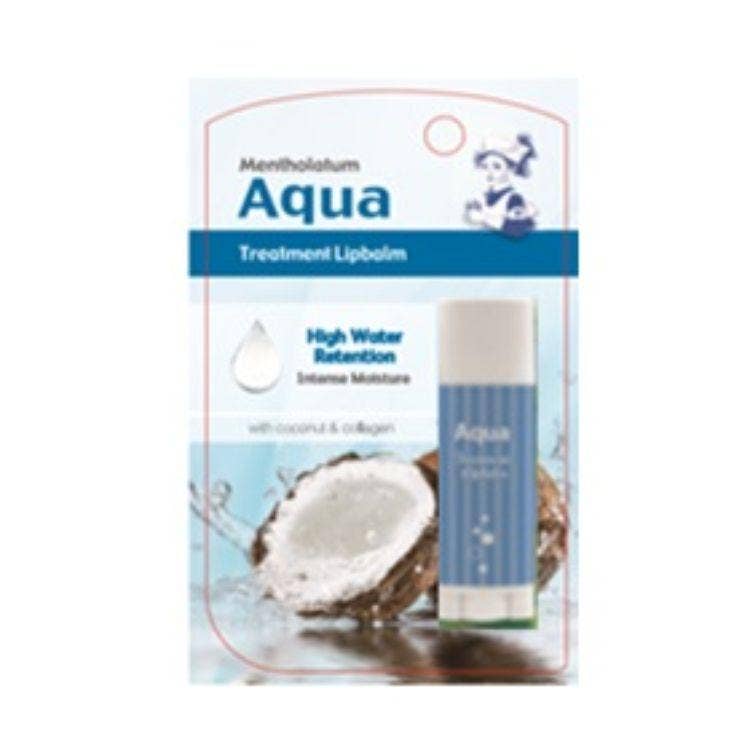
Mentholatum Aqua Lipbalm 3G

Mentholatum Aqua Lipbalm 3G
MENTHOLATUM
mentholatum-aqua-lipbalm-3g
Lip care
10084985340197
Morning or Evening?
How often will you use this product?
Notes


Highlights
WHAT IS IT?
Lip balm
FEATURES
High Water Retention
BEST FOR
CHECKS
Do not use if allergic to any ingredients, Avoid ingesting, Discontinue if irritation or rash occurs
Who Is It For?
What Does It Help With?
Budget
Affordable (under $30)How To Use
Which routine should it be used in?
Instructions:
Key Information

What MENTHOLATUM Says
Product Description:
Not Available
About the Brand:
Ingredients Overview
Ingredients List
Petrolatum, Mineral Oil, Ozokerite, Ethylhexyl Methoxycinnamate, Squalane, Ethylhexyl Salicylate, Flavor, Butyl Methoxydibenzoylmethane, Cocos Nucifera (Coconut) Oil / Aloe Barbadensis Leaf Extract, Menthol, Tocopheryl Acetate, Caprylic / Capric Triglyceride / Crithmum Maritimum Extract, Caprylic / Capric Triglyceride / Laminaria Ochroleuca Extract, Water / Soluble Collagen / Sodium Chloride / Sodium Benzoa / Potassium Sorbate, Sodium Acetylated Hyaluronate, Sodium Hyaluronate, Sea Salt
Key Ingredients
Ingredients Details
Butyl Methoxydibenzoylmethane
Common Name(s): Butyl methoxydibenzoylmethane,organic uv filter,photostabilising sunscreen active
CAS Number: N/a
DESCRIPTION
What It Does: Absorbs uv radiation at specific wavelengths (uva 320–400 nm, uvb 290–320 nm) and dissipates photon energy as heat rather than skin-damaging photochemical reactions.
Why It's Used: Organic uv filters are chosen for their high molar extinction coefficient, specific spectral coverage, and formulation compatibility — individual filters are combined to provide broad-spectrum coverage across uva+uvb.
How It Works: Uv photon absorption by the aromatic chromophore π-system excites the molecule from s₀ ground state to s₁ excited state. rapid internal conversion or photoisomerisation dissipates energy as vibrational heat before it can initiate skin photodamage.
Typically Found In: Sunscreens,photoprotective products
TECHNICAL DETAILS
Primary Category: Active ingredient – cosmetic active
Secondary Functions: Skin conditioning
Application Areas:

Facial Skincare

Body Care
Hair Care
Beard Care
Color Cosmetics (Makeup)
Dietary/Oral Supplements
Typical Concentration Range: Check local sunscreen regulations
SOURCING & ETHICS
Vegan Status: Yes
Halal Status: Yes
Source Notes: Commercially produced for cosmetic use. verify vegan/halal status with supplier.
SKIN COMPATIBILITY
Irritancy Rating: 1/5 – very low
Comedogenicity Rating: 0/5 – non-comedogenic
Sensitivity Concerns: Well-tolerated by most skin types.
Safe for Sensitive Skin: Yes
SAFETY & COMPATIBILITY
Safety Profile: Good safety profile at recommended concentrations. ewg score: 1–2.
Works Well With: Standard skincare actives
Avoid Combining With: No known significant incompatibilities
SCIENTIFIC NOTE
Organic uv filters require photostabilisation (by avobenzone-octocrylene pairing, or triazine stabilisers) as some absorbers degrade on uv exposure — formulator must verify photostability of the chosen filter combination.
Last Verified: Cosing database,butyl methoxydibenzoylmethane organic uv filter review
Primary Sources: 2026-03-12
Ethylhexyl Methoxycinnamate
Common Name(s): Ethylhexyl methoxycinnamate,organic uv filter,photostabilising sunscreen active
CAS Number: N/a
DESCRIPTION
What It Does: Absorbs uv radiation at specific wavelengths (uva 320–400 nm, uvb 290–320 nm) and dissipates photon energy as heat rather than skin-damaging photochemical reactions.
Why It's Used: Organic uv filters are chosen for their high molar extinction coefficient, specific spectral coverage, and formulation compatibility — individual filters are combined to provide broad-spectrum coverage across uva+uvb.
How It Works: Uv photon absorption by the aromatic chromophore π-system excites the molecule from s₀ ground state to s₁ excited state. rapid internal conversion or photoisomerisation dissipates energy as vibrational heat before it can initiate skin photodamage.
Typically Found In: Sunscreens,photoprotective products
TECHNICAL DETAILS
Primary Category: Active ingredient – cosmetic active
Secondary Functions: Skin conditioning
Application Areas:
Facial Skincare
Body Care
Hair Care
Beard Care
Color Cosmetics (Makeup)
Dietary/Oral Supplements
Typical Concentration Range: Check local sunscreen regulations
SOURCING & ETHICS
Vegan Status: Yes
Halal Status: Yes
Source Notes: Commercially produced for cosmetic use. verify vegan/halal status with supplier.
SKIN COMPATIBILITY
Irritancy Rating: 1/5 – very low
Comedogenicity Rating: 0/5 – non-comedogenic
Sensitivity Concerns: Well-tolerated by most skin types.
Safe for Sensitive Skin: Yes
SAFETY & COMPATIBILITY
Safety Profile: Good safety profile at recommended concentrations. ewg score: 1–2.
Works Well With: Standard skincare actives
Avoid Combining With: No known significant incompatibilities
SCIENTIFIC NOTE
Organic uv filters require photostabilisation (by avobenzone-octocrylene pairing, or triazine stabilisers) as some absorbers degrade on uv exposure — formulator must verify photostability of the chosen filter combination.
Last Verified: Cosing database,ethylhexyl methoxycinnamate organic uv filter review
Primary Sources: 2026-03-12
Ethylhexyl Salicylate
Common Name(s): Ethylhexyl salicylate,organic uv filter,photostabilising sunscreen active
CAS Number: N/a
DESCRIPTION
What It Does: Absorbs uv radiation at specific wavelengths (uva 320–400 nm, uvb 290–320 nm) and dissipates photon energy as heat rather than skin-damaging photochemical reactions.
Why It's Used: Organic uv filters are chosen for their high molar extinction coefficient, specific spectral coverage, and formulation compatibility — individual filters are combined to provide broad-spectrum coverage across uva+uvb.
How It Works: Uv photon absorption by the aromatic chromophore π-system excites the molecule from s₀ ground state to s₁ excited state. rapid internal conversion or photoisomerisation dissipates energy as vibrational heat before it can initiate skin photodamage.
Typically Found In: Sunscreens,photoprotective products
TECHNICAL DETAILS
Primary Category: Active ingredient – cosmetic active
Secondary Functions: Skin conditioning
Application Areas:
Facial Skincare
Body Care
Hair Care
Beard Care
Color Cosmetics (Makeup)
Dietary/Oral Supplements
Typical Concentration Range: Check local sunscreen regulations
SOURCING & ETHICS
Vegan Status: Yes
Halal Status: Yes
Source Notes: Commercially produced for cosmetic use. verify vegan/halal status with supplier.
SKIN COMPATIBILITY
Irritancy Rating: 1/5 – very low
Comedogenicity Rating: 0/5 – non-comedogenic
Sensitivity Concerns: Well-tolerated by most skin types.
Safe for Sensitive Skin: Yes
SAFETY & COMPATIBILITY
Safety Profile: Good safety profile at recommended concentrations. ewg score: 1–2.
Works Well With: Standard skincare actives
Avoid Combining With: No known significant incompatibilities
SCIENTIFIC NOTE
Organic uv filters require photostabilisation (by avobenzone-octocrylene pairing, or triazine stabilisers) as some absorbers degrade on uv exposure — formulator must verify photostability of the chosen filter combination.
Last Verified: Cosing database,ethylhexyl salicylate organic uv filter review
Primary Sources: 2026-03-12
Flavor
Common Name(s): Fragrance ingredient,eu allergen or aromatic component,olfactory/flavour
CAS Number: N/a
DESCRIPTION
What It Does: Provides the complete fragrance profile contributing to product sensory experience and consumer appeal.
Why It's Used: Fragrance is a major consumer purchase driver — up to 70% of consumers make purchasing decisions partially based on product scent.
How It Works: Fragrance blends interact with olfactory receptors providing the sensory profile — complex mixtures activate multiple receptor types for rich, multidimensional scent experiences.
Typically Found In: All fragrance products
TECHNICAL DETAILS
Primary Category: Active ingredient – cosmetic active
Secondary Functions: Skin conditioning
Application Areas:
Facial Skincare
Body Care
Hair Care
Beard Care
Color Cosmetics (Makeup)
Dietary/Oral Supplements
Typical Concentration Range: Standard use levels
SOURCING & ETHICS
Vegan Status: Conditional
Halal Status: Yes
Source Notes: Commercially produced for cosmetic use. verify vegan/halal status with supplier.
SKIN COMPATIBILITY
Irritancy Rating: 1/5 – very low
Comedogenicity Rating: 0/5 – non-comedogenic
Sensitivity Concerns: Well-tolerated by most skin types.
Safe for Sensitive Skin: Yes
SAFETY & COMPATIBILITY
Safety Profile: Good safety profile at recommended concentrations. ewg score: 1–2.
Works Well With: Standard skincare actives
Avoid Combining With: No known significant incompatibilities
SCIENTIFIC NOTE
Ifra guidelines set usage limits for fragrance ingredients based on skin sensitisation and phototoxicity assessment for each application category.
Last Verified: Eu regulation 1223/2009 annex iii,ifra standards,fragrance allergen declaration requirements
Primary Sources: 2026-03-12
