

MENTHOLATUM
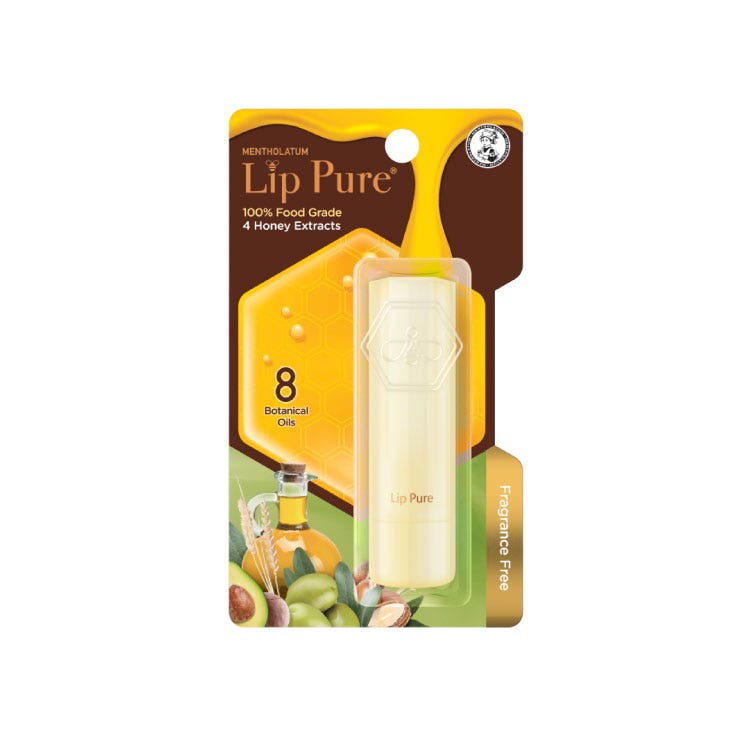
Mentholatum Lip Pure Essential Oil Fragrance Free

Mentholatum Lip Pure Essential Oil Fragrance Free
MENTHOLATUM
mentholatum-lip-pure-essential-oil-fragrance-free
Lip care
10084949950757
Morning or Evening?
How often will you use this product?
Notes


Highlights
WHAT IS IT?
Lip balm with nourishing oils and butters; 6 key ingredients
FEATURES
Contains argan oil, marula oil, sweet almond oil, shea butter, avocado butter, rosehip extracts; moisturizes and nourishes lips; fragrance-free
BEST FOR
sensitive
CHECKS
No fragrance
Who Is It For?
What Does It Help With?
Hydration And Nourishment Of LipsBudget
Affordable (under $30)How To Use
Which routine should it be used in?
Instructions:
Key Information

What MENTHOLATUM Says
Product Description:
Using argan oil, marula oil, sweet almond oil, shea butter, avocado butter and rosehip extracts, this lip balm has plenty of nourishing goodness to keep your lips hydrated hour after hour.
About the Brand:
Ingredients Overview
Ingredients List
Limnanthes Alba (Meadowfoam) Seed Oil, Macadamia Ternifolia Seed Oil, Cocos Nucifera (Coconut) Oil, Sucrose Acetate Isobutyrate, Beeswax (Cera Alba), Euphorbia Cerifera (Candelilla) Wax, Persea Gratissima (Avocado) Oil, Microcrystalline Wax, Hydrogenated Soybean Oil, Copernicia Cerifera (Carnauba) Wax, Phytosteryl Oleate, Olea Europaea (Olive) Fruit Oil, Camellia Japonica Seed Oil, Tocopherol (Vitamin E), Helianthus Annuus (Sunflower) Seed Oil, Oryza Sativa (Rice) Bran Oil, Argania Spinosa Kernel Oil, Water, Prunus Amygdalus Dulcis (Sweet Almond) Oil, Royal Jelly, Honey
Key Ingredients
argan-oil,marula-oil,sweet-almond-oil,shea-butter,avocado-butter,rosehip-extracts
Ingredients Details
Argania Spinosa Kernel Oil
Common Name(s): Argania spinosa kernel oil,botanical carrier oil,emollient fatty acid delivery
CAS Number: N/a
DESCRIPTION
What It Does: Softens and conditions skin by integrating into sc lipid bilayers, delivers essential fatty acids (oleic, linoleic, linolenic) for barrier lipid synthesis, and provides rich, non-stripping moisturisation.
Why It's Used: Natural carrier oils provide the closest compositional match to endogenous sc lipids, delivering emolliency through genuine barrier integration rather than simple surface occlusion.
How It Works: Fatty acid triglycerides partition into sc lipid bilayers — oleic acid (c18:1) provides fluid, emollient integration; linoleic acid (c18:2) acts as essential ceramide precursor; saturated fatty acids provide more occlusive barrier reinforcement.
Typically Found In: Moisturisers,facial oils,natural skin care
TECHNICAL DETAILS
Primary Category: Functional ingredient – emollient
Secondary Functions: Barrier sealing,softening
Application Areas:

Facial Skincare
Body Care
Hair Care

Beard Care
Color Cosmetics (Makeup)
Dietary/Oral Supplements
Typical Concentration Range: 1%–100%
SOURCING & ETHICS
Vegan Status: Conditional
Halal Status: Yes
Source Notes: Plant-derived, synthetic or animal-derived. verify source.
SKIN COMPATIBILITY
Irritancy Rating: 1/5 – very low
Comedogenicity Rating: 1/5 – low; formulation-dependent
Sensitivity Concerns: Non-irritating.
Safe for Sensitive Skin: Yes
SAFETY & COMPATIBILITY
Safety Profile: Excellent safety profile. ewg score: 1.
Works Well With: Humectants,ceramides,actives as carrier
Avoid Combining With: No significant incompatibilities
SCIENTIFIC NOTE
Essential fatty acids — linoleic (c18:2, n-6) and α-linolenic (c18:3, n-3) acids — cannot be synthesised by the body; topical delivery through carrier oils provides direct substrate for ceramide and eicosanoid biosynthesis in the epidermis.
Last Verified: Cosing database,argania spinosa kernel oil carrier oil botanical review
Primary Sources: 2026-03-12
Camellia Japonica Seed Oil
Common Name(s): Camellia japonica seed oil
DESCRIPTION
What It Does: Nourishes and softens skin through its balanced fatty acid profile, while antioxidant compounds protect against oxidative skin damage.
Why It's Used: Plant oils provide physiologically compatible lipid structures that integrate into the skin barrier and deliver fat-soluble antioxidants directly to skin cells.
How It Works: Fatty acids integrate into stratum corneum lipid lamellae, reinforcing the lipid barrier. antioxidants (tocopherols, carotenoids, polyphenols) neutralize ros through electron donation or singlet oxygen quenching.
Typically Found In: Face oils,serums,moisturizers,hair treatments,body oils
TECHNICAL DETAILS
Primary Category: Plant oils
Secondary Functions: Emollient,antioxidant
Application Areas:
Facial Skincare
Body Care
Hair Care
Beard Care
Color Cosmetics (Makeup)
Dietary/Oral Supplements
Typical Concentration Range: 0.5–30%
SOURCING & ETHICS
Vegan Status: Yes
Halal Status: Yes
Source Notes: Cold-pressed or solvent-extracted plant oil; no animal components.
SKIN COMPATIBILITY
Irritancy Rating: 1
Comedogenicity Rating: 2
Sensitivity Concerns: Low sensitization potential at recommended use concentrations.
Safe for Sensitive Skin: Yes
SAFETY & COMPATIBILITY
Safety Profile: Well-characterized cosmetic ingredient with established safety profile. generally non-irritating at typical use concentrations. suitable for leave-on and rinse-off cosmetics.
Works Well With: Vitamin e,ceramides,other plant oils,squalane
Avoid Combining With: Strong oxidizers (accelerate rancidity)
SCIENTIFIC NOTE
Vegetable oils are triglyceride matrices where the fatty acid composition determines skin compatibility, barrier function, and comedogenicity. oleic acid-rich oils (>60%) soften barrier lipids and enhance penetration; linoleic acid-rich oils reinforce ceramide-poor stratum corneum; saturated fatty acid-rich oils provide occlusion without skin penetration.
Last Verified: Cosing eu database; pcpc cosmetic ingredient safety reviews; aocs plant oil composition databases; fatty acid pharmacology reviews
Primary Sources: 2025-01-15
Cocos Nucifera (coconut) Oil
Common Name(s): Cocos nucifera (coconut) oil,cosmetic active,functional ingredient
CAS Number: N/a
DESCRIPTION
What It Does: Delivers characteristic cosmetic function — skin conditioning, protection, preservation, or active biological benefit — at recommended use concentration.
Why It's Used: Selected for its functional contribution and formulation compatibility — supported by cosmetic science literature and regulatory safety assessment.
How It Works: Works through the mechanism of its molecular class — physicochemical interaction with the formulation or biological interaction with skin proteins, lipids, or receptors as documented in peer-reviewed literature.
Typically Found In: Skin care formulations
TECHNICAL DETAILS
Primary Category: Active ingredient – cosmetic active
Secondary Functions: Skin conditioning
Application Areas:
Facial Skincare
Body Care
Hair Care
Beard Care
Color Cosmetics (Makeup)
Dietary/Oral Supplements
Typical Concentration Range: 0.1%–10%
SOURCING & ETHICS
Vegan Status: Conditional
Halal Status: Yes
Source Notes: Commercially produced for cosmetic use. verify vegan/halal status with supplier.
SKIN COMPATIBILITY
Irritancy Rating: 1/5 – very low
Comedogenicity Rating: 0/5 – non-comedogenic
Sensitivity Concerns: Well-tolerated by most skin types.
Safe for Sensitive Skin: Yes
SAFETY & COMPATIBILITY
Safety Profile: Good safety profile at recommended concentrations. ewg score: 1–2.
Works Well With: Standard skincare actives
Avoid Combining With: No known significant incompatibilities
SCIENTIFIC NOTE
Cocos nucifera (coconut) oil delivers documented functional benefit with an established safety profile within the cosmetic regulatory framework (cosing eu, cir usa).
Last Verified: Cosing database,cocos nucifera (coconut) oil technical literature
Primary Sources: 2026-03-12
Copernicia Cerifera (carnauba) Wax
Common Name(s): Copernicia cerifera (carnauba) wax,cosmetic active,functional ingredient
CAS Number: N/a
DESCRIPTION
What It Does: Delivers characteristic cosmetic function at recommended use concentration.
Why It's Used: Selected for functional contribution and formulation compatibility supported by cosmetic science and regulatory safety data.
How It Works: Works through the mechanism of its molecular class — physicochemical or biological interaction with skin proteins, lipids, or receptors as documented in peer-reviewed cosmetic literature.
Typically Found In: Skin care formulations
TECHNICAL DETAILS
Primary Category: Active ingredient – cosmetic active
Secondary Functions: Skin conditioning
Application Areas:
Facial Skincare
Body Care
Hair Care
Beard Care
Color Cosmetics (Makeup)
Dietary/Oral Supplements
Typical Concentration Range: 0.1%–10%
SOURCING & ETHICS
Vegan Status: Conditional
Halal Status: Yes
Source Notes: Commercially produced for cosmetic use. verify vegan/halal status with supplier.
SKIN COMPATIBILITY
Irritancy Rating: 1/5 – very low
Comedogenicity Rating: 0/5 – non-comedogenic
Sensitivity Concerns: Well-tolerated by most skin types.
Safe for Sensitive Skin: Yes
SAFETY & COMPATIBILITY
Safety Profile: Good safety profile at recommended concentrations. ewg score: 1–2.
Works Well With: Standard skincare actives
Avoid Combining With: No known significant incompatibilities
SCIENTIFIC NOTE
Copernicia cerifera (carnauba) wax has an established safety and efficacy profile within the cosmetic regulatory framework at standard use concentrations.
Last Verified: Cosing database,copernicia cerifera (carnauba) wax technical literature
Primary Sources: 2026-03-12
