

MENTHOLATUM
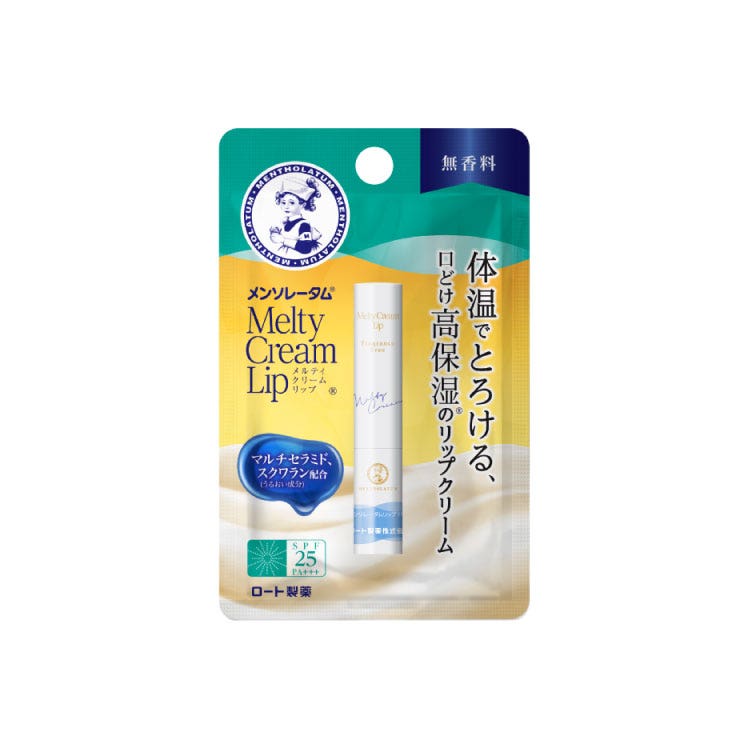
Mentholatum Melty Cream Lip Fragrance Free 2.4G

Mentholatum Melty Cream Lip Fragrance Free 2.4G
MENTHOLATUM
mentholatum-melty-cream-lip-fragrance-free-2-4g
Lip care
10085015290149
Morning or Evening?
How often will you use this product?
Notes


Highlights
WHAT IS IT?
Lip Balm with Moist Bank technology
FEATURES
Creamy lipbalm, melts with lips' temperature, reacts with moisture in air to keep lips hydrated
BEST FOR
CHECKS
No fragrance
Who Is It For?
What Does It Help With?
Hydrating LipsBudget
Affordable (under $30)How To Use
Which routine should it be used in?
Instructions:
Key Information

What MENTHOLATUM Says
Product Description:
Mentholatum Melty Cream Lip Balm
About the Brand:
Ingredients Overview
Ingredients List
Squalane,Petrolatum,Paraffin,Mineral-Oil,Hydrogenated-Polyisobutene,Diisostearyl-Malate,Ethylhexyl-Methoxy-cinnamate,Dipentaerythrityl-Hexahydroxy-stearate-Hexastearate-Hexarosinate,Micro-crystalline-Wax,Butyrospermum-Parkii-(Shea-Butter),Polyglycery-2-Diisostearate,Phytostery-Macadamiate,Butyl-Methoxydibenzoymethane,Dipropylene-Glycol,VP-Eicosene-Copolymer,Polyglycery-4-Oleate,Olea-Europaea-(Olive)-Fruit-Oil,Macadamia-Ternifolia-Seed-Oil,Simmondsia-Chinensis-(Jojoba)-Seed-Oil,Persea-Gratissima-(Avocado)-Oil,Cholesterol,Tocopheryl-Acetate,Argania-Spinosa-Kernel-Oil,Synthenic-Wax,Iron-Oxides,Water,Honey,Hydrogenated-Lecithinm-Glycine-Soja-(Soybean)-Sterols,Isopropyl-Titanium-Triisostearate,Ceramide-3,Ceramide-2,Ceramide-6-II,Butylene-Glycol,Rollay-Jelly-Extract
Key Ingredients
Squalane,Shea Butter,Olive Fruit Oil,Macadamia Seed Oil,Jojoba Seed Oil,Avocado Oil,Ceramide 3
Ingredients Details
Cholesterol
Common Name(s): 5-cholesten-3-ol,cholesterin
CAS Number: 57-88-5
DESCRIPTION
What It Does: Provides essential barrier sterol function as one of three critical stratum corneum lipid components.
Why It's Used: Essential component of complete barrier repair formulations – the stratum corneum barrier requires ceramides:cholesterol:fatty acids in approximately 1:1:1 molar ratio for complete barrier restoration.
How It Works: Integrates between ceramide headgroups in lamellar body structures, providing fluidity and flexibility to the otherwise rigid ceramide-dominated lipid matrix. controls lamellar body phase behavior for functional barrier.
Typically Found In: Barrier repair moisturizers,eczema treatments,dry skin formulations
TECHNICAL DETAILS
Primary Category: Active ingredient – barrier sterol
Secondary Functions: Lamellar body structure,barrier sterol
Application Areas:

Facial Skincare
Body Care

Hair Care
Beard Care
Color Cosmetics (Makeup)
Dietary/Oral Supplements
Typical Concentration Range: 0.01%–1%
SOURCING & ETHICS
Vegan Status: Conditional – animal-derived (lanolin) or plant-derived phytosterol analogs; verify
Halal Status: Conditional – verify source
Source Notes: Traditionally from lanolin (wool grease). plant-derived cholesterol alternatives include phytosterols, though these show slightly different barrier integration. verify for vegan/halal.
SKIN COMPATIBILITY
Irritancy Rating: 1/5 – very low
Comedogenicity Rating: 0/5 – non-comedogenic
Sensitivity Concerns: Endogenous molecule; excellent tolerability.
Safe for Sensitive Skin: Yes
SAFETY & COMPATIBILITY
Safety Profile: Exceptional safety profile. natural skin component. ewg score: 1.
Works Well With: Other ceramides,cholesterol,free fatty acids,hyaluronic acid,niacinamide
Avoid Combining With: No significant incompatibilities
SCIENTIFIC NOTE
Elias demonstrated that barrier repair requires all three lipid classes (ceramides, cholesterol, fatty acids) in approximately equimolar ratios. formulations providing only ceramides without cholesterol and fatty acids show significantly inferior barrier restoration vs complete triple-lipid combinations.
Last Verified: Cosing database,elias et al. barrier lipid ratio study,loden barrier repair review
Primary Sources: 2026-03-12
Honey
Common Name(s): Honey,bee-derived humectant antimicrobial,wound healing active
CAS Number: N/a
DESCRIPTION
What It Does: Provides humectant moisture retention from the hygroscopic fructose/glucose matrix, antimicrobial activity from enzymatically generated h₂o₂ and (in manuka) methylglyoxal, anti-inflammatory activity from phenolic compounds, and wound healing promotion from growth factor activation.
Why It's Used: Honey is the only food-derived ingredient with documented clinical wound healing efficacy in medical grade form (medihoney) — combining humectancy, antimicrobial, anti-inflammatory, and healing activity in a gras, consumer-familiar ingredient.
How It Works: Glucose oxidase in honey catalyses glucose + o₂ → gluconolactone + h₂o₂ — providing sustained low-level h₂o₂ generation that provides bactericidal activity without tissue toxicity. manuka honey's methylglyoxal (mgo) provides additional non-peroxide antimicrobial activity through protein glycation of bacterial enzymes.
Typically Found In: Wound care,anti-aging,humectant products
TECHNICAL DETAILS
Primary Category: Active ingredient – cosmetic active
Secondary Functions: Skin conditioning
Application Areas:
Facial Skincare
Body Care
Hair Care
Beard Care
Color Cosmetics (Makeup)
Dietary/Oral Supplements
Typical Concentration Range: 1%–20%
SOURCING & ETHICS
Vegan Status: No – bee-derived
Halal Status: Conditional
Source Notes: Commercially produced for cosmetic use. verify vegan/halal status with supplier.
SKIN COMPATIBILITY
Irritancy Rating: 1/5 – very low
Comedogenicity Rating: 0/5 – non-comedogenic
Sensitivity Concerns: Well-tolerated by most skin types.
Safe for Sensitive Skin: Yes
SAFETY & COMPATIBILITY
Safety Profile: Good safety profile at recommended concentrations. ewg score: 1–2.
Works Well With: Standard skincare actives
Avoid Combining With: No known significant incompatibilities
SCIENTIFIC NOTE
Manuka honey's unique mānuka factor (umf) grades correlate with methylglyoxal (mgo) concentration — umf10+ (mgo 263 mg/kg) provides bactericidal activity against mrsa at concentrations achievable in topical formulation.
Last Verified: Cosing database,honey manuka honey wound healing antimicrobial review
Primary Sources: 2026-03-12
Paraffin
Common Name(s): Mineral oil/paraffin,petroleum hydrocarbon emollient,occlusive barrier
CAS Number: N/a
DESCRIPTION
What It Does: Forms an occlusive lipid film reducing tewl, softens and smooths skin, and provides a long-lasting emollient effect from the hydrocarbon film's low volatility and high stability.
Why It's Used: The most extensively safety-tested cosmetic emollient — cosmetic-grade mineral oil has a 80+ year safety record with zero documented systemic absorption or sensitisation concerns. its inertness makes it the reference standard for hypoallergenic baby care.
How It Works: Linear and branched c15–c40 paraffin hydrocarbons form a non-polar surface film with water contact angle ~0° (spreads on skin). the film reduces tewl by 40–60% through physical occlusion of the sc surface; the inert hydrocarbon chains have no biological interaction with skin proteins explaining the exceptional safety and non-sensitising profile.
Typically Found In: Baby care,emollient bases,sensitive skin
TECHNICAL DETAILS
Primary Category: Functional ingredient – emollient
Secondary Functions: Barrier sealing,softening
Application Areas:
Facial Skincare
Body Care
Hair Care
Beard Care
Color Cosmetics (Makeup)
Dietary/Oral Supplements
Typical Concentration Range: 1%–80%
SOURCING & ETHICS
Vegan Status: Yes
Halal Status: Yes
Source Notes: Plant-derived, synthetic or animal-derived. verify source.
SKIN COMPATIBILITY
Irritancy Rating: 1/5 – very low
Comedogenicity Rating: 1/5 – low; formulation-dependent
Sensitivity Concerns: Non-irritating.
Safe for Sensitive Skin: Yes
SAFETY & COMPATIBILITY
Safety Profile: Excellent safety profile. ewg score: 1.
Works Well With: Humectants,ceramides,actives as carrier
Avoid Combining With: No significant incompatibilities
SCIENTIFIC NOTE
Cosmetic-grade mineral oil (pharmaceutical grade, fully refined) is distinct from industrial mineral oils — iarc carcinogen designation applies to untreated/mildly treated industrial mineral oils, not the highly refined pharmaceutical/cosmetic grade used in personal care.
Last Verified: Cosing database,mineral oil cosmetic grade safety review
Primary Sources: 2026-03-12
Petrolatum
Common Name(s): Petroleum jelly,vaseline,white petrolatum
DESCRIPTION
What It Does: Provides the highest level of skin occlusion and wound healing protection of any cosmetic ingredient.
Why It's Used: The most effective skin barrier protection ingredient available – fda-approved otc skin protectant with unparalleled occlusive moisturization and wound healing evidence.
How It Works: Semi-solid blend of long-chain hydrocarbons creates an extremely cohesive, impermeable occlusive film. physically prevents bacterial and irritant ingress while completely preventing tewl. does not absorb into skin. promotes moist wound healing environment by maintaining wound surface hydration.
Typically Found In: Intensive moisturizers,wound healing ointments,lip balms,baby products,eczema treatments
TECHNICAL DETAILS
Primary Category: Functional ingredient – petroleum ointment base / gold-standard occlusive
Secondary Functions: Maximum occlusion,wound healing,otc skin protectant
Application Areas:
Facial Skincare
Body Care
Hair Care
Beard Care
Color Cosmetics (Makeup)
Dietary/Oral Supplements
Typical Concentration Range: 1%–100%
SOURCING & ETHICS
Vegan Status: Yes – petroleum-derived
Halal Status: Yes
Source Notes: Plant-derived, synthetic or animal-derived. verify source.
SKIN COMPATIBILITY
Irritancy Rating: 1/5 – very low
Comedogenicity Rating: 0/5 – non-comedogenic (clinical evidence)
Sensitivity Concerns: Non-irritating.
Safe for Sensitive Skin: Yes
SAFETY & COMPATIBILITY
Safety Profile: Fda category i grase otc skin protectant. ewg score: 1.
Works Well With: Humectants,ceramides,actives as carrier
Avoid Combining With: No significant incompatibilities
SCIENTIFIC NOTE
Petrolatum's wound healing mechanism (moist wound healing) was first systematically studied by george winter (1962) and demonstrated that wounds heal 2× faster under occlusion than air-exposed. all subsequent wound dressings and occlusive skin treatments are based on this fundamental finding, with petrolatum remaining the most effective occlusive agent 60 years later.
Last Verified: Cosing database,fda otc skin protectant monograph,winter (1962) moist wound healing study
Primary Sources: 2026-03-12
