

AfricanBotanicsStaging
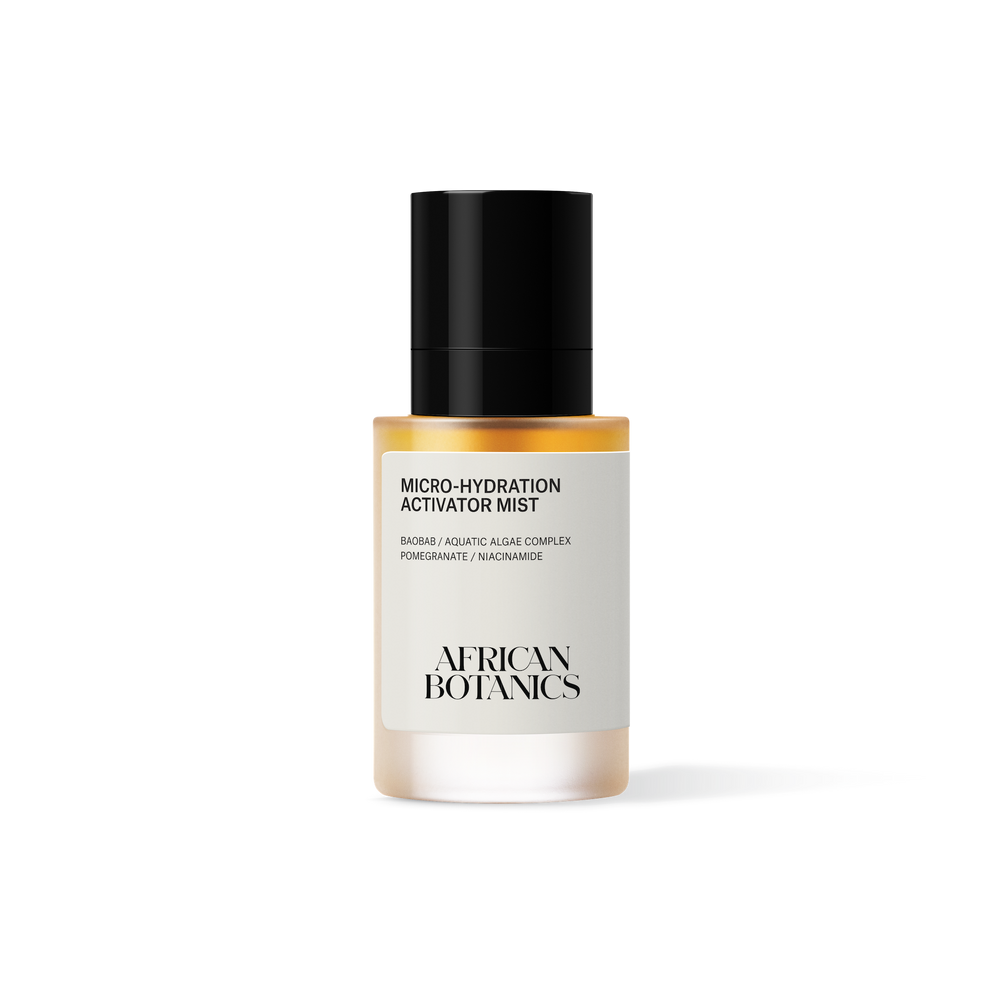
Micro-Hydration Activator Mist

Micro-Hydration Activator Mist
AfricanBotanicsStaging
micro-hydration-activator-mist
Tone
9643647729957
Morning or Evening?
How often will you use this product?
Notes


Highlights
WHAT IS IT?
Face mist with five micro and macro algae bio extracts
FEATURES
Delivers micro-droplets of hydration, plumps, tones, soothes skin, refines pores, restores pH balance
BEST FOR
combination
CHECKS
Does not contain any harsh alcohols, common allergens, parabens, silicones or sulfates
Who Is It For?
All Ages And GendersWhat Does It Help With?
Hyperpigmentation Dehydration Loss Of Firmness Pore Refinement Ph BalanceBudget
Mid-range ($30-$75)How To Use
Which routine should it be used in?
Instructions:
Key Information


What AfricanBotanicsStaging Says
Product Description:
The innovative formula combines five micro and macro algae bio extracts, sourced from different areas of the sea, to address skin concerns like hyperpigmentation, dehydration and loss of firmness. Micro-Hydration Activator Mist delivers micro-droplets of supercharged hydration to plump, tone and soothe the skin. The multitasking mist refines pores and restores pH balance while enhancing the performance of your skincare products.
About the Brand:
Ingredients Overview
Ingredients List
Aqua, Niacinamide, Colloidal Silver, Polyglutamic Acid, Cannabis sativa leaf extract, Hydrolyzed Rice Protein, Adansonia Digitata Fruit Extract, Propanediol, Porphyra Umbilicalis Extract, Spirulina Maxima Extract, Himanthalia Elongata Extract, Crithmum Maritimum Extract, Palmaria Palmata Extract, Gigartina Stellata Extract, Azelamidopropyl Dimethyl Amine, Butylene Glycol, Isostearyl Alcohol, Butylene Glycol Cocoate, Ethylcellulose, Punica Granatum Fruit Extract, Cyclopia Genistoides (Honeybush) Leaf Extract, Glycerin, Cucumis Sativus (Cucumber) Fruit Extract, Kigelia Africana Leaf Extract, Aspalathus Linearis (Rooibos) Leaf Extract, Tocopherol, Bulbine Frutescens, Hyaluronic Acid, Aloe Ferox Leaf Extract, Pelargonium Roseum Leaf Oil, Citrus Aurantium Amara (Petitgrain) Leaf Oil, Citrus Aurantium Bergamia Fruit Oil, Commiphora Myrrha Oil, Phenoxyethanol, Ethylhexylglycerin
Key Ingredients
micro-algae, macro-algae
Ingredients Details
Adansonia Digitata Fruit Extract
Common Name(s): Adansonia digitata fruit extract
DESCRIPTION
What It Does: Provides antioxidant protection, soothing anti-inflammatory effects, and skin-conditioning benefits through plant-derived polyphenols and phytochemicals.
Why It's Used: Plant extracts concentrate bioactive phytochemicals evolved for environmental protection — uv, microbial, and oxidative stressors — that translate to skin benefits.
How It Works: Polyphenols (flavonoids, phenolic acids) inhibit nf-κb-mediated inflammatory signaling, scavenge reactive oxygen species through electron donation, and chelate pro-oxidant metal ions to reduce oxidative skin damage.
Typically Found In: Serums,toners,moisturizers,masks,essences
TECHNICAL DETAILS
Primary Category: Botanical extracts
Secondary Functions: Antioxidant,anti-inflammatory
Application Areas:

Facial Skincare

Body Care
Hair Care
Beard Care
Color Cosmetics (Makeup)
Dietary/Oral Supplements
Typical Concentration Range: 0.1–10%
SOURCING & ETHICS
Vegan Status: Yes
Halal Status: Yes
Source Notes: Plant-derived extract; no animal components.
SKIN COMPATIBILITY
Irritancy Rating: 1
Comedogenicity Rating: 0
Sensitivity Concerns: Low sensitization potential at recommended use concentrations.
Safe for Sensitive Skin: Yes
SAFETY & COMPATIBILITY
Safety Profile: Well-characterized cosmetic ingredient with established safety profile. generally non-irritating at typical use concentrations. suitable for leave-on and rinse-off cosmetics.
Works Well With: Niacinamide,hyaluronic acid,vitamin c,ceramides
Avoid Combining With: Strong oxidizing agents
SCIENTIFIC NOTE
Plant secondary metabolites (flavonoids, terpenes, phenolic acids) are biosynthesized as defense compounds against uv, herbivores, and pathogens. their anti-inflammatory activity typically derives from competitive inhibition of cox-2 and 5-lox enzymes (ic50 1–50 µm), while antioxidant activity involves single electron transfer (set) and hydrogen atom transfer (hat) mechanisms with structure-dependent rate constants.
Last Verified: 2025-01-15
Primary Sources: Cosing eu database; pcpc cosmetic ingredient safety reviews; phytochemical and ethnobotanical literature
Cannabis Sativa Leaf Extract
Common Name(s): Cannabis sativa leaf extract
DESCRIPTION
What It Does: Provides antioxidant protection, soothing anti-inflammatory effects, and skin-conditioning benefits through plant-derived polyphenols and phytochemicals.
Why It's Used: Plant extracts concentrate bioactive phytochemicals evolved for environmental protection — uv, microbial, and oxidative stressors — that translate to skin benefits.
How It Works: Polyphenols (flavonoids, phenolic acids) inhibit nf-κb-mediated inflammatory signaling, scavenge reactive oxygen species through electron donation, and chelate pro-oxidant metal ions to reduce oxidative skin damage.
Typically Found In: Serums,toners,moisturizers,masks,essences
TECHNICAL DETAILS
Primary Category: Botanical extracts
Secondary Functions: Antioxidant,anti-inflammatory
Application Areas:
Facial Skincare
Body Care
Hair Care
Beard Care
Color Cosmetics (Makeup)
Dietary/Oral Supplements
Typical Concentration Range: 0.1–10%
SOURCING & ETHICS
Vegan Status: Yes
Halal Status: Yes
Source Notes: Plant-derived extract; no animal components.
SKIN COMPATIBILITY
Irritancy Rating: 1
Comedogenicity Rating: 0
Sensitivity Concerns: Low sensitization potential at recommended use concentrations.
Safe for Sensitive Skin: Yes
SAFETY & COMPATIBILITY
Safety Profile: Well-characterized cosmetic ingredient with established safety profile. generally non-irritating at typical use concentrations. suitable for leave-on and rinse-off cosmetics.
Works Well With: Niacinamide,hyaluronic acid,vitamin c,ceramides
Avoid Combining With: Strong oxidizing agents
SCIENTIFIC NOTE
Plant secondary metabolites (flavonoids, terpenes, phenolic acids) are biosynthesized as defense compounds against uv, herbivores, and pathogens. their anti-inflammatory activity typically derives from competitive inhibition of cox-2 and 5-lox enzymes (ic50 1–50 µm), while antioxidant activity involves single electron transfer (set) and hydrogen atom transfer (hat) mechanisms with structure-dependent rate constants.
Last Verified: 2025-01-15
Primary Sources: Cosing eu database; pcpc cosmetic ingredient safety reviews; phytochemical and ethnobotanical literature
Colloidal Silver
Common Name(s): Colloidal/ionic silver,antimicrobial nanoparticle,broad-spectrum bactericidal
CAS Number: N/a
DESCRIPTION
What It Does: Provides broad-spectrum antimicrobial protection against bacteria, fungi, and viruses through silver ion release, with documented wound healing promotion through anti-biofilm activity and inflammatory modulation.
Why It's Used: Silver's multi-target antimicrobial mechanism prevents resistance development — bacteria cannot simultaneously mutate all silver-targeted enzymes (thiol enzymes, respiratory chain proteins, dna) to escape silver's activity, unlike single-target antibiotics.
How It Works: Ag⁺ ions bind bacterial thiol (-sh) groups in respiratory chain enzymes (nadh dehydrogenase, succinate dehydrogenase) inactivating atp synthesis. simultaneously, ag⁺ binds bacterial dna causing structural disruption, and binds cell wall lipopolysaccharide increasing membrane permeability. the three concurrent mechanisms provide resistance-proof bactericidal activity.
Typically Found In: Wound care,antimicrobial skin care
TECHNICAL DETAILS
Primary Category: Active ingredient – cosmetic active
Secondary Functions: Skin conditioning
Application Areas:
Facial Skincare
Body Care
Hair Care
Beard Care
Color Cosmetics (Makeup)
Dietary/Oral Supplements
Typical Concentration Range: Check concentration limits
SOURCING & ETHICS
Vegan Status: Conditional - supplier confirmation required
Halal Status: Unverified - supplier confirmation required
Source Notes: Commercially produced for cosmetic use. verify vegan/halal status with supplier. [audit 2026-07-29 rev2: the record's own source_notes does not assert a non-animal origin, or instructs the reader to verify with the supplier; "yes" asserts knowledge the record does not hold. determination requires shariah-panel sign-off.]
SKIN COMPATIBILITY
Irritancy Rating: 1/5 – very low
Comedogenicity Rating: 0/5 – non-comedogenic
Sensitivity Concerns: Well-tolerated by most skin types.
Safe for Sensitive Skin: Yes
SAFETY & COMPATIBILITY
Safety Profile: Good safety profile at recommended concentrations. ewg score: 1–2.
Works Well With: Standard skincare actives
Avoid Combining With: No known significant incompatibilities
SCIENTIFIC NOTE
Nano-silver regulatory status varies by market — eu considers nano-silver ingredients under nano-material notification requirements. ionic silver (ag⁺ salts) and colloidal forms have different regulatory pathways. formulators must verify nano-definition compliance for particle size specifications.
Last Verified:
Crithmum Maritimum Extract
Common Name(s): Crithmum maritimum extract
DESCRIPTION
What It Does: Provides antioxidant protection, soothing anti-inflammatory effects, and skin-conditioning benefits through plant-derived polyphenols and phytochemicals.
Why It's Used: Plant extracts concentrate bioactive phytochemicals evolved for environmental protection — uv, microbial, and oxidative stressors — that translate to skin benefits.
How It Works: Polyphenols (flavonoids, phenolic acids) inhibit nf-κb-mediated inflammatory signaling, scavenge reactive oxygen species through electron donation, and chelate pro-oxidant metal ions to reduce oxidative skin damage.
Typically Found In: Serums,toners,moisturizers,masks,essences
TECHNICAL DETAILS
Primary Category: Botanical extracts
Secondary Functions: Antioxidant,anti-inflammatory
Application Areas:
Facial Skincare
Body Care
Hair Care
Beard Care
Color Cosmetics (Makeup)
Dietary/Oral Supplements
Typical Concentration Range: 0.1–10%
SOURCING & ETHICS
Vegan Status: Yes
Halal Status: Yes
Source Notes: Plant-derived extract; no animal components.
SKIN COMPATIBILITY
Irritancy Rating: 1
Comedogenicity Rating: 0
Sensitivity Concerns: Low sensitization potential at recommended use concentrations.
Safe for Sensitive Skin: Yes
SAFETY & COMPATIBILITY
Safety Profile: Well-characterized cosmetic ingredient with established safety profile. generally non-irritating at typical use concentrations. suitable for leave-on and rinse-off cosmetics.
Works Well With: Niacinamide,hyaluronic acid,vitamin c,ceramides
Avoid Combining With: Strong oxidizing agents
SCIENTIFIC NOTE
Plant secondary metabolites (flavonoids, terpenes, phenolic acids) are biosynthesized as defense compounds against uv, herbivores, and pathogens. their anti-inflammatory activity typically derives from competitive inhibition of cox-2 and 5-lox enzymes (ic50 1–50 µm), while antioxidant activity involves single electron transfer (set) and hydrogen atom transfer (hat) mechanisms with structure-dependent rate constants.
Last Verified: 2025-01-15
Primary Sources: Cosing eu database; pcpc cosmetic ingredient safety reviews; phytochemical and ethnobotanical literature