

Minimalist
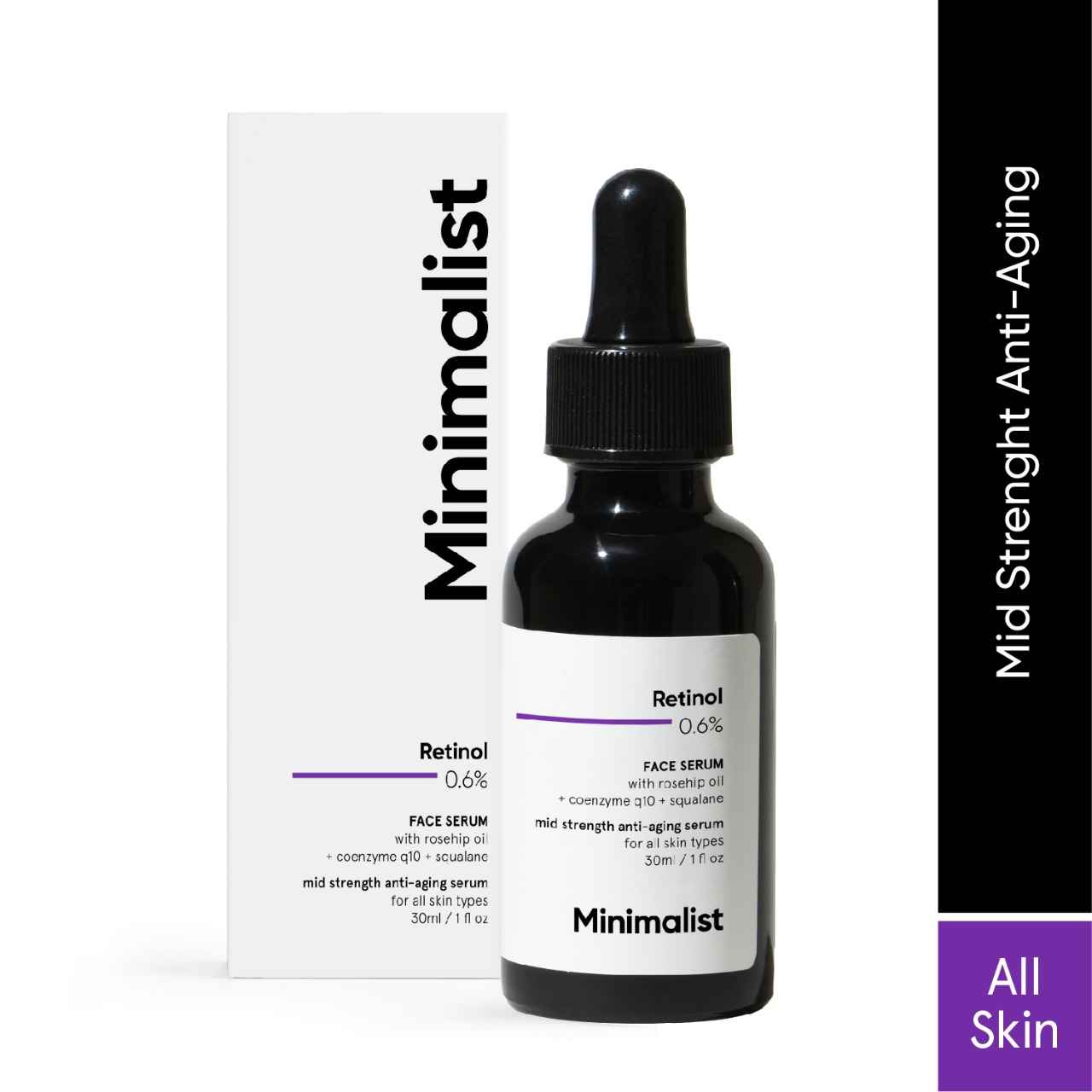
Minimalist Retinol 0.6% Anti Aging Mid-strength Formula For Fine Lines & Wrinkles - 30 ml

Minimalist Retinol 0.6% Anti Aging Mid-strength Formula For Fine Lines & Wrinkles - 30 ml
Minimalist
minimalist-retinol-0-6-anti-aging-mid-strength-formula-for-fine-lines-wrinkles-30-ml
Serum
10085025874213
Morning or Evening?
How often will you use this product?
Notes


Highlights
WHAT IS IT?
Mid strength anti-aging retinol serum with key ingredients retinol, Coenzyme Q10, rosehip
FEATURES
Increased concentration of retinol for anti-aging and skin renewal, promotes cell turnover, decreases collagen breakdown enzymes, antioxidant and radical scavenger, boosts collagen synthesis, reduces signs of photoaging
BEST FOR
sensitive
CHECKS
No mention of parabens, sulfates, silicones, fragrances or alcohol; presumably free from these
Who Is It For?
Intermediate Users Suitable For Sensitive Skin; Gender Not SpecifiedWhat Does It Help With?
Fine Lines Wrinkles Collagen Synthesis Skin Renewal Photoaging Signs ReductionBudget
Affordable (under $30)How To Use
Which routine should it be used in?
Instructions:
Key Information


What Minimalist Says
Product Description:
An intermediate serum with increased concentration of retinol which is the most proven ingredient for antiaging and skin renewal. Formulated with 0.6% retinol, which promotes cell turnover & decreases enzymes causing collagen breakdown. Boosted with Co-enxyme Q10, an antioxidant & radical scavenger which reduces wrinkle depths. Combined with rosehip, which is known to boost collagen synthesis as well as reduces signs of photoaging. Mid strength serum for intermediate users.
About the Brand:
Ingredients Overview
Ingredients List
Squalane, Rosehip Oil, Coenzyme Q10, Retinol
Key Ingredients
retinol, coenzyme-q10, rosehip
Ingredients Details
Coenzyme Q10
Common Name(s): Coq10,coenzyme q10,ubiquinol-10
CAS Number: 303-98-0
DESCRIPTION
What It Does: Replenishes age-declining coq10 for mitochondrial energy support and membrane antioxidant protection.
Why It's Used: The only cosmetic ingredient directly targeting mitochondrial function decline in aging – coq10 skin levels decrease significantly after age 30 and topical supplementation directly addresses this documented deficiency.
How It Works: Ubiquinone/ubiquinol cycle (oxidized/reduced forms) carries electrons in mitochondrial complexes i-iii for atp production. reduced ubiquinol quenches lipid peroxyl radicals in inner mitochondrial membrane and plasma membrane. coq10 depletion in aging skin reduces atp production capacity and membrane antioxidant defense simultaneously.
Typically Found In: Anti-aging serums,mitochondrial skincare,antioxidant products
TECHNICAL DETAILS
Primary Category: Active ingredient – antioxidant
Secondary Functions: Mitochondrial electron transport,membrane lipid antioxidant
Application Areas:

Facial Skincare
Body Care

Hair Care
Beard Care
Color Cosmetics (Makeup)
Dietary/Oral Supplements
Typical Concentration Range: 0.01%–1%
SOURCING & ETHICS
Vegan Status: Yes – from fermentation (rhizobium radiobacter) or synthetic
Halal Status: Yes
Source Notes: Ubiquinol (reduced, active form) provides better bioavailability than ubiquinone, though skin converts ubiquinone to ubiquinol enzymatically. requires oil-phase formulation for stability.
SKIN COMPATIBILITY
Irritancy Rating: 1/5 – very low
Comedogenicity Rating: 0/5 – non-comedogenic
Sensitivity Concerns: Non-irritating; well-tolerated.
Safe for Sensitive Skin: Yes
SAFETY & COMPATIBILITY
Safety Profile: Excellent safety profile. ewg score: 1.
Works Well With: Vitamin c,vitamin e,ferulic acid,spf,other antioxidants
Avoid Combining With: No significant incompatibilities
SCIENTIFIC NOTE
Coq10's role in the mitochondrial electron transport chain places it at the nexus of aging biology – mitochondrial coq10 declines approximately 50% from age 20 to 80, and this decline is mechanistically linked to reduced atp production, increased mitochondrial superoxide leak, and mtdna damage that collectively constitute the 'mitochondrial theory of aging' at the cellular level.
Last Verified: Cosing database,crane ubiquinone review,shindo et al. coq10 skin aging study
Primary Sources: 2026-03-12
Retinol
Common Name(s): Vitamin a,all-trans retinol,(all-e)-3,7-dimethyl-9-(2,6,6-trimethyl-1-cyclohexen-1-yl)-2,4,6,8-nonatetraen-1-ol
CAS Number: 68-26-8
DESCRIPTION
What It Does: Retinol accelerates skin cell turnover, stimulates collagen production, reduces fine lines and wrinkles, fades hyperpigmentation, and helps normalize pore size.
Why It's Used: It is the most evidence-backed anti-aging ingredient available without a prescription. it provides comprehensive skin renewal benefits that no other single cosmetic ingredient can match.
How It Works: Retinol is converted in the skin to retinoic acid, which binds to retinoid receptors in cell nuclei. this activates gene expression changes that accelerate cell turnover, boost collagen synthesis, and inhibit matrix metalloproteinases (collagen-degrading enzymes).
Typically Found In: Night creams,serums,eye creams,targeted treatment products,anti-aging formulations
TECHNICAL DETAILS
Primary Category: Active ingredient – vitamin a derivative
Secondary Functions: Exfoliating,anti-acne,brightening
Application Areas:
Facial Skincare
Body Care
Hair Care
Beard Care
Color Cosmetics (Makeup)
Dietary/Oral Supplements
Typical Concentration Range: 0.025%–1% (otc); start at low concentrations and build up slowly
SOURCING & ETHICS
Vegan Status: Conditional – can be animal-derived (fish liver, egg yolk) or synthetic; verify source
Halal Status: Conditional – verify source; synthetic retinol is halal
Source Notes: Cosmetic retinol is predominantly synthetically manufactured. some natural sources include fish liver oils. synthetic is preferred for purity and sustainability.
SKIN COMPATIBILITY
Irritancy Rating: 3/5 – moderate; can cause dryness, peeling, redness, especially during adjustment period (retinization)
Comedogenicity Rating: 0/5 – non-comedogenic; actually helps clear pores
Sensitivity Concerns: Retinization period: 2–6 weeks of potential dryness, flaking, and sensitivity. photosensitizing – must use spf when using retinol. avoid during pregnancy.
Safe for Sensitive Skin: Use with caution – start at 0.025%, buffer with moisturizer, use every 2–3 nights initially
SAFETY & COMPATIBILITY
Safety Profile: Safe for general use at otc concentrations. not recommended during pregnancy. avoid with waxing. use spf daily. ewg hazard score: varies by concentration.
Works Well With: Niacinamide (soothes irritation),peptides,ceramides,hyaluronic acid,spf (mandatory)
Avoid Combining With: Benzoyl peroxide (may inactivate retinol),ahas/bhas (when new to retinol – overexfoliation risk),vitamin c (use at different times)
SCIENTIFIC NOTE
Retinol is approximately 20 times less potent than prescription tretinoin (retinoic acid) but significantly better tolerated. the conversion rate of retinol to retinoic acid in skin is the rate-limiting step in its efficacy.
Last Verified: Cosing database,cir safety assessment,journal of investigative dermatology,kligman et al. studies
Primary Sources: 2026-03-12
Squalane
Common Name(s): Perhydrosqualene,2,6,10,15,19,23-hexamethyltetracosane
CAS Number: 0111-01-03
DESCRIPTION
What It Does: Provides endogenous-skin-identical emolliency with exceptional stability and skin compatibility.
Why It's Used: The most skin-compatible emollient – chemically identical to human sebum squalene component with outstanding tolerability across all skin types.
How It Works: Fully saturated hydrocarbon with zero oxidation sites provides exceptional stability unlike squalene's 6 double bonds. integrates into stratum corneum lipid bilayers with near-perfect biocompatibility. provides antioxidant protection to formulation via radical quenching.
Typically Found In: Facial oils,serums,non-comedogenic moisturizers,luxury body care
TECHNICAL DETAILS
Primary Category: Functional ingredient – emollient
Secondary Functions: Maximum biocompatibility,antioxidant stabilizer,non-comedogenic
Application Areas:
Facial Skincare
Body Care
Hair Care
Beard Care
Color Cosmetics (Makeup)
Dietary/Oral Supplements
Typical Concentration Range: 1%–100%
SOURCING & ETHICS
Vegan Status: Conditional – plant-derived (sugarcane, olive) preferred; shark liver-derived being phased out
Halal Status: Yes – plant-derived
Source Notes: Sustainable plant-derived squalane from sugarcane fermentation (amyris) or olive oil fractionation is preferred over shark liver-derived. chemically identical regardless of source.
SKIN COMPATIBILITY
Irritancy Rating: 1/5 – very low
Comedogenicity Rating: 0/5 – non-comedogenic
Sensitivity Concerns: Non-irritating.
Safe for Sensitive Skin: Yes
SAFETY & COMPATIBILITY
Safety Profile: Excellent safety profile. ewg score: 1.
Works Well With: Humectants,ceramides,actives as carrier
Avoid Combining With: No significant incompatibilities
SCIENTIFIC NOTE
Squalene constitutes approximately 12-15% of human sebum – the highest proportion of any skin lipid. topical squalane (stable, hydrogenated form) replenishes this abundant endogenous skin lipid. the complete absence of oxidizable double bonds (unlike squalene's 6 double bonds) eliminates the pro-oxidant concerns of natural squalene oxidation.
Last Verified: Cosing database,huang et al. squalane review,cir safety assessment
Primary Sources: 2026-03-12
