

Nykaa E retail limited
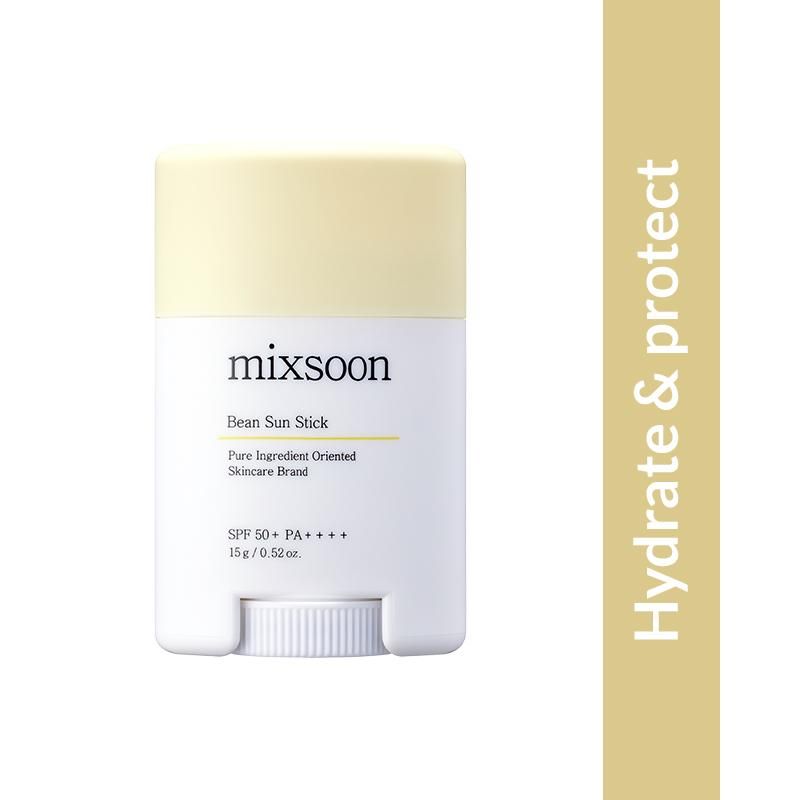
Mixsoon Bean Sunstick Invisible SPF 50+ PA++++ With Fermented Bean Extract

Mixsoon Bean Sunstick Invisible SPF 50+ PA++++ With Fermented Bean Extract
Nykaa E retail limited
mixsoon-bean-sunstick-invisible-spf-50-pa-with-fermented-bean-extract
Suncare
10084737155365
Morning or Evening?
How often will you use this product?
Notes


Highlights
WHAT IS IT?
Sunstick with fermented bean extract
FEATURES
Lightweight texture, High UV protection, Portable design, Dermatologically tested, Vegan
BEST FOR
sensitive
CHECKS
Fragrance-free
Who Is It For?
What Does It Help With?
Uv Protection Skin Barrier Strengthening Soothes Irritation Antioxidant Protection Brightens And Evens Skin ToneBudget
Premium ($76-$150)How To Use
Which routine should it be used in?
Instructions:
Key Information


What Nykaa E retail limited Says
Product Description:
The Mixsoon Bean Sun Sunstick is a high-performance, portable sunscreen that combines strong UV protection with skin-nourishing benefits. Enriched with Mixsoon’s signature fermented bean extract, this sunstick not only shields your skin from harmful UVA and UVB rays (SPF50+ PA++++) but also helps improve skin texture and radiance over time. Its balm-like, non-sticky formula glides smoothly onto the skin, leaving a soft, velvety finish without any white cast - making it ideal for all skin tones and types, including oily and sensitive skin. The compact design makes it easy to carry and perfect for reapplying throughout the day, even over makeup. Fermented ingredients in the formula work to strengthen the skin barrier, soothe irritation, and deliver antioxidant protection, while niacinamide helps brighten and even out the skin tone. Gentle yet effective, the Mixsoon Bean Sunstick is your go-to for daily sun protection with added skincare benefits - fragrance-free, vegan-friendly, and reef-safe.
About the Brand:
Ingredients Overview
Ingredients List
Silica,Synthetic-Wax,Dibutyl-Adipate,Dicaprylyl-Ether,Coco-Caprylate/Caprate,Dicaprylyl-Carbonate,Microcrystalline-Wax,Diethylamino-Hydroxybenzoyl-Hexyl-Benzoate,Butyloctyl-Salicylate,Ethylhexyl-Triazone,C18-21-Alkane,Bis-Ethylhexyloxyphenol-Methoxyphenyl-Triazine,C12-15-Alkyl-Benzoate,Ethylene/Propylene-Copolymer,Glycerin,Dipropylene-Glycol,1-2-Hexanediol,Bisabolol,Polyglyceryl-2-Triisostearate,Pentaerythrityl-Tetra-Di-T-Butyl-Hydroxyhydrocinnamate,Water,Hydrogenated-Olive-Oil-Unsaponifiables,Caprylic/Capric-Triglyceride,Ethylhexylglycerin,Hydrogenated-Lecithin,Polyglyceryl-10-Oleate,Stearalkonium-Hectorite,Polyglyceryl-3-Polyricinoleate,Polyglyceryl-3-Diisostearate,Adenosine,Tocopherol,Glycine-Soja-(Soybean)-Oil,Propanediol,Butylene-Glycol,Lactobacillus/Soybean-Ferment-Extract,Lactobacillus/Pear-Juice-Ferment-Filtrate,Lactobacillus/Punica-Granatum-Fruit-Ferment-Extract,Saccharomyces/Barley-Seed-Ferment-Filtrate,Andrographis-Paniculata-Extract,Carnosine,Hydrolyzed-Soy-Protein
Key Ingredients
Fermented bean extract, Niacinamide
Ingredients Details
1-2-hexanediol
Common Name(s): 1-2-hexanediol,cosmetic active,functional ingredient
CAS Number: N/a
DESCRIPTION
What It Does: Delivers characteristic cosmetic function at recommended use concentration.
Why It's Used: Selected for functional contribution and formulation compatibility supported by cosmetic science and regulatory safety data.
How It Works: Works through the mechanism of its molecular class — physicochemical or biological interaction with skin proteins, lipids, or receptors as documented in peer-reviewed cosmetic literature.
Typically Found In: Skin care formulations
TECHNICAL DETAILS
Primary Category: Active ingredient – cosmetic active
Secondary Functions: Skin conditioning
Application Areas:

Facial Skincare

Body Care
Hair Care
Beard Care
Color Cosmetics (Makeup)
Dietary/Oral Supplements
Typical Concentration Range: 0.1%–10%
SOURCING & ETHICS
Vegan Status: Conditional - supplier confirmation required
Halal Status: Unverified - supplier confirmation required
Source Notes: Commercially produced for cosmetic use. verify vegan/halal status with supplier. [audit 2026-07-29 rev2: the record's own source_notes does not assert a non-animal origin, or instructs the reader to verify with the supplier; "yes" asserts knowledge the record does not hold. determination requires shariah-panel sign-off.]
SKIN COMPATIBILITY
Irritancy Rating: 1/5 – very low
Comedogenicity Rating: 0/5 – non-comedogenic
Sensitivity Concerns: Well-tolerated by most skin types.
Safe for Sensitive Skin: Yes
SAFETY & COMPATIBILITY
Safety Profile: Good safety profile at recommended concentrations. ewg score: 1–2.
Works Well With: Standard skincare actives
Avoid Combining With: No known significant incompatibilities
SCIENTIFIC NOTE
1-2-hexanediol has an established safety and efficacy profile within the cosmetic regulatory framework at standard use concentrations.
Last Verified: 2026-03-12
Primary Sources: Cosing database,1-2-hexanediol technical literature
Adenosine
Common Name(s): Adenine riboside,9-beta-d-ribofuranosyladenine
CAS Number: 58-61-7
DESCRIPTION
What It Does: Reduces fine lines, stimulates collagen, firms skin, and reduces inflammation.
Why It's Used: Fda-recognized anti-wrinkle active with multi-action collagen stimulation + wrinkle reduction + anti-inflammatory efficacy.
How It Works: Activates adenosine a2a receptors on fibroblasts stimulating collagen type i. also activates pka pathway promoting atp production and reducing inflammatory cytokines.
Typically Found In: Anti-aging serums,wrinkle treatments,korean skincare
TECHNICAL DETAILS
Primary Category: Active ingredient – purine nucleoside / anti-aging
Secondary Functions: Collagen stimulation,anti-inflammatory,cell energy
Application Areas:
Facial Skincare
Body Care
Hair Care
Beard Care
Color Cosmetics (Makeup)
Dietary/Oral Supplements
Typical Concentration Range: 0.04%–0.1%
SOURCING & ETHICS
Vegan Status: Conditional - supplier confirmation required
Halal Status: Unverified - supplier confirmation required
Source Notes: Synthetically produced for cosmetic use. [audit 2026-07-29 rev2: status downgraded on audit. determination requires shariah-panel sign-off.]
SKIN COMPATIBILITY
Irritancy Rating: 1/5 – very low
Comedogenicity Rating: 0/5 – non-comedogenic
Sensitivity Concerns: Non-irritating; excellent tolerability.
Safe for Sensitive Skin: Yes
SAFETY & COMPATIBILITY
Safety Profile: Excellent safety profile. fda-recognized as safe and effective anti-wrinkle ingredient. ewg score: 1.
Works Well With: Other b vitamins,niacinamide,antioxidant complexes
Avoid Combining With: No significant incompatibilities
SCIENTIFIC NOTE
A 2002 clinical study demonstrated 0.04% adenosine cream significantly reduced wrinkle depth and increased skin elasticity after 4 weeks. fda recognition requires controlled clinical trial evidence.
Last Verified: 2026-03-12
Primary Sources: Cosing database,adenosine anti-aging clinical data,fda otc anti-wrinkle monograph
Bisabolol
Common Name(s): Alpha-bisabolol,levomenol,(-)-alpha-bisabolol
CAS Number: 515-69-5
DESCRIPTION
What It Does: Reduces skin inflammation, soothes irritation, promotes wound healing, and enhances penetration of co-formulated actives.
Why It's Used: Premium natural soothing active with combined anti-inflammatory, wound healing, and penetration-enhancing activity – clinically validated across sensitive, reactive, and irritated skin types.
How It Works: Inhibits nf-kb pathway reducing pro-inflammatory cytokines il-1β, il-6, tnf-α. enhances stratum corneum lipid fluidity increasing penetration of co-delivered actives. antimicrobial against s. aureus and c. albicans. promotes keratinocyte migration for wound healing.
Typically Found In: Sensitive skin products,post-procedure formulations,anti-irritant formulas,wound healing
TECHNICAL DETAILS
Primary Category: Active ingredient – soothing / anti-inflammatory
Secondary Functions: Anti-inflammatory,penetration enhancement,antimicrobial
Application Areas:
Facial Skincare
Body Care
Hair Care
Beard Care
Color Cosmetics (Makeup)
Dietary/Oral Supplements
Typical Concentration Range: 0.1%–1%
SOURCING & ETHICS
Vegan Status: Conditional - supplier confirmation required
Halal Status: Unverified - supplier confirmation required
Source Notes: Natural (-)-alpha-bisabolol from brazilian candeia tree is more sustainable and potent than chamomile-derived bisabolol. synthetic (±)-bisabolol is racemic with slightly lower anti-inflammatory potency. [audit 2026-07-29 rev2: status downgraded on audit. determination requires shariah-panel sign-off.]
SKIN COMPATIBILITY
Irritancy Rating: 1/5 – very low
Comedogenicity Rating: 0/5 – non-comedogenic
Sensitivity Concerns: Non-irritating; ideal for reactive and sensitive skin.
Safe for Sensitive Skin: Yes – particularly recommended for sensitive skin
SAFETY & COMPATIBILITY
Safety Profile: Excellent safety profile. ewg score: 1.
Works Well With: Ceramides,panthenol,allantoin,hyaluronic acid,centella asiatica
Avoid Combining With: No significant incompatibilities
SCIENTIFIC NOTE
Bisabolol's dual function as both an anti-inflammatory and a penetration enhancer is synergistic – by reducing the inflammatory response that increases barrier tightness while simultaneously fluidizing stratum corneum lipids, it provides enhanced delivery of co-formulated actives in the very conditions where delivery is most needed.
Last Verified: 2026-03-12
Primary Sources: Cosing database,piazza et al. bisabolol anti-inflammatory study,cir safety assessment
Carnosine
Common Name(s): Beta-alanyl-l-histidine,n-beta-alanyl-l-histidine dipeptide
CAS Number: 305-84-0
DESCRIPTION
What It Does: Provides anti-glycation and anti-carbonylation activity protecting collagen from glycation-induced crosslinking.
Why It's Used: Natural anti-age dipeptide targeting glycation — complementary to antioxidant-only anti-aging strategies with documented collagen protection.
How It Works: Histidine imidazole chelates cu²⁺ for antioxidant metal chelation. beta-alanine traps reactive carbonyl species (glycating aldehydes). quenches 4-hydroxynonenal (hne) protein carbonylation. anti-glycation via competing with lysine residues.
Typically Found In: Anti-aging serums,anti-glycation products,longevity skincare
TECHNICAL DETAILS
Primary Category: Active ingredient – antioxidant
Secondary Functions: Free radical scavenging,anti-aging
Application Areas:
Facial Skincare
Body Care
Hair Care
Beard Care
Color Cosmetics (Makeup)
Dietary/Oral Supplements
Typical Concentration Range: 0.5%–5%
SOURCING & ETHICS
Vegan Status: Conditional - feedstock declaration required
Halal Status: Unverified - feedstock declaration required (plant, animal and petrochemical routes all exist)
Source Notes: Plant-derived extract or synthetic. [audit 2026-07-29 rev2: origin-dependent: the same inci exists in plant, animal and petrochemical versions and the name does not discriminate. determination requires shariah-panel sign-off.]
SKIN COMPATIBILITY
Irritancy Rating: 1/5 – very low
Comedogenicity Rating: 0/5 – non-comedogenic
Sensitivity Concerns: Non-irritating; well-tolerated.
Safe for Sensitive Skin: Yes
SAFETY & COMPATIBILITY
Safety Profile: Excellent safety profile. ewg score: 1.
Works Well With: Vitamin c,vitamin e,ferulic acid,spf,other antioxidants
Avoid Combining With: No significant incompatibilities
SCIENTIFIC NOTE
Carnosine's anti-glycation mechanism is sacrificial carbonyl trapping: reactive carbonyl species (methylglyoxal, glyoxal) that would normally glycate collagen lysines are instead captured by carnosine's free amino groups — carnosine acts as a sacrificial protector for collagen, being consumed in the process of preventing more damaging collagen glycation.
Last Verified: 2026-03-12
Primary Sources: Cosing database,guiotto et al. carnosine anti-glycation review