

The Face Shop
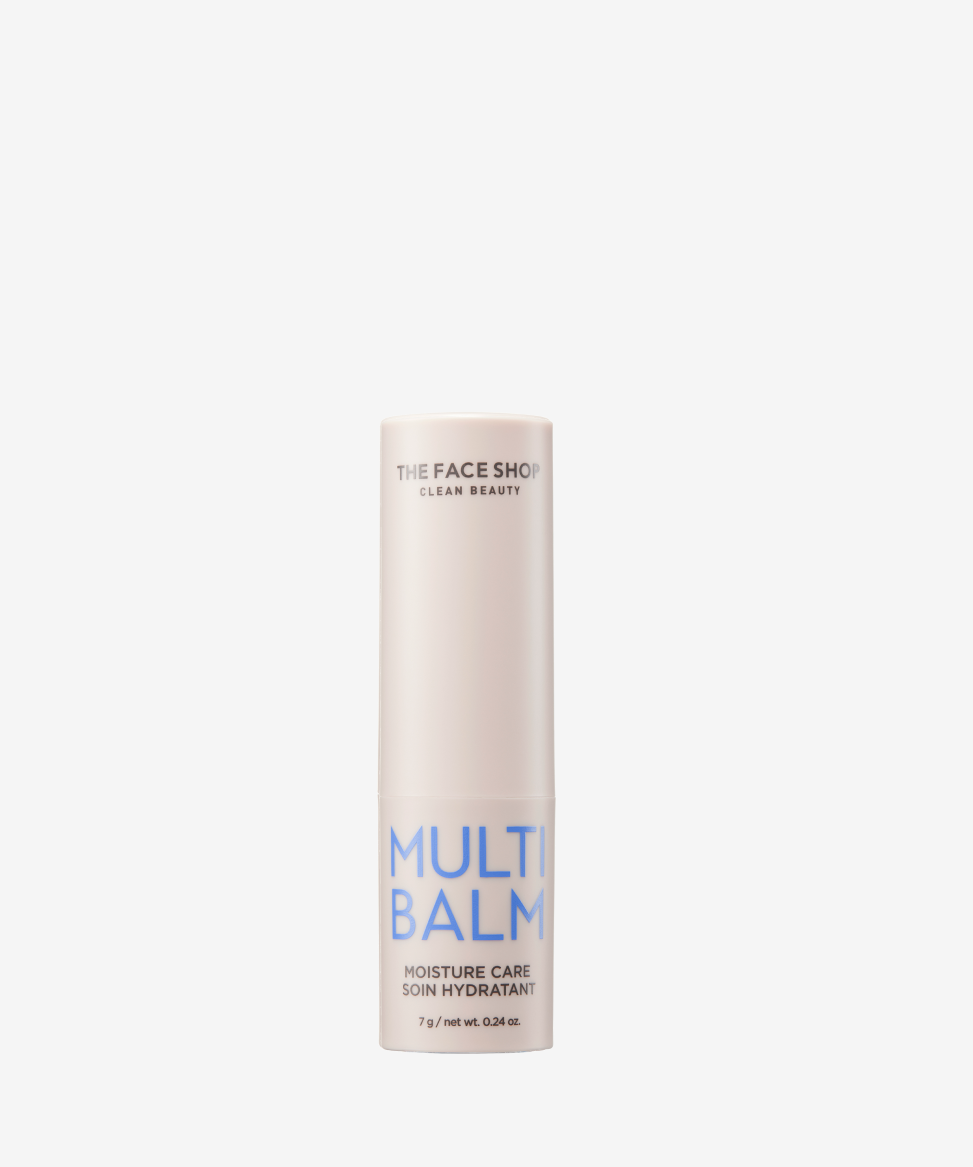
Moisture Care Multi Balm

Moisture Care Multi Balm
The Face Shop
moisture-care-multi-balm
Moisturize
9706818404645
Morning or Evening?
How often will you use this product?
Notes


Highlights
WHAT IS IT?
Moisturizing balm stick
FEATURES
Convenient application, clinically tested, improves skin hydration and moisture barrier
BEST FOR
Dry skin
CHECKS
Free of pigment, alcohol, paraben, artificial fragrances, mineral oil, benzophenone
Who Is It For?
Adults (default) Women And MenWhat Does It Help With?
Dry Skin Skin Hydration Moisture Barrier HealthBudget
Mid-rangeHow To Use
Which routine should it be used in?
Instructions:
Key Information


What The Face Shop Says
Product Description:
A convenient, clean-formula balm stick that provides an instant boost of moisture to dry skin with just a few swipes. Clinically tested to improve skin hydration and helps improve skin's moisture barrier health after 1 use, keeping skin looking firm and healthy.
About the Brand:
Ingredients Overview
Ingredients List
Water, Dicaprylyl Carbonate, Synthetic Wax, Butylene Glycol, Diphenylsiloxy Phenyl Trimethicone, Ceresin, Stearyl Heptanoate, C10-18 Triglycerides, Octadecane, Cetyl Palmitate, Glycerin, Polyglyceryl-6 Polyricinoleate, 1,2-hexanediol, Pentaerythrityl Tetraisostearate, Stearyl Dimethicone, Rosa Damascena Flower Water, Nymphaea Caerulea Flower Water, Paeonia Albiflora Root Extract, Aloe Barbadensis Leaf Juice Powder, Sodium Hyaluronate, Polyglyceryl-4 Oleate, Polyglyceryl-6 Oleate, Polyhydroxystearic Acid, Magnesium Sulfate, Microcrystalline Wax, Stearoyl Inulin, Disteardimonium Hectorite, Propylene Carbonate, Cedrol, Malachite Extract, C18-21 Alkane, C15-19 Alkane, Ascorbyl Tetraisopalmitate, Tocopherol, Madecassoside, Prunella Vulgaris Extract, Avena Sativa (Oat) Kernel Extract, Chamomilla Recutita (Matricaria) Flower Extract, Rosa Damascena Flower Extract, Stellaria Media (Chickweed) Extract, Viola Tricolor Extract, Trisodium Edta, Synthetic Fluorphlogopite, Tin Oxide, Titanium Dioxide, Ferric Ferrocyanide, Fragrance, Bht, Linalool, Limonene, Hexyl Cinnamal, Citronellol, Geraniol
Key Ingredients
Moisture Barrier Complex (Damask Rose Water, Blue Lotus Water, Aloe Barbadensis Leaf Juice Powder, Peony Extracts), Hyaluronic Acid
Ingredients Details
Butylene Glycol
Common Name(s): 1,3-butanediol,bg,1,3-butylene glycol
CAS Number: 107-88-0
DESCRIPTION
What It Does: Provides humectant hydration and active ingredient solubilization with excellent skin feel.
Why It's Used: Preferred glycol humectant in premium and k-beauty formulations for superior skin feel vs propylene glycol with equivalent functionality.
How It Works: Two hydroxyl groups at 1,3-positions provide water binding and solvent activity. better tolerated than propylene glycol with minimal sensitization risk. 4-carbon backbone provides slightly greater hydrophobic character enabling dissolution of less polar actives vs pg.
Typically Found In: Toners,essences,serums,k-beauty formulas
TECHNICAL DETAILS
Primary Category: Functional ingredient – glycol humectant
Secondary Functions: Tewl reduction,skin plumping
Application Areas:

Facial Skincare
Body Care
Hair Care

Beard Care
Color Cosmetics (Makeup)
Dietary/Oral Supplements
Typical Concentration Range: 1%–10%
SOURCING & ETHICS
Vegan Status: Yes – synthetic
Halal Status: Yes
Source Notes: Synthetic or naturally derived. excellent aqueous solubility.
SKIN COMPATIBILITY
Irritancy Rating: 1/5 – very low
Comedogenicity Rating: 0/5 – non-comedogenic
Sensitivity Concerns: Non-irritating; suitable for all skin types.
Safe for Sensitive Skin: Yes
SAFETY & COMPATIBILITY
Safety Profile: Excellent safety profile. ewg score: 1.
Works Well With: Ceramides,emollients,occlusives,glycerin,hyaluronic acid
Avoid Combining With: No significant incompatibilities
SCIENTIFIC NOTE
K-beauty's preference for butylene glycol over propylene glycol is driven by two factors: bg's superior skin feel (less tacky than pg's higher viscosity) and its lower sensitization potential (1,3-bg has better spatial distribution of hydroxyl groups that reduces protein interaction vs pg's 1,2-position oh groups).
Last Verified: 2026-03-12
Primary Sources: Cosing database,cir safety assessment
C10-18 Triglycerides
Common Name(s): C10-18 triglycerides
DESCRIPTION
What It Does: Delivers targeted skin-conditioning or bioactive benefits through a specific mechanism of action suited to the formulation's intended purpose.
Why It's Used: Specialty actives address specific skin concerns through targeted molecular mechanisms, providing efficacy beyond what base formulation ingredients alone can achieve.
How It Works: The bioactive compound interacts with specific molecular targets in skin cells or the extracellular matrix — enzymes, receptors, structural proteins, or signaling molecules — triggering beneficial biological responses.
Typically Found In: Serums,treatments,moisturizers,specialty products
TECHNICAL DETAILS
Primary Category: Specialty actives
Secondary Functions: Skin-conditioning,anti-aging
Application Areas:
Facial Skincare
Body Care
Hair Care
Beard Care
Color Cosmetics (Makeup)
Dietary/Oral Supplements
Typical Concentration Range: 0.01–5%
SOURCING & ETHICS
Vegan Status: Conditional - feedstock declaration required
Halal Status: Unverified - feedstock declaration required (plant, animal and petrochemical routes all exist)
Source Notes: Specialty active ingredient; check individual sourcing for vegan status. [audit 2026-07-29 rev2: origin-dependent: the same inci exists in plant, animal and petrochemical versions and the name does not discriminate. determination requires shariah-panel sign-off.]
SKIN COMPATIBILITY
Irritancy Rating: 1
Comedogenicity Rating: 0
Sensitivity Concerns: Low sensitization potential at recommended use concentrations.
Safe for Sensitive Skin: Yes
SAFETY & COMPATIBILITY
Safety Profile: Well-characterized cosmetic ingredient with established safety profile. generally non-irritating at typical use concentrations. suitable for leave-on and rinse-off cosmetics.
Works Well With: Niacinamide,hyaluronic acid,vitamin c,peptides
Avoid Combining With: Incompatible with oxidizing agents; check ph stability
SCIENTIFIC NOTE
Specialty actives typically work through enzyme inhibition (e.g., tyrosinase inhibition for brightening, mmp inhibition for anti-aging), receptor activation (e.g., retinoid receptors, ppar-γ for barrier genes), or transcription factor modulation (e.g., nrf2 for antioxidant gene upregulation). structure-activity relationships determine potency and selectivity.
Last Verified: 2025-01-15
Primary Sources: Cosing eu database; pcpc cosmetic ingredient safety reviews; ingredient-specific safety and efficacy literature
Ceresin
Common Name(s): Ceresin,botanical extract,phytochemical active
CAS Number: N/a
DESCRIPTION
What It Does: Provides antioxidant protection, anti-inflammatory activity, and skin conditioning from polyphenols, terpenoids, and phytochemicals.
Why It's Used: Multi-functional phytochemical profiles support concurrent skin care claims with authentic botanical heritage.
How It Works: Polyphenols scavenge ros, inhibit nf-kb/cox pathways, and condition skin through phytochemical interactions.
Typically Found In: Botanical skin care
TECHNICAL DETAILS
Primary Category: Active ingredient – antioxidant
Secondary Functions: Free radical scavenging,anti-aging
Application Areas:
Facial Skincare
Body Care
Hair Care
Beard Care
Color Cosmetics (Makeup)
Dietary/Oral Supplements
Typical Concentration Range: 0.1%–30%
SOURCING & ETHICS
Vegan Status: Conditional - supplier confirmation required
Halal Status: Conditional - basis not stated in source record; supplier origin confirmation required to determine what evidence applies
Source Notes: Plant-derived extract or synthetic. [audit 2026-07-29 rev2: status downgraded on audit. determination requires shariah-panel sign-off.]
SKIN COMPATIBILITY
Irritancy Rating: 1/5 – very low
Comedogenicity Rating: 0/5 – non-comedogenic
Sensitivity Concerns: Non-irritating; well-tolerated.
Safe for Sensitive Skin: Yes
SAFETY & COMPATIBILITY
Safety Profile: Excellent safety profile. ewg score: 1.
Works Well With: Vitamin c,vitamin e,ferulic acid,spf,other antioxidants
Avoid Combining With: No significant incompatibilities
SCIENTIFIC NOTE
Plant secondary metabolites evolved for uv photoprotection and pathogen defence — mechanisms directly translatable to cosmetic antioxidant and anti-inflammatory activity in human skin.
Last Verified:
Cetyl Palmitate
Common Name(s): Spermaceti substitute,cetyl hexadecanoate,synthetic spermaceti
CAS Number: 0540-10-3
DESCRIPTION
What It Does: Provides spermaceti-equivalent skin conditioning as an ethical whale-free synthetic wax ester.
Why It's Used: Ethical spermaceti replacement maintaining traditional cream skin feel without animal cruelty – the synthetic version of the wax that gave historical 'cold creams' their unique skin feel.
How It Works: Wax ester of cetyl alcohol and palmitic acid provides melting point 48-52°c. semi-solid at room temperature melts on skin contact for spreadable emollient film. opacifies emulsions from crystalline light scattering.
Typically Found In: Cold creams,emollient creams,opaque lotions
TECHNICAL DETAILS
Primary Category: Functional ingredient – wax ester emollient
Secondary Functions: Barrier sealing,softening
Application Areas:
Facial Skincare
Body Care
Hair Care
Beard Care
Color Cosmetics (Makeup)
Dietary/Oral Supplements
Typical Concentration Range: 1%–10%
SOURCING & ETHICS
Vegan Status: Conditional - feedstock declaration required
Halal Status: Unverified - feedstock declaration required (plant, animal and petrochemical routes all exist)
Source Notes: Plant-derived, synthetic or animal-derived. verify source. [audit 2026-07-29 rev2: origin-dependent: the same inci exists in plant, animal and petrochemical versions and the name does not discriminate. determination requires shariah-panel sign-off.]
SKIN COMPATIBILITY
Irritancy Rating: 1/5 – very low
Comedogenicity Rating: 1/5 – low; formulation-dependent
Sensitivity Concerns: Non-irritating.
Safe for Sensitive Skin: Yes
SAFETY & COMPATIBILITY
Safety Profile: Excellent safety profile. ewg score: 1.
Works Well With: Humectants,ceramides,actives as carrier
Avoid Combining With: No significant incompatibilities
SCIENTIFIC NOTE
Historical cold creams (galen's original 2nd-century ad formulation used beeswax and rosewater) used natural spermaceti as the key emollient until whale hunting bans. cetyl palmitate's creation as a synthetic spermaceti substitute in the 1980s maintained the traditional cold cream skin feel while enabling ethical production – one of the cosmetic industry's successful cruelty-free ingredient innovations.
Last Verified: 2026-03-12
Primary Sources: Cosing database,cir safety assessment