

Moroccanoil
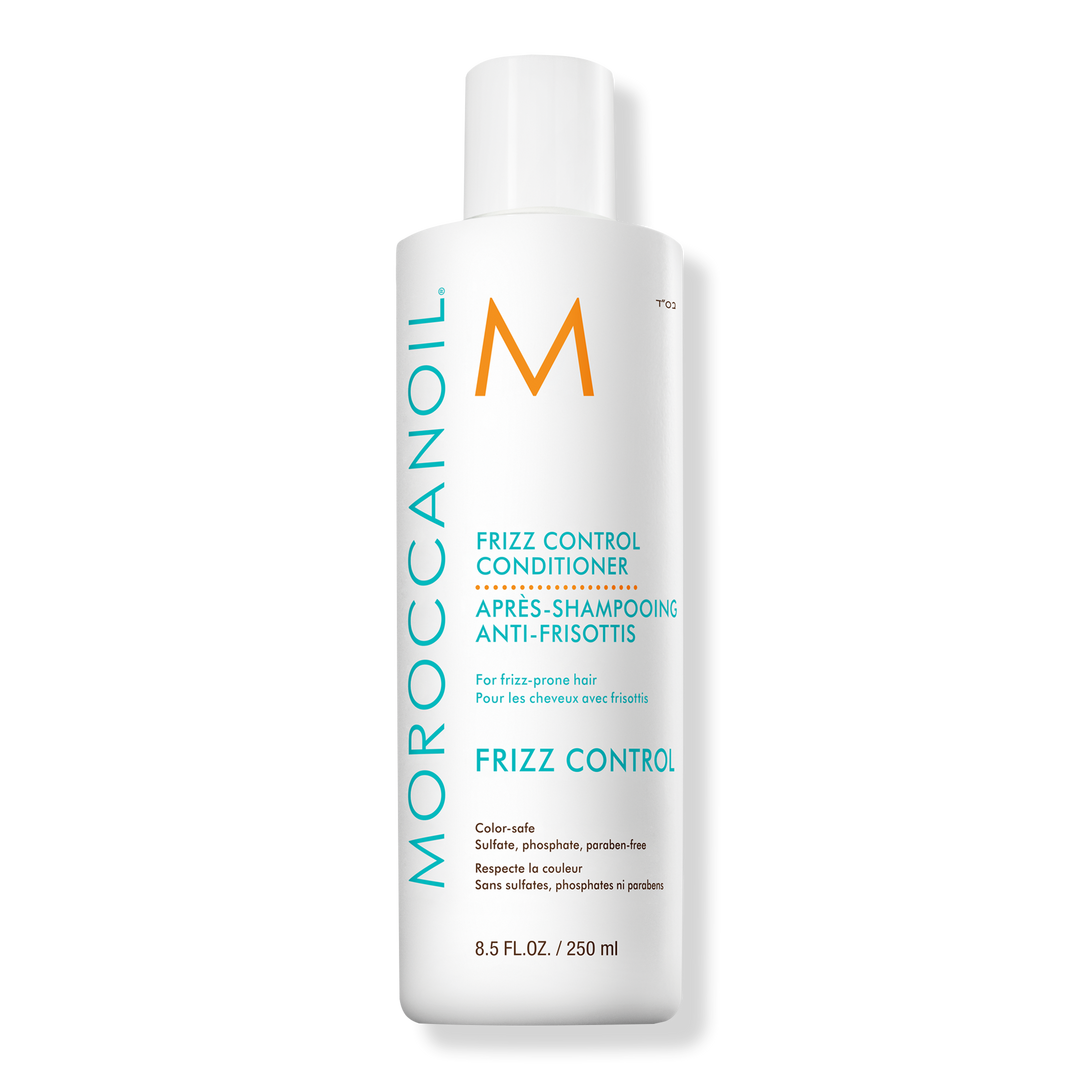
Moroccanoil Frizz Control Conditioner
Moroccanoil Frizz Control Conditioner imparts optimal nourishment to fight frizz, flyaways, and static while protecting hair against the effects of humidity.
Paraben-free
Color-safe
Silicone-free
Natural
Protein-free
CGM
Optimized for Your Environment & Lifestyle
Nykaa
In stock
Recommended

Moroccanoil Frizz Control Conditioner
Moroccanoil
moroccanoil-frizz-control-conditioner
Conditioner
10355431014693
Morning or Evening?
How often will you use this product?
Notes


Secure payment protection
Your Biodata Compatibility Analysis
Based on your 6 hair health indices and environmental factors
Poor Match
Significant incompatibilities
Growth Cycle Health Index
Hair Match
Hair Health Index Alignment
Optimal for OSI, SSI, DI, HSI
Ingredient Efficacy
Matching Ingredient Score
Environment Compatibility
Current UV, Air Quality & Humidity
Why This Works for Your Specific Profile
Damage Index:
Damage levels outside specified range may not benefit optimally from product formulation
Water Quality:
Fine hair becomes weighed down and greasy from heavy formulation
Hair:
Closed cuticles resist product penetration causing surface buildup without internal benefits
Active Lifestyle:
Activity levels outside optimal range affect product performance and maintenance requirements
Your Hair Profile Integration
Your Hair Archetype

Density Level

Washing Frequency

Shedding Level

Oil Level
Your Hair Health Indices
Oil Secretion (OSI)
Very low oil production
Scalp Sensitivity (SSI)
Very low sensitivity
Growth Rate (CMR)
Poor metabolism rate
Damage Index (DI)
Minimal damage
Hair Strength (HSI)
Very weak strength
Softness Index (SI)
Significant improvement needed
Water & Environmental Integration

Water:


Expected Results & Timeline
Key Highlights

What is it?
Conditioner with 30 ingredients

Who Is It For
All ages, All genders

Budget
Rs. 2,897.79 - Rs. 5,795.58

Timeline
Up to 72 hours
Why You’ll Love It

What Does It Help With?
Frizz, Dryness, Breakage, Split Ends, Dullness

Best for
Frizz

Features
Long-lasting frizz control, Imparts optimal nourishment, Noticeably softer, silkier, more luminous hair, Tested on fine, medium, and coarse hair types

Checks
Paraben-free, Color-safe, Silicone-free, Natural, Protein-free, CGM, Heat Protection, Anti-Frizz
Ingredients Overview
Ingredients List
aqua-water-eau, cetearyl-alcohol, stearyl-alcohol, triheptanoin, brassicamidopropyl-dimethylamine, c13-16-isoparaffin, cetyl-esters, coco-caprylate-caprate, parfum-fragrance, behentrimonium-chloride, bis-cetearyl-amodimethicone, jojoba-esters, argania-spinosa-argan-kernel-oil, helianthus-annuus-sunflower-seed-wax, artocarpus-heterophyllus-jackfruit-fruit-extract, helianthus-annuus-sunflower-seed-oil, amaranthus-caudatus-amaranth-seed-extract, porphyra-umbilicalis-red-algae-extract, rosmarinus-officinalis-rosemary-leaf-extract, caesalpinia-spinosa-gum, citric-acid, glycerin, ethylhexylglycerin, polyquaternium-37, heptyl-undecylenate, polysorbate-60, caprylyl-glycol, cetrimonium-chloride, polyurethane-100, propanediol, guar-hydroxypropyltrimonium-chloride, panthenol, ceteareth-25, ceteareth-7, tocopherol, polyglycerin-3, tetrasodium-glutamate-diacetate, lactobacillus-ferment, fumaric-acid, glycolic-acid, diisostearyl-malate, potassium-hydroxide, sodium-hydroxide, potassium-sorbate, sodium-benzoate, chlorphenesin, phenoxyethanol, tetramethyl-acetyloctahydronaphthalenes, linalool, linalyl-acetate, vanillin, alpha-isomethyl-ionone
Key Ingredients
argan-oil, jackfruit-extract, amaranth-oil
Ingredients Details
Ceteareth-25
Common Name(s): Nonionic emulsifier,o/w surfactant,emulsion stabiliser
CAS Number: N/a
DESCRIPTION
What It Does: Stabilises o/w emulsions by forming a molecular monolayer at the oil-water interface, provides co-emulsification synergy with other emulsifiers, and contributes to emulsion texture through interfacial film properties.
Why It's Used: Nonionic emulsifiers are preferred for sensitive skin and ph-extreme formulations — no ionic charge means no electrostatic interaction with skin proteins, no ph-dependent function loss, and compatibility with both anionic and cationic co-ingredients.
How It Works: Hlb determines emulsion type: hlb 8–12 for o/w emulsification; hlb 3–6 for w/o. the peg or glycoside head group provides hydrophilicity while the c16–c18 fatty chain provides lipophilicity. at the o/w interface, nonionic emulsifiers form a mixed monolayer reducing interfacial tension from ~35 mn/m (clean oil-water) to 5–10 mn/m, providing thermodynamic stabilisation.
Typically Found In: Creams,lotions,o/w emulsions
TECHNICAL DETAILS
Primary Category: Active ingredient – cosmetic active
Secondary Functions: Skin conditioning
Application Areas:

Facial Skincare

Body Care
Hair Care
Beard Care
Color Cosmetics (Makeup)
Dietary/Oral Supplements
Typical Concentration Range: 1%–10%
SOURCING & ETHICS
Vegan Status: Conditional - feedstock declaration required
Halal Status: Unverified - feedstock declaration required (plant, animal and petrochemical routes all exist)
Source Notes: Commercially produced for cosmetic use. verify vegan/halal status with supplier. [audit 2026-07-29 rev2: origin-dependent: the same inci exists in plant, animal and petrochemical versions and the name does not discriminate. determination requires shariah-panel sign-off.]
SKIN COMPATIBILITY
Irritancy Rating: 1/5 – very low
Comedogenicity Rating: 0/5 – non-comedogenic
Sensitivity Concerns: Well-tolerated by most skin types.
Safe for Sensitive Skin: Yes
SAFETY & COMPATIBILITY
Safety Profile: Good safety profile at recommended concentrations. ewg score: 1–2.
Works Well With: Standard skincare actives
Avoid Combining With: No known significant incompatibilities
SCIENTIFIC NOTE
Mixed emulsifier systems (e.g., glyceryl stearate + peg-100 stearate, or cetearyl glucoside + cetearyl alcohol) provide better emulsion stability than single emulsifiers — synergistic packing of different molecular geometries creates a more cohesive, mechanically robust interfacial film.
Last Verified: 2026-03-12
Primary Sources: Cosing database,nonionic emulsifier hlb system review
Ceteareth-7
Common Name(s): Ceteareth-7
DESCRIPTION
What It Does: Delivers targeted skin-conditioning or bioactive benefits through a specific mechanism of action suited to the formulation's intended purpose.
Why It's Used: Specialty actives address specific skin concerns through targeted molecular mechanisms, providing efficacy beyond what base formulation ingredients alone can achieve.
How It Works: The bioactive compound interacts with specific molecular targets in skin cells or the extracellular matrix — enzymes, receptors, structural proteins, or signaling molecules — triggering beneficial biological responses.
Typically Found In: Serums,treatments,moisturizers,specialty products
TECHNICAL DETAILS
Primary Category: Specialty actives
Secondary Functions: Skin-conditioning,anti-aging
Application Areas:
Facial Skincare
Body Care
Hair Care
Beard Care
Color Cosmetics (Makeup)
Dietary/Oral Supplements
Typical Concentration Range: 0.01–5%
SOURCING & ETHICS
Vegan Status: Conditional - feedstock declaration required
Halal Status: Unverified - feedstock declaration required (plant, animal and petrochemical routes all exist)
Source Notes: Specialty active ingredient; check individual sourcing for vegan status. [audit 2026-07-29 rev2: origin-dependent: the same inci exists in plant, animal and petrochemical versions and the name does not discriminate. determination requires shariah-panel sign-off.]
SKIN COMPATIBILITY
Irritancy Rating: 1
Comedogenicity Rating: 0
Sensitivity Concerns: Low sensitization potential at recommended use concentrations.
Safe for Sensitive Skin: Yes
SAFETY & COMPATIBILITY
Safety Profile: Well-characterized cosmetic ingredient with established safety profile. generally non-irritating at typical use concentrations. suitable for leave-on and rinse-off cosmetics.
Works Well With: Niacinamide,hyaluronic acid,vitamin c,peptides
Avoid Combining With: Incompatible with oxidizing agents; check ph stability
SCIENTIFIC NOTE
Specialty actives typically work through enzyme inhibition (e.g., tyrosinase inhibition for brightening, mmp inhibition for anti-aging), receptor activation (e.g., retinoid receptors, ppar-γ for barrier genes), or transcription factor modulation (e.g., nrf2 for antioxidant gene upregulation). structure-activity relationships determine potency and selectivity.
Last Verified: 2025-01-15
Primary Sources: Cosing eu database; pcpc cosmetic ingredient safety reviews; ingredient-specific safety and efficacy literature
Chlorphenesin
Common Name(s): 3-(4-chlorophenoxy)-1,2-propanediol,globacid
CAS Number: 104-29-0
DESCRIPTION
What It Does: Provides gram-negative focused preservation complementary to phenoxyethanol for comprehensive spectrum coverage.
Why It's Used: Phenoxyethanol complement — chlorphenesin's gram-negative and antifungal coverage complements phenoxyethanol's gram-positive activity for full-spectrum preservation at lower individual concentrations.
How It Works: 4-chlorophenol ether glycol disrupts bacterial and fungal membranes. strong gram-negative activity (pseudomonas, e. coli). good candida antifungal activity. used with phenoxyethanol for synergistic broad-spectrum coverage. ph stable 3-9.
Typically Found In: Comprehensive preservation systems,baby products (low concentration)
TECHNICAL DETAILS
Primary Category: Functional ingredient – glycerol ether preservative
Secondary Functions: Skin conditioning
Application Areas:
Facial Skincare
Body Care
Hair Care
Beard Care
Color Cosmetics (Makeup)
Dietary/Oral Supplements
Typical Concentration Range: 0.1%–0.3%
SOURCING & ETHICS
Vegan Status: Conditional - supplier confirmation required
Halal Status: Unverified - supplier confirmation required
Source Notes: Commercially produced for cosmetic use. verify vegan/halal status with supplier. [audit 2026-07-29 rev2: the record's own source_notes does not assert a non-animal origin, or instructs the reader to verify with the supplier; "yes" asserts knowledge the record does not hold. determination requires shariah-panel sign-off.]
SKIN COMPATIBILITY
Irritancy Rating: 1/5 – very low
Comedogenicity Rating: 0/5 – non-comedogenic
Sensitivity Concerns: Well-tolerated by most skin types.
Safe for Sensitive Skin: Yes
SAFETY & COMPATIBILITY
Safety Profile: Eu max 0.3% cosmetics. good safety profile. synergistic combination with phenoxyethanol (0.3% pe + 0.1% chlorphenesin often equivalent to 1% pe alone).
Works Well With: Standard skincare actives
Avoid Combining With: No known significant incompatibilities
SCIENTIFIC NOTE
Chlorphenesin + phenoxyethanol synergy operates through a classic spectrum-filling combination: phenoxyethanol provides strong gram-positive antimicrobial activity while chlorphenesin provides gram-negative and antifungal coverage. the combination's minimum inhibitory concentration sum is subadditive (provides equivalent preservation at combined concentrations below what either alone would require) — textbook pharmacological synergy enabling lower total preservative load.
Last Verified: 2026-03-12
Primary Sources: Cosing database,eu preservative annex v,cir safety assessment
Ethylhexylglycerin
Common Name(s): Octylglycerin,2-ethylhexyl glycerol ether,sensiva sc 10
CAS Number: 70445-33-9
DESCRIPTION
What It Does: Provides antimicrobial skin conditioning with deodorant activity and preservation system enhancement.
Why It's Used: Multifunctional clean beauty preservation active — ethylhexylglycerin provides antimicrobial, deodorant, and skin conditioning in a single ingredient accepted in most natural cosmetic certification schemes.
How It Works: Glycerol ether provides antimicrobial via bacterial membrane phospholipid disruption. deodorant activity via reduction of underarm lipase enzyme activity (similar mechanism to triethyl citrate). skin conditioning from glycerol humectant component. synergistic with phenoxyethanol and diols.
Typically Found In: Natural preservation systems,deodorants,skin conditioning products
TECHNICAL DETAILS
Primary Category: Functional ingredient – antimicrobial glycerol ether
Secondary Functions: Skin conditioning
Application Areas:
Facial Skincare
Body Care
Hair Care
Beard Care
Color Cosmetics (Makeup)
Dietary/Oral Supplements
Typical Concentration Range: 0.1%–0.5%
SOURCING & ETHICS
Vegan Status: Conditional - supplier confirmation required
Halal Status: Unverified - supplier confirmation required
Source Notes: Commercially produced for cosmetic use. verify vegan/halal status with supplier. [audit 2026-07-29 rev2: the record's own source_notes does not assert a non-animal origin, or instructs the reader to verify with the supplier; "yes" asserts knowledge the record does not hold. determination requires shariah-panel sign-off.]
SKIN COMPATIBILITY
Irritancy Rating: 1/5 – very low
Comedogenicity Rating: 0/5 – non-comedogenic
Sensitivity Concerns: Well-tolerated by most skin types.
Safe for Sensitive Skin: Yes
SAFETY & COMPATIBILITY
Safety Profile: Good safety profile at recommended concentrations. ewg score: 1–2.
Works Well With: Standard skincare actives
Avoid Combining With: No known significant incompatibilities
SCIENTIFIC NOTE
Ethylhexylglycerin's deodorant mechanism is pharmacologically identical to triethyl citrate: both inhibit skin surface microbial lipase enzymes that convert odourless triglycerides to odorous free fatty acids. the glycerol ether structure of ethylhexylglycerin, combined with the 2-ethylhexyl chain, provides lipase inhibition similar to ester-based lipase inhibitors from a different chemical class.
Last Verified: 2026-03-12
Primary Sources: Cosing database,schülke sensiva sc 10 technical data,cir safety assessment
Personalized Usage Instructions
How to Use
Step 1
After shampooing with Moroccanoil Frizz Control Shampoo, gently squeeze excess water from hair and apply conditioner from mid-length to ends
Step 2
Leave on for 1–2 minutes
Step 3
Rinse well
Medical Chemicals

Protein/Moisture
- Moisture
pH Level
- Acidic

Porosity Taget
- Normal Porosity
Customized for Your Profile
Scalp Condtions
Sensitive Scalp, pH Balanced, Oil Control, Dry Scalp
Climate Suitability
Humid, Dry, UV Protection, Pollution Shield, Winter, Summer
Clinical Claims
Frizz control for up to 72 hours, Protect against frizz in up to 90% humidity
Frequency
After shampooing with Moroccanoil Frizz Control Shampoo, gently squeeze excess water from hair and apply conditioner from mid-length to ends. Leave on for 1–2 minutes. Rinse well.
Product Information

Paraben-free
Color-safe
Silicone-free
Natural
Protein-free
CGM
Heat Protection
Anti-Frizz