

Moroccanoil
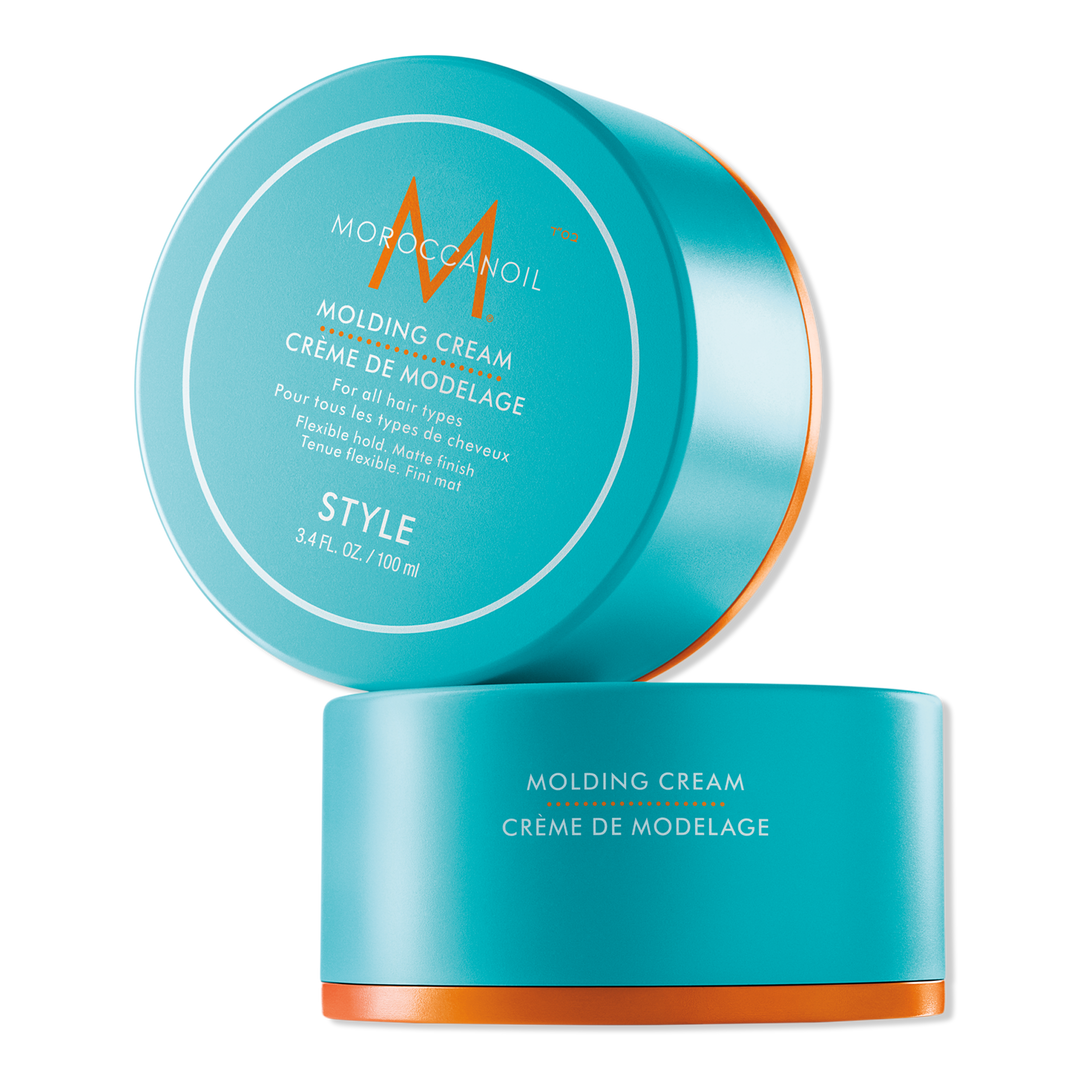
Moroccanoil Molding Cream
Moroccanoil Molding Cream is a fiber-rich, emollient cream that provides gentle structure and definition with flexible hold. This innovative formula is infused with thickening fibers to create soft, natural-looking texture, as well as argan and olive oils to help moisturize and improve elasticity.
Paraben-free
Color-safe
Silicone-free
Natural
Protein-free
Frizz
Optimized for Your Environment & Lifestyle
Nykaa
In stock
Recommended

Moroccanoil Molding Cream
Moroccanoil
moroccanoil-molding-cream
Styling Cream
10365008183589
Morning or Evening?
How often will you use this product?
Notes


Secure payment protection
Your Biodata Compatibility Analysis
Based on your 6 hair health indices and environmental factors
Poor Match
Significant incompatibilities
Growth Cycle Health Index
Hair Match
Hair Health Index Alignment
Optimal for OSI, SSI, DI, HSI
Ingredient Efficacy
Matching Ingredient Score
Environment Compatibility
Current UV, Air Quality & Humidity
Why This Works for Your Specific Profile
Damage Index:
Damage levels outside specified range may not benefit optimally from product formulation
Water Quality:
Straight to wavy hair lacks curl structure becoming weighed down without curl definition benefits
Hair:
Closed cuticles resist product penetration causing surface buildup without internal benefits
Active Lifestyle:
Activity levels outside optimal range affect product performance and maintenance requirements
Your Hair Profile Integration
Your Hair Archetype

Density Level

Washing Frequency

Shedding Level

Oil Level
Your Hair Health Indices
Oil Secretion (OSI)
Very low oil production
Scalp Sensitivity (SSI)
Very low sensitivity
Growth Rate (CMR)
Poor metabolism rate
Damage Index (DI)
Minimal damage
Hair Strength (HSI)
Very weak strength
Softness Index (SI)
Significant improvement needed
Water & Environmental Integration

Water:


Expected Results & Timeline
Key Highlights

What is it?
Styling cream with 30 ingredients

Who Is It For
All ages, All genders

Budget
Rs. 2,938.68 - Rs. 5,877.36

Timeline
Immediate
Why You’ll Love It

What Does It Help With?
Frizz, Breakage, Dullness

Best for
Frizz

Features
Texturizes hair with a fiber-rich, emollient formula; Nourishes with antioxidant-rich argan and olive oils; Enhances look and feel of hair with thickening fibers; Emphasizes layers and updos, creating piecey, matte definition; Provides medium hold without stiffness or flaking

Checks
Paraben-free, Color-safe, Silicone-free, Natural, Protein-free
Ingredients Overview
Ingredients List
aqua-water-eau, synthetic-beeswax, glycerin, palmitic-acid, dimethicone, parfum-fragrance, steareth-2, stearyl-alcohol, cetearyl-alcohol, polyquaternium-11, acrylates-palmeth-25-acrylate-copolymer, behenamidopropyl-dimethylamine, glyceryl-stearate, peg-100-stearate, peg-12-dimethicone, argania-spinosa-argan-kernel-oil, olea-europaea-olive-fruit-oil, hydrogenated-olive-oil, olea-europaea-olive-oil-unsaponifiables, cellulose, hydroxyethylcellulose, glucose, cetearyl-glucoside, polyquaternium-55, peg-90m, caprylyl-glycol, myristic-acid, stearic-acid, sodium-acetate, triethanolamine, chlorphenesin, phenoxyethanol, alpha-isomethyl-ionone, carvone, camphor, eucalyptus-globulus-oil, hexamethylindano-pyran, hydroxycitronellal, lavandula-lavender-oil-extract, isoeugenyl-acetate, linalool, linalyl-acetate, mentha-viridis-spearmint-leaf-oil, tetramethyl-acetyloctahydronaphthalenes, vanillin
Key Ingredients
argan-oil, olive-oil, palmitic-acid
Ingredients Details
Camphor
Common Name(s): 2-bornanone,2-camphanone,gum camphor
CAS Number: 76-22-2
DESCRIPTION
What It Does: Provides cooling sensation, analgesic, and anti-itch activity through trpm8 and trpv1 modulation.
Why It's Used: Cooling-sensation active with topical analgesic and anti-itch benefits for soothing formulations requiring temperature-sensation modification.
How It Works: Activates trpm8 (cold thermoreceptor) for cooling sensation. at higher concentrations, desensitizes trpv1 (heat/pain receptor) for analgesic activity. penetration enhancement via stratum corneum lipid fluidization. antimicrobial via membrane disruption.
Typically Found In: Cooling balms,topical pain relief,anti-itch products,sensory skincare
TECHNICAL DETAILS
Primary Category: Active ingredient – monoterpenoid sensory active
Secondary Functions: Redness reduction,anti-inflammatory,calming
Application Areas:

Facial Skincare
Body Care

Hair Care
Beard Care
Color Cosmetics (Makeup)
Dietary/Oral Supplements
Typical Concentration Range: 0.5%–3%
SOURCING & ETHICS
Vegan Status: Yes – from cinnamomum camphora or synthetic
Halal Status: Yes
Source Notes: Plant-derived extract or synthetic.
SKIN COMPATIBILITY
Irritancy Rating: 2/5 – low to moderate at high concentrations
Comedogenicity Rating: 0/5 – non-comedogenic
Sensitivity Concerns: Avoid contact with eyes. can cause skin sensitization at concentrations above eu limit. contraindicated in infants and young children.
Safe for Sensitive Skin: Yes – particularly recommended for sensitive skin
SAFETY & COMPATIBILITY
Safety Profile: Eu max 1.5% (leave-on body). avoid near eyes. do not apply to broken skin. not for infant use near face.
Works Well With: Ceramides,panthenol,allantoin,hyaluronic acid,centella asiatica
Avoid Combining With: No significant incompatibilities
SCIENTIFIC NOTE
Camphor's concurrent activation of trpm8 (cooling) and desensitization of trpv1 (heat/pain) provides a unique dual sensory modulation that both masks pain (trpv1 desensitization) and replaces it with a pleasant cooling sensation (trpm8 activation) – explaining the well-documented analgesic efficacy of camphor-containing topical preparations.
Last Verified: Cosing database,cir safety assessment
Primary Sources: 2026-03-12
Carvone
Common Name(s): Fragrance ingredient,eu allergen or aromatic component,olfactory/flavour
CAS Number: N/a
DESCRIPTION
What It Does: Provides specific aromatic character and olfactory experience contributing to product sensory experience and consumer appeal.
Why It's Used: Fragrance components are the primary cause of cosmetic contact sensitisation — eu requires individual label declaration of 26 identified fragrance allergens above threshold concentrations.
How It Works: Terpenoid and phenylpropanoid aromatic chemicals interact with olfactory receptor neurons (orns) in the nasal epithelium — small volatile molecules (logp 2–5, mw 100–300) bind g-protein coupled olfactory receptors triggering neurological scent perception. sensitisation risk from electrophilic reactivity of certain functional groups (aldehydes, α,β-unsaturated carbonyls) with skin proteins.
Typically Found In: All fragrance products
TECHNICAL DETAILS
Primary Category: Active ingredient – cosmetic active
Secondary Functions: Skin conditioning
Application Areas:
Facial Skincare
Body Care
Hair Care
Beard Care
Color Cosmetics (Makeup)
Dietary/Oral Supplements
Typical Concentration Range: Declare on label above threshold (eu)
SOURCING & ETHICS
Vegan Status: Conditional
Halal Status: Yes
Source Notes: Commercially produced for cosmetic use. verify vegan/halal status with supplier.
SKIN COMPATIBILITY
Irritancy Rating: 1/5 – very low
Comedogenicity Rating: 0/5 – non-comedogenic
Sensitivity Concerns: Well-tolerated by most skin types.
Safe for Sensitive Skin: Yes
SAFETY & COMPATIBILITY
Safety Profile: Good safety profile at recommended concentrations. ewg score: 1–2.
Works Well With: Standard skincare actives
Avoid Combining With: No known significant incompatibilities
SCIENTIFIC NOTE
Eu 1223/2009 annex iii allergen threshold: >0.001% in rinse-off, >0.0001% in leave-on — any listed allergen exceeding these levels requires individual inci label declaration separate from the generic fragrance/parfum declaration.
Last Verified: Eu regulation 1223/2009 annex iii,fragrance allergen declaration requirements
Primary Sources: 2026-03-12
Cellulose
Common Name(s): Cellulose,cosmetic active,functional ingredient
CAS Number: N/a
DESCRIPTION
What It Does: Delivers characteristic cosmetic function at recommended use concentration.
Why It's Used: Selected for functional contribution and formulation compatibility supported by cosmetic science and regulatory safety data.
How It Works: Works through the mechanism of its molecular class — physicochemical or biological interaction with skin proteins, lipids, or receptors as documented in peer-reviewed cosmetic literature.
Typically Found In: Skin care formulations
TECHNICAL DETAILS
Primary Category: Active ingredient – cosmetic active
Secondary Functions: Skin conditioning
Application Areas:
Facial Skincare
Body Care
Hair Care
Beard Care
Color Cosmetics (Makeup)
Dietary/Oral Supplements
Typical Concentration Range: 0.1%–10%
SOURCING & ETHICS
Vegan Status: Conditional
Halal Status: Yes
Source Notes: Commercially produced for cosmetic use. verify vegan/halal status with supplier.
SKIN COMPATIBILITY
Irritancy Rating: 1/5 – very low
Comedogenicity Rating: 0/5 – non-comedogenic
Sensitivity Concerns: Well-tolerated by most skin types.
Safe for Sensitive Skin: Yes
SAFETY & COMPATIBILITY
Safety Profile: Good safety profile at recommended concentrations. ewg score: 1–2.
Works Well With: Standard skincare actives
Avoid Combining With: No known significant incompatibilities
SCIENTIFIC NOTE
Cellulose has an established safety and efficacy profile within the cosmetic regulatory framework at standard use concentrations.
Last Verified: Cosing database,cellulose technical literature
Primary Sources: 2026-03-12
Chlorphenesin
Common Name(s): 3-(4-chlorophenoxy)-1,2-propanediol,globacid
CAS Number: 104-29-0
DESCRIPTION
What It Does: Provides gram-negative focused preservation complementary to phenoxyethanol for comprehensive spectrum coverage.
Why It's Used: Phenoxyethanol complement — chlorphenesin's gram-negative and antifungal coverage complements phenoxyethanol's gram-positive activity for full-spectrum preservation at lower individual concentrations.
How It Works: 4-chlorophenol ether glycol disrupts bacterial and fungal membranes. strong gram-negative activity (pseudomonas, e. coli). good candida antifungal activity. used with phenoxyethanol for synergistic broad-spectrum coverage. ph stable 3-9.
Typically Found In: Comprehensive preservation systems,baby products (low concentration)
TECHNICAL DETAILS
Primary Category: Functional ingredient – glycerol ether preservative
Secondary Functions: Skin conditioning
Application Areas:
Facial Skincare
Body Care
Hair Care
Beard Care
Color Cosmetics (Makeup)
Dietary/Oral Supplements
Typical Concentration Range: 0.1%–0.3%
SOURCING & ETHICS
Vegan Status: Yes – synthetic
Halal Status: Yes
Source Notes: Commercially produced for cosmetic use. verify vegan/halal status with supplier.
SKIN COMPATIBILITY
Irritancy Rating: 1/5 – very low
Comedogenicity Rating: 0/5 – non-comedogenic
Sensitivity Concerns: Well-tolerated by most skin types.
Safe for Sensitive Skin: Yes
SAFETY & COMPATIBILITY
Safety Profile: Eu max 0.3% cosmetics. good safety profile. synergistic combination with phenoxyethanol (0.3% pe + 0.1% chlorphenesin often equivalent to 1% pe alone).
Works Well With: Standard skincare actives
Avoid Combining With: No known significant incompatibilities
SCIENTIFIC NOTE
Chlorphenesin + phenoxyethanol synergy operates through a classic spectrum-filling combination: phenoxyethanol provides strong gram-positive antimicrobial activity while chlorphenesin provides gram-negative and antifungal coverage. the combination's minimum inhibitory concentration sum is subadditive (provides equivalent preservation at combined concentrations below what either alone would require) — textbook pharmacological synergy enabling lower total preservative load.
Last Verified: Cosing database,eu preservative annex v,cir safety assessment
Primary Sources: 2026-03-12
Personalized Usage Instructions
How to Use
Step 1
Rub a small amount between palms and distribute evenly through damp or dry hair
Medical Chemicals

Protein/Moisture
- Moisture
pH Level
- Acidic

Porosity Taget
- Normal Porosity
Customized for Your Profile
Scalp Condtions
Sensitive Scalp, pH Balanced, Oil Control, Dry Scalp
Climate Suitability
Humid, Dry, Hard Water, Soft Water, UV Protection, Pollution Shield, Winter, Summer
Clinical Claims
Frequency
Rub a small amount between palms and distribute evenly through damp or dry hair.
Product Information

Paraben-free
Color-safe
Silicone-free
Natural
Protein-free
