

HATOMUGI
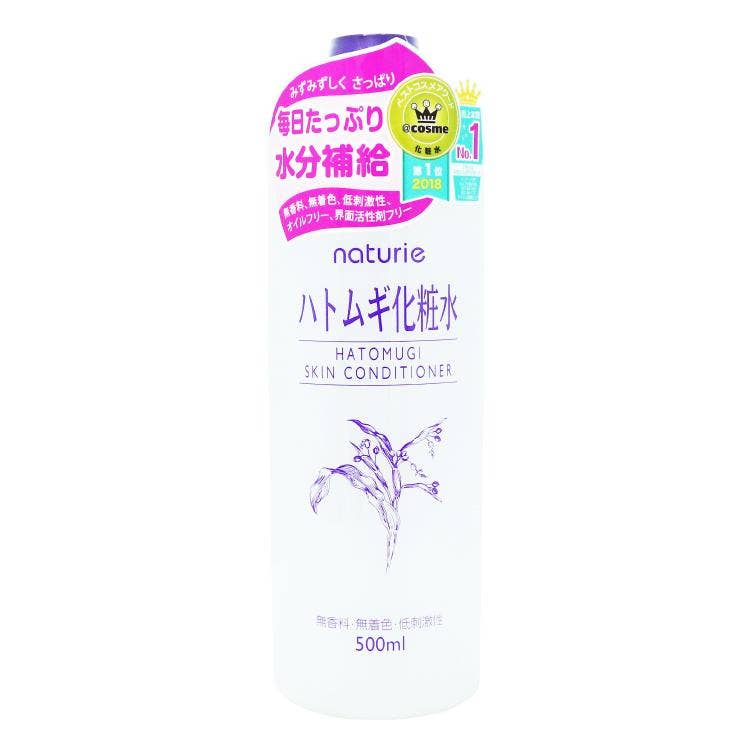
Naturie Hatomugi Skin Conditioning Lotion 500Ml#

Naturie Hatomugi Skin Conditioning Lotion 500Ml#
HATOMUGI
naturie-hatomugi-skin-conditioning-lotion-500ml
Tone
10084792172837
Morning or Evening?
How often will you use this product?
Notes


Highlights
WHAT IS IT?
Skin Conditioner - 10 ingredients
FEATURES
Hydrates, tones, evens out skin, water-like consistency, no scent, lightweight and non-greasy, moisturizing and soothing properties from Coix Seed.
BEST FOR
sensitive
CHECKS
No parabens, no synthetic fragrances, no silicones
Who Is It For?
All Ages Both GendersWhat Does It Help With?
Hydrating Soothing Skin Elasticity Skin ClarityBudget
Affordable (under $30)How To Use
Which routine should it be used in?
Instructions:
Key Information


What HATOMUGI Says
Product Description:
This is made in Japan and it is popular as an all-in-one type of product to hydrate, tone and even out the skin for improved clarity and radiance. The formula has a very thin, watery consistency and no scent. Unlike some products, this thankfully leaves no uncomfortable residue to speak of and I don’t need to rinse it away after application. It’s really very water-like and non-sticky, non-greasy and feels completely weightless and refreshing when applied to the skin. The Hatomugi grain is also known as Coix Seed and it is the extract from this seed that is the active ingredient in this skin conditioning product. One of the key features of the hatomugi seed is its extremely impressive moisture-holding qualities and it is therefore famed for its highly effective properties in rehydrating and soothing skin. The hatomugi seed is also popularly consumed as a grain in countries across Asia and is a popular ingredient in drinks and soups as a herbal remedy to cool down the body as well as for its famed ability to encourage skin elasticity.
About the Brand:
Ingredients Overview
Ingredients List
Water,Butylene-Glycol,Dipotassium-Glycyrrhizate,Coix-lacryma-jobi,Styrene/acrylates-copolymer,Dipropylene-glycol,Alcohol,Citric-Acid,Sodium-citrate,Methylparaben,Propylparaben
Key Ingredients
Coix-lacryma-jobi,Water,Butylene-Glycol
Ingredients Details
Alcohol
Common Name(s): Alcohol,cosmetic active,functional ingredient
CAS Number: N/a
DESCRIPTION
What It Does: Delivers characteristic cosmetic function at recommended use concentration.
Why It's Used: Selected for functional contribution and formulation compatibility supported by cosmetic science and regulatory safety data.
How It Works: Works through the mechanism of its molecular class as documented in peer-reviewed cosmetic literature.
Typically Found In: Skin care formulations
TECHNICAL DETAILS
Primary Category: Active ingredient – cosmetic active
Secondary Functions: Skin conditioning
Application Areas:

Facial Skincare

Body Care
Hair Care
Beard Care
Color Cosmetics (Makeup)
Dietary/Oral Supplements
Typical Concentration Range: 0.1%–10%
SOURCING & ETHICS
Vegan Status: Yes - standard ethanol routes are non-animal; confirm denaturant origin
Halal Status: Conditional - ethanol production route and residual concentration; jurisdiction-dependent, refer to certifier stance
Source Notes: Commercially produced for cosmetic use. verify vegan/halal status with supplier. [audit 2026-07-29 rev2: ethanol pathway; determination depends on route, on whether the plant also produces beverage alcohol, and on residual concentration. determination requires shariah-panel sign-off.]
SKIN COMPATIBILITY
Irritancy Rating: 1/5 – very low
Comedogenicity Rating: 0/5 – non-comedogenic
Sensitivity Concerns: Well-tolerated by most skin types.
Safe for Sensitive Skin: Yes
SAFETY & COMPATIBILITY
Safety Profile: Good safety profile at recommended concentrations. ewg score: 1–2.
Works Well With: Standard skincare actives
Avoid Combining With: No known significant incompatibilities
SCIENTIFIC NOTE
Alcohol has an established safety profile within the cosmetic regulatory framework at standard use concentrations.
Last Verified: 2026-03-12
Primary Sources: Cosing database,alcohol technical literature
Methylparaben
Common Name(s): Methylparaben,cosmetic active,functional ingredient
CAS Number: N/a
DESCRIPTION
What It Does: Delivers characteristic cosmetic function at recommended use concentration.
Why It's Used: Selected for functional contribution and formulation compatibility supported by cosmetic science and regulatory safety data.
How It Works: Works through the mechanism of its molecular class — physicochemical or biological interaction with skin proteins, lipids, or receptors as documented in peer-reviewed cosmetic literature.
Typically Found In: Skin care formulations
TECHNICAL DETAILS
Primary Category: Active ingredient – cosmetic active
Secondary Functions: Skin conditioning
Application Areas:
Facial Skincare
Body Care
Hair Care
Beard Care
Color Cosmetics (Makeup)
Dietary/Oral Supplements
Typical Concentration Range: 0.1%–10%
SOURCING & ETHICS
Vegan Status: Conditional - supplier confirmation required
Halal Status: Unverified - supplier confirmation required
Source Notes: Commercially produced for cosmetic use. verify vegan/halal status with supplier. [audit 2026-07-29 rev2: the record's own source_notes does not assert a non-animal origin, or instructs the reader to verify with the supplier; "yes" asserts knowledge the record does not hold. determination requires shariah-panel sign-off.]
SKIN COMPATIBILITY
Irritancy Rating: 1/5 – very low
Comedogenicity Rating: 0/5 – non-comedogenic
Sensitivity Concerns: Well-tolerated by most skin types.
Safe for Sensitive Skin: Yes
SAFETY & COMPATIBILITY
Safety Profile: Good safety profile at recommended concentrations. ewg score: 1–2.
Works Well With: Standard skincare actives
Avoid Combining With: No known significant incompatibilities
SCIENTIFIC NOTE
Methylparaben has an established safety and efficacy profile within the cosmetic regulatory framework at standard use concentrations.
Last Verified: 2026-03-12
Primary Sources: Cosing database,methylparaben technical literature
Propylparaben
Common Name(s): Propylparaben,cosmetic active,functional ingredient
CAS Number: N/a
DESCRIPTION
What It Does: Delivers characteristic cosmetic function at recommended use concentration.
Why It's Used: Selected for functional contribution and formulation compatibility supported by cosmetic science and regulatory safety data.
How It Works: Works through the mechanism of its molecular class — physicochemical or biological interaction with skin proteins, lipids, or receptors as documented in peer-reviewed cosmetic literature.
Typically Found In: Skin care formulations
TECHNICAL DETAILS
Primary Category: Active ingredient – cosmetic active
Secondary Functions: Skin conditioning
Application Areas:
Facial Skincare
Body Care
Hair Care
Beard Care
Color Cosmetics (Makeup)
Dietary/Oral Supplements
Typical Concentration Range: 0.1%–10%
SOURCING & ETHICS
Vegan Status: Conditional - supplier confirmation required
Halal Status: Unverified - supplier confirmation required
Source Notes: Commercially produced for cosmetic use. verify vegan/halal status with supplier. [audit 2026-07-29 rev2: the record's own source_notes does not assert a non-animal origin, or instructs the reader to verify with the supplier; "yes" asserts knowledge the record does not hold. determination requires shariah-panel sign-off.]
SKIN COMPATIBILITY
Irritancy Rating: 1/5 – very low
Comedogenicity Rating: 0/5 – non-comedogenic
Sensitivity Concerns: Well-tolerated by most skin types.
Safe for Sensitive Skin: Yes
SAFETY & COMPATIBILITY
Safety Profile: Good safety profile at recommended concentrations. ewg score: 1–2.
Works Well With: Standard skincare actives
Avoid Combining With: No known significant incompatibilities
SCIENTIFIC NOTE
Propylparaben has an established safety and efficacy profile within the cosmetic regulatory framework at standard use concentrations.
Last Verified: 2026-03-12
Primary Sources: Cosing database,propylparaben technical literature
Water
Common Name(s): Water,purified water,deionised water,inci water
CAS Number: 7732-18-5
DESCRIPTION
What It Does: Provides the universal solvent and vehicle for water-soluble actives and the continuous phase of all o/w emulsions.
Why It's Used: The most essential cosmetic ingredient — aqua (water) is listed first on virtually all water-containing cosmetic inci labels as the highest-concentration ingredient, serving as the foundation of the global cosmetics industry.
How It Works: Acts as solvent for all water-soluble ingredients (glycols, amino acids, water-soluble actives). forms the continuous external phase of o/w emulsions (lotions, creams, serums). provides aqueous environment for enzymatic and chemical reactions between actives. ph adjustment medium.
Typically Found In: Virtually all cosmetic products — the most universal cosmetic ingredient globally
TECHNICAL DETAILS
Primary Category: Functional ingredient – water
Secondary Functions: Skin conditioning
Application Areas:
Facial Skincare
Body Care
Hair Care
Beard Care
Color Cosmetics (Makeup)
Dietary/Oral Supplements
Typical Concentration Range: Varies widely — up to 95% in some toners and serums
SOURCING & ETHICS
Vegan Status: Yes – water (deionised/purified)
Halal Status: Yes
Source Notes: Cosmetic-grade water is purified (deionised, distilled, or ro filtered) to prevent mineral content interference with formulation stability. european pharmacopoeial water (aqua purificata ph. eur.) is the quality standard for pharmaceutical and high-end cosmetic formulations.
SKIN COMPATIBILITY
Irritancy Rating: 1/5 – non-irritant
Comedogenicity Rating: 0/5 – non-comedogenic
Sensitivity Concerns: Well-tolerated by most skin types.
Safe for Sensitive Skin: Yes
SAFETY & COMPATIBILITY
Safety Profile: Good safety profile at recommended concentrations. ewg score: 1–2.
Works Well With: Standard skincare actives
Avoid Combining With: No known significant incompatibilities
SCIENTIFIC NOTE
Water's position as the first inci ingredient on most cosmetic labels reflects the regulatory requirement to list ingredients in descending concentration order — meaning water is the most abundant ingredient in the majority of cosmetic products. the fundamental role of water as the universal cosmetic solvent and vehicle makes it simultaneously the most important cosmetic ingredient and the one that requires the most sophisticated formulation chemistry to control — every emulsifier, thickener, preservative, and ph adjuster exists primarily to manage water's interaction with other ingredients in formulation.
Last Verified: 2026-03-12
Primary Sources: Cosing database,eu cosmetics regulation 1223/2009 inci requirements,ph. eur. aqua purificata monograph