
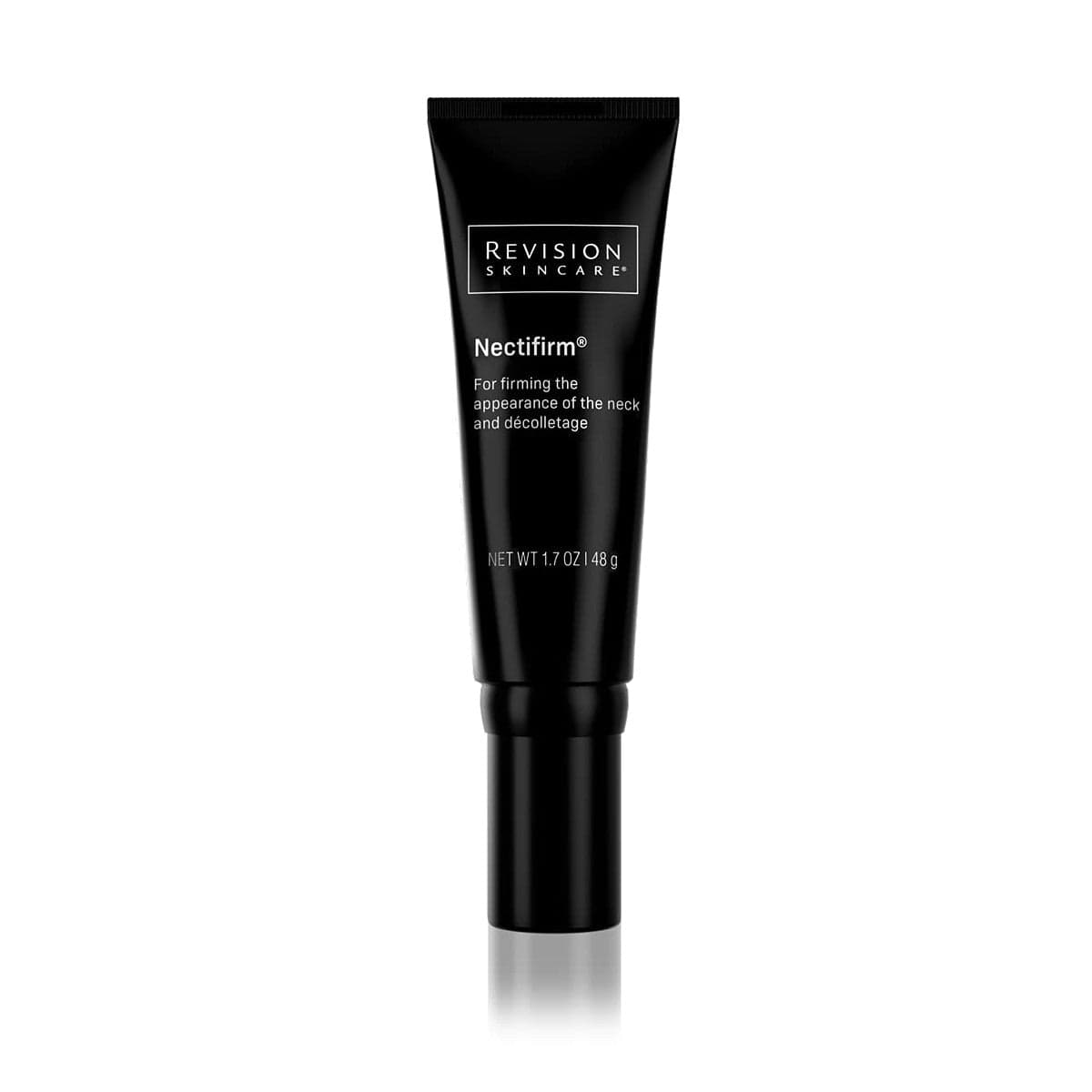

Revision Skincare
Nectifirm®

Nectifirm®
Revision Skincare
nectifirm-r
Moisturize
9784771871013
Morning or Evening?
How often will you use this product?
Notes


Highlights
WHAT IS IT?
Neck and décolletage cream with five peptides
FEATURES
Helps neck and jawline appear firmer and more lifted, improves appearance of fine lines and wrinkles, reduces crepey skin appearance, improves photodamage appearance
BEST FOR
combination
CHECKS
FRAGRANCE-FREE, NO ARTIFICIAL DYES, PARABEN FREE, PHTHALATES FREE, ALCOHOL FREE, FORMALDEHYDES FREE, NO HORMONES
Who Is It For?
All Skin Types With Early To Moderate Signs Of AgingWhat Does It Help With?
Firming Fine Lines Wrinkles Crepey Skin PhotodamageBudget
Premium ($76-$150)How To Use
Which routine should it be used in?
Instructions:
Key Information


What Revision Skincare Says
Product Description:
A breakthrough formula featuring five peptides, plant extracts, antioxidants and unique biotechnological blends that work to create a smoother, younger-looking neck, décolletage and jawline. Specifically formulated for early to moderate aging on the neck and décolletage.
About the Brand:
Ingredients Overview
Ingredients List
Water (Aqua), Glycerin, Tricaprylin, Cetyl Esters, Canarium Indicum Seed Oil, Cocos Nucifera (Coconut) Fruit Extract, C12-15 Alkyl Benzoate, Glyceryl Stearate Citrate, Cetearyl Alcohol, Dimethicone, Squalane, Glyceryl Stearate, PEG-100 Stearate, Methylsilanol Carboxymethyl Theophylline Alginate, Hordeum Distichon (Barley) Extract, Yeast Extract (Faex), Santalum Album (Sandalwood) Extract, Prunus Amygdalus Dulcis (Sweet Almond) Seed Extract, Phellodendron Amurense Bark Extract, Palmitoyl Tripeptide-5, Lauryl Lactate, Steareth-10, Ceramide NG, Dihydromyricetin, Palmitoyl Tetrapeptide-7, Enteromorpha Compressa (Algae) Extract, Tripleurospermum Maritima Extract, Palmitoyl Dipeptide-5 Diaminobutyroyl Hydroxythreonine, Bambusa Vulgaris (Bamboo) Stem/Leaf Extract, Steareth-20, Hydroxyethyl Acrylate/Sodium Acryloyldimethyl Taurate Copolymer, Palmitoyl Hexapeptide-12, Pisum Sativum (Pea) Extract, Tocopherol, Polysorbate 60, Butylene Glycol, Glucosamine HCl, Tetrahexyldecyl Ascorbate, PEG-10 Phytosterol, Tetradecyl Aminobutyroylvalylaminobutyric Urea Trifluoroacetate, Triethanolamine, Caprylyl Glycol, Tribehenin, Diazolidinyl Urea, Carbomer, Disodium EDTA, Xanthan Gum, Iodopropynyl Butylcarbamate, Potassium Sorbate, Magnesium Chloride, Sodium Benzoate, Sorbic Acid, Fragrance (Parfum).
Key Ingredients
peptides, plant-extracts, antioxidants
Ingredients Details
C12-15 Alkyl Benzoate
Common Name(s): C12-15 alkyl benzoate,cosmetic active,functional ingredient
CAS Number: N/a
DESCRIPTION
What It Does: Delivers characteristic cosmetic function at recommended use concentration.
Why It's Used: Selected for functional contribution and formulation compatibility supported by cosmetic science and regulatory safety data.
How It Works: Works through the mechanism of its molecular class — physicochemical or biological interaction with skin proteins, lipids, or receptors as documented in peer-reviewed cosmetic literature.
Typically Found In: Skin care formulations
TECHNICAL DETAILS
Primary Category: Active ingredient – cosmetic active
Secondary Functions: Skin conditioning
Application Areas:

Facial Skincare

Body Care
Hair Care
Beard Care
Color Cosmetics (Makeup)
Dietary/Oral Supplements
Typical Concentration Range: 0.1%–10%
SOURCING & ETHICS
Vegan Status: Conditional - supplier confirmation required
Halal Status: Unverified - supplier confirmation required
Source Notes: Commercially produced for cosmetic use. verify vegan/halal status with supplier. [audit 2026-07-29 rev2: the record's own source_notes does not assert a non-animal origin, or instructs the reader to verify with the supplier; "yes" asserts knowledge the record does not hold. determination requires shariah-panel sign-off.]
SKIN COMPATIBILITY
Irritancy Rating: 1/5 – very low
Comedogenicity Rating: 0/5 – non-comedogenic
Sensitivity Concerns: Well-tolerated by most skin types.
Safe for Sensitive Skin: Yes
SAFETY & COMPATIBILITY
Safety Profile: Good safety profile at recommended concentrations. ewg score: 1–2.
Works Well With: Standard skincare actives
Avoid Combining With: No known significant incompatibilities
SCIENTIFIC NOTE
C12-15 alkyl benzoate has an established safety and efficacy profile within the cosmetic regulatory framework at standard use concentrations.
Last Verified:
Canarium Indicum Seed Oil
Common Name(s): Canarium indicum seed oil,canarium indicum seed oil,botanical oil/butter,emollient efa source
CAS Number: N/a
DESCRIPTION
What It Does: Provides emollient conditioning from sc-compatible fatty acid triglycerides — oleic, linoleic, and linolenic acids supporting barrier lipid supplementation and ceramide precursor delivery.
Why It's Used: Canarium indicum seed oil is selected for the distinctive triglyceride fatty acid profile of canarium indicum — the specific oleic, linoleic, and saturated fatty acid ratio determines the spreading speed, occlusion level, and sc barrier integration properties unique to this botanical oil.
How It Works: Fatty acid triglycerides integrate into sc: oleic (c18:1) provides fluid emolliency; linoleic (c18:2) serves as ceramide precursor; alpha-linolenic (c18:3) provides anti-inflammatory eicosanoid competition.
Typically Found In: Skin care,barrier repair
TECHNICAL DETAILS
Primary Category: Active ingredient – antioxidant
Secondary Functions: Free radical scavenging,anti-aging
Application Areas:
Facial Skincare
Body Care
Hair Care
Beard Care
Color Cosmetics (Makeup)
Dietary/Oral Supplements
Typical Concentration Range: 0.5%–30%
SOURCING & ETHICS
Vegan Status: Conditional - supplier confirmation required
Halal Status: Conditional - basis not stated in source record; supplier origin confirmation required to determine what evidence applies
Source Notes: Plant-derived extract or synthetic. [audit 2026-07-29 rev2: status downgraded on audit. determination requires shariah-panel sign-off.]
SKIN COMPATIBILITY
Irritancy Rating: 1/5 – very low
Comedogenicity Rating: 0/5 – non-comedogenic
Sensitivity Concerns: Non-irritating; well-tolerated.
Safe for Sensitive Skin: Yes
SAFETY & COMPATIBILITY
Safety Profile: Excellent safety profile. ewg score: 1.
Works Well With: Vitamin c,vitamin e,ferulic acid,spf,other antioxidants
Avoid Combining With: No significant incompatibilities
SCIENTIFIC NOTE
Verify specific oil's efa composition and oxidative stability for target application.
Last Verified: 2026-03-22
Primary Sources: Cosing database,canarium indicum seed oil botanical oil review
Cetearyl Alcohol
Common Name(s): Cetostearyl alcohol,c16-18 fatty alcohol
CAS Number: 8005-44-5
DESCRIPTION
What It Does: Provides fatty alcohol emulsification and thickening for stable, well-textured emulsions.
Why It's Used: The most widely used fatty alcohol in cosmetics – provides emulsification, thickening, and emolliency simultaneously from a single ingredient with excellent safety profile.
How It Works: Forms bilayer lamellar structures in water with emulsifiers creating a viscous structured network that thickens and stabilizes emulsions. fatty alcohol emolliency provides direct skin conditioning. bilayer formation reduces inter-droplet coalescence in emulsions.
Typically Found In: Creams,lotions,conditioners – virtually all emulsion products
TECHNICAL DETAILS
Primary Category: Functional ingredient – fatty alcohol emulsifier/thickener
Secondary Functions: Barrier sealing,softening
Application Areas:
Facial Skincare
Body Care
Hair Care
Beard Care
Color Cosmetics (Makeup)
Dietary/Oral Supplements
Typical Concentration Range: 1%–25%
SOURCING & ETHICS
Vegan Status: Yes - standard ethanol routes are non-animal; confirm denaturant origin
Halal Status: Conditional - ethanol production route and residual concentration; jurisdiction-dependent, refer to certifier stance
Source Notes: Plant-derived, synthetic or animal-derived. verify source. [audit 2026-07-29 rev2: ethanol pathway; determination depends on route, on whether the plant also produces beverage alcohol, and on residual concentration. determination requires shariah-panel sign-off.]
SKIN COMPATIBILITY
Irritancy Rating: 1/5 – very low
Comedogenicity Rating: 1/5 – low; formulation-dependent
Sensitivity Concerns: Non-irritating.
Safe for Sensitive Skin: Yes
SAFETY & COMPATIBILITY
Safety Profile: Excellent safety profile. ewg score: 1.
Works Well With: Humectants,ceramides,actives as carrier
Avoid Combining With: No significant incompatibilities
SCIENTIFIC NOTE
Cetearyl alcohol's ability to form lamellar liquid crystal structures ('krafft phases') with water and co-emulsifiers provides not only emulsion stability but also enhanced skin penetration via the lamellar skin barrier pathway. these crystalline structures can act as a reservoir for active ingredients, slowly releasing them as the lamellar structure melts on skin contact.
Last Verified: 2026-03-12
Primary Sources: Cosing database,cir safety assessment
Cetyl Esters
Common Name(s): Cetyl esters,cosmetic active,functional ingredient
CAS Number: N/a
DESCRIPTION
What It Does: Delivers characteristic cosmetic function at recommended use concentration.
Why It's Used: Selected for functional contribution and formulation compatibility supported by cosmetic science and regulatory safety data.
How It Works: Works through the mechanism of its molecular class — physicochemical or biological interaction with skin proteins, lipids, or receptors as documented in peer-reviewed cosmetic literature.
Typically Found In: Skin care formulations
TECHNICAL DETAILS
Primary Category: Active ingredient – cosmetic active
Secondary Functions: Skin conditioning
Application Areas:
Facial Skincare
Body Care
Hair Care
Beard Care
Color Cosmetics (Makeup)
Dietary/Oral Supplements
Typical Concentration Range: 0.1%–10%
SOURCING & ETHICS
Vegan Status: Conditional - supplier confirmation required
Halal Status: Unverified - supplier confirmation required
Source Notes: Commercially produced for cosmetic use. verify vegan/halal status with supplier. [audit 2026-07-29 rev2: the record's own source_notes does not assert a non-animal origin, or instructs the reader to verify with the supplier; "yes" asserts knowledge the record does not hold. determination requires shariah-panel sign-off.]
SKIN COMPATIBILITY
Irritancy Rating: 1/5 – very low
Comedogenicity Rating: 0/5 – non-comedogenic
Sensitivity Concerns: Well-tolerated by most skin types.
Safe for Sensitive Skin: Yes
SAFETY & COMPATIBILITY
Safety Profile: Good safety profile at recommended concentrations. ewg score: 1–2.
Works Well With: Standard skincare actives
Avoid Combining With: No known significant incompatibilities
SCIENTIFIC NOTE
Cetyl esters has an established safety and efficacy profile within the cosmetic regulatory framework at standard use concentrations.
Last Verified: 2026-03-12
Primary Sources: Cosing database,cetyl esters technical literature