

SUNDÃRI
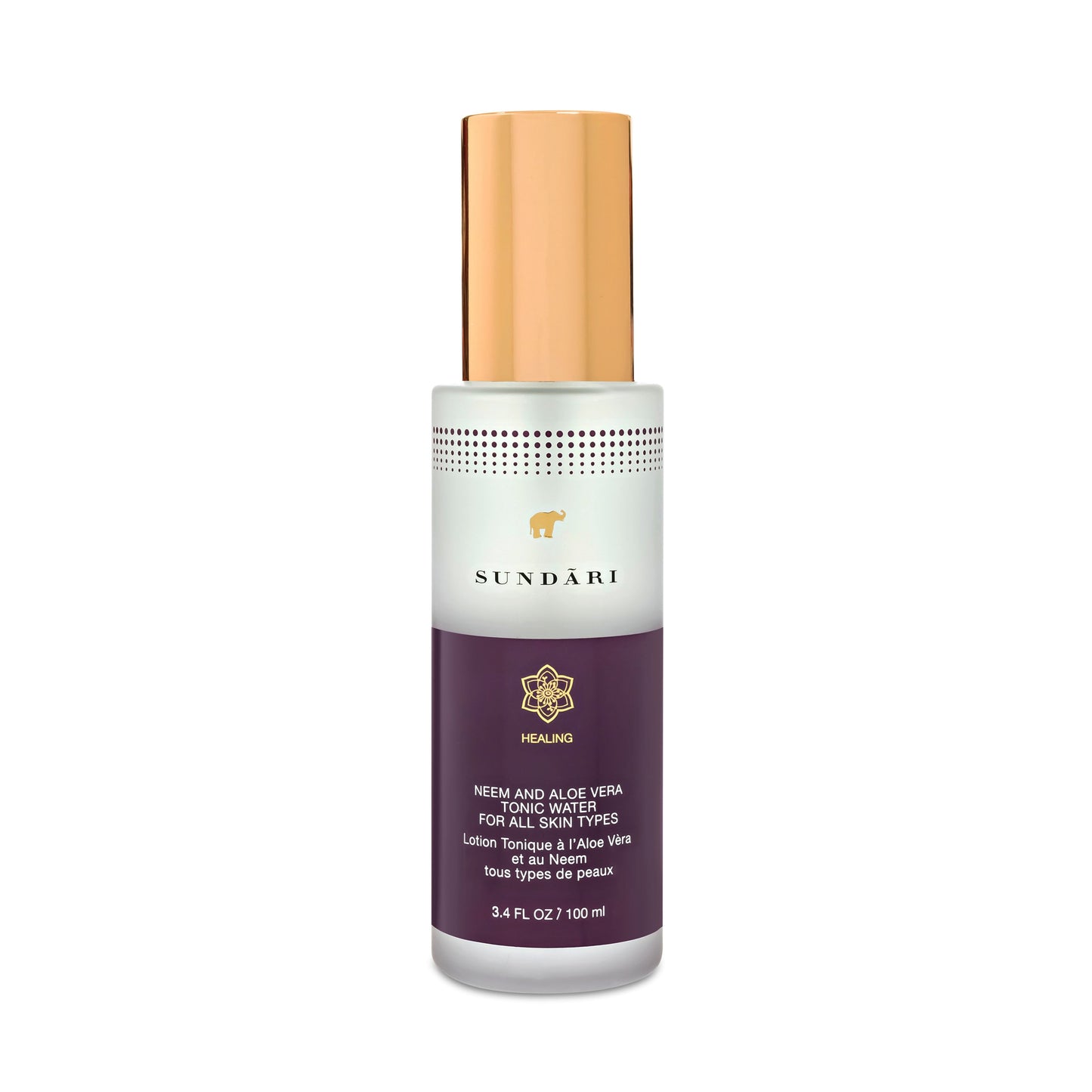
Neem and Aloe Vera Tonic Water

Neem and Aloe Vera Tonic Water
SUNDÃRI
neem-and-aloe-vera-tonic-water
Tone
9706839310629
Morning or Evening?
How often will you use this product?
Notes


Highlights
WHAT IS IT?
A toner with multiple natural ingredients
FEATURES
Dual-use formula, alcohol-free, rapidly absorbing, non-staining
BEST FOR
Combination, Dry, Sensitive skin
CHECKS
Free of parabens, sulfate, phthalates
Who Is It For?
Adults Both Women And MenWhat Does It Help With?
Hydration Refreshing Skin Protecting From Free RadicalsBudget
Mid-rangeHow To Use
Which routine should it be used in?
Instructions:
Key Information


What SUNDÃRI Says
Product Description:
A unique Aloe Vera and Neem Oil blend to refresh and keep skin hydrated. Light fine mist spray that is rapidly absorbing and non-staining leaving a dewy fresh appearance on skin. Neem is the pharmacy tree of India. Neem extract with naturally high sulfur content acts as a building block for collagen. Dual use formula which can be used as an alcohol-free toner or natural facial freshener with a unique blend of essential oils. Aloe Vera and Green Tea extract protect the skin from free radicals.
About the Brand:
Ingredients Overview
Ingredients List
water, aloe barbadensis extract, allantoin, phenoxyethanol, caprylyl glycol, peg-40 hydrogenate castor oil, citrus aurantium bergamia (bergamot) fruit oil, citrus limon peel oil, parfum, melia azadirachta extract, camellia oleifera (green tea) extract, copper pca, copper sulfate, propylene glycol
Key Ingredients
Aloe Vera, Neem Oil, Green Tea extract
Ingredients Details
Allantoin
Common Name(s): 5-ureidohydantoin,glyoxyldiureide,aluminum dihydroxy allantoinate
CAS Number: 97-59-6
DESCRIPTION
What It Does: Soothes irritation, accelerates wound healing, promotes skin cell renewal, and provides mild keratolytic exfoliation.
Why It's Used: Gold standard multi-function soothing active – one of the most widely used cosmetic ingredients across all product types for its exceptional tolerability and clinically proven multi-action skin conditioning.
How It Works: Promotes keratinocyte proliferation and fibroblast migration for wound healing. mild keratolytic activity by disrupting corneocyte binding. anti-irritant via direct protein binding and anti-inflammatory cytokine reduction. humectant activity via hydroxyl groups.
Typically Found In: Post-procedure products,sensitive skin formulas,wound care,anti-acne treatments,baby products
TECHNICAL DETAILS
Primary Category: Active ingredient – soothing / anti-inflammatory
Secondary Functions: Wound healing,keratolytic,anti-irritant
Application Areas:

Facial Skincare
Body Care

Hair Care
Beard Care
Color Cosmetics (Makeup)
Dietary/Oral Supplements
Typical Concentration Range: 0.1%–2%
SOURCING & ETHICS
Vegan Status: Yes – synthetic or comfrey-derived
Halal Status: Yes
Source Notes: Plant-derived extract or synthetic.
SKIN COMPATIBILITY
Irritancy Rating: 1/5 – very low
Comedogenicity Rating: 0/5 – non-comedogenic
Sensitivity Concerns: Exceptionally well-tolerated; suitable for all skin types including baby and compromised skin.
Safe for Sensitive Skin: Yes – particularly recommended for sensitive skin
SAFETY & COMPATIBILITY
Safety Profile: Excellent safety profile. ewg score: 1.
Works Well With: Ceramides,panthenol,allantoin,hyaluronic acid,centella asiatica
Avoid Combining With: No significant incompatibilities
SCIENTIFIC NOTE
Allantoin's keratinocyte proliferation stimulation occurs via receptor-mediated signaling (possibly machr activation) rather than non-specific irritation-driven proliferation, making it a true wound-healing stimulant rather than a pro-inflammatory proliferative signal.
Last Verified: Cosing database,cir safety assessment,araújo et al. allantoin review
Primary Sources: 2026-03-12
Aloe Barbadensis Extract
Common Name(s): Aloe barbadensis extract,aloe barbadensis extract,botanical extract,phytochemical active
CAS Number: N/a
DESCRIPTION
What It Does: Provides antioxidant protection from polyphenol radical scavenging, anti-inflammatory activity from terpenoid nf-kb/cox pathway inhibition, and skin conditioning from the phytochemical secondary metabolite complex.
Why It's Used: Aloe barbadensis extract is selected for the characteristic secondary metabolite signature of aloe barbadensis — whether polyphenols, terpenoids, alkaloids, or polysaccharides, the phytochemical profile provides antioxidant, anti-inflammatory, or skin conditioning benefits specific to this botanical species.
How It Works: Botanical secondary metabolites: polyphenol catechol h-atom donation for ros scavenging (rate constants 10⁶-10⁹ m⁻¹s⁻¹); terpenoids inhibit iκb kinase blocking nf-κb; flavonoids compete at cox-1/2; alkaloids modulate specific receptors for targeted bioactivity.
Typically Found In: Botanical skin care
TECHNICAL DETAILS
Primary Category: Active ingredient – antioxidant
Secondary Functions: Free radical scavenging,anti-aging
Application Areas:
Facial Skincare
Body Care
Hair Care
Beard Care
Color Cosmetics (Makeup)
Dietary/Oral Supplements
Typical Concentration Range: 0.1%–10%
SOURCING & ETHICS
Vegan Status: Conditional
Halal Status: Conditional
Source Notes: Plant-derived extract or synthetic.
SKIN COMPATIBILITY
Irritancy Rating: 1/5 – very low
Comedogenicity Rating: 0/5 – non-comedogenic
Sensitivity Concerns: Non-irritating; well-tolerated.
Safe for Sensitive Skin: Yes
SAFETY & COMPATIBILITY
Safety Profile: Excellent safety profile. ewg score: 1.
Works Well With: Vitamin c,vitamin e,ferulic acid,spf,other antioxidants
Avoid Combining With: No significant incompatibilities
SCIENTIFIC NOTE
Standardise to marker compounds for consistent bioactivity — field-grown material varies 3-10× in secondary metabolite content.
Last Verified: Cosing database,aloe barbadensis extract botanical extract review
Primary Sources: 2026-03-22
Caprylyl Glycol
Common Name(s): 1,2-octanediol,octanediol,sensiva sc 50
CAS Number: 1117-86-8
DESCRIPTION
What It Does: Provides the most potent antimicrobial diol activity alongside skin feel enhancement.
Why It's Used: Premium antimicrobial diol — caprylyl glycol's c8 chain provides the strongest membrane-disrupting antimicrobial activity of common diol preservative boosters with unique skin-feel enhancement.
How It Works: C8 1,2-diol: c8 chain length provides strongest bacterial and fungal membrane disruption of common diols. emollient skin feel improvement from c8 chain length interaction with skin surface. active at lower concentrations than shorter-chain diols. synergistic with ethylhexylglycerin.
Typically Found In: Natural preservation systems,skin feel enhancement
TECHNICAL DETAILS
Primary Category: Functional ingredient – antimicrobial humectant
Secondary Functions: Skin conditioning
Application Areas:
Facial Skincare
Body Care
Hair Care
Beard Care
Color Cosmetics (Makeup)
Dietary/Oral Supplements
Typical Concentration Range: 0.1%–1%
SOURCING & ETHICS
Vegan Status: Yes – synthetic
Halal Status: Yes
Source Notes: Commercially produced for cosmetic use. verify vegan/halal status with supplier.
SKIN COMPATIBILITY
Irritancy Rating: 1/5 – very low
Comedogenicity Rating: 0/5 – non-comedogenic
Sensitivity Concerns: Well-tolerated by most skin types.
Safe for Sensitive Skin: Yes
SAFETY & COMPATIBILITY
Safety Profile: Good safety profile at recommended concentrations. ewg score: 1–2.
Works Well With: Standard skincare actives
Avoid Combining With: No known significant incompatibilities
SCIENTIFIC NOTE
Caprylyl glycol's antimicrobial potency follows the chain-length dependent membrane activity of fatty acids: c8 is the optimal chain length for membrane disruption (same as caprylic acid's antimicrobial optimum), providing maximum membrane integration without the skin sensitisation associated with longer chain lengths. this chain-length pharmacophore relationship is why c8 > c6 > c5 in diol antimicrobial potency despite identical head group chemistry.
Last Verified: Cosing database,schülke sensiva sc 50 technical data,cir safety assessment
Primary Sources: 2026-03-12
Citrus Limon Peel Oil
Common Name(s): Citrus limon peel oil,citrus limon peel oil,essential oil,concentrated volatile plant extract
CAS Number: N/a
DESCRIPTION
What It Does: Provides aromatic fragrance from volatile terpenoid constituents alongside bioactive skin activity — the same mono and sesquiterpene compounds providing both olfactory benefit and pharmacological activity at cosmetic use concentrations.
Why It's Used: Essential oils provide authentic aromatherapy narrative with genuine bioactive chemistry — concentrated terpenoid profiles delivering documented biological activity alongside fragrance function.
How It Works: Steam distillation concentrates volatile secondary metabolites. antimicrobial activity from terpenoid membrane disruption (phenols: thymol, carvacrol; monoterpene alcohols: terpinen-4-ol, linalool). anti-inflammatory from sesquiterpene nf-kb inhibition. antioxidant from phenylpropanoid radical donation. eu allergen monitoring required for individual components.
Typically Found In: Aromatherapy,natural fragrance,bioactive care
TECHNICAL DETAILS
Primary Category: Active ingredient – antioxidant
Secondary Functions: Free radical scavenging,anti-aging
Application Areas:
Facial Skincare
Body Care
Hair Care
Beard Care
Color Cosmetics (Makeup)
Dietary/Oral Supplements
Typical Concentration Range: 0.01%–2%
SOURCING & ETHICS
Vegan Status: Yes
Halal Status: Yes
Source Notes: Plant-derived extract or synthetic.
SKIN COMPATIBILITY
Irritancy Rating: 1/5 – very low
Comedogenicity Rating: 0/5 – non-comedogenic
Sensitivity Concerns: Non-irritating; well-tolerated.
Safe for Sensitive Skin: Yes
SAFETY & COMPATIBILITY
Safety Profile: Excellent safety profile. ewg score: 1.
Works Well With: Vitamin c,vitamin e,ferulic acid,spf,other antioxidants
Avoid Combining With: No significant incompatibilities
SCIENTIFIC NOTE
Ifra sets category-specific maximum use levels for each essential oil based on qra of sensitising terpenoid components. auto-oxidation of terpene constituents increases sensitisation risk in aged/improperly stored oils — antioxidant stabilisation and freshness dating recommended.
Last Verified: Cosing database,ifra standards,citrus limon peel oil essential oil review
Primary Sources: 2026-03-22
