

NEUTROGENA
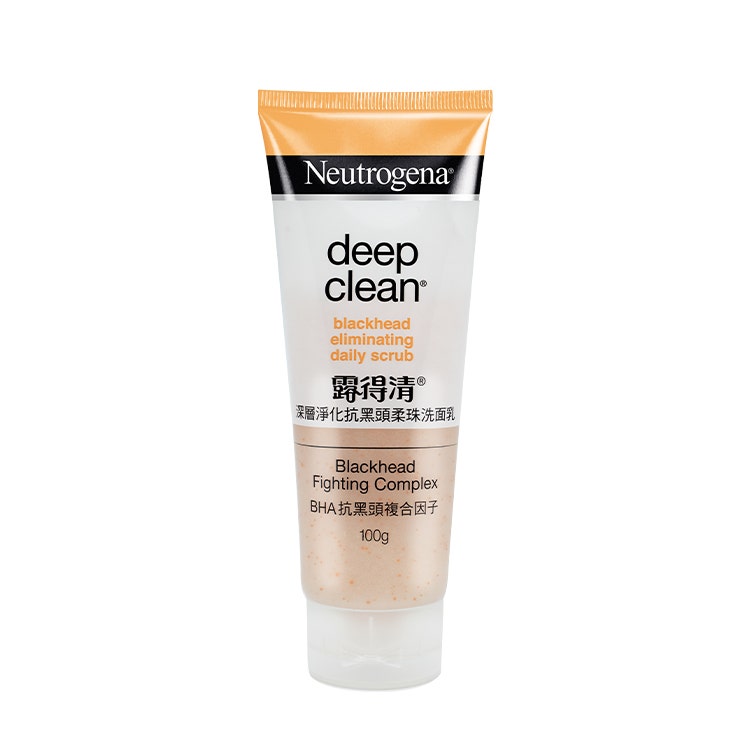
Neutrogena Deep Clean Black Head Eliminating Scrub 100G

Neutrogena Deep Clean Black Head Eliminating Scrub 100G
NEUTROGENA
neutrogena-deep-clean-black-head-eliminating-scrub-100g
Exfoliation
10084786307365
Morning or Evening?
How often will you use this product?
Notes


Highlights
WHAT IS IT?
Blackhead eliminating facial scrub with microbeads and blackhead fighting complex
FEATURES
Effectively and gently exfoliates skin, dissolves excessive oil deep in pores, prevents blackheads, clears and refines pores, dermatologist tested, oil free, hypoallergenic
BEST FOR
combination
CHECKS
Does not contain oil and is hypoallergenic
Who Is It For?
Adults Of Any GenderWhat Does It Help With?
Eliminates Blackheads Prevents New Blackheads Clear And Healthy Looking Skin Oil ControlBudget
Affordable (under $30)How To Use
Which routine should it be used in?
Instructions:
Key Information


What NEUTROGENA Says
Product Description:
Neutrogena Deep Clean Blackhead Eliminating Daily Scrub helps to effectively eliminate blackheads from the very first use, and prevents their return, for clear & healthy looking skin! Microbeads that can effectively, yet gently exfoliate skin. "Blackhead Fighting Complex", penetrates deep into pores to dissolve excessive oil to help eliminate stubborn blackheads. Prevents new ones from forming with continuous use. Natural ingredients with proven oil control efficacy. Helps clear and refine pores. Dermatologist Tested. Oil free Hypoallergenic. Non-comedogenic.
About the Brand:
Ingredients Overview
Ingredients List
Water,Sodium-Methyl-Cocoyl-Taurate,Cocoamidopropyl-Betaine,Polyethylene,Disodium-Lauroamphodiacetate,Citric-Acid,Lauryl-Methyl-Gluceth-10-Hydroxypropyldimonium-Chloride,Methyl-Gluceth-20,Acrylates/Aminoacrylates-C10-30-Alkyl-PEG-20-Itaconate-Copolymer,Acrylates-Copolymer,PEG-3-Distearate,Glycol-Stearate,Salicylic-Acid,Sodium-Laureth-Sulfate,Fragrance,Neopentyl-Glycol-Dicaprylate/Dicaprate,Iron-Oxide,Mica,CI-73360,Titanium-Dioxide,Agar,Propylene-Glycol,Methylchloroisothiazolinone,Methylisothiazolinone,Cedrus-Atlantica-Bark-Extract
Key Ingredients
Salicylic Acid, Microbeads, Blackhead Fighting Complex
Ingredients Details
Agar
Common Name(s): Agar-agar,agarose,gelidium amansii extract
CAS Number: 9002-18-0
DESCRIPTION
What It Does: Provides firm, thermally reversible marine-derived gels from natural seaweed polysaccharide.
Why It's Used: Natural seaweed gellant for clean beauty formulations requiring firm, stiff gel textures with authentic marine provenance.
How It Works: Agarose chains form double helix junction zones that aggregate into bundles forming a rigid gel network below 38°c. melts at 85°c but re-gels at 38°c – this 47°c hysteresis window means agar gels remain solid at skin contact (33°c) but dissolve cleanly in hot water for rinse-off products.
Typically Found In: Sheet masks,gel cleansers,firm gel products
TECHNICAL DETAILS
Primary Category: Functional ingredient – seaweed gellant
Secondary Functions: Tewl reduction,skin plumping
Application Areas:

Facial Skincare
Body Care
Hair Care

Beard Care
Color Cosmetics (Makeup)
Dietary/Oral Supplements
Typical Concentration Range: 0.5%–3%
SOURCING & ETHICS
Vegan Status: Conditional - supplier confirmation required
Halal Status: Unverified - supplier confirmation required
Source Notes: Synthetic or naturally derived. excellent aqueous solubility. [audit 2026-07-29 rev2: status downgraded on audit. determination requires shariah-panel sign-off.]
SKIN COMPATIBILITY
Irritancy Rating: 1/5 – very low
Comedogenicity Rating: 0/5 – non-comedogenic
Sensitivity Concerns: Non-irritating; suitable for all skin types.
Safe for Sensitive Skin: Yes
SAFETY & COMPATIBILITY
Safety Profile: Excellent safety profile. ewg score: 1.
Works Well With: Ceramides,emollients,occlusives,glycerin,hyaluronic acid
Avoid Combining With: No significant incompatibilities
SCIENTIFIC NOTE
Agar's thermal hysteresis (melts 85°c, sets 38°c) is unique among natural gellants. this hysteresis arises from the different temperatures required for helix-coil disruption (melting) vs helix formation (setting) in the agarose chains. the practical consequence – a gel that can be sterilized at 121°c yet remains stable at skin temperature (33°c) – makes agar uniquely useful for thermally stable cosmetic gels.
Last Verified: 2026-03-12
Primary Sources: Cosing database,cir safety assessment,fda gras
Fragrance
Common Name(s): Fragrance ingredient,eu allergen or aromatic component,olfactory/flavour
CAS Number: N/a
DESCRIPTION
What It Does: Provides the complete fragrance profile contributing to product sensory experience and consumer appeal.
Why It's Used: Fragrance is a major consumer purchase driver — up to 70% of consumers make purchasing decisions partially based on product scent.
How It Works: Fragrance blends interact with olfactory receptors providing the sensory profile — complex mixtures activate multiple receptor types for rich, multidimensional scent experiences.
Typically Found In: All fragrance products
TECHNICAL DETAILS
Primary Category: Active ingredient – cosmetic active
Secondary Functions: Skin conditioning
Application Areas:
Facial Skincare
Body Care
Hair Care
Beard Care
Color Cosmetics (Makeup)
Dietary/Oral Supplements
Typical Concentration Range: Standard use levels
SOURCING & ETHICS
Vegan Status: Conditional - supplier confirmation required
Halal Status: Unverified - supplier confirmation required
Source Notes: Commercially produced for cosmetic use. verify vegan/halal status with supplier. [audit 2026-07-29 rev2: the record's own source_notes does not assert a non-animal origin, or instructs the reader to verify with the supplier; "yes" asserts knowledge the record does not hold. determination requires shariah-panel sign-off.]
SKIN COMPATIBILITY
Irritancy Rating: 1/5 – very low
Comedogenicity Rating: 0/5 – non-comedogenic
Sensitivity Concerns: Well-tolerated by most skin types.
Safe for Sensitive Skin: Yes
SAFETY & COMPATIBILITY
Safety Profile: Good safety profile at recommended concentrations. ewg score: 1–2.
Works Well With: Standard skincare actives
Avoid Combining With: No known significant incompatibilities
SCIENTIFIC NOTE
Ifra guidelines set usage limits for fragrance ingredients based on skin sensitisation and phototoxicity assessment for each application category.
Last Verified: 2026-03-12
Primary Sources: Eu regulation 1223/2009 annex iii,ifra standards,fragrance allergen declaration requirements
Methylchloroisothiazolinone
Common Name(s): Methylchloroisothiazolinone,cosmetic active,functional ingredient
CAS Number: N/a
DESCRIPTION
What It Does: Delivers characteristic cosmetic function at recommended use concentration.
Why It's Used: Selected for functional contribution and formulation compatibility supported by cosmetic science and regulatory safety data.
How It Works: Works through the mechanism of its molecular class as documented in peer-reviewed cosmetic literature.
Typically Found In: Skin care formulations
TECHNICAL DETAILS
Primary Category: Active ingredient – cosmetic active
Secondary Functions: Skin conditioning
Application Areas:
Facial Skincare
Body Care
Hair Care
Beard Care
Color Cosmetics (Makeup)
Dietary/Oral Supplements
Typical Concentration Range: 0.1%–10%
SOURCING & ETHICS
Vegan Status: Conditional - supplier confirmation required
Halal Status: Unverified - supplier confirmation required
Source Notes: Commercially produced for cosmetic use. verify vegan/halal status with supplier. [audit 2026-07-29 rev2: the record's own source_notes does not assert a non-animal origin, or instructs the reader to verify with the supplier; "yes" asserts knowledge the record does not hold. determination requires shariah-panel sign-off.]
SKIN COMPATIBILITY
Irritancy Rating: 1/5 – very low
Comedogenicity Rating: 0/5 – non-comedogenic
Sensitivity Concerns: Well-tolerated by most skin types.
Safe for Sensitive Skin: Yes
SAFETY & COMPATIBILITY
Safety Profile: Good safety profile at recommended concentrations. ewg score: 1–2.
Works Well With: Standard skincare actives
Avoid Combining With: No known significant incompatibilities
SCIENTIFIC NOTE
Methylchloroisothiazolinone has an established safety profile within the cosmetic regulatory framework at standard use concentrations.
Last Verified: 2026-03-12
Primary Sources: Cosing database,methylchloroisothiazolinone technical literature
Methylisothiazolinone
Common Name(s): Mit,kathon,neolone
CAS Number: 2682-20-4
DESCRIPTION
What It Does: Provides highly potent broad-spectrum preservation at very low concentrations in rinse-off formulations.
Why It's Used: Most potent cosmetic preservative — mit provides effective preservation at concentrations 10-100× lower than most other preservatives, enabling clean-label preservation at minimal ingredient load.
How It Works: Electrophilic isothiazolinone ring reacts with bacterial thiol enzymes (glutathione, coa-dependent enzymes) via michael addition for rapid kill. very potent — mic vs e. coli 0.06μg/ml (vs phenoxyethanol mic ~400μg/ml — 6000× more potent). rapidly biodegradable.
Typically Found In: Rinse-off shampoos,body washes,conditioners
TECHNICAL DETAILS
Primary Category: Functional ingredient – isothiazolinone preservative
Secondary Functions: Skin conditioning
Application Areas:
Facial Skincare
Body Care
Hair Care
Beard Care
Color Cosmetics (Makeup)
Dietary/Oral Supplements
Typical Concentration Range: 0.0015%–0.0015% (max 15ppm eu rinse-off)
SOURCING & ETHICS
Vegan Status: Conditional - supplier confirmation required
Halal Status: Unverified - supplier confirmation required
Source Notes: Commercially produced for cosmetic use. verify vegan/halal status with supplier. [audit 2026-07-29 rev2: the record's own source_notes does not assert a non-animal origin, or instructs the reader to verify with the supplier; "yes" asserts knowledge the record does not hold. determination requires shariah-panel sign-off.]
SKIN COMPATIBILITY
Irritancy Rating: 1/5 – very low
Comedogenicity Rating: 0/5 – non-comedogenic
Sensitivity Concerns: Well-tolerated by most skin types.
Safe for Sensitive Skin: Yes
SAFETY & COMPATIBILITY
Safety Profile: Eu regulation 2014/1298: mit banned from leave-on products. max 15ppm in rinse-off only. contact sensitiser — causes occupational dermatitis epidemic in hairdressers and consumers. sccs noted no safe level for leave-on. 2016 eu restriction driven by major sensitisation epidemic.
Works Well With: Standard skincare actives
Avoid Combining With: No known significant incompatibilities
SCIENTIFIC NOTE
Mit's sensitisation epidemic (2010-2015) is one of the most significant cosmetic safety events in modern dermatology: a dramatic increase in contact allergy patch test positive rates from <1% (2005) to 7% (2015) in the eu was directly traceable to the widespread introduction of mit in leave-on products. this epidemic prompted the fastest eu cosmetic regulatory action in history and demonstrates the critical importance of patch test surveillance in monitoring emerging cosmetic allergens.
Last Verified: 2026-03-12
Primary Sources: Cosing database,eu regulation 2014/1298,yazar et al. mit sensitisation epidemic study