

Neutrogena
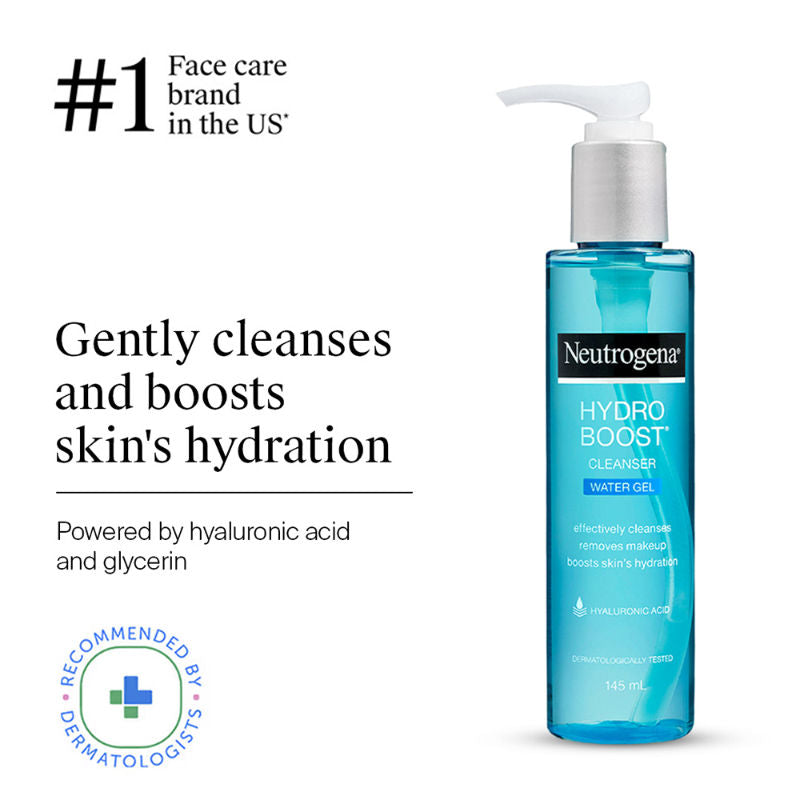
Neutrogena Hydro Boost Cleanser Water Gel Face Wash with Hyaluronic Acid for Normal & Sensitive Skin

Neutrogena Hydro Boost Cleanser Water Gel Face Wash with Hyaluronic Acid for Normal & Sensitive Skin
Neutrogena
neutrogena-hydro-boost-cleanser-water-gel-face-wash-with-hyaluronic-acid-for-normal-sensitive-skin
Cleanse
10085018140965
Morning or Evening?
How often will you use this product?
Notes


Highlights
WHAT IS IT?
Face Wash, Ingredient count not specified
FEATURES
Includes Hyaluronic Acid; Suitable for Normal and Sensitive Skin; Hydrating gel cleanser
BEST FOR
sensitive
CHECKS
Who Is It For?
Age Range And Gender Not SpecifiedWhat Does It Help With?
Acne Rashes Moisturizes SkinBudget
Mid-range ($30-$75)How To Use
Which routine should it be used in?
Instructions:
Key Information


What Neutrogena Says
Product Description:
Explore the entire range of Face Wash available on Nykaa. Shop more Neutrogena products here. You can browse through the complete world of Neutrogena Face Wash.
About the Brand:
Ingredients Overview
Ingredients List
Water, Glycerin, Cocamidopropyl Hydroxysultaine, Sodium Cocoyl Isethionate, Sodium Methyl Cocoyl Taurate, Sodium Hydrolyzed Potato Starch Dodecenylsuccinate, Potassium Acrylates Copolymer, Hydroxyacetophenone, Phenoxyethanol, Fragrance, Linoleamidopropyl PG-Dimonium Chloride Phosphate, Polyquaternium-10, Polysorbate 20, Sodium Hydroxide, Disodium EDTA, Citric Acid, Ethylhexylglycerin, Hydrolyzed Hyaluronic Acid
Key Ingredients
Hyaluronic Acid
Ingredients Details
Citric Acid
Common Name(s): Lemon acid,2-hydroxypropane-1,2,3-tricarboxylic acid
CAS Number: 77-92-9
DESCRIPTION
What It Does: Adjusts ph to optimal ranges, chelates destabilizing metal ions, provides mild exfoliation at higher concentrations.
Why It's Used: Universal cosmetic ph adjuster and chelating agent. aha exfoliant activity is secondary.
How It Works: As ph adjuster, donates protons. as chelating agent, three carboxylic groups bind divalent metals (ca²⁺, mg²⁺, fe²⁺) preventing oxidative degradation.
Typically Found In: Nearly all cosmetic formulations,brightening products,exfoliants
TECHNICAL DETAILS
Primary Category: Active ingredient – alpha hydroxy acid (aha)
Secondary Functions: Chelating agent,ph adjustment,preservation enhancement
Application Areas:

Facial Skincare
Body Care
Hair Care

Beard Care
Color Cosmetics (Makeup)
Dietary/Oral Supplements
Typical Concentration Range: 0.1%–10%
SOURCING & ETHICS
Vegan Status: Yes – synthetic or fermentation-derived
Halal Status: Yes
Source Notes: Produced by fermentation of sugars by aspergillus niger. gras (e330). most abundant organic acid in citrus.
SKIN COMPATIBILITY
Irritancy Rating: 1/5 – very low at low concentrations; 2/5 at exfoliant concentrations
Comedogenicity Rating: 0/5 – non-comedogenic
Sensitivity Concerns: Photosensitizing – mandatory spf use. start at low frequency.
Safe for Sensitive Skin: Use with caution – spf required
SAFETY & COMPATIBILITY
Safety Profile: Safe at otc concentrations. eu: ≤10% leave-on at ph ≥3.5. mandatory spf advisory.
Works Well With: Niacinamide,ceramides,hyaluronic acid,spf
Avoid Combining With: Retinol in same step; multiple exfoliants simultaneously
SCIENTIFIC NOTE
Three carboxylic acid groups provide multiple proton donation sites and stronger chelation than monocarboxylic ahas. this makes citric acid the preferred cosmetic chelating agent alongside edta.
Last Verified: 2026-03-12
Primary Sources: Cosing database,cir safety assessment,ewg skin deep
Cocamidopropyl Hydroxysultaine
Common Name(s): Cahs,hydroxypropyl sultaine
CAS Number: 68139-30-0
DESCRIPTION
What It Does: Provides amphoteric foaming and conditioning with excellent compatibility across surfactant systems.
Why It's Used: Premium amphoteric surfactant for mild foaming shampoos and cleansers requiring broad surfactant compatibility and improved skin and eye tolerance vs capb alternatives.
How It Works: Amphoteric sultaine (internal zwitterion from quaternary ammonium + sulfonate) provides: foam stability and enhancement; antistatic conditioning on hair; mildness enhancement reducing ionic surfactant irritation; viscosity building with salt addition. superior eye tolerance vs capb (betaine).
Typically Found In: Baby shampoos,mild cleansers,eye-safe products
TECHNICAL DETAILS
Primary Category: Functional ingredient – amphoteric surfactant
Secondary Functions: Skin conditioning
Application Areas:
Facial Skincare
Body Care
Hair Care
Beard Care
Color Cosmetics (Makeup)
Dietary/Oral Supplements
Typical Concentration Range: 2%–10%
SOURCING & ETHICS
Vegan Status: Conditional - supplier confirmation required
Halal Status: Unverified - supplier confirmation required
Source Notes: Commercially produced for cosmetic use. verify vegan/halal status with supplier. [audit 2026-07-29 rev2: the record's own source_notes does not assert a non-animal origin, or instructs the reader to verify with the supplier; "yes" asserts knowledge the record does not hold. determination requires shariah-panel sign-off.]
SKIN COMPATIBILITY
Irritancy Rating: 1/5 – very low
Comedogenicity Rating: 0/5 – non-comedogenic
Sensitivity Concerns: Well-tolerated by most skin types.
Safe for Sensitive Skin: Yes
SAFETY & COMPATIBILITY
Safety Profile: Good safety profile at recommended concentrations. ewg score: 1–2.
Works Well With: Standard skincare actives
Avoid Combining With: No known significant incompatibilities
SCIENTIFIC NOTE
Cocamidopropyl hydroxysultaine's superior eye tolerance vs capb arises from its sultaine rather than betaine zwitterionic head group. the sulfonate anion (so3⁻ in sultaine) is a stronger acid group than the carboxylate (coo⁻ in betaine), providing greater charge neutralisation and better interaction with tear film proteins — the molecular basis for its improved eye irritation profile in baby and sensitive-eye formulations.
Last Verified:
Disodium Edta
Common Name(s): Edathamil disodium,edta disodium,versene 100
CAS Number: 139-33-3
DESCRIPTION
What It Does: Provides metal ion chelation to prevent product degradation and boost preservative and antioxidant efficacy.
Why It's Used: The most essential stability ingredient in cosmetics — disodium edta's metal chelation prevents rancidity, discoloration, and preservative failure caused by trace metal contamination in virtually all aqueous cosmetic formulations.
How It Works: Ethylenediaminetetraacetic acid provides six potential coordination sites for metal ions (aminodiacetate groups). chelates ca²⁺, mg²⁺ (stability), fe³⁺ (fenton radical prevention), cu²⁺ (oxidase inhibition). disrupts gram-negative bacterial outer membrane by chelating membrane calcium, enhancing preservative penetration.
Typically Found In: Virtually all aqueous cosmetics — creams, lotions, shampoos, toners
TECHNICAL DETAILS
Primary Category: Functional ingredient – chelating agent
Secondary Functions: Skin conditioning
Application Areas:
Facial Skincare
Body Care
Hair Care
Beard Care
Color Cosmetics (Makeup)
Dietary/Oral Supplements
Typical Concentration Range: 0.005%–0.1%
SOURCING & ETHICS
Vegan Status: Conditional - supplier confirmation required
Halal Status: Unverified - supplier confirmation required
Source Notes: Commercially produced for cosmetic use. verify vegan/halal status with supplier. [audit 2026-07-29 rev2: the record's own source_notes does not assert a non-animal origin, or instructs the reader to verify with the supplier; "yes" asserts knowledge the record does not hold. determination requires shariah-panel sign-off.]
SKIN COMPATIBILITY
Irritancy Rating: 1/5 – very low
Comedogenicity Rating: 0/5 – non-comedogenic
Sensitivity Concerns: Well-tolerated by most skin types.
Safe for Sensitive Skin: Yes
SAFETY & COMPATIBILITY
Safety Profile: Good safety profile at recommended concentrations. ewg score: 1–2.
Works Well With: Standard skincare actives
Avoid Combining With: No known significant incompatibilities
SCIENTIFIC NOTE
Disodium edta's preservative potentiation against gram-negative bacteria is mechanistically elegant: gram-negative outer membranes contain lipopolysaccharide stabilised by calcium and magnesium bridges. edta chelates these metal ions, destabilising the lps layer and creating pores that allow hydrophobic preservatives (phenoxyethanol, parabens) to penetrate — converting gram-negative-resistant preservatives into broad-spectrum ones.
Last Verified: 2026-03-12
Primary Sources: Cosing database,cir safety assessment
Ethylhexylglycerin
Common Name(s): Octylglycerin,2-ethylhexyl glycerol ether,sensiva sc 10
CAS Number: 70445-33-9
DESCRIPTION
What It Does: Provides antimicrobial skin conditioning with deodorant activity and preservation system enhancement.
Why It's Used: Multifunctional clean beauty preservation active — ethylhexylglycerin provides antimicrobial, deodorant, and skin conditioning in a single ingredient accepted in most natural cosmetic certification schemes.
How It Works: Glycerol ether provides antimicrobial via bacterial membrane phospholipid disruption. deodorant activity via reduction of underarm lipase enzyme activity (similar mechanism to triethyl citrate). skin conditioning from glycerol humectant component. synergistic with phenoxyethanol and diols.
Typically Found In: Natural preservation systems,deodorants,skin conditioning products
TECHNICAL DETAILS
Primary Category: Functional ingredient – antimicrobial glycerol ether
Secondary Functions: Skin conditioning
Application Areas:
Facial Skincare
Body Care
Hair Care
Beard Care
Color Cosmetics (Makeup)
Dietary/Oral Supplements
Typical Concentration Range: 0.1%–0.5%
SOURCING & ETHICS
Vegan Status: Conditional - supplier confirmation required
Halal Status: Unverified - supplier confirmation required
Source Notes: Commercially produced for cosmetic use. verify vegan/halal status with supplier. [audit 2026-07-29 rev2: the record's own source_notes does not assert a non-animal origin, or instructs the reader to verify with the supplier; "yes" asserts knowledge the record does not hold. determination requires shariah-panel sign-off.]
SKIN COMPATIBILITY
Irritancy Rating: 1/5 – very low
Comedogenicity Rating: 0/5 – non-comedogenic
Sensitivity Concerns: Well-tolerated by most skin types.
Safe for Sensitive Skin: Yes
SAFETY & COMPATIBILITY
Safety Profile: Good safety profile at recommended concentrations. ewg score: 1–2.
Works Well With: Standard skincare actives
Avoid Combining With: No known significant incompatibilities
SCIENTIFIC NOTE
Ethylhexylglycerin's deodorant mechanism is pharmacologically identical to triethyl citrate: both inhibit skin surface microbial lipase enzymes that convert odourless triglycerides to odorous free fatty acids. the glycerol ether structure of ethylhexylglycerin, combined with the 2-ethylhexyl chain, provides lipase inhibition similar to ester-based lipase inhibitors from a different chemical class.
Last Verified: 2026-03-12
Primary Sources: Cosing database,schülke sensiva sc 10 technical data,cir safety assessment