

Nykaa E retail limited
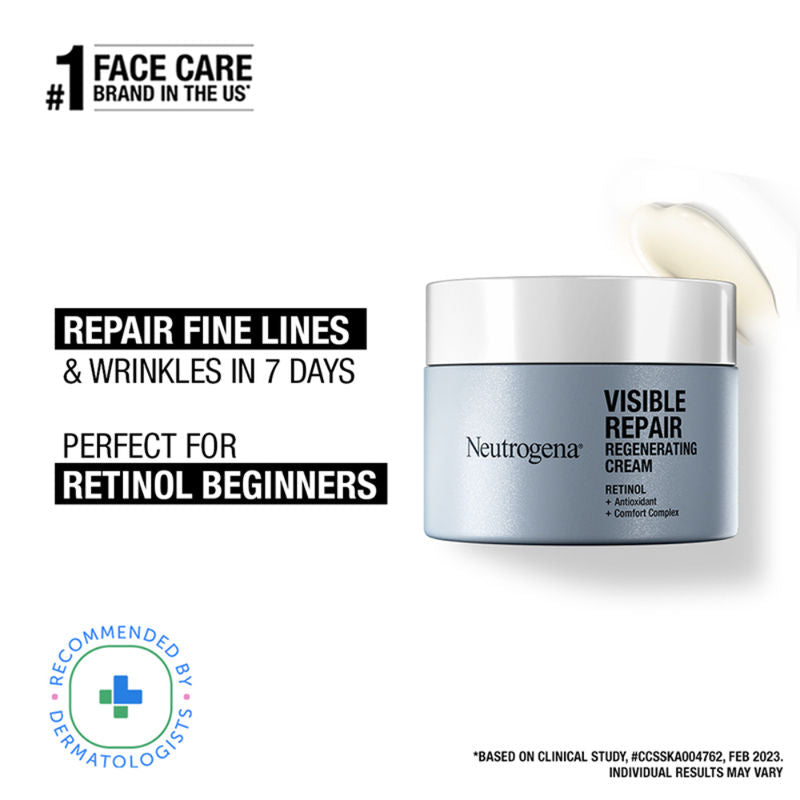
Neutrogena Visible Repair Retinol + Peptide Anti-Ageing Day & Night Cream For Wrinkles & Fine Lines

Neutrogena Visible Repair Retinol + Peptide Anti-Ageing Day & Night Cream For Wrinkles & Fine Lines
Nykaa E retail limited
neutrogena-visible-repair-retinol-peptide-anti-ageing-day-night-cream-for-wrinkles-fine-lines
Moisturize
10084764582181
Morning or Evening?
How often will you use this product?
Notes


Highlights
WHAT IS IT?
Day & Night Cream, multiple ingredients
FEATURES
Anti-Ageing, Contains Retinol and Peptide, Reduces Wrinkles & Fine Lines, Easy to apply, Suitable for all skin types, Mild fragrance
BEST FOR
normal
CHECKS
Paraben-Free,Sulfate-free,Alcohol-free
Who Is It For?
Adults UnisexWhat Does It Help With?
Wrinkles Fine Lines Anti-ageing Skin RejuvenationBudget
Mid-range ($30-$75)How To Use
Which routine should it be used in?
Instructions:
Key Information


What Nykaa E retail limited Says
Product Description:
Explore the entire range of Face Moisturizer & Day Cream available on Nykaa. Shop more Neutrogena products here. You can browse through the complete world of Neutrogena Face Moisturizer & Day Cream.
About the Brand:
Ingredients Overview
Ingredients List
Water,Pentaerythrityl-Tetraethylhexanoate,Glycerin,Dimethicone,PPG-15-Stearyl-Ether,Butylene-Glycol,Stearyl-Alcohol,Cetearyl-Alcohol,Glyceryl-Behenate,Ceteareth-20,Isohexadecane,Zea-Mays-Corn-Starch,Pentylene-Glycol,Dimethicone-Crosspolymer,Fragrance,Ammonium-Acryloyldimethyltaurate-VP-Copolymer,Caprylyl-Glycol,Polyacrylamide,4-t-Butylcyclohexanol,Sodium-Polyacrylate,Chlorphenesin,Sodium-Cocoyl-Amino-Acids,Carnosine,C13-14Isoparaffin,Polysorbate-20,Retinol,Hydrolyzed-Myrtus-Communis-Leaf-Extract,Disodium-EDTA,Pentaerythrityl-Tetra-di-t-butyl-Hydroxyhydrocinnamate,Sodium-Hyaluronate,Laureth-7,Ascorbic-Acid,Sarcosine,Sodium-Hydroxide,Magnesium-Aspartate,Potassium-Aspartate,Portulaca-Oleracea-Extract
Key Ingredients
Retinol, Peptide, Sodium Hyaluronate, Ascorbic Acid, Carnosine
Ingredients Details
4-t-butylcyclohexanol
Common Name(s): 4-t-butylcyclohexanol,cosmetic active,functional ingredient
CAS Number: N/a
DESCRIPTION
What It Does: Delivers characteristic cosmetic function at recommended use concentration.
Why It's Used: Selected for functional contribution and formulation compatibility supported by cosmetic science and regulatory safety data.
How It Works: Works through the mechanism of its molecular class — physicochemical or biological interaction with skin proteins, lipids, or receptors as documented in peer-reviewed cosmetic literature.
Typically Found In: Skin care formulations
TECHNICAL DETAILS
Primary Category: Active ingredient – cosmetic active
Secondary Functions: Skin conditioning
Application Areas:

Facial Skincare

Body Care
Hair Care
Beard Care
Color Cosmetics (Makeup)
Dietary/Oral Supplements
Typical Concentration Range: 0.1%–10%
SOURCING & ETHICS
Vegan Status: Conditional
Halal Status: Yes
Source Notes: Commercially produced for cosmetic use. verify vegan/halal status with supplier.
SKIN COMPATIBILITY
Irritancy Rating: 1/5 – very low
Comedogenicity Rating: 0/5 – non-comedogenic
Sensitivity Concerns: Well-tolerated by most skin types.
Safe for Sensitive Skin: Yes
SAFETY & COMPATIBILITY
Safety Profile: Good safety profile at recommended concentrations. ewg score: 1–2.
Works Well With: Standard skincare actives
Avoid Combining With: No known significant incompatibilities
SCIENTIFIC NOTE
4-t-butylcyclohexanol has an established safety and efficacy profile within the cosmetic regulatory framework at standard use concentrations.
Last Verified: Cosing database,4-t-butylcyclohexanol technical literature
Primary Sources: 2026-03-12
Carnosine
Common Name(s): Beta-alanyl-l-histidine,n-beta-alanyl-l-histidine dipeptide
CAS Number: 305-84-0
DESCRIPTION
What It Does: Provides anti-glycation and anti-carbonylation activity protecting collagen from glycation-induced crosslinking.
Why It's Used: Natural anti-age dipeptide targeting glycation — complementary to antioxidant-only anti-aging strategies with documented collagen protection.
How It Works: Histidine imidazole chelates cu²⁺ for antioxidant metal chelation. beta-alanine traps reactive carbonyl species (glycating aldehydes). quenches 4-hydroxynonenal (hne) protein carbonylation. anti-glycation via competing with lysine residues.
Typically Found In: Anti-aging serums,anti-glycation products,longevity skincare
TECHNICAL DETAILS
Primary Category: Active ingredient – antioxidant
Secondary Functions: Free radical scavenging,anti-aging
Application Areas:
Facial Skincare
Body Care
Hair Care
Beard Care
Color Cosmetics (Makeup)
Dietary/Oral Supplements
Typical Concentration Range: 0.5%–5%
SOURCING & ETHICS
Vegan Status: Yes – synthetic
Halal Status: Yes
Source Notes: Plant-derived extract or synthetic.
SKIN COMPATIBILITY
Irritancy Rating: 1/5 – very low
Comedogenicity Rating: 0/5 – non-comedogenic
Sensitivity Concerns: Non-irritating; well-tolerated.
Safe for Sensitive Skin: Yes
SAFETY & COMPATIBILITY
Safety Profile: Excellent safety profile. ewg score: 1.
Works Well With: Vitamin c,vitamin e,ferulic acid,spf,other antioxidants
Avoid Combining With: No significant incompatibilities
SCIENTIFIC NOTE
Carnosine's anti-glycation mechanism is sacrificial carbonyl trapping: reactive carbonyl species (methylglyoxal, glyoxal) that would normally glycate collagen lysines are instead captured by carnosine's free amino groups — carnosine acts as a sacrificial protector for collagen, being consumed in the process of preventing more damaging collagen glycation.
Last Verified: Cosing database,guiotto et al. carnosine anti-glycation review
Primary Sources: 2026-03-12
Ceteareth-20
Common Name(s): Polyethylene glycol cetearyl ether,peg-20 cetearyl ether
CAS Number: 68439-49-6
DESCRIPTION
What It Does: Provides high-hlb o/w emulsification for stable cream formation from ethoxylated cetearyl alcohol.
Why It's Used: Classic self-emulsifying wax component for standard pharmaceutical and cosmetic cream formulation.
How It Works: 20 eo units on cetearyl alcohol chain provide hlb ~15-17 for strong o/w emulsification. often pre-blended with cetearyl alcohol as 'emulsifying wax' for simplified cream making. combined low-hlb cetearyl alcohol + high-hlb ceteareth-20 forms a balanced self-emulsifying system.
Typically Found In: Classic pharmaceutical and cosmetic creams
TECHNICAL DETAILS
Primary Category: Functional ingredient – ethoxylated fatty alcohol emulsifier
Secondary Functions: Skin conditioning
Application Areas:
Facial Skincare
Body Care
Hair Care
Beard Care
Color Cosmetics (Makeup)
Dietary/Oral Supplements
Typical Concentration Range: 1%–8%
SOURCING & ETHICS
Vegan Status: Conditional – peg petroleum; cetearyl vegetable
Halal Status: Yes
Source Notes: Commercially produced for cosmetic use. verify vegan/halal status with supplier.
SKIN COMPATIBILITY
Irritancy Rating: 1/5 – very low
Comedogenicity Rating: 0/5 – non-comedogenic
Sensitivity Concerns: Well-tolerated by most skin types.
Safe for Sensitive Skin: Yes
SAFETY & COMPATIBILITY
Safety Profile: Good safety profile at recommended concentrations. ewg score: 1–2.
Works Well With: Standard skincare actives
Avoid Combining With: No known significant incompatibilities
SCIENTIFIC NOTE
Ceteareth-20's combination with cetearyl alcohol in the classic 'emulsifying wax nf' creates what is called a 'mixed emulsifier system' where the fatty alcohol forms lamellar crystal phases that physically trap and stabilize oil droplets. this physical (lamellar crystal) + chemical (hlb balance) dual stabilization provides superior stability compared to either component alone.
Last Verified: Cosing database,cir safety assessment
Primary Sources: 2026-03-12
Chlorphenesin
Common Name(s): 3-(4-chlorophenoxy)-1,2-propanediol,globacid
CAS Number: 104-29-0
DESCRIPTION
What It Does: Provides gram-negative focused preservation complementary to phenoxyethanol for comprehensive spectrum coverage.
Why It's Used: Phenoxyethanol complement — chlorphenesin's gram-negative and antifungal coverage complements phenoxyethanol's gram-positive activity for full-spectrum preservation at lower individual concentrations.
How It Works: 4-chlorophenol ether glycol disrupts bacterial and fungal membranes. strong gram-negative activity (pseudomonas, e. coli). good candida antifungal activity. used with phenoxyethanol for synergistic broad-spectrum coverage. ph stable 3-9.
Typically Found In: Comprehensive preservation systems,baby products (low concentration)
TECHNICAL DETAILS
Primary Category: Functional ingredient – glycerol ether preservative
Secondary Functions: Skin conditioning
Application Areas:
Facial Skincare
Body Care
Hair Care
Beard Care
Color Cosmetics (Makeup)
Dietary/Oral Supplements
Typical Concentration Range: 0.1%–0.3%
SOURCING & ETHICS
Vegan Status: Yes – synthetic
Halal Status: Yes
Source Notes: Commercially produced for cosmetic use. verify vegan/halal status with supplier.
SKIN COMPATIBILITY
Irritancy Rating: 1/5 – very low
Comedogenicity Rating: 0/5 – non-comedogenic
Sensitivity Concerns: Well-tolerated by most skin types.
Safe for Sensitive Skin: Yes
SAFETY & COMPATIBILITY
Safety Profile: Eu max 0.3% cosmetics. good safety profile. synergistic combination with phenoxyethanol (0.3% pe + 0.1% chlorphenesin often equivalent to 1% pe alone).
Works Well With: Standard skincare actives
Avoid Combining With: No known significant incompatibilities
SCIENTIFIC NOTE
Chlorphenesin + phenoxyethanol synergy operates through a classic spectrum-filling combination: phenoxyethanol provides strong gram-positive antimicrobial activity while chlorphenesin provides gram-negative and antifungal coverage. the combination's minimum inhibitory concentration sum is subadditive (provides equivalent preservation at combined concentrations below what either alone would require) — textbook pharmacological synergy enabling lower total preservative load.
Last Verified: Cosing database,eu preservative annex v,cir safety assessment
Primary Sources: 2026-03-12
