

NIVEA India Pvt Ltd
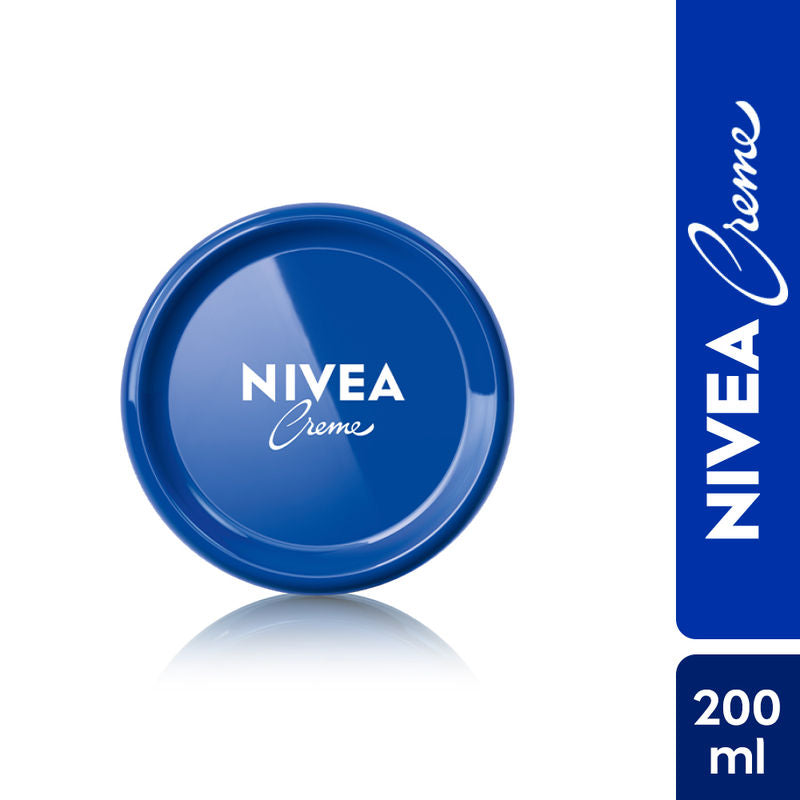
NIVEA Creme, Multi-Purpose Moisturizer, Protective Skin Care Cream for Men, Women & Family

NIVEA Creme, Multi-Purpose Moisturizer, Protective Skin Care Cream for Men, Women & Family
NIVEA India Pvt Ltd
nivea-creme-multi-purpose-moisturizer-protective-skin-care-cream-for-men-women-family
Moisturize
10084869439781
Morning or Evening?
How often will you use this product?
Notes


Highlights
WHAT IS IT?
Multi-Purpose Moisturizer
FEATURES
Protective skin care cream, suitable for men, women, and family
BEST FOR
normal
CHECKS
No specific exclusions found
Who Is It For?
Men Women Family All AgesWhat Does It Help With?
Protects Skin MoisturizesBudget
Affordable (under $30)How To Use
Which routine should it be used in?
Instructions:
Key Information


What NIVEA India Pvt Ltd Says
Product Description:
Multi-Purpose Moisturizer, Protective Skin Care Cream for Men, Women & Family. Explore the entire range of Face Moisturizer & Day Cream available on Nykaa.
About the Brand:
Ingredients Overview
Ingredients List
Water, Mineral Oil, Petrolatum, Glycerin, Microcrystalline Wax, Lanolin Alcohol, Paraffin, Panthenol, Magnesium Sulfate, Decyl Oleate, Octyldodecanol, Aluminum Stearates, Fragrance, Citric Acid, Magnesium Stearate, Methylchloroisothiazolinone, Methylisothiazolinone
Key Ingredients
Ingredients Details
Aluminum Stearates
Common Name(s): Aluminum stearates,aluminum metallic soap,colour cosmetic glidant powder
CAS Number: N/a
DESCRIPTION
What It Does: Aluminum stearates provides silky powder flow and excellent skin adhesion in colour cosmetics and face powders, contributes mild aluminum astringency for improved cosmetic wear, forms a water-resistant hydrophobic film on skin that extends make-up longevity through perspiration, and binds compressed powder tablets together in pressed-powder formulations through the wax-like fatty acid crystal cohesion.
Why It's Used: Formulators choose aluminum stearates for pressed and loose colour cosmetic powder formulations because metallic soaps provide a unique functional triad that no single non-metallic ingredient can replicate: (1) the fatty acid anion provides lubricity and silky skin-glide from the waxy hydrocarbon surface; (2) the aluminum cation provides astringency and water resistance from the ionic metal-skin protein interaction; (3) the crystal plate morphology provides particle-particle cohesion for compressed powder tablet integrity. this three-in-one functionality at 1–20% concentration makes metallic soaps irreplaceable in commercial colour cosmetic formulation despite the availability of individually superior alternatives for each function.
How It Works: Aluminum stearates works through its metallic soap crystal architecture's dual surface chemistry: the aluminum divalent (or trivalent for aluminium) ion bridges two or three fatty acid carboxylate anions forming a layered crystalline structure. individual crystals are plate-like with the metal-carboxylate ionic plane buried inside and the hydrocarbon chain ends forming the outer surface. the waxy hydrocarbon outer surface has a water contact angle of 90–110° (hydrophobic) and low surface energy (~25 mn/m) providing inter-crystal lubricity and smooth skin-glide. the ionic inner structure provides crystal cohesion for pressed powder. on skin contact, the aluminum ions at crystal edges interact with skin surface carboxylate and amine groups from mild ionic bonding — providing the adhesion that keeps face powder on skin through the wear period. the water-resistance arises from the hydrophobic crystal surface that prevents aqueous sweat from penetrating and disrupting the powder layer.
Typically Found In: Face powders,colour cosmetics,pressed foundations
TECHNICAL DETAILS
Primary Category: Functional ingredient – emollient
Secondary Functions: Barrier sealing,softening
Application Areas:

Facial Skincare
Body Care
Hair Care

Beard Care
Color Cosmetics (Makeup)
Dietary/Oral Supplements
Typical Concentration Range: 1%–20%
SOURCING & ETHICS
Vegan Status: Conditional
Halal Status: Yes
Source Notes: Plant-derived, synthetic or animal-derived. verify source.
SKIN COMPATIBILITY
Irritancy Rating: 1/5 – very low
Comedogenicity Rating: 1/5 – low; formulation-dependent
Sensitivity Concerns: Non-irritating.
Safe for Sensitive Skin: Yes
SAFETY & COMPATIBILITY
Safety Profile: Excellent safety profile. ewg score: 1.
Works Well With: Humectants,ceramides,actives as carrier
Avoid Combining With: No significant incompatibilities
SCIENTIFIC NOTE
Metallic soap crystal morphology effect on skin feel: aluminum stearate forms small (~5 μm) lamellar plate crystals with high aspect ratio (width/thickness ~10). under applied finger pressure, these plates slide over each other along the cleavage plane (inter-plate lubricity) providing the characteristic silky glide. larger crystallites provide more glide; smaller provide better adhesion from higher surface area-to-volume ratio. formulators control metallic soap particle size through precipitation conditions during manufacture to tune the glide-adhesion balance for specific cosmetic product requirements.
Last Verified: Cosing database,aluminum stearates metallic soap colour cosmetic review
Primary Sources: 2026-03-12
Citric Acid
Common Name(s): Lemon acid,2-hydroxypropane-1,2,3-tricarboxylic acid
CAS Number: 77-92-9
DESCRIPTION
What It Does: Adjusts ph to optimal ranges, chelates destabilizing metal ions, provides mild exfoliation at higher concentrations.
Why It's Used: Universal cosmetic ph adjuster and chelating agent. aha exfoliant activity is secondary.
How It Works: As ph adjuster, donates protons. as chelating agent, three carboxylic groups bind divalent metals (ca²⁺, mg²⁺, fe²⁺) preventing oxidative degradation.
Typically Found In: Nearly all cosmetic formulations,brightening products,exfoliants
TECHNICAL DETAILS
Primary Category: Active ingredient – alpha hydroxy acid (aha)
Secondary Functions: Chelating agent,ph adjustment,preservation enhancement
Application Areas:
Facial Skincare
Body Care
Hair Care
Beard Care
Color Cosmetics (Makeup)
Dietary/Oral Supplements
Typical Concentration Range: 0.1%–10%
SOURCING & ETHICS
Vegan Status: Yes – synthetic or fermentation-derived
Halal Status: Yes
Source Notes: Produced by fermentation of sugars by aspergillus niger. gras (e330). most abundant organic acid in citrus.
SKIN COMPATIBILITY
Irritancy Rating: 1/5 – very low at low concentrations; 2/5 at exfoliant concentrations
Comedogenicity Rating: 0/5 – non-comedogenic
Sensitivity Concerns: Photosensitizing – mandatory spf use. start at low frequency.
Safe for Sensitive Skin: Use with caution – spf required
SAFETY & COMPATIBILITY
Safety Profile: Safe at otc concentrations. eu: ≤10% leave-on at ph ≥3.5. mandatory spf advisory.
Works Well With: Niacinamide,ceramides,hyaluronic acid,spf
Avoid Combining With: Retinol in same step; multiple exfoliants simultaneously
SCIENTIFIC NOTE
Three carboxylic acid groups provide multiple proton donation sites and stronger chelation than monocarboxylic ahas. this makes citric acid the preferred cosmetic chelating agent alongside edta.
Last Verified: Cosing database,cir safety assessment,ewg skin deep
Primary Sources: 2026-03-12
Decyl Oleate
Common Name(s): Decyl oleate,cosmetic active,functional ingredient
CAS Number: N/a
DESCRIPTION
What It Does: Delivers characteristic cosmetic function at recommended use concentration.
Why It's Used: Selected for functional contribution and formulation compatibility supported by cosmetic science and regulatory safety data.
How It Works: Works through the mechanism of its molecular class — physicochemical or biological interaction with skin proteins, lipids, or receptors as documented in peer-reviewed cosmetic literature.
Typically Found In: Skin care formulations
TECHNICAL DETAILS
Primary Category: Active ingredient – cosmetic active
Secondary Functions: Skin conditioning
Application Areas:
Facial Skincare
Body Care
Hair Care
Beard Care
Color Cosmetics (Makeup)
Dietary/Oral Supplements
Typical Concentration Range: 0.1%–10%
SOURCING & ETHICS
Vegan Status: Conditional
Halal Status: Yes
Source Notes: Commercially produced for cosmetic use. verify vegan/halal status with supplier.
SKIN COMPATIBILITY
Irritancy Rating: 1/5 – very low
Comedogenicity Rating: 0/5 – non-comedogenic
Sensitivity Concerns: Well-tolerated by most skin types.
Safe for Sensitive Skin: Yes
SAFETY & COMPATIBILITY
Safety Profile: Good safety profile at recommended concentrations. ewg score: 1–2.
Works Well With: Standard skincare actives
Avoid Combining With: No known significant incompatibilities
SCIENTIFIC NOTE
Decyl oleate has an established safety and efficacy profile within the cosmetic regulatory framework at standard use concentrations.
Last Verified: Cosing database,decyl oleate technical literature
Primary Sources: 2026-03-12
Fragrance
Common Name(s): Fragrance ingredient,eu allergen or aromatic component,olfactory/flavour
CAS Number: N/a
DESCRIPTION
What It Does: Provides the complete fragrance profile contributing to product sensory experience and consumer appeal.
Why It's Used: Fragrance is a major consumer purchase driver — up to 70% of consumers make purchasing decisions partially based on product scent.
How It Works: Fragrance blends interact with olfactory receptors providing the sensory profile — complex mixtures activate multiple receptor types for rich, multidimensional scent experiences.
Typically Found In: All fragrance products
TECHNICAL DETAILS
Primary Category: Active ingredient – cosmetic active
Secondary Functions: Skin conditioning
Application Areas:
Facial Skincare
Body Care
Hair Care
Beard Care
Color Cosmetics (Makeup)
Dietary/Oral Supplements
Typical Concentration Range: Standard use levels
SOURCING & ETHICS
Vegan Status: Conditional
Halal Status: Yes
Source Notes: Commercially produced for cosmetic use. verify vegan/halal status with supplier.
SKIN COMPATIBILITY
Irritancy Rating: 1/5 – very low
Comedogenicity Rating: 0/5 – non-comedogenic
Sensitivity Concerns: Well-tolerated by most skin types.
Safe for Sensitive Skin: Yes
SAFETY & COMPATIBILITY
Safety Profile: Good safety profile at recommended concentrations. ewg score: 1–2.
Works Well With: Standard skincare actives
Avoid Combining With: No known significant incompatibilities
SCIENTIFIC NOTE
Ifra guidelines set usage limits for fragrance ingredients based on skin sensitisation and phototoxicity assessment for each application category.
Last Verified: Eu regulation 1223/2009 annex iii,ifra standards,fragrance allergen declaration requirements
Primary Sources: 2026-03-12
