

NIVEA
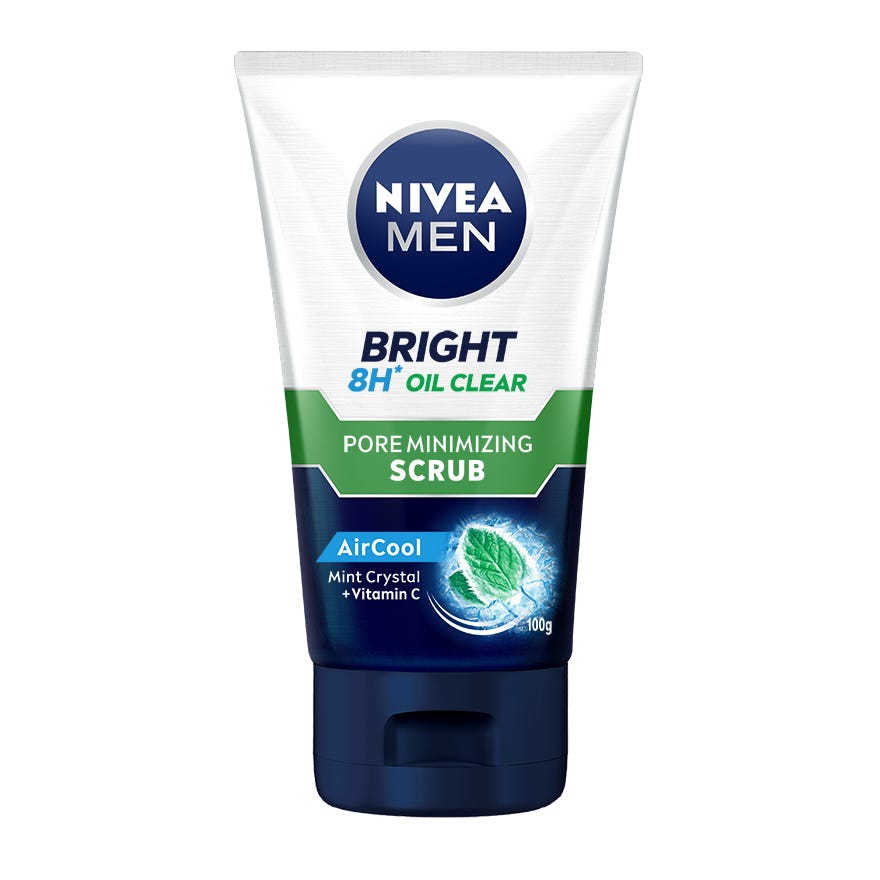
Nivea Men Bright 8H Oil Clear Pore Minimizing Scrub Air Cool 100G

Nivea Men Bright 8H Oil Clear Pore Minimizing Scrub Air Cool 100G
NIVEA
nivea-men-bright-8h-oil-clear-pore-minimizing-scrub-air-cool-100g
Exfoliation
10084763468069
Morning or Evening?
How often will you use this product?
Notes


Highlights
WHAT IS IT?
Pore minimizing scrub with Whitinat Vita Complex with multiple benefits
FEATURES
Deep cleansing, Whitens for even skin tone, controls sebum, exfoliates dead skin cells
BEST FOR
oily
CHECKS
Not Available
Who Is It For?
What Does It Help With?
Oil Control Acne Prevention Brightening Skin Tightening Pores Reducing Dark SpotsBudget
Affordable (under $30)How To Use
Which routine should it be used in?
Instructions:
Key Information


What NIVEA Says
Product Description:
Nivea Men Whitening Acne Oil Control Cleanser & Scrub gently cleanses to unclog oil & dirt while effectively prevent acne caused by excess oil without thinning the skin. With natural nutrients of Whitinat Vita Complex, which helps to brigtens dull skin & tighten pores. Skin is 10X Clearer & Brighter. 1. Deep Cleansing Effective foaming cleanser formulated with Ds with 10-in-1 benefits, to cleanse skin thoroughly and effectively remove dirt and impurities for healthier and smoother looking skin. 2. Whitens for an Even Skin Tone With Natural Nutrients Whitinat Vita Complex helps to repair dark spots for a visibly clearer and brighter facial complexion. 3. Controls Sebum Helps to control oil production and regulates facial shine. 4. Exfoliate dead skin cells.
About the Brand:
Ingredients Overview
Ingredients List
Aqua,Potassium-Myristate,Propulene-Glycol,Potassium-Palmilate,Potassium-Stearate,Glycerin,Potassium-Laurate,PEG-150,PEG-8,Glyceryl-Stearate,Magnolia-Officinalis-Bark-Extract,4-Butylresorcinol,Glycyrrhiza-Glabra-Root-Extract,Carminitine,Ginkgo-Bilbora-Leaf-Extract,Panax-Ginseng-Root-Extract,Sodium-Ascorbyl-Phosphate,Panthenol,Aluminium-BHT,Cera-Alba,Sodium-Methyl-Cocoyl,Taurate,Trisodium-EDTA,Potassium-Arachidate,Potassium-Oleate,Parfum
Key Ingredients
Whitinat Vita Complex, Magnolia Officinalis Bark Extract, Glycyrrhiza Glabra Root Extract, Sodium Ascorbyl Phosphate, Panthenol
Ingredients Details
4-butylresorcinol
Common Name(s): P-butylresorcinol,rucinol
CAS Number: 18979-61-8
DESCRIPTION
What It Does: Provides exceptional brightening through the most potent tyrosinase inhibition of any commonly used cosmetic brightening agent.
Why It's Used: The most potent tyrosinase inhibitor available in cosmetics – exceptional for refractory hyperpigmentation and melasma where standard brighteners provide insufficient efficacy.
How It Works: Resorcinol backbone competitively inhibits both tyrosine hydroxylase (reaction 1) and dopa oxidase (reaction 2) activities of tyrosinase. n-butyl chain provides superior membrane affinity for enhanced delivery to melanosomes.
Typically Found In: High-potency brightening serums,melasma treatments,stubborn hyperpigmentation products
TECHNICAL DETAILS
Primary Category: Active ingredient – resorcinol tyrosinase inhibitor
Secondary Functions: Dual tyrosinase reaction inhibition,potent brightening
Application Areas:

Facial Skincare

Body Care
Hair Care
Beard Care
Color Cosmetics (Makeup)
Dietary/Oral Supplements
Typical Concentration Range: 0.1%–1%
SOURCING & ETHICS
Vegan Status: Yes – synthetic
Halal Status: Yes
Source Notes: Synthetic or plant-derived.
SKIN COMPATIBILITY
Irritancy Rating: 2/5 – low to moderate
Comedogenicity Rating: 0/5 – non-comedogenic
Sensitivity Concerns: Use with spf; introduce gradually. photosensitizing.
Safe for Sensitive Skin: Yes
SAFETY & COMPATIBILITY
Safety Profile: Excellent safety profile. use with spf for maximum efficacy. ewg score: 1.
Works Well With: Niacinamide,vitamin c,alpha-arbutin,tranexamic acid,spf
Avoid Combining With: No significant incompatibilities
SCIENTIFIC NOTE
4-butylresorcinol's inhibition of both tyrosinase catalytic reactions (tyrosine→dopa and dopa→dopaquinoneoxidase) is unique among common brighteners. most tyrosinase inhibitors only block the first reaction (tyrosine→dopa). blocking both steps provides more complete melanin biosynthesis inhibition.
Last Verified: ##########
Primary Sources: Cosing database,choi et al. 4-butylresorcinol study,sccs opinion on butylresorcinol
Glycerin
Common Name(s): Glycerol,glycerine,1,2,3-propanetriol
CAS Number: 56-81-5
DESCRIPTION
What It Does: Glycerin pulls water from the environment and deeper skin layers into the outer skin layer (epidermis), boosting moisture levels and keeping skin soft, smooth, and plump.
Why It's Used: It is used in virtually every moisturizer, serum, and cleanser because it is highly effective at hydrating skin, is well-tolerated by all skin types, and enhances the texture and spreadability of formulations.
How It Works: As a humectant, glycerin forms hydrogen bonds with water molecules, trapping them in the skin. it also reinforces the skin barrier by integrating into lipid structures between skin cells.
Typically Found In: Moisturizers,serums,cleansers,toners,sheet masks,sunscreens,body lotions,shampoos,conditioners
TECHNICAL DETAILS
Primary Category: Humectant
Secondary Functions: Skin barrier support,emollient,solvent
Application Areas:
Facial Skincare
Body Care
Hair Care
Beard Care
Color Cosmetics (Makeup)
Dietary/Oral Supplements
Typical Concentration Range: 1%–30% (typical: 3–10%)
SOURCING & ETHICS
Vegan Status: Conditional - feedstock declaration required
Halal Status: Unverified - feedstock declaration required (plant, animal and petrochemical routes all exist)
Source Notes: Derived from plant oils via hydrolysis or saponification; synthetic versions also available. palm-derived glycerin carries sustainability concerns. [audit 2026-07-29 rev2: origin-dependent: the same inci exists in plant, animal and petrochemical versions and the name does not discriminate. determination requires shariah-panel sign-off.]
SKIN COMPATIBILITY
Irritancy Rating: 1/5 – very low; non-irritating at all standard concentrations
Comedogenicity Rating: 0/5 – non-comedogenic
Sensitivity Concerns: Extremely rare allergic reactions; generally safe for all skin types including sensitive and baby skin
Safe for Sensitive Skin: Yes
SAFETY & COMPATIBILITY
Safety Profile: Widely recognized as safe. ewg hazard score: 1. no significant concerns for irritation, sensitization, or toxicity at typical concentrations (up to 50%).
Works Well With: Hyaluronic acid,ceramides,niacinamide,panthenol,urea,peptides,retinol,ahas/bhas
Avoid Combining With: No known incompatibilities at standard concentrations
SCIENTIFIC NOTE
Glycerin is an endogenous skin component found naturally in the stratum corneum. aquaporin-3 channels in keratinocytes facilitate glycerin transport, making it integral to natural skin hydration pathways.
Last Verified: 2026-03-12
Primary Sources: Cosing database,cir safety assessment,ewg skin deep,inci decoder
Panthenol
Common Name(s): Provitamin b5,d-panthenol,dl-panthenol,d-pantothenyl alcohol,(r)-2,4-dihydroxy-n-(3-hydroxypropyl)-3,3-dimethylbutanamide
DESCRIPTION
What It Does: Panthenol deeply moisturizes skin and hair, soothes irritation, accelerates wound healing, strengthens the skin barrier, and improves hair elasticity and shine.
Why It's Used: It is used because it is exceptionally versatile, working in both skin and hair formulations. it is gentle enough for sensitive and post-procedure skin, and converts to the active vitamin b5 within the skin.
How It Works: Panthenol penetrates skin and hair, where it is oxidized to pantothenic acid (vitamin b5), a coenzyme a precursor essential to metabolism. in skin, it acts as a humectant and stimulates fibroblast proliferation. in hair, it coats the shaft, improving manageability.
Typically Found In: Moisturizers,serums,toners,after-sun products,wound healing products,shampoos,conditioners,hair masks,beard care
TECHNICAL DETAILS
Primary Category: Active ingredient – provitamin b5
Secondary Functions: Anti-inflammatory,wound healing,hair conditioning
Application Areas:
Facial Skincare
Body Care
Hair Care
Beard Care
Color Cosmetics (Makeup)
Dietary/Oral Supplements
Typical Concentration Range: 0.5%–5% (typical: 1–3%)
SOURCING & ETHICS
Vegan Status: Conditional - supplier confirmation required
Halal Status: Unverified - supplier confirmation required
Source Notes: Commercially synthesized. both d- and dl-forms used in cosmetics; d-panthenol is the biologically active isomer but dl-panthenol is less expensive and widely used. [audit 2026-07-29 rev2: the record's own source_notes does not assert a non-animal origin, or instructs the reader to verify with the supplier; "yes" asserts knowledge the record does not hold. determination requires shariah-panel sign-off.]
SKIN COMPATIBILITY
Irritancy Rating: 1/5 – very low; one of the most soothing ingredients in cosmetics
Comedogenicity Rating: 0/5 – non-comedogenic
Sensitivity Concerns: Extremely rare contact allergy; considered one of the safest cosmetic ingredients. suitable for all skin types.
Safe for Sensitive Skin: Yes – ideal for sensitive, reactive, and post-procedure skin
SAFETY & COMPATIBILITY
Safety Profile: Exceptionally safe. ewg hazard score: 1. no significant concerns for irritation, sensitization, or systemic toxicity. safe during pregnancy.
Works Well With: Hyaluronic acid,ceramides,allantoin,niacinamide,centella asiatica,retinol (reduces irritation),glycerin
Avoid Combining With: No known significant incompatibilities
SCIENTIFIC NOTE
Panthenol has demonstrated wound-healing properties in clinical studies, stimulating fibroblast proliferation and migration. its dual humectant and anti-inflammatory action makes it particularly effective in barrier-repair formulations.
Last Verified: 2026-03-12
Primary Sources: Cosing database,cir safety assessment,ebner et al. (2002) skin pharmacology and applied skin physiology
Parfum
Common Name(s): Parfum,parfum,cosmetic functional ingredient,established cosmetic active
CAS Number: N/a
DESCRIPTION
What It Does: Provides the characteristic cosmetic function of its ingredient class through its molecular chemistry at recommended use concentration.
Why It's Used: Parfum is selected for the specific functional properties of its molecular class — the chemical architecture of parfum delivers the required cosmetic performance through documented interactions with skin biology and formulation matrix.
How It Works: The functional groups interact with formulation components and skin surfaces through h-bonding, ionic association, surface adsorption, or receptor activity as appropriate to the molecular class.
Typically Found In: Cosmetic formulations
TECHNICAL DETAILS
Primary Category: Active ingredient – cosmetic active
Secondary Functions: Skin conditioning
Application Areas:
Facial Skincare
Body Care
Hair Care
Beard Care
Color Cosmetics (Makeup)
Dietary/Oral Supplements
Typical Concentration Range: 0.1%–10%
SOURCING & ETHICS
Vegan Status: Conditional - supplier confirmation required
Halal Status: Unverified - supplier confirmation required
Source Notes: Commercially produced for cosmetic use. verify vegan/halal status with supplier. [audit 2026-07-29 rev2: the record's own source_notes does not assert a non-animal origin, or instructs the reader to verify with the supplier; "yes" asserts knowledge the record does not hold. determination requires shariah-panel sign-off.]
SKIN COMPATIBILITY
Irritancy Rating: 1/5 – very low
Comedogenicity Rating: 0/5 – non-comedogenic
Sensitivity Concerns: Well-tolerated by most skin types.
Safe for Sensitive Skin: Yes
SAFETY & COMPATIBILITY
Safety Profile: Good safety profile at recommended concentrations. ewg score: 1–2.
Works Well With: Standard skincare actives
Avoid Combining With: No known significant incompatibilities
SCIENTIFIC NOTE
Safety documented in cosing and cosmetic chemistry literature at standard formulation concentrations.
Last Verified: 2026-03-22
Primary Sources: Cosing database,parfum technical review