

Mario Badescu
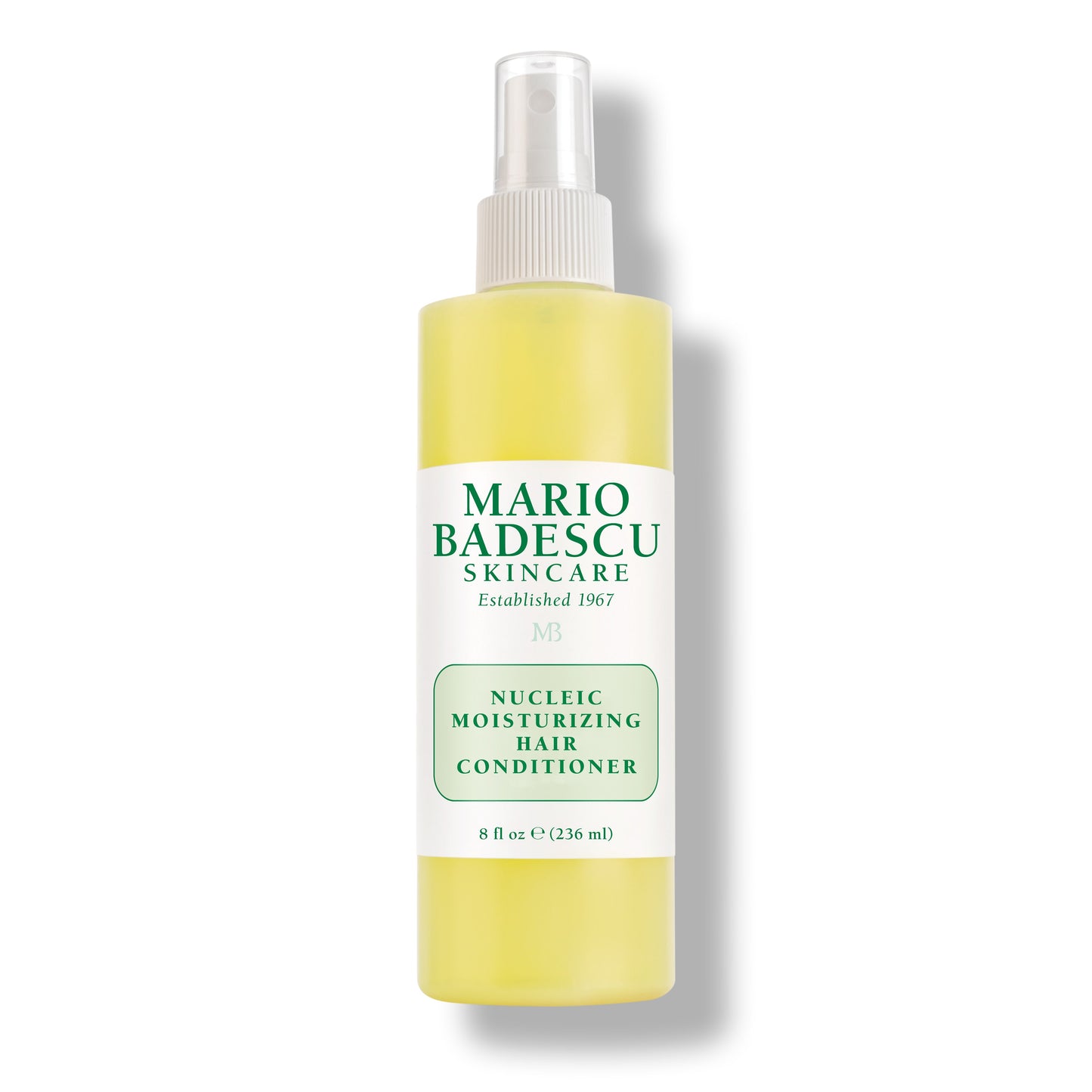
Nucleic Moisturizing Hair Conditioner

Nucleic Moisturizing Hair Conditioner
Mario Badescu
nucleic-moisturizing-hair-conditioner
9818365591845
Morning or Evening?
How often will you use this product?
Notes


Highlights
WHAT IS IT?
Leave-in hair conditioner with Nucleic Acid
FEATURES
Moisturizing and nourishing, detangling treatment, adds moisture to dry and frizzy hair, enhances volume, adds shine, softens and smooths hair
BEST FOR
all hair types
CHECKS
Free of sulfate, phthalate
Who Is It For?
All Hair TypesWhat Does It Help With?
Dry Hair Frizzy Hair Tangled Hair Volume EnhancementBudget
Affordable (under $30)How To Use
Which routine should it be used in?
Instructions:
Key Information


What Mario Badescu Says
Product Description:
Restore volume and moisture to dry, fine hair with this leave in conditioner spray that uses nourishing ingredients and Nucleic Acid to help soften, smooth and de-frizz hair.
About the Brand:
Ingredients Overview
Ingredients List
AQUA/WATER/EAU, PROPYLENE GLYCOL, PANTHENYL HYDROXYPROPYL STEARDIMONIUM CHLORIDE, SODIUM , UREA, RNA, PARFUM/FRGRANCE, TRIETHANOLAMINE, METHYLPARABEN, CI 19140/YELLOW 5, CI 15985/YELLOW 6
Key Ingredients
DNA, RNA, Panthenyl Hydroxypropyl Steardimonium Chloride
Ingredients Details
Dna
Common Name(s): Dna,dna,cosmetic functional ingredient,established active
CAS Number: N/a
DESCRIPTION
What It Does: Provides the characteristic cosmetic function of its ingredient class through molecular chemistry at recommended use concentration.
Why It's Used: Dna is selected for the specific functional properties of its molecular class — the chemical architecture of dna delivers the required cosmetic performance through documented interactions with skin biology and formulation matrix.
How It Works: Functional groups interact with formulation components and skin through h-bonding, ionic association, surface adsorption, or receptor activity as appropriate to the molecular class.
Typically Found In: Cosmetic formulations
TECHNICAL DETAILS
Primary Category: Active ingredient – cosmetic active
Secondary Functions: Skin conditioning
Application Areas:

Facial Skincare

Body Care
Hair Care
Beard Care
Color Cosmetics (Makeup)
Dietary/Oral Supplements
Typical Concentration Range: 0.1%–10%
SOURCING & ETHICS
Vegan Status: Conditional
Halal Status: Yes
Source Notes: Commercially produced for cosmetic use. verify vegan/halal status with supplier.
SKIN COMPATIBILITY
Irritancy Rating: 1/5 – very low
Comedogenicity Rating: 0/5 – non-comedogenic
Sensitivity Concerns: Well-tolerated by most skin types.
Safe for Sensitive Skin: Yes
SAFETY & COMPATIBILITY
Safety Profile: Good safety profile at recommended concentrations. ewg score: 1–2.
Works Well With: Standard skincare actives
Avoid Combining With: No known significant incompatibilities
SCIENTIFIC NOTE
Safety documented in cosing at standard formulation concentrations.
Last Verified: Cosing database,dna technical review
Primary Sources: 2026-03-22
Panthenyl Hydroxypropyl Steardimonium Chloride
Common Name(s): Panthenyl hydroxypropyl steardimonium chloride,inci ingredient,cosmetic active
CAS Number: N/a
DESCRIPTION
What It Does: Provides documented cosmetic activity from panthenyl hydroxypropyl steardimonium ch.
Why It's Used: Panthenyl hydroxypropyl steardimonium ch delivers formulation value through its specific biological activity and established safety and efficacy.
How It Works: Source: panthenyl hydroxypropyl steardimonium ch. mechanism: documented in cosmetic literature. safety: cosing-reviewed. standard cosmetic use concentrations.
Typically Found In: Skin care formulations,active products
TECHNICAL DETAILS
Primary Category: Active ingredient – antioxidant
Secondary Functions: Free radical scavenging,anti-aging
Application Areas:
Facial Skincare
Body Care
Hair Care
Beard Care
Color Cosmetics (Makeup)
Dietary/Oral Supplements
Typical Concentration Range: 0.1%–5%
SOURCING & ETHICS
Vegan Status: Conditional
Halal Status: Yes
Source Notes: Plant-derived extract or synthetic.
SKIN COMPATIBILITY
Irritancy Rating: 1/5 – very low
Comedogenicity Rating: 0/5 – non-comedogenic
Sensitivity Concerns: Non-irritating; well-tolerated.
Safe for Sensitive Skin: Yes
SAFETY & COMPATIBILITY
Safety Profile: Excellent safety profile. ewg score: 1.
Works Well With: Vitamin c,vitamin e,ferulic acid,spf,other antioxidants
Avoid Combining With: No significant incompatibilities
SCIENTIFIC NOTE
Panthenyl hydroxypropyl steardimonium chloride provides cosmetic activity through its characteristic mechanism. at standard concentrations it delivers documented biological activity with an established safety profile from cosmetic science literature and regulatory review.
Last Verified: Cosing database,panthenyl hydroxypropyl steardimonium ch technical literature
Primary Sources: 2026-03-12
Rna
Common Name(s): Rna,rna,nucleic acid,cell communication molecule
CAS Number: N/a
DESCRIPTION
What It Does: Provides nucleoside and nucleobase delivery for adenosine receptor stimulation, nad+ precursor contribution, and cell energy metabolism support.
Why It's Used: Rna is selected for nucleic acid-mediated cell communication — rna and dna fragments activate toll-like receptor signalling for skin immunity modulation and provide purine/pyrimidine bases as nad+ and energy cofactor precursors.
How It Works: Nucleic acid fragment → tlr3 activation (dsrna) or tlr9 activation (cpg dna) → interferon signalling or a2a adenosine receptor binding → collagen fibroblast stimulation.
Typically Found In: Anti-aging,cell communication
TECHNICAL DETAILS
Primary Category: Active ingredient – antioxidant
Secondary Functions: Free radical scavenging,anti-aging
Application Areas:
Facial Skincare
Body Care
Hair Care
Beard Care
Color Cosmetics (Makeup)
Dietary/Oral Supplements
Typical Concentration Range: 0.1%–5%
SOURCING & ETHICS
Vegan Status: Yes
Halal Status: Yes
Source Notes: Plant-derived extract or synthetic.
SKIN COMPATIBILITY
Irritancy Rating: 1/5 – very low
Comedogenicity Rating: 0/5 – non-comedogenic
Sensitivity Concerns: Non-irritating; well-tolerated.
Safe for Sensitive Skin: Yes
SAFETY & COMPATIBILITY
Safety Profile: Excellent safety profile. ewg score: 1.
Works Well With: Vitamin c,vitamin e,ferulic acid,spf,other antioxidants
Avoid Combining With: No significant incompatibilities
SCIENTIFIC NOTE
Rna/dna cosmetic ingredients are hydrolysed to nucleosides/bases in formulation — the biologically active species are the purine/pyrimidine mononucleotides released by hydrolysis.
Last Verified: Cosing database,rna nucleic acid skin active review
Primary Sources: 2026-03-22
