

Nuerma Science
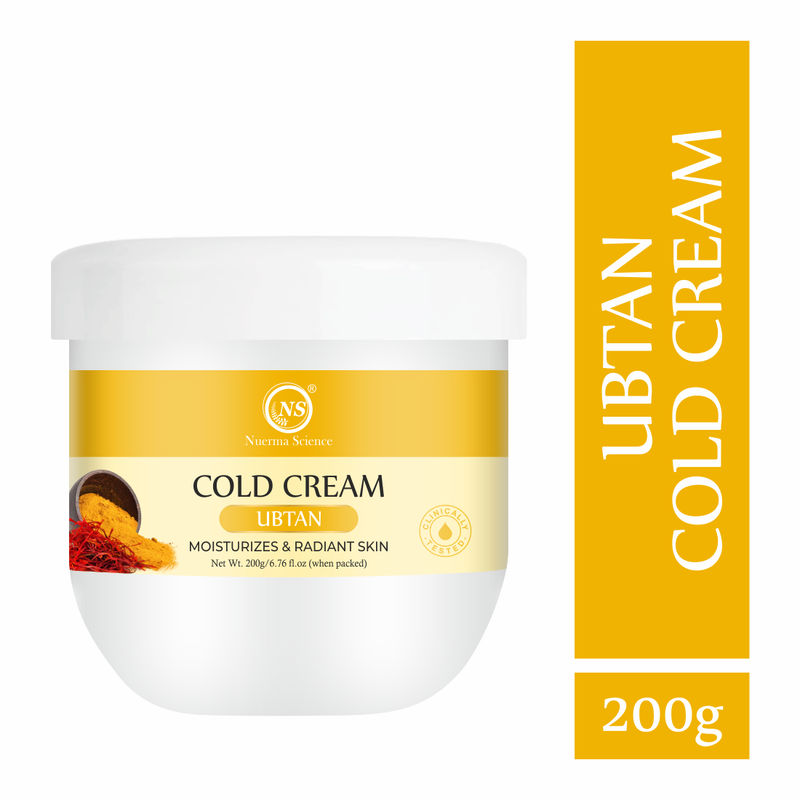
Nuerma Science Ubtan Nourishing Cold Cream

Nuerma Science Ubtan Nourishing Cold Cream
Nuerma Science
nuerma-science-ubtan-nourishing-cold-cream
Moisturize
10084846108965
Morning or Evening?
How often will you use this product?
Notes


Highlights
WHAT IS IT?
Cold cream with natural ingredients
FEATURES
Luxurious blend of Turmeric and Saffron, minimizes UV damage, combats free radicals, enriched with Vitamin E and Almond Oil, quick absorption, non-greasy, evens out skin tone, suitable for all skin types
BEST FOR
sensitive
CHECKS
No stickiness, no residue
Who Is It For?
Adults 18 Years And Older All GendersWhat Does It Help With?
Dark Spots Dry Skin Uv Damage Free Radicals Uneven Skin Tone MoisturizationBudget
Affordable (under $30)How To Use
Which routine should it be used in?
Instructions:
Key Information


What Nuerma Science Says
Product Description:
Elevate your winter skincare ritual with Nuerma Science Ubtan Nourishing Cold Cream, a luxurious blend of Turmeric and Saffron that transforms your daily routine into a rejuvenating experience. Immerse your skin in glowing moisturization as these natural ingredients work synergistically to minimize UV damage and combat free radicals, leaving your skin refreshed and revitalized. Enriched with Vitamin E and Almond Oil, this cold cream goes beyond the surface, deeply nourishing the skin and providing intense moisturization that extends to both the face and body. Experience the pleasure of quick absorption without the stickiness, thanks to its lightweight and non-greasy formula that leaves no residue behind. Say goodbye to dark spots and dry skin, as the potent Ubtan blend evens out your skin tone and ensures well-hydrated, supple skin. Dermatologically tested and suitable for all skin types, this cold cream comes in a generous 200gm size, promising enduring nourishment for a radiant and glowing you. Embrace the versatility of Ubtan Nourishing Cold Cream, your go-to solution for comprehensive winter skincare.
About the Brand:
Ingredients Overview
Ingredients List
ALMOND OIL, TURMERIC EXTRACT, Ubtan Extract, Vitamin E Oil, Shea Butter
Key Ingredients
Turmeric,Saffron,Vitamin E,Almond Oil
Ingredients Details
Almond Oil
Common Name(s): Almond oil,botanical carrier oil,emollient fatty acid delivery
CAS Number: N/a
DESCRIPTION
What It Does: Softens and conditions skin by integrating into sc lipid bilayers, delivers essential fatty acids (oleic, linoleic, linolenic) for barrier lipid synthesis, and provides rich, non-stripping moisturisation.
Why It's Used: Natural carrier oils provide the closest compositional match to endogenous sc lipids, delivering emolliency through genuine barrier integration rather than simple surface occlusion.
How It Works: Fatty acid triglycerides partition into sc lipid bilayers — oleic acid (c18:1) provides fluid, emollient integration; linoleic acid (c18:2) acts as essential ceramide precursor; saturated fatty acids provide more occlusive barrier reinforcement.
Typically Found In: Moisturisers,facial oils,natural skin care
TECHNICAL DETAILS
Primary Category: Functional ingredient – emollient
Secondary Functions: Barrier sealing,softening
Application Areas:

Facial Skincare
Body Care
Hair Care

Beard Care
Color Cosmetics (Makeup)
Dietary/Oral Supplements
Typical Concentration Range: 1%–100%
SOURCING & ETHICS
Vegan Status: Conditional
Halal Status: Yes
Source Notes: Plant-derived, synthetic or animal-derived. verify source.
SKIN COMPATIBILITY
Irritancy Rating: 1/5 – very low
Comedogenicity Rating: 1/5 – low; formulation-dependent
Sensitivity Concerns: Non-irritating.
Safe for Sensitive Skin: Yes
SAFETY & COMPATIBILITY
Safety Profile: Excellent safety profile. ewg score: 1.
Works Well With: Humectants,ceramides,actives as carrier
Avoid Combining With: No significant incompatibilities
SCIENTIFIC NOTE
Essential fatty acids — linoleic (c18:2, n-6) and α-linolenic (c18:3, n-3) acids — cannot be synthesised by the body; topical delivery through carrier oils provides direct substrate for ceramide and eicosanoid biosynthesis in the epidermis.
Last Verified: Cosing database,almond oil carrier oil botanical review
Primary Sources: 2026-03-12
Shea Butter
Common Name(s): Shea butter,karite butter
CAS Number: 91080-23-8
DESCRIPTION
What It Does: Provides deep nourishing emolliency with anti-inflammatory cinnamic acid esters and a uniquely rich unsaponifiable fraction.
Why It's Used: The most nutritious plant butter – unique cinnamic acid esters, lupeol, and rich unsaponifiable fraction provide anti-inflammatory and wound healing benefits beyond standard fatty acid emolliency.
How It Works: Cinnamic acid esters absorb uv radiation providing mild natural uv filtering (spf 3-4). lupeol inhibits nf-kb for anti-inflammatory activity. high stearic acid provides occlusive barrier function. rich unsaponifiable fraction (4-9%) provides phytosterols, tocopherols, and triterpenes for bioactive skin benefits.
Typically Found In: Body butters,rich moisturizers,baby products,hair conditioners,lip balms
TECHNICAL DETAILS
Primary Category: Functional ingredient – emollient
Secondary Functions: Cinnamic acid uv support,lupeol anti-inflammatory,rich emolliency
Application Areas:
Facial Skincare
Body Care
Hair Care
Beard Care
Color Cosmetics (Makeup)
Dietary/Oral Supplements
Typical Concentration Range: 1%–100%
SOURCING & ETHICS
Vegan Status: Yes – from butyrospermum parkii nuts
Halal Status: Yes
Source Notes: Unrefined (raw) shea retains more unsaponifiable fraction and stronger natural scent/color. refined shea is odorless, white, and cleaner for formulation. certified fair trade supports west african women's cooperatives.
SKIN COMPATIBILITY
Irritancy Rating: 1/5 – very low
Comedogenicity Rating: 0/5 – non-comedogenic (refined); 2/5 – low (raw/unrefined)
Sensitivity Concerns: Non-irritating.
Safe for Sensitive Skin: Yes
SAFETY & COMPATIBILITY
Safety Profile: Excellent safety profile. ewg score: 1.
Works Well With: Humectants,ceramides,actives as carrier
Avoid Combining With: No significant incompatibilities
SCIENTIFIC NOTE
Shea butter's unsaponifiable fraction (4-9%, vs coconut oil's 0.5% and olive oil's 1-2%) is exceptionally rich in triterpenes, phytosterols, and tocopherols. this fraction is responsible for shea's anti-inflammatory and wound healing properties that simple fatty acid analysis fails to reveal.
Last Verified: Cosing database,lin et al. shea butter cinnamic acid study,cir safety assessment
Primary Sources: 2026-03-12
