

Nuerma Science
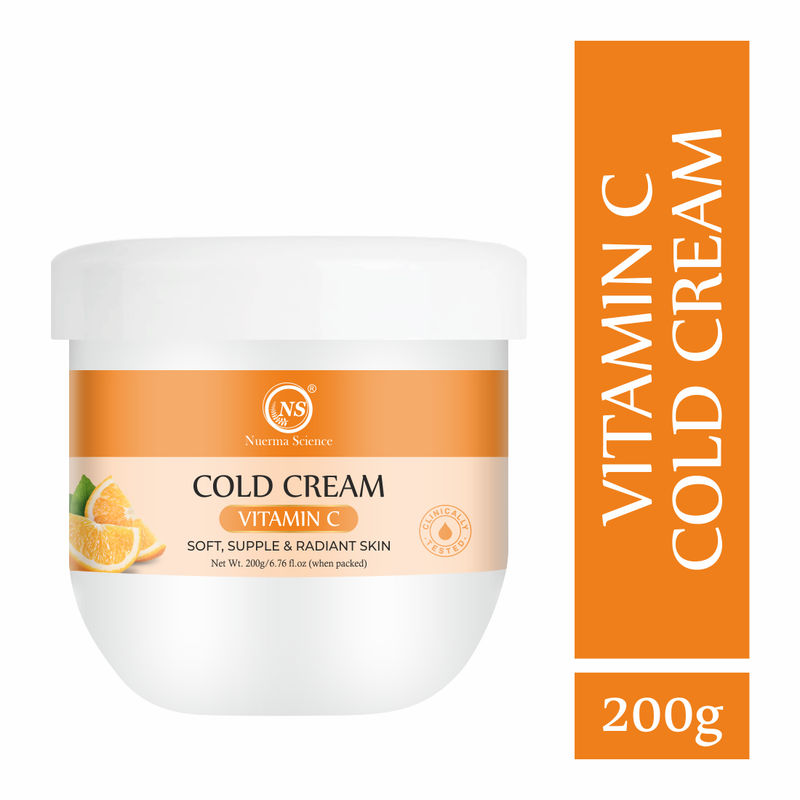
Nuerma Science Vitamin C Cold Cream

Nuerma Science Vitamin C Cold Cream
Nuerma Science
nuerma-science-vitamin-c-cold-cream
Moisturize
10085497733413
Morning or Evening?
How often will you use this product?
Notes


Highlights
WHAT IS IT?
Cold Cream with herbal blend
FEATURES
Non-greasy, ultra-moisturizing, quick absorption, no parabens, no mineral oils, infused with rose water, bees wax, olive oil, vegetable glycerin, apricot kernel oil
BEST FOR
dry
CHECKS
no parabens, no mineral oils
Who Is It For?
Adults 18 Years And Older All GendersWhat Does It Help With?
Repairs And Rejuvenates Dry And Damaged Skin Provides Long-lasting Hydration Promotes Softness And Natural GlowBudget
Affordable (under $30)How To Use
Which routine should it be used in?
Instructions:
Key Information


What Nuerma Science Says
Product Description:
Elevate your winter skincare routine with Nuerma Science Coconut Cold Cream, a luxurious solution designed to repair and rejuvenate dry and damaged skin. This exceptional cold cream boasts a unique, non-greasy, and ultra-moisturizing formula that swiftly absorbs into the skin, leaving it soft and radiant. Suitable for all skin types, this versatile cream is your go-to for comprehensive care, from face to body. Infused with a herbal blend featuring rose water, bee's wax, olive oil, vegetable glycerin, and apricot kernel oil, it provides a soothing and long-lasting effect, locking in moisture for unparalleled hydration. What sets this cold cream apart is its commitment to natural ingredients – no parabens or mineral oils. Immerse yourself in the purity of botanicals, promoting a softness and natural glow that enhances your winter skincare experience. With quick absorption, embrace the ease of integrating Nuerma Science Coconut Cold Cream into your daily routine, and let your skin revel in the nourishment it deserves.
About the Brand:
Ingredients Overview
Ingredients List
rose-water,bees-wax,olive-oil,vegetable-glycerin,apricot-kernel-oil
Key Ingredients
rose water, bee's wax, olive oil, vegetable glycerin, apricot kernel oil
Ingredients Details
Apricot Kernel Oil
Common Name(s): Apricot kernel oil,botanical carrier oil,emollient fatty acid delivery
CAS Number: N/a
DESCRIPTION
What It Does: Softens and conditions skin by integrating into sc lipid bilayers, delivers essential fatty acids (oleic, linoleic, linolenic) for barrier lipid synthesis, and provides rich, non-stripping moisturisation.
Why It's Used: Natural carrier oils provide the closest compositional match to endogenous sc lipids, delivering emolliency through genuine barrier integration rather than simple surface occlusion.
How It Works: Fatty acid triglycerides partition into sc lipid bilayers — oleic acid (c18:1) provides fluid, emollient integration; linoleic acid (c18:2) acts as essential ceramide precursor; saturated fatty acids provide more occlusive barrier reinforcement.
Typically Found In: Moisturisers,facial oils,natural skin care
TECHNICAL DETAILS
Primary Category: Functional ingredient – emollient
Secondary Functions: Barrier sealing,softening
Application Areas:

Facial Skincare
Body Care
Hair Care

Beard Care
Color Cosmetics (Makeup)
Dietary/Oral Supplements
Typical Concentration Range: 1%–100%
SOURCING & ETHICS
Vegan Status: Conditional - supplier confirmation required
Halal Status: Unverified - supplier confirmation required
Source Notes: Plant-derived, synthetic or animal-derived. verify source. [audit 2026-07-29 rev2: the record's own source_notes does not assert a non-animal origin, or instructs the reader to verify with the supplier; "yes" asserts knowledge the record does not hold. determination requires shariah-panel sign-off.]
SKIN COMPATIBILITY
Irritancy Rating: 1/5 – very low
Comedogenicity Rating: 1/5 – low; formulation-dependent
Sensitivity Concerns: Non-irritating.
Safe for Sensitive Skin: Yes
SAFETY & COMPATIBILITY
Safety Profile: Excellent safety profile. ewg score: 1.
Works Well With: Humectants,ceramides,actives as carrier
Avoid Combining With: No significant incompatibilities
SCIENTIFIC NOTE
Essential fatty acids — linoleic (c18:2, n-6) and α-linolenic (c18:3, n-3) acids — cannot be synthesised by the body; topical delivery through carrier oils provides direct substrate for ceramide and eicosanoid biosynthesis in the epidermis.
Last Verified: 2026-03-12
Primary Sources: Cosing database,apricot kernel oil carrier oil botanical review
Olive Oil
Common Name(s): Olive oil oil
DESCRIPTION
What It Does: Nourishes and softens skin through its balanced fatty acid profile, while antioxidant compounds protect against oxidative skin damage.
Why It's Used: Plant oils provide physiologically compatible lipid structures that integrate into the skin barrier and deliver fat-soluble antioxidants directly to skin cells.
How It Works: Fatty acids integrate into stratum corneum lipid lamellae, reinforcing the lipid barrier. antioxidants (tocopherols, carotenoids, polyphenols) neutralize ros through electron donation or singlet oxygen quenching.
Typically Found In: Face oils,serums,moisturizers,hair treatments,body oils
TECHNICAL DETAILS
Primary Category: Plant oils
Secondary Functions: Emollient,antioxidant
Application Areas:
Facial Skincare
Body Care
Hair Care
Beard Care
Color Cosmetics (Makeup)
Dietary/Oral Supplements
Typical Concentration Range: 0.5–30%
SOURCING & ETHICS
Vegan Status: Yes
Halal Status: Yes
Source Notes: Cold-pressed or solvent-extracted plant oil; no animal components.
SKIN COMPATIBILITY
Irritancy Rating: 1899-12-31 00:00:00 -0800
Comedogenicity Rating: 2000-01-01 00:00:00 -0800
Sensitivity Concerns: Low sensitization potential at recommended use concentrations.
Safe for Sensitive Skin: Yes
SAFETY & COMPATIBILITY
Safety Profile: Well-characterized cosmetic ingredient with established safety profile. generally non-irritating at typical use concentrations. suitable for leave-on and rinse-off cosmetics.
Works Well With: Vitamin e,ceramides,other plant oils,squalane
Avoid Combining With: Strong oxidizers (accelerate rancidity)
SCIENTIFIC NOTE
Vegetable oils are triglyceride matrices where the fatty acid composition determines skin compatibility, barrier function, and comedogenicity. oleic acid-rich oils (>60%) soften barrier lipids and enhance penetration; linoleic acid-rich oils reinforce ceramide-poor stratum corneum; saturated fatty acid-rich oils provide occlusion without skin penetration.
Last Verified: 2025-01-15
Primary Sources: Cosing eu database; pcpc cosmetic ingredient safety reviews; aocs plant oil composition databases; fatty acid pharmacology reviews
Vegetable Glycerin
Common Name(s): Vegetable glycerol,plant-derived glycerin,sustainable glycerin
CAS Number: 56-81-5
DESCRIPTION
What It Does: Provides plant-derived glycerin humectancy with explicit vegan natural credentials.
Why It's Used: Credentialed natural humectant — vegetable glycerin's explicit plant origin provides the clean beauty and vegan credentials alongside glycerin's unmatched humectancy, safety, and barrier repair for natural cosmetic positioning.
How It Works: Glycerin (glycerol) from plant oil triglyceride hydrolysis during biodiesel production. chemically identical to synthetic glycerin but with plant-origin documentation. sustainable byproduct of renewable biodiesel production from rapeseed, soy, or palm.
Typically Found In: Natural cosmetics,vegan products,clean beauty — identical function to standard glycerin
TECHNICAL DETAILS
Primary Category: Functional ingredient – humectant
Secondary Functions: Tewl reduction,skin plumping
Application Areas:
Facial Skincare
Body Care
Hair Care
Beard Care
Color Cosmetics (Makeup)
Dietary/Oral Supplements
Typical Concentration Range: 1%–40%
SOURCING & ETHICS
Vegan Status: Conditional - feedstock declaration required
Halal Status: Unverified - feedstock declaration required (plant, animal and petrochemical routes all exist)
Source Notes: Synthetic or naturally derived. excellent aqueous solubility. [audit 2026-07-29 rev2: origin-dependent: the same inci exists in plant, animal and petrochemical versions and the name does not discriminate. determination requires shariah-panel sign-off.]
SKIN COMPATIBILITY
Irritancy Rating: 2026-01-05 00:00:00 -0800
Comedogenicity Rating: 0/5
Sensitivity Concerns: Non-irritating; suitable for all skin types.
Safe for Sensitive Skin: Yes
SAFETY & COMPATIBILITY
Safety Profile: Excellent safety profile. ewg score: 1.
Works Well With: Ceramides,emollients,occlusives,glycerin,hyaluronic acid
Avoid Combining With: No significant incompatibilities
SCIENTIFIC NOTE
Vegetable glycerin's biodiesel byproduct origin provides circular economy sustainability: biodiesel production from plant triglycerides generates glycerin as a co-product (approximately 10% by mass of biodiesel). this abundant sustainable supply from renewable feedstocks makes vegetable glycerin one of cosmetics' most genuinely sustainable primary ingredients.
Last Verified: 2026-03-12
Primary Sources: Cosing database,cir safety assessment