

NUXE
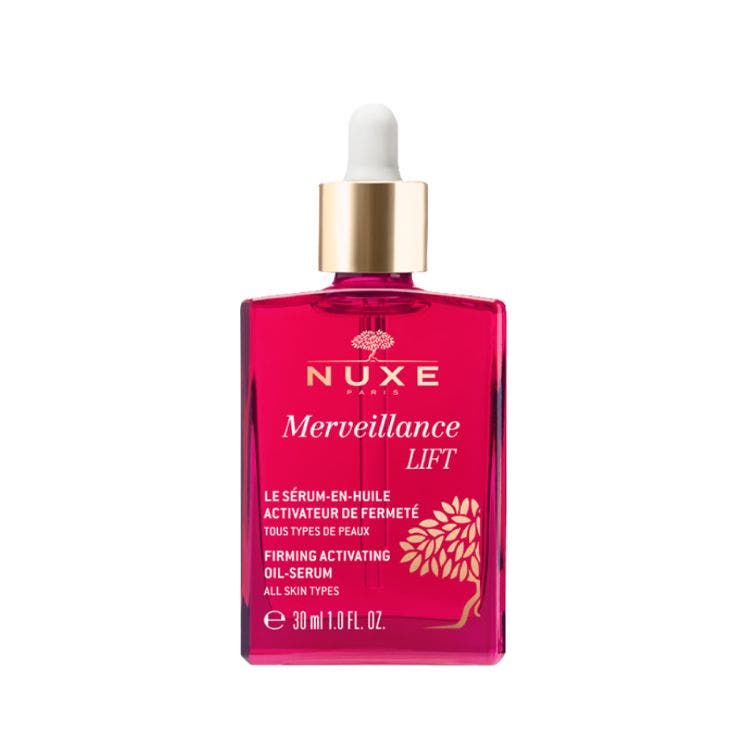
Nuxe Merveillance Lift Firming Activating Oil-Serum 30ml

Nuxe Merveillance Lift Firming Activating Oil-Serum 30ml
NUXE
nuxe-merveillance-lift-firming-activating-oil-serum-30ml
Serum
10085018927397
Morning or Evening?
How often will you use this product?
Notes


Highlights
WHAT IS IT?
Firming activating oil-serum with 13 ingredients
FEATURES
Anti-aging serum, firms and smooths skin, 98% natural origin ingredients, non-greasy and non-sticky texture, ultra corrective Micro-Algae Oil, +32% firmness in 1 month, delicate floral and musk scent, suitable for all skin types
BEST FOR
sensitive
CHECKS
No animal ingredients, Non-greasy, Non-sticky
Who Is It For?
All Genders AdultWhat Does It Help With?
Firms Skin Smooths Skin Strengthens Skin Anti-agingBudget
Premium ($76-$150)How To Use
Which routine should it be used in?
Instructions:
Key Information


What NUXE Says
Product Description:
Anti-aging serum - firms and smooths the skin. 98% ingredients of natural origin
About the Brand:
Ingredients Overview
Ingredients List
Macadamia-Integrifolia-Seed-Oil,Simmondsia-Chinensis-Jojoba-Seed-Oil,Sesamum-Indicum-Sesame-Seed-Oil,Oleic-Linoleic-Linolenic-Polyglycerides,Helianthus-Annuus-Sunflower-Seed-Oil,Parfum-Fragrance,Tocopherol,Caprylic-Capric-Triglyceride,Chlorella-Vulgaris-Extract,Rosmarinus-Officinalis-Rosemary-Leaf-Extract,Linalool,Alpha-Isomethyl-Ionone,Geraniol,Citronellol,Limonene
Key Ingredients
Micro-Algae Oil,Macadamia Integrifolia Seed Oil,Simmondsia Chinensis (Jojoba) Seed Oil,Sesamum Indicum (Sesame) Seed Oil
Ingredients Details
Citronellol
Common Name(s): (r)-3,7-dimethyl-6-octen-1-ol,rhodinol
CAS Number: 106-22-9
DESCRIPTION
What It Does: Provides soft, lasting rose-floral fragrance note.
Why It's Used: Essential rose fragrance monoterpene for lasting smooth floral notes in high-quality perfumery and cosmetic fragrances.
How It Works: Allylic alcohol monoterpene provides fixative property in fragrance blends. good skin substantivity for lasting scent. softer, rounder rose note vs geraniol's fresher character. natural in rose otto at 18-34%.
Typically Found In: Rose perfumes,floral fragrances,luxury skincare
TECHNICAL DETAILS
Primary Category: Fragrance component – monoterpene alcohol
Secondary Functions: Skin conditioning
Application Areas:

Facial Skincare

Body Care
Hair Care
Beard Care
Color Cosmetics (Makeup)
Dietary/Oral Supplements
Typical Concentration Range: 0.001%–1%
SOURCING & ETHICS
Vegan Status: Yes – from rose, geranium, citronella oils
Halal Status: Yes
Source Notes: Commercially produced for cosmetic use. verify vegan/halal status with supplier.
SKIN COMPATIBILITY
Irritancy Rating: 1/5 – very low
Comedogenicity Rating: 0/5 – non-comedogenic
Sensitivity Concerns: Well-tolerated by most skin types.
Safe for Sensitive Skin: Yes
SAFETY & COMPATIBILITY
Safety Profile: Eu cosmetics regulation: declared fragrance allergen. ifra guidelines apply.
Works Well With: Standard skincare actives
Avoid Combining With: No known significant incompatibilities
SCIENTIFIC NOTE
Citronellol's r-enantiomer (natural) vs s-enantiomer (synthetic) provide meaningfully different scent character – a remarkable demonstration of chiral scent discrimination by olfactory receptors. the (r) form provides the characteristic rose note while the (s) form has a distinctly different, less pleasant character. this enantiomeric scent difference means that the biological handedness of naturally-sourced vs racemic synthetic citronellol produces perceptibly different fragrance quality.
Last Verified: Cosing database,ifra standards
Primary Sources: 2026-03-12
Geraniol
Common Name(s): (e)-3,7-dimethyl-2,6-octadien-1-ol,geranyl alcohol
CAS Number: 106-24-1
DESCRIPTION
What It Does: Provides fresh rose-geranium floral scent with antimicrobial activity.
Why It's Used: The rose fragrance terpene – geraniol defines the fresh, sweet rose-geranium note found in more than 60 essential oils and is essential for recreating natural floral fragrance profiles.
How It Works: Monoterpene alcohol inhibits bacterial membrane integrity for antimicrobial activity. activates trpv1 for anti-nociception. inhibits nf-kb for anti-inflammatory activity. antioxidant via allylic radical scavenging.
Typically Found In: Rose-scented products,floral fragrances,natural cosmetics
TECHNICAL DETAILS
Primary Category: Fragrance component – acyclic monoterpene alcohol
Secondary Functions: Skin conditioning
Application Areas:
Facial Skincare
Body Care
Hair Care
Beard Care
Color Cosmetics (Makeup)
Dietary/Oral Supplements
Typical Concentration Range: 0.001%–1%
SOURCING & ETHICS
Vegan Status: Yes – from rose, geranium, palmarosa oils
Halal Status: Yes
Source Notes: Commercially produced for cosmetic use. verify vegan/halal status with supplier.
SKIN COMPATIBILITY
Irritancy Rating: 1/5 – very low
Comedogenicity Rating: 0/5 – non-comedogenic
Sensitivity Concerns: Well-tolerated by most skin types.
Safe for Sensitive Skin: Yes
SAFETY & COMPATIBILITY
Safety Profile: Eu cosmetics regulation: declared fragrance allergen. ifra guidelines apply.
Works Well With: Standard skincare actives
Avoid Combining With: No known significant incompatibilities
SCIENTIFIC NOTE
Geraniol's isomers (geraniol, nerol, citronellol) provide subtly different scent characters despite identical molecular formulae (c10h18o): geraniol provides the sweet, fresh rose note while its z-isomer nerol has a more delicate, neroli-like character. these isomeric scent differences arise from different spatial presentation of the hydroxyl and double bond groups to the olfactory receptor – demonstrating the extraordinary structural sensitivity of olfactory perception.
Last Verified: Cosing database,ifra standards
Primary Sources: 2026-03-12
Limonene
Common Name(s): D-limonene,(r)-limonene,dipentene
CAS Number: 5989-27-5
DESCRIPTION
What It Does: Provides the defining fresh citrus fragrance note alongside solvent and antimicrobial properties.
Why It's Used: The citrus industry's primary fragrance compound and the most abundant terpene in essential oils – limonene provides the clean, universally appealing fresh citrus scent character.
How It Works: D-limonene activates trpv1 mildly at high concentrations. antimicrobial via membrane disruption. solvent for oils and lipophilic compounds. cleaning via emulsification of lipid soils.
Typically Found In: Citrus-scented products,cleaning products,fragrance compounds
TECHNICAL DETAILS
Primary Category: Fragrance component – cyclic monoterpene
Secondary Functions: Skin conditioning
Application Areas:
Facial Skincare
Body Care
Hair Care
Beard Care
Color Cosmetics (Makeup)
Dietary/Oral Supplements
Typical Concentration Range: 0.001%–3%
SOURCING & ETHICS
Vegan Status: Yes – from citrus peel essential oils
Halal Status: Yes
Source Notes: Commercially produced for cosmetic use. verify vegan/halal status with supplier.
SKIN COMPATIBILITY
Irritancy Rating: 1/5 – very low
Comedogenicity Rating: 0/5 – non-comedogenic
Sensitivity Concerns: Well-tolerated by most skin types.
Safe for Sensitive Skin: Yes
SAFETY & COMPATIBILITY
Safety Profile: Eu cosmetics regulation: declared fragrance allergen. oxidises to sensitising compounds (limonene hydroperoxides) on air exposure – use with antioxidant stabilisers. ifra guidelines apply.
Works Well With: Standard skincare actives
Avoid Combining With: No known significant incompatibilities
SCIENTIFIC NOTE
Limonene's sensitisation risk arises not from limonene itself but from its autooxidation products (limonene-1,2-epoxide and limonene hydroperoxides) formed on air exposure. fresh limonene has low sensitisation potential, but air-oxidised limonene's hydroperoxide products are potent skin sensitisers. this explains why oxidation-stabilised formulations (with bht or other antioxidants) are required to manage limonene safety.
Last Verified: Cosing database,ifra standards,bråred christensson et al. limonene oxidation study
Primary Sources: 2026-03-12
Linalool
Common Name(s): 3,7-dimethyl-1,6-octadien-3-ol,linalyl alcohol
CAS Number: 78-70-6
DESCRIPTION
What It Does: Provides the most common natural floral-citrus fragrance note with additional anti-inflammatory properties.
Why It's Used: The most abundant fragrance terpene in nature – linalool forms the primary scent character of lavender, responsible for lavender's documented aromatherapy calming effects.
How It Works: Monoterpene alcohol activates gaba-a receptors for anti-anxiety activity (same receptor as benzodiazepines). inhibits glutamate-induced excitotoxicity. antimicrobial via membrane disruption. anti-inflammatory via nf-kb inhibition.
Typically Found In: Virtually all fragranced cosmetics
TECHNICAL DETAILS
Primary Category: Fragrance component – tertiary terpene alcohol
Secondary Functions: Skin conditioning
Application Areas:
Facial Skincare
Body Care
Hair Care
Beard Care
Color Cosmetics (Makeup)
Dietary/Oral Supplements
Typical Concentration Range: 0.001%–3%
SOURCING & ETHICS
Vegan Status: Yes – from lavender, coriander, bergamot
Halal Status: Yes
Source Notes: Commercially produced for cosmetic use. verify vegan/halal status with supplier.
SKIN COMPATIBILITY
Irritancy Rating: 1/5 – very low
Comedogenicity Rating: 0/5 – non-comedogenic
Sensitivity Concerns: Well-tolerated by most skin types.
Safe for Sensitive Skin: Yes
SAFETY & COMPATIBILITY
Safety Profile: Eu cosmetics regulation: declared fragrance allergen on label when >0.001% (leave-on) or >0.01% (rinse-off). ifra guidelines apply.
Works Well With: Standard skincare actives
Avoid Combining With: No known significant incompatibilities
SCIENTIFIC NOTE
Linalool's gaba-a receptor activation provides a pharmacological basis for lavender aromatherapy's documented anxiolytic effects. the same receptor modulation used by benzodiazepine drugs (such as diazepam) is activated by inhaled linalool vapor, providing receptor-mediated calming without the tolerance and dependence associated with pharmaceutical gaba-a modulators.
Last Verified: Cosing database,ifra standards,elisabetsky et al. linalool gaba study
Primary Sources: 2026-03-12
