

O3+
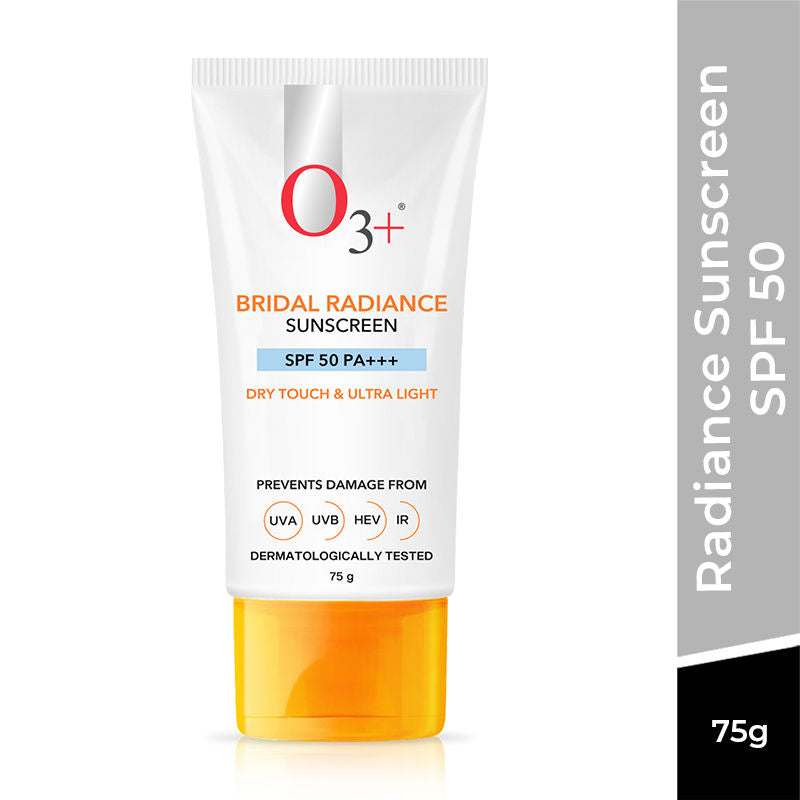
O3+ Professional Bridal Radiance Sunscreen SPF 50 PA +++

O3+ Professional Bridal Radiance Sunscreen SPF 50 PA +++
O3+
o3-professional-bridal-radiance-sunscreen-spf-50-pa
Suncare
10085099045157
Morning or Evening?
How often will you use this product?
Notes


Highlights
WHAT IS IT?
Face Sunscreen with 3 key ingredients
FEATURES
Non-greasy, leaves no white cast, complete UVA and UVB protection, brightens skin, prevents suntan, enhances glow, dermatologically tested, toxin-free
BEST FOR
sensitive
CHECKS
No parabens, no gluten, no toxins
Who Is It For?
All Ages And GendersWhat Does It Help With?
Sun Protection Brightening Preventing Suntan Reducing Scars Preventing Acne And Breakouts Anti-ageingBudget
Affordable (under $30)How To Use
Which routine should it be used in?
Instructions:
Key Information


What O3+ Says
Product Description:
Protect your skin with O3+ Bridal Radiance Sunscreen. This Bridal Radiance SPF 50 PA +++ gives complete protection from UVA, and UVB rays while brightening the skin and preventing sun tan. It’s an ultra-lightweight, and non-greasy sunscreen that is incredibly comfortable to use. It protects the skin with its SPF 50 PA +++ formula that leaves no white cast on the skin. It gives a nice, dewy finish to the skin. This sunscreen is enriched with niacinamide and acai berry. The niacinamide helps in removing tan while softening and smoothening the skin. It also helps in balancing the oil and sebum production to decrease the breakouts. While the acai berry It contains many vitamins and minerals that enhance skin health. They not only help to slow the signs of ageing but also reduce scars and prevent acne and breakouts.
About the Brand:
Ingredients Overview
Ingredients List
niacinamide,acai-berry-extract,hyaluronic-acid
Key Ingredients
Niacinamide, Acai berry Extract, Hyaluronic Acid
Ingredients Details
Niacinamide
Common Name(s): Vitamin b3,nicotinamide,pyridine-3-carboxamide
CAS Number: 98-92-0
DESCRIPTION
What It Does: Niacinamide strengthens the skin barrier, reduces visible pore size, regulates sebum production, fades dark spots, and improves skin texture and tone.
Why It's Used: It is used because it addresses multiple skin concerns at once without irritation, making it suitable for all skin types. it is stable in formulations and pairs well with most other actives.
How It Works: Niacinamide inhibits the transfer of melanosomes (pigment packets) to skin cells, reducing hyperpigmentation. it also stimulates ceramide synthesis to strengthen the skin barrier and reduces inflammation by modulating cytokine activity.
Typically Found In: Serums,moisturizers,toners,cleansers,eye creams,sunscreens,primers
TECHNICAL DETAILS
Primary Category: Active ingredient – vitamin
Secondary Functions: Barrier repair,brightening,anti-inflammatory
Application Areas:

Facial Skincare
Body Care

Hair Care
Beard Care
Color Cosmetics (Makeup)
Dietary/Oral Supplements
Typical Concentration Range: 2%–10% (typical: 5%; higher concentrations may cause flushing in some individuals)
SOURCING & ETHICS
Vegan Status: Yes – synthetically produced
Halal Status: Yes – synthetic origin
Source Notes: Commercially produced via synthesis from nicotinic acid or 3-cyanopyridine. no animal-derived sources used in cosmetic-grade niacinamide.
SKIN COMPATIBILITY
Irritancy Rating: 1/5 – very low; concentrations above 10% may cause temporary flushing in sensitive individuals
Comedogenicity Rating: 0/5 – non-comedogenic
Sensitivity Concerns: At concentrations >10%, some users experience niacin flush (transient redness/tingling). generally very well-tolerated.
Safe for Sensitive Skin: Yes – one of the best-tolerated actives for sensitive skin
SAFETY & COMPATIBILITY
Safety Profile: Extensively studied and considered very safe. ewg hazard score: 1. no significant systemic toxicity concerns at topical concentrations.
Works Well With: Retinol,peptides,ahas/bhas,hyaluronic acid,ceramides,zinc,vitamin c,spf
Avoid Combining With: High concentrations of vitamin c (ascorbic acid) may theoretically convert to niacin – use at different times if using pure l-ascorbic acid above 15%
SCIENTIFIC NOTE
Niacinamide is a precursor to nad+ and nadp+, coenzymes vital to cellular energy metabolism. its benefits for dna repair and mitochondrial function make it a key ingredient in anti-aging strategies.
Last Verified: Cosing database,cir safety assessment,ewg skin deep,pubmed clinical studies
Primary Sources: 2026-03-12
