
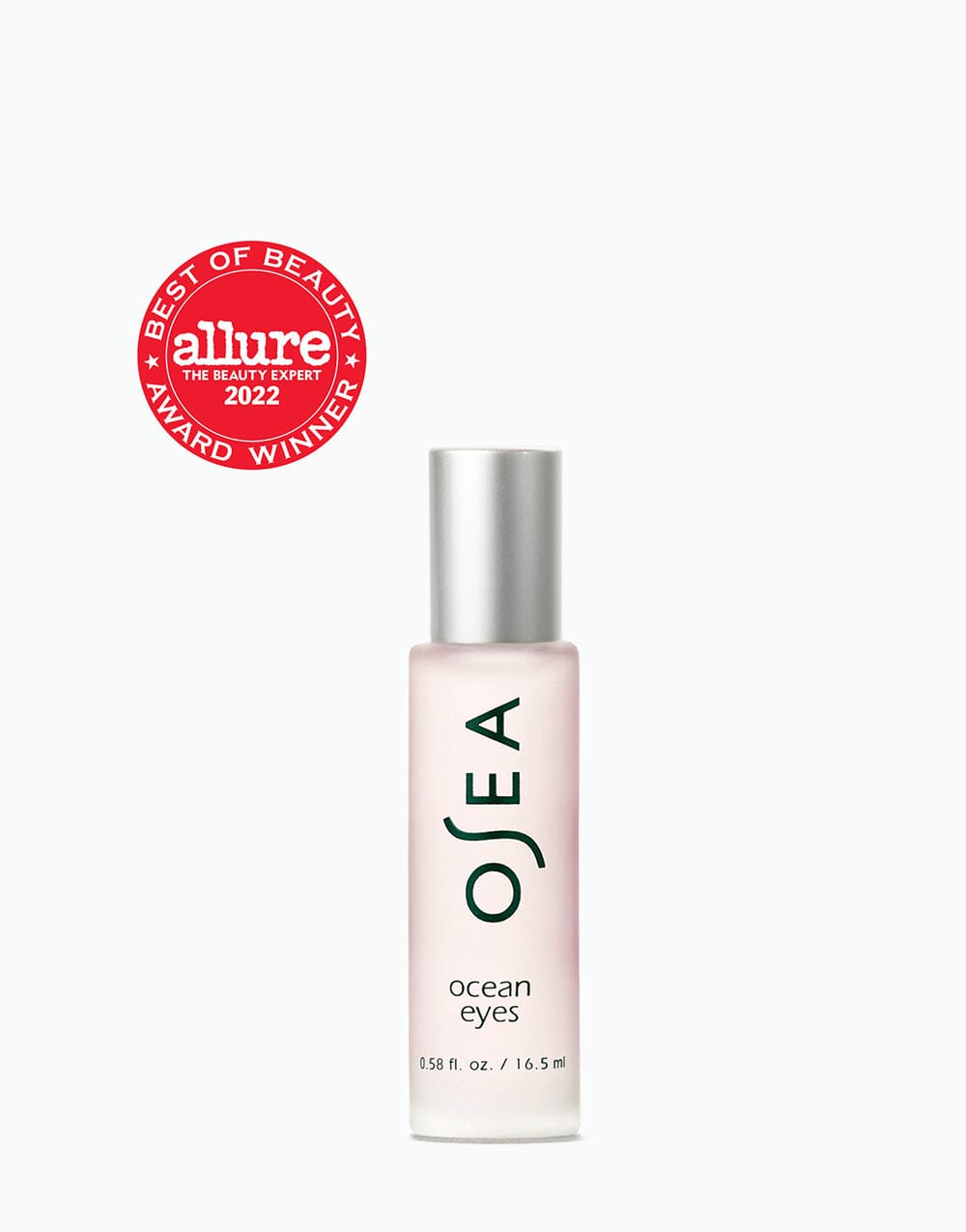

OSEA Malibu
Ocean Eyes® Age-Defying Eye Serum

Ocean Eyes® Age-Defying Eye Serum
OSEA Malibu
ocean-eyes-r-age-defying-eye-serum
Eyecare
9784849891621
Morning or Evening?
How often will you use this product?
Notes


Highlights
WHAT IS IT?
Age-defying eye serum with seaweed, hyaluronic acid, caffeine and peptides
FEATURES
Cooling roller ball applicator, Reduces dark circles and puffiness, Smooths fine lines and crow's feet
BEST FOR
sensitive
CHECKS
Fragrance-free, Essential oil-free
Who Is It For?
Adults Concerned With Eye-area AgingWhat Does It Help With?
Fine Lines Crow's Feet Dark Circles PuffinessBudget
Mid-range ($30-$75)How To Use
Which routine should it be used in?
Instructions:
Key Information

What OSEA Malibu Says
Product Description:
A wake up call for tired eyes. This hydrating gel serum addresses all signs of aging. A high-performance blend of seaweed, hyaluronic acid, caffeine and peptides smooths the look of fine lines and crow's feet. Our lightweight formula reduces appearance of dark circles and puffiness. Delivered with a cooling roller ball applicator that instantly refreshes. Clinically and dermatologist tested.
About the Brand:
Ingredients Overview
Ingredients List
Water / Aqua / Eau, Glycerin , Undaria Pinnatifida Extract, Corallina Officinalis Extract, Caprooyl Tetrapeptide-3, Chenopodium Quinoa Seed Extract, Caffeine, Sodium Hyaluronate, Albizia Julibrissin Bark Extract, Dextran, Darutoside, Hydrolyzed Gardenia Florida Extract, Maltodextrin, Sodium Benzoate, Potassium Sorbate, Citric Acid, Lonicera Japonica (Honeysuckle) Flower Extract, Lonicera Caprifolium (Honeysuckle) Flower Extract
Key Ingredients
seaweed,hyaluronic-acid,caffeine,peptides
Ingredients Details
Albizia Julibrissin Bark Extract
Common Name(s): Albizia julibrissin bark extract,botanical extract,phytochemical active
CAS Number: N/a
DESCRIPTION
What It Does: Provides antioxidant protection, anti-inflammatory activity, and skin conditioning from polyphenols, terpenoids, and phytochemicals in the extract.
Why It's Used: Natural plant extracts provide multi-functional phytochemical profiles supporting concurrent skin care claims from one ingredient with authentic botanical heritage.
How It Works: Polyphenols scavenge ros via h• donation; terpenoids inhibit nf-kb or cox inflammatory pathways; vitamins and minerals provide cofactor skin nutrition.
Typically Found In: Botanical skin care,natural products
TECHNICAL DETAILS
Primary Category: Active ingredient – antioxidant
Secondary Functions: Free radical scavenging,anti-aging
Application Areas:

Facial Skincare
Body Care

Hair Care
Beard Care
Color Cosmetics (Makeup)
Dietary/Oral Supplements
Typical Concentration Range: 0.1%–30%
SOURCING & ETHICS
Vegan Status: Conditional - supplier confirmation required
Halal Status: Conditional - basis not stated in source record; supplier origin confirmation required to determine what evidence applies
Source Notes: Plant-derived extract or synthetic. [audit 2026-07-29 rev2: status downgraded on audit. determination requires shariah-panel sign-off.]
SKIN COMPATIBILITY
Irritancy Rating: 1/5 – very low
Comedogenicity Rating: 0/5 – non-comedogenic
Sensitivity Concerns: Non-irritating; well-tolerated.
Safe for Sensitive Skin: Yes
SAFETY & COMPATIBILITY
Safety Profile: Excellent safety profile. ewg score: 1.
Works Well With: Vitamin c,vitamin e,ferulic acid,spf,other antioxidants
Avoid Combining With: No significant incompatibilities
SCIENTIFIC NOTE
Plant secondary metabolites evolved for uv photoprotection and pathogen defence — mechanisms directly applicable to cosmetic antioxidant and anti-inflammatory activity in human skin.
Last Verified: 2026-03-12
Primary Sources: Cosing database,albizia julibrissin bark extract botanical review
Caffeine
Common Name(s): Caffeine,methylxanthine anti-cellulite,antioxidant vasoactive
CAS Number: N/a
DESCRIPTION
What It Does: Stimulates lipolysis in adipocytes by inhibiting phosphodiesterase (preventing camp breakdown), reduces eye puffiness through vasoconstriction of periorbital capillaries, and provides antioxidant dna repair stimulation for photoprotective benefit.
Why It's Used: The only cosmetic active with a well-defined mechanism for anti-cellulite claims — phosphodiesterase inhibition elevating adipocyte camp is the documented biochemical pathway, providing mechanism-based efficacy substantiation superior to most slimming actives.
How It Works: Caffeine inhibits phosphodiesterase (pde3, pde4) preventing camp hydrolysis → elevated camp activates protein kinase a → phosphorylates hormone-sensitive lipase → lipolysis of triglycerides in adipocytes. for eye puffiness: caffeine's adenosine receptor antagonism reduces prostaglandin-mediated capillary dilation in periorbital tissue, reducing fluid accumulation.
Typically Found In: Anti-cellulite,eye creams,antioxidant products
TECHNICAL DETAILS
Primary Category: Active ingredient – antioxidant
Secondary Functions: Free radical scavenging,anti-aging
Application Areas:
Facial Skincare
Body Care
Hair Care
Beard Care
Color Cosmetics (Makeup)
Dietary/Oral Supplements
Typical Concentration Range: 0.1%–3%
SOURCING & ETHICS
Vegan Status: Conditional - supplier confirmation required
Halal Status: Unverified - supplier confirmation required
Source Notes: Plant-derived extract or synthetic. [audit 2026-07-29 rev2: status downgraded on audit. determination requires shariah-panel sign-off.]
SKIN COMPATIBILITY
Irritancy Rating: 1/5 – very low
Comedogenicity Rating: 0/5 – non-comedogenic
Sensitivity Concerns: Non-irritating; well-tolerated.
Safe for Sensitive Skin: Yes
SAFETY & COMPATIBILITY
Safety Profile: Excellent safety profile. ewg score: 1.
Works Well With: Vitamin c,vitamin e,ferulic acid,spf,other antioxidants
Avoid Combining With: No significant incompatibilities
SCIENTIFIC NOTE
Caffeine has one of the highest sc penetration rates of any cosmetic active (logp -0.07, mw 194 da) — the combination of small size and moderate logp providing excellent aqueous solubility with sufficient sc lipid partitioning for effective transdermal delivery to adipose tissue.
Last Verified: 2026-03-12
Primary Sources: Cosing database,caffeine pde inhibitor anti-cellulite lipolysis review
Caprooyl Tetrapeptide-3
Common Name(s): Caprooyl tetrapeptide-3,tetrapeptide signal peptide,anti-aging active
CAS Number: N/a
DESCRIPTION
What It Does: Stimulates collagen i, iii, and iv synthesis, inhibits collagen-degrading mmp-1 and mmp-3, and promotes dermal matrix density for firmer, more elastic skin with reduced wrinkle depth.
Why It's Used: Provides precision receptor targeting (tgf-β, egf, or integrin receptors) that broad-spectrum botanicals cannot replicate, with clinical-grade purity and quantified in-vitro efficacy at 1–5000 ppm.
How It Works: The tetrapeptide amino acid sequence binds specific receptors activating map kinase or smad signalling cascades, upregulating col1a1, col3a1, and fibronectin genes while downregulating mmp-1.
Typically Found In: Anti-aging serums,collagen actives
TECHNICAL DETAILS
Primary Category: Active ingredient – signal peptide
Secondary Functions: Collagen stimulation,skin firming,anti-aging
Application Areas:
Facial Skincare
Body Care
Hair Care
Beard Care
Color Cosmetics (Makeup)
Dietary/Oral Supplements
Typical Concentration Range: 1–5000 ppm
SOURCING & ETHICS
Vegan Status: Yes
Halal Status: Yes
Source Notes: Synthetically produced by solid-phase peptide synthesis (spps). may be palmitoylated for stability.
SKIN COMPATIBILITY
Irritancy Rating: 1/5 – very low
Comedogenicity Rating: 0/5 – non-comedogenic
Sensitivity Concerns: Non-irritating; suitable for all skin types.
Safe for Sensitive Skin: Yes
SAFETY & COMPATIBILITY
Safety Profile: Exceptional safety profile. ewg score: 1.
Works Well With: Hyaluronic acid,ceramides,retinol,vitamin c,niacinamide
Avoid Combining With: Avoid mixing with high-concentration ahas at same ph (may hydrolyze peptide bonds)
SCIENTIFIC NOTE
Synthetic tetrapeptide sequences are designed from naturally occurring signal protein domains (collagen propeptides, growth factor active sites) and synthesised by solid-phase peptide synthesis to >98% purity.
Last Verified: 2026-03-12
Primary Sources: Cosing database,caprooyl tetrapeptide-3 signal peptide review
Chenopodium Quinoa Seed Extract
Common Name(s): Chenopodium quinoa seed extract,chenopodium quinoa seed extract,botanical extract,phytochemical active
CAS Number: N/a
DESCRIPTION
What It Does: Provides antioxidant protection from polyphenol radical scavenging, anti-inflammatory activity from terpenoid nf-kb/cox pathway inhibition, and skin conditioning from the secondary metabolite complex.
Why It's Used: Chenopodium quinoa seed extract is selected for the characteristic secondary metabolite signature of chenopodium quinoa — whether polyphenols, terpenoids, alkaloids, or polysaccharides, the phytochemical profile provides antioxidant, anti-inflammatory, or skin conditioning benefits specific to this botanical species.
How It Works: Polyphenol catechol h-atom donation for ros scavenging (rate constants 10⁶-10⁹ m⁻¹s⁻¹); terpenoids inhibit iκb kinase; flavonoids compete at cox-1/2; alkaloids modulate specific receptor targets.
Typically Found In: Botanical skin care
TECHNICAL DETAILS
Primary Category: Active ingredient – antioxidant
Secondary Functions: Free radical scavenging,anti-aging
Application Areas:
Facial Skincare
Body Care
Hair Care
Beard Care
Color Cosmetics (Makeup)
Dietary/Oral Supplements
Typical Concentration Range: 0.1%–10%
SOURCING & ETHICS
Vegan Status: Conditional - supplier confirmation required
Halal Status: Conditional - basis not stated in source record; supplier origin confirmation required to determine what evidence applies
Source Notes: Plant-derived extract or synthetic. [audit 2026-07-29 rev2: status downgraded on audit. determination requires shariah-panel sign-off.]
SKIN COMPATIBILITY
Irritancy Rating: 1/5 – very low
Comedogenicity Rating: 0/5 – non-comedogenic
Sensitivity Concerns: Non-irritating; well-tolerated.
Safe for Sensitive Skin: Yes
SAFETY & COMPATIBILITY
Safety Profile: Excellent safety profile. ewg score: 1.
Works Well With: Vitamin c,vitamin e,ferulic acid,spf,other antioxidants
Avoid Combining With: No significant incompatibilities
SCIENTIFIC NOTE
Standardise to marker compounds for consistent bioactivity — field-grown material varies 3-10× in secondary metabolite content.
Last Verified: 2026-03-22
Primary Sources: Cosing database,chenopodium quinoa seed extract botanical extract review