
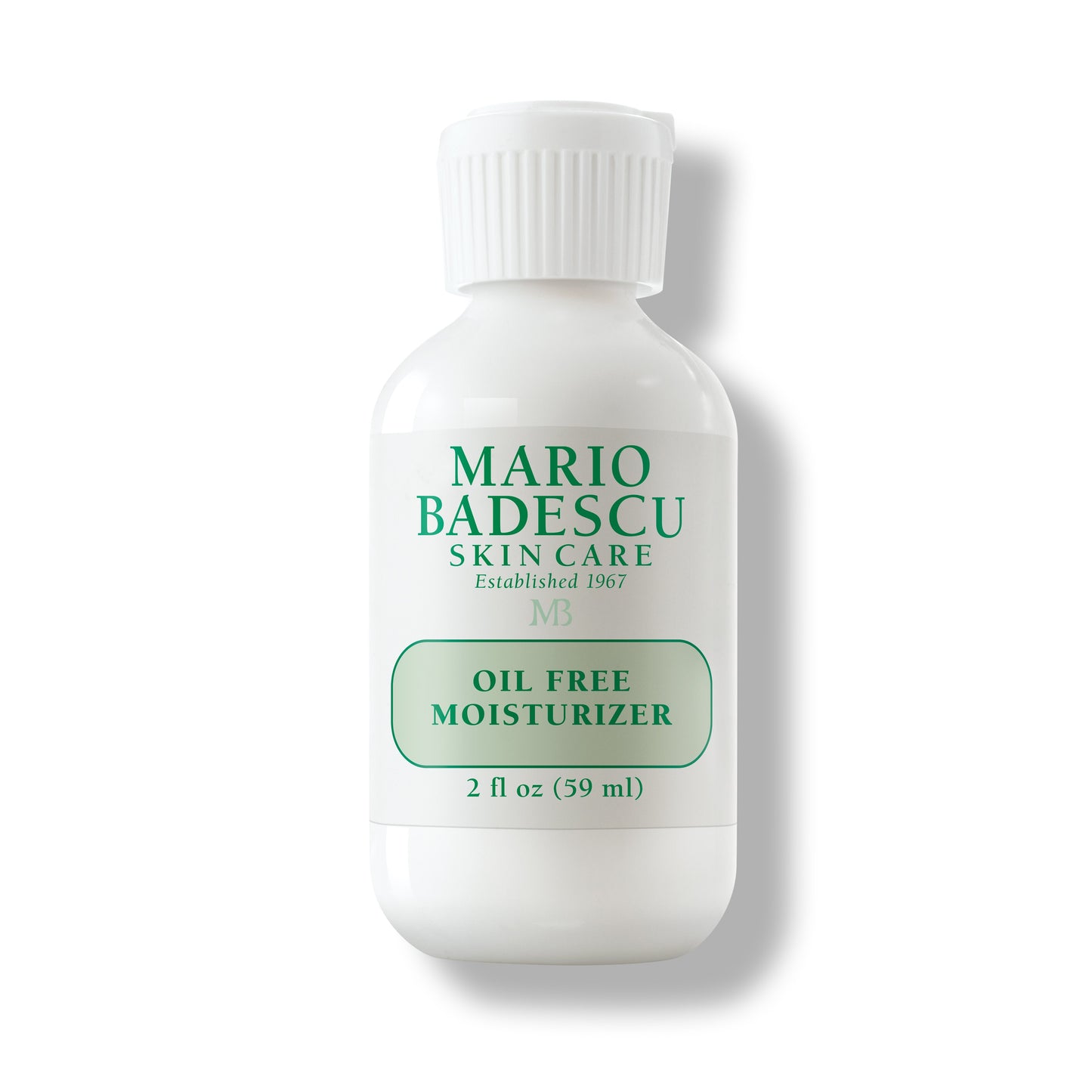

Mario Badescu
Oil Free Moisturizer

Oil Free Moisturizer
Mario Badescu
oil-free-moisturizer-1
Moisturize
9818357891365
Morning or Evening?
How often will you use this product?
Notes


Highlights
WHAT IS IT?
Oil-free moisturizer with Lemongrass Extract and Allantoin
FEATURES
Lightweight, non-greasy, ultra-absorbent, safe for sensitive skin
BEST FOR
oily
CHECKS
Free of alcohol, sulfates, silicon, fragrance, oil
Who Is It For?
All Ages All GendersWhat Does It Help With?
Hydration Skin Brightening Soothing Balancing ComplexionBudget
Affordable (under $30)How To Use
Which routine should it be used in?
Instructions:
Key Information


What Mario Badescu Says
Product Description:
Oil-free, non-greasy lightweight and ultra absorbent moisturizer without any pore clogging oils, specifically designed to be safe for sensitive skin. This simple formula is infused with skin brightening Lemongrass Extract and soothing, calming and moisturizing allantoin, to promote optimal skin health and a hydrated, balanced complexion.
About the Brand:
Ingredients Overview
Ingredients List
Aqua (water, eau), propylene glycol, cetyl alcohol, panthenyl hydroxypropyl steardimonium chloride, allantoin, cymbopogon schoenanthus leaf extract, stearic acid, methylparaben, triethanolamine, carbomer, propylparaben, phenoxyethanol, diazolidinyl urea
Key Ingredients
Lemongrass Extract, Allantoin
Ingredients Details
Allantoin
Common Name(s): 5-ureidohydantoin,glyoxyldiureide,aluminum dihydroxy allantoinate
CAS Number: 97-59-6
DESCRIPTION
What It Does: Soothes irritation, accelerates wound healing, promotes skin cell renewal, and provides mild keratolytic exfoliation.
Why It's Used: Gold standard multi-function soothing active – one of the most widely used cosmetic ingredients across all product types for its exceptional tolerability and clinically proven multi-action skin conditioning.
How It Works: Promotes keratinocyte proliferation and fibroblast migration for wound healing. mild keratolytic activity by disrupting corneocyte binding. anti-irritant via direct protein binding and anti-inflammatory cytokine reduction. humectant activity via hydroxyl groups.
Typically Found In: Post-procedure products,sensitive skin formulas,wound care,anti-acne treatments,baby products
TECHNICAL DETAILS
Primary Category: Active ingredient – soothing / anti-inflammatory
Secondary Functions: Wound healing,keratolytic,anti-irritant
Application Areas:

Facial Skincare
Body Care

Hair Care
Beard Care
Color Cosmetics (Makeup)
Dietary/Oral Supplements
Typical Concentration Range: 0.1%–2%
SOURCING & ETHICS
Vegan Status: Yes – synthetic or comfrey-derived
Halal Status: Yes
Source Notes: Plant-derived extract or synthetic.
SKIN COMPATIBILITY
Irritancy Rating: 1/5 – very low
Comedogenicity Rating: 0/5 – non-comedogenic
Sensitivity Concerns: Exceptionally well-tolerated; suitable for all skin types including baby and compromised skin.
Safe for Sensitive Skin: Yes – particularly recommended for sensitive skin
SAFETY & COMPATIBILITY
Safety Profile: Excellent safety profile. ewg score: 1.
Works Well With: Ceramides,panthenol,allantoin,hyaluronic acid,centella asiatica
Avoid Combining With: No significant incompatibilities
SCIENTIFIC NOTE
Allantoin's keratinocyte proliferation stimulation occurs via receptor-mediated signaling (possibly machr activation) rather than non-specific irritation-driven proliferation, making it a true wound-healing stimulant rather than a pro-inflammatory proliferative signal.
Last Verified: Cosing database,cir safety assessment,araújo et al. allantoin review
Primary Sources: 2026-03-12
Lemongrass Extract
Common Name(s): Essential oil,concentrated volatile aromatic,bioactive fragrance active
CAS Number: N/a
DESCRIPTION
What It Does: Provides aromatic sensory benefit alongside bioactive skin activity from concentrated plant volatile compounds — including antimicrobial activity (tea tree, thyme, clove), anti-inflammatory activity (lavender, chamomile), or circulatory stimulation (peppermint, rosemary).
Why It's Used: Essential oils provide authentic 'aromatherapy' narrative with genuine bioactive chemistry — the concentrated terpenoid constituents have documented biological activity in addition to olfactory benefit, justifying ingredient claims beyond pure fragrance.
How It Works: Essential oil complexity: steam distillation concentrates volatile terpenes (monoterpenes, sesquiterpenes), phenylpropanoids, and other volatiles. antimicrobial activity from terpenoid membrane disruption (terpinen-4-ol, eugenol, thymol disrupt bacterial membranes); anti-inflammatory from sesquiterpene nf-kb inhibition; sensitisation risk from electrophilic monoterpene oxides and aldehydes.
Typically Found In: Aromatherapy,bioactive skin care,fragrance
TECHNICAL DETAILS
Primary Category: Active ingredient – cosmetic active
Secondary Functions: Skin conditioning
Application Areas:
Facial Skincare
Body Care
Hair Care
Beard Care
Color Cosmetics (Makeup)
Dietary/Oral Supplements
Typical Concentration Range: 0.01%–2%
SOURCING & ETHICS
Vegan Status: Yes
Halal Status: Yes
Source Notes: Commercially produced for cosmetic use. verify vegan/halal status with supplier.
SKIN COMPATIBILITY
Irritancy Rating: 1/5 – very low
Comedogenicity Rating: 0/5 – non-comedogenic
Sensitivity Concerns: Well-tolerated by most skin types.
Safe for Sensitive Skin: Yes
SAFETY & COMPATIBILITY
Safety Profile: Good safety profile at recommended concentrations. ewg score: 1–2.
Works Well With: Standard skincare actives
Avoid Combining With: No known significant incompatibilities
SCIENTIFIC NOTE
Essential oil concentration in cosmetics must respect ifra (international fragrance association) guidelines — each oil has category-specific maximum use levels based on skin sensitisation quantitative risk assessment (qra). tea tree oil maximum 0.5% (rinse-off), lavender oil 2% (leave-on skin) as examples.
Last Verified: Cosing database,ifra standards,essential oil bioactive fragrance review
Primary Sources: 2026-03-12
