

Olivia
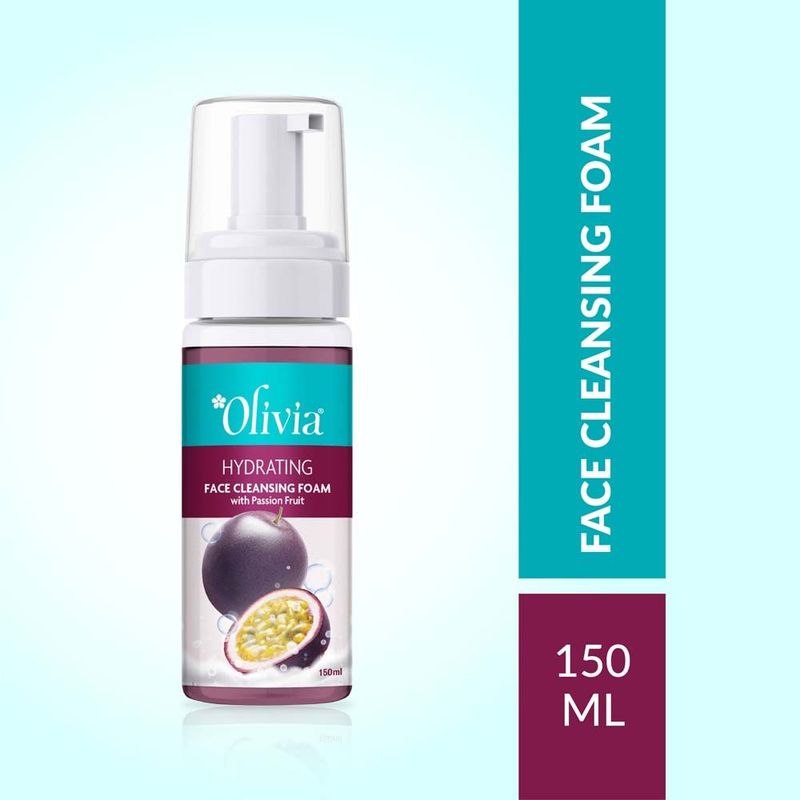
Olivia Healthy Glow Face Cleansing Foam With Dragon Fruit for Radiant, Fresh & Revitalized Skin

Olivia Healthy Glow Face Cleansing Foam With Dragon Fruit for Radiant, Fresh & Revitalized Skin
Olivia
olivia-healthy-glow-face-cleansing-foam-with-dragon-fruit-for-radiant-fresh-revitalized-skin
Cleanse
10084968169765
Morning or Evening?
How often will you use this product?
Notes


Highlights
WHAT IS IT?
Face Cleansing Foam, 3 ingredients
FEATURES
Healing properties of dragon fruit, Rich in vitamin C, Prevents acne and blemishes, Daily use for glowing skin, Supports a healthy skin microbiome
BEST FOR
sensitive
CHECKS
Harmful chemicals, artificial colors, soap
Who Is It For?
What Does It Help With?
Acne Blemishes Skin Radiance Antioxidant Protection Soothing Acne-prone SkinBudget
Affordable (under $30)How To Use
Which routine should it be used in?
Instructions:
Key Information


What Olivia Says
Product Description:
Olivia’s Healthy Glow Face Cleansing Foam with dragon fruit is a luxurious, frothy cleanser designed to give your skin a radiant, celebrity-like glow. Enriched with the nourishing power of dragon fruit, this face wash deeply cleanses the skin without leaving behind any oily residue. Dragon fruit is known for its healing properties, providing a youthful glow while soothing acne-prone skin. Packed with vitamin C, it has antioxidant properties that help heal acne and blemishes while keeping the skin fresh and clear of dirt and pollution. This face cleansing foam is free from harmful chemicals, artificial colors, and soap, ensuring your skin receives only the benefits of natural ingredients, leaving your complexion radiant and refreshed.
About the Brand:
Ingredients Overview
Ingredients List
dragon-fruit-extract,benzophenone-4,trehalose
Key Ingredients
Dragon Fruit Extract, Vitamin C, Benzophenone-4
Ingredients Details
Benzophenone-4
Common Name(s): Benzophenone-4
DESCRIPTION
What It Does: Absorbs or reflects uv radiation, preventing uv-induced dna damage, photo-oxidative stress, and premature skin aging.
Why It's Used: Uv filters are the active ingredients in sun protection — without them, formulations cannot make spf claims or prevent solar-induced skin damage.
How It Works: The uv-absorbing chromophore undergoes photoexcitation by uv photons, then dissipates the absorbed energy through thermal relaxation (chemical filters) or photon scattering/reflection (physical filters), preventing photon penetration to skin cells.
Typically Found In: Sunscreens,moisturizers with spf,foundations with spf
TECHNICAL DETAILS
Primary Category: Uv filters
Secondary Functions: Skin-protecting
Application Areas:

Facial Skincare

Body Care
Hair Care
Beard Care
Color Cosmetics (Makeup)
Dietary/Oral Supplements
Typical Concentration Range: 0.5–25% (within regulatory limits)
SOURCING & ETHICS
Vegan Status: Yes
Halal Status: Yes
Source Notes: Synthetic uv filter; no animal components.
SKIN COMPATIBILITY
Irritancy Rating: 1
Comedogenicity Rating: 0
Sensitivity Concerns: Contact allergy to uv filters occurs in approximately 1–3% of the general population; patch testing recommended for those with known photosensitivity.
Safe for Sensitive Skin: Yes
SAFETY & COMPATIBILITY
Safety Profile: Regulatory approval required per market (eu annex vi, fda otc monograph, etc.). generally non-irritating at approved concentrations.
Works Well With: Other uv filters,antioxidants,emollients
Avoid Combining With: Incompatible filter combinations (photodegradation); check regulatory approvals per region
SCIENTIFIC NOTE
Uv filters operate through two mechanisms: organic/chemical filters absorb uv photons through electronic excitation (π→π* transitions in conjugated systems), then dissipate energy via thermal relaxation; inorganic/physical filters (tio2, zno) scatter and reflect photons through mie scattering (particle size 50–300 nm) and band gap absorption. spf is measured in vivo (iso 24444) as the ratio of minimal erythema doses with and without sunscreen.
Last Verified: Cosing eu database; pcpc cosmetic ingredient safety reviews; eu cosmetics regulation annex vi; iso 24444 (in vivo spf testing)
Primary Sources: 2025-01-15
Trehalose
Common Name(s): Alpha,alpha-trehalose,mycose
CAS Number: 99-20-7
DESCRIPTION
What It Does: Provides superior moisture retention under dehydrating conditions – uniquely protective in extreme environments.
Why It's Used: Premium humectant for formulations targeting dehydration, environmental stress protection, and dry/mature skin hydration.
How It Works: Forms a protective glassy matrix that replaces water molecules around proteins and cell membranes during dehydration stress, preventing protein denaturation and membrane damage. stronger water binding than sucrose or glucose.
Typically Found In: Premium moisturizers,protective barrier formulas,anti-aging products
TECHNICAL DETAILS
Primary Category: Active ingredient – anhydrobiotic sugar / humectant
Secondary Functions: Stress protection,barrier support,cryoprotectant
Application Areas:
Facial Skincare
Body Care
Hair Care
Beard Care
Color Cosmetics (Makeup)
Dietary/Oral Supplements
Typical Concentration Range: 1%–10%
SOURCING & ETHICS
Vegan Status: Yes – fermentation-derived or from yeast
Halal Status: Yes
Source Notes: Produced by yeast fermentation or enzymatic conversion of starch. available as anhydrous or dihydrate form.
SKIN COMPATIBILITY
Irritancy Rating: 1/5 – very low
Comedogenicity Rating: 0/5 – non-comedogenic
Sensitivity Concerns: Non-irritating; exceptionally well-tolerated; endogenous to many organisms.
Safe for Sensitive Skin: Yes
SAFETY & COMPATIBILITY
Safety Profile: Excellent safety profile. ewg score: 1.
Works Well With: Ceramides,emollients,occlusives,glycerin,hyaluronic acid
Avoid Combining With: No significant incompatibilities
SCIENTIFIC NOTE
Trehalose's unique ability to form an amorphous glassy matrix during dehydration (replacing water molecules) explains the survival of tardigrades and resurrection plants. this property translates to exceptional skin protection under environmental dehydration stress.
Last Verified: Cosing database,crowe et al. trehalose anhydrobiosis review,cir safety assessment
Primary Sources: 2026-03-12
