

Korres
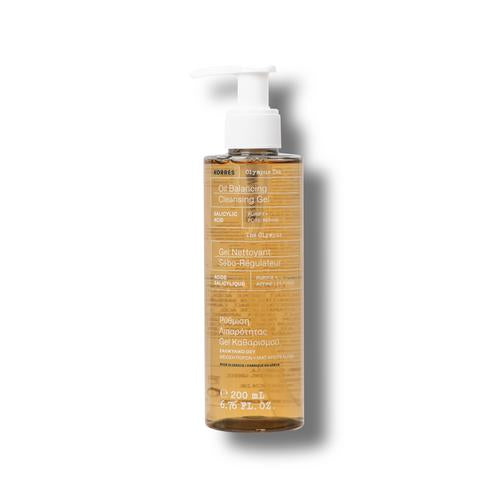
Olympus Tea Oil Balancing Cleansing Gel

Olympus Tea Oil Balancing Cleansing Gel
Korres
olympus-tea-oil-balancing-cleansing-gel
Cleanse
9706858479909
Morning or Evening?
How often will you use this product?
Notes


Highlights
WHAT IS IT?
Cleansing gel
FEATURES
Removes excess oil, draws out impurities, reduces appearance of pores
BEST FOR
Oily, combination skin
CHECKS
Clean formulation, free of mineral oils, silicones, parabens, propylene glycol, phthalates, sulfates
Who Is It For?
Adults Both Men And WomenWhat Does It Help With?
Oily Skin Clogged PoresBudget
Mid-rangeHow To Use
Which routine should it be used in?
Instructions:
Key Information


What Korres Says
Product Description:
A skin re-balancing cleansing gel that removes excess oil and draws out pore-clogging impurities. It provides deep yet gentle cleansing action and reduces the appearance of pores, leaving the skin matte and purified.
About the Brand:
Ingredients Overview
Ingredients List
AQUA/WATER/EAU, SODIUM COCETH SULFATE, COCAMIDOPROPYL HYDROXYSULTAINE, SODIUM LAURYL GLUCOSE CARBOXYLATE, LAURYL GLUCOSIDE, SALIX ALBA (WILLOW) BARK EXTRACT, SALICYLIC ACID, GLYCERIN, PEG-120 METHYL GLUCOSE DIOLEATE, DISODIUM COCOAMPHODIACETATE, ALOE BARBADENSIS LEAF EXTRACT, BIOFLAVONOIDS, BRASSICA OLERACEA ITALICA (BROCCOLI) EXTRACT, CAMELLIA SINENSIS LEAF EXTRACT, DECYL GLUCOSIDE, DISODIUM COCOYL GLUTAMATE, LACTIC ACID, LEVULINIC ACID, LONICERA CAPRIFOLIUM (HONEYSUCKLE) FLOWER EXTRACT, LONICERA JAPONICA (HONEYSUCKLE) FLOWER EXTRACT, PROPANEDIOL, PUNICA GRANATUM FRUIT EXTRACT, SIDERITIS SCARDICA FLOWER/LEAF/STEM EXTRACT, SODIUM CHLORIDE, SODIUM CITRATE, SODIUM COCOYL GLUTAMATE, SODIUM LEVULINATE, TETRASODIUM GLUTAMATE DIACETATE, BENZYL ALCOHOL, PHENOXYETHANOL, POTASSIUM SORBATE, SODIUM BENZOATE, SORBIC ACID, PARFUM/FRAGRANCE. KORRES OLYMPUS TEA EXTRACT
Key Ingredients
Olympus Tea, Salicylic Acid (BHA), BioDTox™
Ingredients Details
Cocamidopropyl Hydroxysultaine
Common Name(s): Cahs,hydroxypropyl sultaine
CAS Number: 68139-30-0
DESCRIPTION
What It Does: Provides amphoteric foaming and conditioning with excellent compatibility across surfactant systems.
Why It's Used: Premium amphoteric surfactant for mild foaming shampoos and cleansers requiring broad surfactant compatibility and improved skin and eye tolerance vs capb alternatives.
How It Works: Amphoteric sultaine (internal zwitterion from quaternary ammonium + sulfonate) provides: foam stability and enhancement; antistatic conditioning on hair; mildness enhancement reducing ionic surfactant irritation; viscosity building with salt addition. superior eye tolerance vs capb (betaine).
Typically Found In: Baby shampoos,mild cleansers,eye-safe products
TECHNICAL DETAILS
Primary Category: Functional ingredient – amphoteric surfactant
Secondary Functions: Skin conditioning
Application Areas:

Facial Skincare

Body Care
Hair Care
Beard Care
Color Cosmetics (Makeup)
Dietary/Oral Supplements
Typical Concentration Range: 2%–10%
SOURCING & ETHICS
Vegan Status: Conditional - supplier confirmation required
Halal Status: Unverified - supplier confirmation required
Source Notes: Commercially produced for cosmetic use. verify vegan/halal status with supplier. [audit 2026-07-29 rev2: the record's own source_notes does not assert a non-animal origin, or instructs the reader to verify with the supplier; "yes" asserts knowledge the record does not hold. determination requires shariah-panel sign-off.]
SKIN COMPATIBILITY
Irritancy Rating: 1/5 – very low
Comedogenicity Rating: 0/5 – non-comedogenic
Sensitivity Concerns: Well-tolerated by most skin types.
Safe for Sensitive Skin: Yes
SAFETY & COMPATIBILITY
Safety Profile: Good safety profile at recommended concentrations. ewg score: 1–2.
Works Well With: Standard skincare actives
Avoid Combining With: No known significant incompatibilities
SCIENTIFIC NOTE
Cocamidopropyl hydroxysultaine's superior eye tolerance vs capb arises from its sultaine rather than betaine zwitterionic head group. the sulfonate anion (so3⁻ in sultaine) is a stronger acid group than the carboxylate (coo⁻ in betaine), providing greater charge neutralisation and better interaction with tear film proteins — the molecular basis for its improved eye irritation profile in baby and sensitive-eye formulations.
Last Verified:
Disodium Cocoamphodiacetate
Common Name(s): Dccda,sodium cocoamphoacetate
CAS Number: 68650-39-5
DESCRIPTION
What It Does: Provides gentle, low-irritation cleansing particularly suitable for eye area and baby products.
Why It's Used: Baby wash and eye-area cleanser primary surfactant for minimum-irritation cleansing at sensitive skin and eye contact areas.
How It Works: Amphoteric structure with lower cationicity than capb reduces positive charge-mediated protein binding. very low eye irritation in draize test. conditioning activity via residual cationic character interaction with keratin.
Typically Found In: Baby washes,eye makeup removers,gentle eye-area cleansers
TECHNICAL DETAILS
Primary Category: Functional ingredient – amphoteric mild surfactant
Secondary Functions: Skin conditioning
Application Areas:
Facial Skincare
Body Care
Hair Care
Beard Care
Color Cosmetics (Makeup)
Dietary/Oral Supplements
Typical Concentration Range: 2%–15%
SOURCING & ETHICS
Vegan Status: Conditional - supplier confirmation required
Halal Status: Unverified - supplier confirmation required
Source Notes: Commercially produced for cosmetic use. verify vegan/halal status with supplier. [audit 2026-07-29 rev2: the record's own source_notes does not assert a non-animal origin, or instructs the reader to verify with the supplier; "yes" asserts knowledge the record does not hold. determination requires shariah-panel sign-off.]
SKIN COMPATIBILITY
Irritancy Rating: 1/5 – very low
Comedogenicity Rating: 0/5 – non-comedogenic
Sensitivity Concerns: Well-tolerated by most skin types.
Safe for Sensitive Skin: Yes
SAFETY & COMPATIBILITY
Safety Profile: Good safety profile at recommended concentrations. ewg score: 1–2.
Works Well With: Standard skincare actives
Avoid Combining With: No known significant incompatibilities
SCIENTIFIC NOTE
Eye irritation testing (draize rabbit eye test and human volunteer eye sting test) demonstrates disodium cocoamphodiacetate has among the lowest irritation scores of any commercial surfactant, making it the preferred primary surfactant for 'no-more-tears' baby shampoo formulations and eye-area cleansers.
Last Verified: 2026-03-12
Primary Sources: Cosing database,cir safety assessment
Glycerin
Common Name(s): Glycerol,glycerine,1,2,3-propanetriol
CAS Number: 56-81-5
DESCRIPTION
What It Does: Glycerin pulls water from the environment and deeper skin layers into the outer skin layer (epidermis), boosting moisture levels and keeping skin soft, smooth, and plump.
Why It's Used: It is used in virtually every moisturizer, serum, and cleanser because it is highly effective at hydrating skin, is well-tolerated by all skin types, and enhances the texture and spreadability of formulations.
How It Works: As a humectant, glycerin forms hydrogen bonds with water molecules, trapping them in the skin. it also reinforces the skin barrier by integrating into lipid structures between skin cells.
Typically Found In: Moisturizers,serums,cleansers,toners,sheet masks,sunscreens,body lotions,shampoos,conditioners
TECHNICAL DETAILS
Primary Category: Humectant
Secondary Functions: Skin barrier support,emollient,solvent
Application Areas:
Facial Skincare
Body Care
Hair Care
Beard Care
Color Cosmetics (Makeup)
Dietary/Oral Supplements
Typical Concentration Range: 1%–30% (typical: 3–10%)
SOURCING & ETHICS
Vegan Status: Conditional - feedstock declaration required
Halal Status: Unverified - feedstock declaration required (plant, animal and petrochemical routes all exist)
Source Notes: Derived from plant oils via hydrolysis or saponification; synthetic versions also available. palm-derived glycerin carries sustainability concerns. [audit 2026-07-29 rev2: origin-dependent: the same inci exists in plant, animal and petrochemical versions and the name does not discriminate. determination requires shariah-panel sign-off.]
SKIN COMPATIBILITY
Irritancy Rating: 1/5 – very low; non-irritating at all standard concentrations
Comedogenicity Rating: 0/5 – non-comedogenic
Sensitivity Concerns: Extremely rare allergic reactions; generally safe for all skin types including sensitive and baby skin
Safe for Sensitive Skin: Yes
SAFETY & COMPATIBILITY
Safety Profile: Widely recognized as safe. ewg hazard score: 1. no significant concerns for irritation, sensitization, or toxicity at typical concentrations (up to 50%).
Works Well With: Hyaluronic acid,ceramides,niacinamide,panthenol,urea,peptides,retinol,ahas/bhas
Avoid Combining With: No known incompatibilities at standard concentrations
SCIENTIFIC NOTE
Glycerin is an endogenous skin component found naturally in the stratum corneum. aquaporin-3 channels in keratinocytes facilitate glycerin transport, making it integral to natural skin hydration pathways.
Last Verified: 2026-03-12
Primary Sources: Cosing database,cir safety assessment,ewg skin deep,inci decoder
Lauryl Glucoside
Common Name(s): C12 glucoside,dodecyl glucoside,apg surfactant
CAS Number: 110615-47-9
DESCRIPTION
What It Does: Provides mild, naturally-derived cleansing with excellent biodegradability from glucose and lauryl alcohol.
Why It's Used: The natural cleansing standard — lauryl glucoside's combination of renewability, biodegradability, mildness, and foaming makes it the benchmark natural surfactant for clean beauty facial cleansers.
How It Works: C12 alkyl chain provides cmc and foaming. glucose head group provides mild non-ionic/weakly anionic character from hydroxyl groups. very low irritation potential from polyol head group. excellent biodegradability >95% bod28 from glucoside hydrolysis. cosmos approved.
Typically Found In: Natural facial cleansers,baby shampoos,cosmos certified products
TECHNICAL DETAILS
Primary Category: Functional ingredient – alkyl glucoside surfactant
Secondary Functions: Skin conditioning
Application Areas:
Facial Skincare
Body Care
Hair Care
Beard Care
Color Cosmetics (Makeup)
Dietary/Oral Supplements
Typical Concentration Range: 2%–15%
SOURCING & ETHICS
Vegan Status: Conditional - supplier confirmation required
Halal Status: Unverified - supplier confirmation required
Source Notes: Commercially produced for cosmetic use. verify vegan/halal status with supplier. [audit 2026-07-29 rev2: the record's own source_notes does not assert a non-animal origin, or instructs the reader to verify with the supplier; "yes" asserts knowledge the record does not hold. determination requires shariah-panel sign-off.]
SKIN COMPATIBILITY
Irritancy Rating: 1/5 – very low
Comedogenicity Rating: 0/5 – non-comedogenic
Sensitivity Concerns: Well-tolerated by most skin types.
Safe for Sensitive Skin: Yes
SAFETY & COMPATIBILITY
Safety Profile: Good safety profile at recommended concentrations. ewg score: 1–2.
Works Well With: Standard skincare actives
Avoid Combining With: No known significant incompatibilities
SCIENTIFIC NOTE
Lauryl glucoside's mildness vs sls at equivalent foam performance is measurable by draize eye score: sls scores approximately 55 (mild irritant) while lauryl glucoside scores <15 (essentially non-irritant) in identical eye irritation testing. this quantitative mildness advantage explains why apg surfactants command premium pricing despite renewable/natural origin — actual performance superiority justifies the cost.
Last Verified: 2026-03-12
Primary Sources: Cosing database,cosmos standard,cir safety assessment