

Nykaa E retail limited
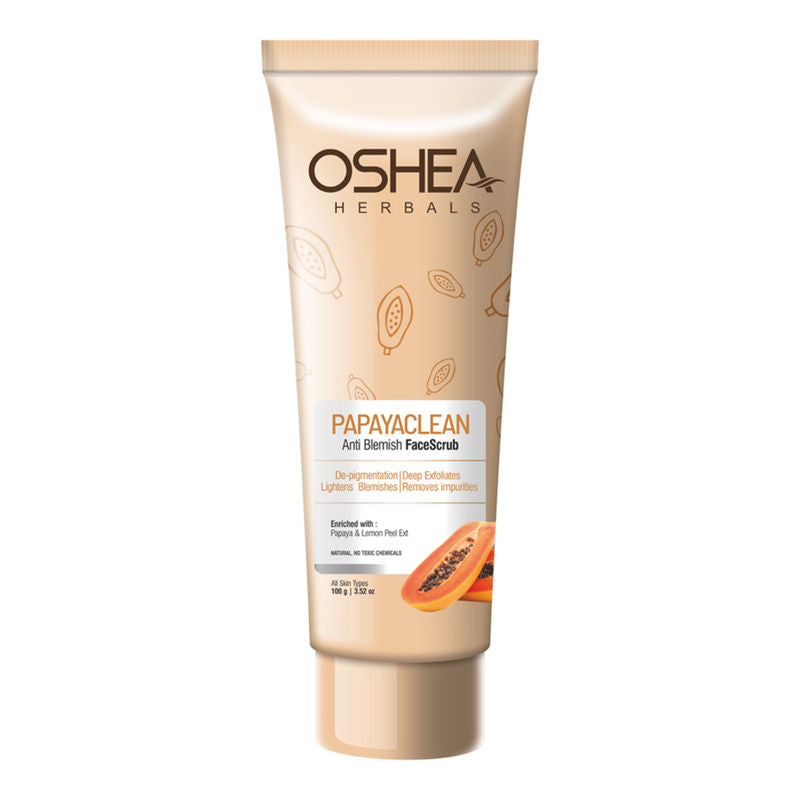
Oshea Herbals Papayaclean Anti Blemish Scrub

Oshea Herbals Papayaclean Anti Blemish Scrub
Nykaa E retail limited
oshea-herbals-papayaclean-anti-blemish-scrub
Exfoliation
10085091639589
Morning or Evening?
How often will you use this product?
Notes


Highlights
WHAT IS IT?
Exfoliating scrub with papaya extract, lemon peel extract, and liquorice extract
FEATURES
Gently removes dead skin cells, improves skin complexion, lightens patches
BEST FOR
normal
CHECKS
Who Is It For?
What Does It Help With?
Dead Skin Cell Removal Skin Complexion Improvement Patch LighteningBudget
Affordable (under $30)How To Use
Which routine should it be used in?
Instructions:
Key Information

What Nykaa E retail limited Says
Product Description:
Papaya Exfoliating Scrub Enriched with the goodness of papaya extract, lemon peel extract, Liquorice extract, this formulation gently removes the dead cell of facial skin. It improves the skin complexion and lightens the patches.
About the Brand:
Ingredients Overview
Ingredients List
Papaya Extract, Lemon Peel Extract, Aloevera Extract, Liquorice Extract
Key Ingredients
papaya-extract,lemon-peel-extract,liquorice-extract
Ingredients Details
Lemon Peel Extract
Common Name(s): Lemon peel extract extract
DESCRIPTION
What It Does: Provides antioxidant protection, soothing anti-inflammatory effects, and skin-conditioning benefits through plant-derived polyphenols and phytochemicals.
Why It's Used: Plant extracts concentrate bioactive phytochemicals evolved for environmental protection — uv, microbial, and oxidative stressors — that translate to skin benefits.
How It Works: Polyphenols (flavonoids, phenolic acids) inhibit nf-κb-mediated inflammatory signaling, scavenge reactive oxygen species through electron donation, and chelate pro-oxidant metal ions to reduce oxidative skin damage.
Typically Found In: Serums,toners,moisturizers,masks,essences
TECHNICAL DETAILS
Primary Category: Botanical extracts
Secondary Functions: Antioxidant,anti-inflammatory
Application Areas:

Facial Skincare

Body Care
Hair Care
Beard Care
Color Cosmetics (Makeup)
Dietary/Oral Supplements
Typical Concentration Range: 0.1–10%
SOURCING & ETHICS
Vegan Status: Yes
Halal Status: Yes
Source Notes: Plant-derived extract; no animal components.
SKIN COMPATIBILITY
Irritancy Rating: 1899-12-31 00:00:00 -0800
Sensitivity Concerns: Low sensitization potential at recommended use concentrations.
Safe for Sensitive Skin: Yes
SAFETY & COMPATIBILITY
Safety Profile: Well-characterized cosmetic ingredient with established safety profile. generally non-irritating at typical use concentrations. suitable for leave-on and rinse-off cosmetics.
Works Well With: Niacinamide,hyaluronic acid,vitamin c,ceramides
Avoid Combining With: Strong oxidizing agents
SCIENTIFIC NOTE
Plant secondary metabolites (flavonoids, terpenes, phenolic acids) are biosynthesized as defense compounds against uv, herbivores, and pathogens. their anti-inflammatory activity typically derives from competitive inhibition of cox-2 and 5-lox enzymes (ic50 1–50 µm), while antioxidant activity involves single electron transfer (set) and hydrogen atom transfer (hat) mechanisms with structure-dependent rate constants.
Last Verified: 2025-01-15
Primary Sources: Cosing eu database; pcpc cosmetic ingredient safety reviews; phytochemical and ethnobotanical literature
Papaya Extract
Common Name(s): Papaya extract,papaw extract
CAS Number: 94349-61-8
DESCRIPTION
What It Does: Provides papain-based enzymatic exfoliation alongside natural vitamin c and carotenoid antioxidants.
Why It's Used: Tropical enzyme exfoliant with natural vitamin c, beta-carotene, and papain for combined brightening and enzymatic renewal.
How It Works: Papain provides keratin-specific enzymatic exfoliation (see papain entry). beta-carotene provides photoprotective antioxidant activity. vitamin c from fresh papaya provides brightening and collagen cofactor activity.
Typically Found In: Tropical enzyme peels,natural brightening masks
TECHNICAL DETAILS
Primary Category: Active ingredient – brightening / tyrosinase inhibitor
Secondary Functions: Melanin inhibition,hyperpigmentation reduction
Application Areas:
Facial Skincare
Body Care
Hair Care
Beard Care
Color Cosmetics (Makeup)
Dietary/Oral Supplements
Typical Concentration Range: 1%–15%
SOURCING & ETHICS
Vegan Status: Yes – from carica papaya fruit
Halal Status: Yes
Source Notes: Synthetic or plant-derived.
SKIN COMPATIBILITY
Irritancy Rating: 1/5 – very low
Comedogenicity Rating: 0/5 – non-comedogenic
Sensitivity Concerns: Non-irritating; well-tolerated.
Safe for Sensitive Skin: Yes
SAFETY & COMPATIBILITY
Safety Profile: Excellent safety profile. use with spf for maximum efficacy. ewg score: 1.
Works Well With: Niacinamide,vitamin c,alpha-arbutin,tranexamic acid,spf
Avoid Combining With: No significant incompatibilities
SCIENTIFIC NOTE
Fresh papaya fruit extract contains both functional papain enzyme and ~75mg/100g vitamin c – more than oranges. processing conditions determine whether both activities are preserved: high-heat processing destroys both, while aqueous cold extraction can retain both, making processing conditions critical for extract bioactivity.
Last Verified: 2026-03-12
Primary Sources: Cosing database,cir safety assessment