

Natura Bissé
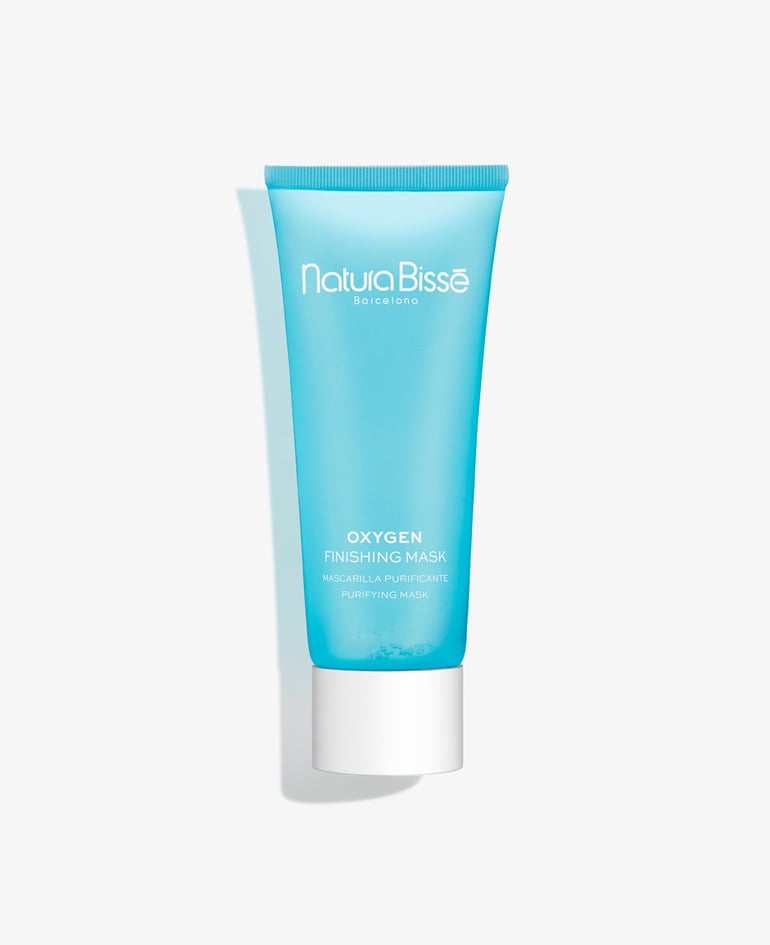
OXYGEN FINISHING MASK

OXYGEN FINISHING MASK
Natura Bissé
oxygen-finishing-mask
Face Mask
9643576197413
Morning or Evening?
How often will you use this product?
Notes


Highlights
WHAT IS IT?
A purifying brightening gel mask
FEATURES
Purifying, brightening, hydrating, invigorating
BEST FOR
Dry Skin, Combination Skin, Oily Skin
CHECKS
Oil-free, Gluten-free, paraben-free, sulfate-free, silicones-free
Who Is It For?
Men And Women (ideal For Men Mentioned In Product Badges)What Does It Help With?
Purifies Revitalizes And Brightens SkinBudget
Mid-rangeHow To Use
Which routine should it be used in?
Instructions:
Key Information


What Natura Bissé Says
Product Description:
A 10-minute invigorating gel mask that envelops the skin in ultra-fresh, instant hydration to ensure a healthy appearance. Instantly wake up your skin with a healthy glow thanks to this purifying brightening solution.
About the Brand:
Ingredients Overview
Ingredients List
Water (Aqua), Glycerin, Alcohol Denat., Hydrogen Peroxide, Spirulina Platensis Extract, Glyceryl Polyacrylate, Carbomer, PEG-40 Hydrogenated Castor Oil, Disodium EDTA, Sodium Hydroxide, Phenoxyethanol, Fragrance (Parfum), Limonene, Linalool, Hexyl Cinnamal.
Key Ingredients
Stabilized hydrogen peroxide, Living water (mineral-rich)
Ingredients Details
Alcohol Denat.
Common Name(s): Alcohol denat.,denatured ethanol,solvent antimicrobial astringent
CAS Number: N/a
DESCRIPTION
What It Does: Alcohol denat. dissolves oil-soluble and water-soluble cosmetic actives, provides rapid antimicrobial activity at concentrations above 60–70% by denaturing microbial proteins, delivers a refreshing cooling sensation through evaporative cooling on skin, and temporarily enhances the penetration of topical actives by transiently disrupting the stratum corneum lipid bilayer organisation.
Why It's Used: Formulators choose alcohol denat. for its irreplaceable combination of solvent power, antimicrobial activity, and penetration-enhancing properties. no other cosmetic solvent simultaneously provides the cooling sensory experience of alcohol (from evaporative cooling at the skin surface), the immediate antimicrobial activity required for sanitisers (from protein denaturation above 60%), and the transient sc lipid disruption that improves active ingredient delivery (essential in actives-rich toners and essences). for denatured alcohol specifically, denaturing agents (typically 5% isopropanol or bitrex) prevent consumption without affecting cosmetic function.
How It Works: Alcohol denat. works through multiple mechanisms depending on concentration: (1) solvent action — alcohol's hydroxyl group provides hydrogen bonding with water while the short alkyl chain provides interaction with organic solutes, enabling dissolution of both hydrophilic and moderately lipophilic cosmetic actives in a single solvent; (2) antimicrobial — above 60% concentration, ethanol denatures microbial proteins by disrupting non-covalent bonds maintaining protein secondary and tertiary structure — the alcohol molecules intercalate between protein chains, disrupting the hydrophobic interactions and hydrogen bonds that maintain enzyme active site geometry. this non-specific protein denaturation is immediately bactericidal and virucidal with no resistance mechanism possible; (3) sc penetration enhancement — at lower concentrations (5–30%), ethanol transiently fluidises the sc lipid bilayer by intercalating between the ordered lipid lamellae, disrupting the crystal packing and increasing lipid bilayer fluidity. this transient fluidisation increases the diffusion coefficient of co-applied actives through the sc for up to 30 minutes post-application; (4) astringency — alcohol's protein precipitating action at the skin surface contracts superficial proteins, temporarily tightening pores and reducing oiliness.
Typically Found In: Toners,hand sanitisers,actives serums
TECHNICAL DETAILS
Primary Category: Active ingredient – cosmetic active
Secondary Functions: Skin conditioning
Application Areas:

Facial Skincare

Body Care
Hair Care
Beard Care
Color Cosmetics (Makeup)
Dietary/Oral Supplements
Typical Concentration Range: 5%–95%
SOURCING & ETHICS
Vegan Status: Yes - standard ethanol routes are non-animal; confirm denaturant origin
Halal Status: Conditional - ethanol production route and residual concentration; jurisdiction-dependent, refer to certifier stance
Source Notes: Commercially produced for cosmetic use. verify vegan/halal status with supplier. [audit 2026-07-29 rev2: ethanol pathway; determination depends on route, on whether the plant also produces beverage alcohol, and on residual concentration. determination requires shariah-panel sign-off.]
SKIN COMPATIBILITY
Irritancy Rating: 1/5 – very low
Comedogenicity Rating: 0/5 – non-comedogenic
Sensitivity Concerns: Well-tolerated by most skin types.
Safe for Sensitive Skin: Yes
SAFETY & COMPATIBILITY
Safety Profile: Good safety profile at recommended concentrations. ewg score: 1–2.
Works Well With: Standard skincare actives
Avoid Combining With: No known significant incompatibilities
SCIENTIFIC NOTE
Ethanol concentration-dependent antimicrobial efficacy: below 40% — minimal bactericidal effect (insufficient protein denaturation); 40–60% — bacteriostatic, not bactericidal; 60–70% — peak bactericidal efficacy against both enveloped and non-enveloped viruses and vegetative bacteria (optimal water content maintains protein hydration required for denaturation to proceed); 80–90% — remains effective but slightly reduced from decreased water activity; 95–100% — reduced efficacy (insufficient water for protein denaturation). the 70% 'sweet spot' for sanitisers reflects this concentration-efficacy peak, not a formulation convenience.
Last Verified: 2026-03-12
Primary Sources: Cosing database,alcohol denat. ethanol solvent antimicrobial review
Carbomer
Common Name(s): Carbopol,polyacrylic acid,carboxyvinyl polymer
DESCRIPTION
What It Does: Provides transparent gel textures and thickening at very low concentrations via ph-responsive swelling.
Why It's Used: The most widely used gel thickener – provides crystal-clear, stable gels at concentrations as low as 0.1-0.5% with ph-controlled viscosity.
How It Works: Highly crosslinked polyacrylic acid remains tightly coiled at acidic ph. neutralization with naoh or triethanolamine ionizes carboxylic groups causing electrostatic repulsion that unfolds and swells the polymer coils, dramatically increasing viscosity. concentration-dependent thickening.
Typically Found In: Gels,serums,emulsions,sunscreens
TECHNICAL DETAILS
Primary Category: Functional ingredient – polyacrylic acid thickener
Secondary Functions: Skin conditioning
Application Areas:
Facial Skincare
Body Care
Hair Care
Beard Care
Color Cosmetics (Makeup)
Dietary/Oral Supplements
Typical Concentration Range: 0.1%–2%
SOURCING & ETHICS
Vegan Status: Conditional - supplier confirmation required
Halal Status: Unverified - supplier confirmation required
Source Notes: Commercially produced for cosmetic use. verify vegan/halal status with supplier. [audit 2026-07-29 rev2: the record's own source_notes does not assert a non-animal origin, or instructs the reader to verify with the supplier; "yes" asserts knowledge the record does not hold. determination requires shariah-panel sign-off.]
SKIN COMPATIBILITY
Irritancy Rating: 1/5 – very low
Comedogenicity Rating: 0/5 – non-comedogenic
Sensitivity Concerns: Well-tolerated by most skin types.
Safe for Sensitive Skin: Yes
SAFETY & COMPATIBILITY
Safety Profile: Good safety profile at recommended concentrations. ewg score: 1–2.
Works Well With: Standard skincare actives
Avoid Combining With: No known significant incompatibilities
SCIENTIFIC NOTE
Carbomer's ph-responsive swelling mechanism provides an elegant formulation control tool: a neutralized gel can be liquefied by ph reduction (adding acid) and re-thickened by reneutralization. this reversible rheology control allows two-phase products that mix on application without the need for mechanical emulsification.
Last Verified: 2026-03-12
Primary Sources: Cosing database,cir safety assessment
Disodium Edta
Common Name(s): Edathamil disodium,edta disodium,versene 100
CAS Number: 139-33-3
DESCRIPTION
What It Does: Provides metal ion chelation to prevent product degradation and boost preservative and antioxidant efficacy.
Why It's Used: The most essential stability ingredient in cosmetics — disodium edta's metal chelation prevents rancidity, discoloration, and preservative failure caused by trace metal contamination in virtually all aqueous cosmetic formulations.
How It Works: Ethylenediaminetetraacetic acid provides six potential coordination sites for metal ions (aminodiacetate groups). chelates ca²⁺, mg²⁺ (stability), fe³⁺ (fenton radical prevention), cu²⁺ (oxidase inhibition). disrupts gram-negative bacterial outer membrane by chelating membrane calcium, enhancing preservative penetration.
Typically Found In: Virtually all aqueous cosmetics — creams, lotions, shampoos, toners
TECHNICAL DETAILS
Primary Category: Functional ingredient – chelating agent
Secondary Functions: Skin conditioning
Application Areas:
Facial Skincare
Body Care
Hair Care
Beard Care
Color Cosmetics (Makeup)
Dietary/Oral Supplements
Typical Concentration Range: 0.005%–0.1%
SOURCING & ETHICS
Vegan Status: Conditional - supplier confirmation required
Halal Status: Unverified - supplier confirmation required
Source Notes: Commercially produced for cosmetic use. verify vegan/halal status with supplier. [audit 2026-07-29 rev2: the record's own source_notes does not assert a non-animal origin, or instructs the reader to verify with the supplier; "yes" asserts knowledge the record does not hold. determination requires shariah-panel sign-off.]
SKIN COMPATIBILITY
Irritancy Rating: 1/5 – very low
Comedogenicity Rating: 0/5 – non-comedogenic
Sensitivity Concerns: Well-tolerated by most skin types.
Safe for Sensitive Skin: Yes
SAFETY & COMPATIBILITY
Safety Profile: Good safety profile at recommended concentrations. ewg score: 1–2.
Works Well With: Standard skincare actives
Avoid Combining With: No known significant incompatibilities
SCIENTIFIC NOTE
Disodium edta's preservative potentiation against gram-negative bacteria is mechanistically elegant: gram-negative outer membranes contain lipopolysaccharide stabilised by calcium and magnesium bridges. edta chelates these metal ions, destabilising the lps layer and creating pores that allow hydrophobic preservatives (phenoxyethanol, parabens) to penetrate — converting gram-negative-resistant preservatives into broad-spectrum ones.
Last Verified: 2026-03-12
Primary Sources: Cosing database,cir safety assessment
Glycerin
Common Name(s): Glycerol,glycerine,1,2,3-propanetriol
CAS Number: 56-81-5
DESCRIPTION
What It Does: Glycerin pulls water from the environment and deeper skin layers into the outer skin layer (epidermis), boosting moisture levels and keeping skin soft, smooth, and plump.
Why It's Used: It is used in virtually every moisturizer, serum, and cleanser because it is highly effective at hydrating skin, is well-tolerated by all skin types, and enhances the texture and spreadability of formulations.
How It Works: As a humectant, glycerin forms hydrogen bonds with water molecules, trapping them in the skin. it also reinforces the skin barrier by integrating into lipid structures between skin cells.
Typically Found In: Moisturizers,serums,cleansers,toners,sheet masks,sunscreens,body lotions,shampoos,conditioners
TECHNICAL DETAILS
Primary Category: Humectant
Secondary Functions: Skin barrier support,emollient,solvent
Application Areas:
Facial Skincare
Body Care
Hair Care
Beard Care
Color Cosmetics (Makeup)
Dietary/Oral Supplements
Typical Concentration Range: 1%–30% (typical: 3–10%)
SOURCING & ETHICS
Vegan Status: Conditional - feedstock declaration required
Halal Status: Unverified - feedstock declaration required (plant, animal and petrochemical routes all exist)
Source Notes: Derived from plant oils via hydrolysis or saponification; synthetic versions also available. palm-derived glycerin carries sustainability concerns. [audit 2026-07-29 rev2: origin-dependent: the same inci exists in plant, animal and petrochemical versions and the name does not discriminate. determination requires shariah-panel sign-off.]
SKIN COMPATIBILITY
Irritancy Rating: 1/5 – very low; non-irritating at all standard concentrations
Comedogenicity Rating: 0/5 – non-comedogenic
Sensitivity Concerns: Extremely rare allergic reactions; generally safe for all skin types including sensitive and baby skin
Safe for Sensitive Skin: Yes
SAFETY & COMPATIBILITY
Safety Profile: Widely recognized as safe. ewg hazard score: 1. no significant concerns for irritation, sensitization, or toxicity at typical concentrations (up to 50%).
Works Well With: Hyaluronic acid,ceramides,niacinamide,panthenol,urea,peptides,retinol,ahas/bhas
Avoid Combining With: No known incompatibilities at standard concentrations
SCIENTIFIC NOTE
Glycerin is an endogenous skin component found naturally in the stratum corneum. aquaporin-3 channels in keratinocytes facilitate glycerin transport, making it integral to natural skin hydration pathways.
Last Verified: 2026-03-12
Primary Sources: Cosing database,cir safety assessment,ewg skin deep,inci decoder