

Oziva
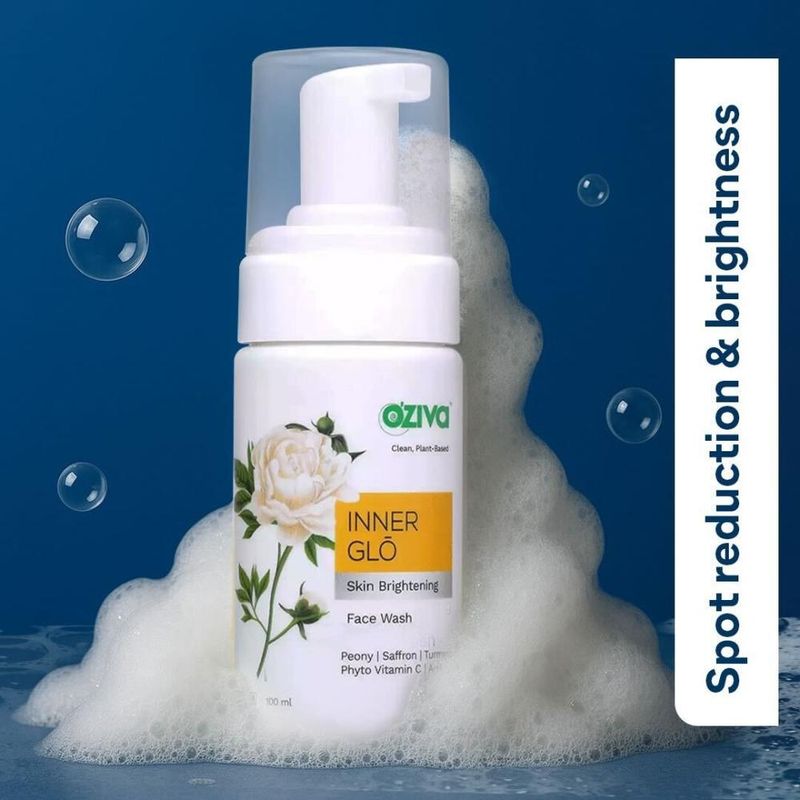
OZiva Inner Glo Skin Brightening Face Wash (with Vitamin C) for Spot Correction & Radiance

OZiva Inner Glo Skin Brightening Face Wash (with Vitamin C) for Spot Correction & Radiance
Oziva
oziva-inner-glo-skin-brightening-face-wash-with-vitamin-c-for-spot-correction-radiance
Cleanse
10084921016613
Morning or Evening?
How often will you use this product?
Notes


Highlights
WHAT IS IT?
Skin brightening face wash with potent plant-based ingredients and multiple actives
FEATURES
Brightening, foaming, smooth exfoliation, enriched with white peony, vitamin C, sandalwood oil, vitamin E, Chinese skullcap root extract, rose oil; reduces pigmentation; restores skin barrier; supports new skin cell growth; lessens pigmentation with saffron oil; repairs skin with antioxidants; suitable for all skin types; paraben-free, sulphate-free, silicone-free, dye-free, gluten-free, artificial fragrance-free; vegan and cruelty-free
BEST FOR
sensitive
CHECKS
Parabens, Sulfates, Silicones, Artificial fragrance, Dyes, Gluten
Who Is It For?
What Does It Help With?
Spot Correction Radiance Pigmentation Reduction Skin Barrier RepairBudget
Affordable (under $30)How To Use
Which routine should it be used in?
Instructions:
Key Information


What Oziva Says
Product Description:
OZiva Inner Glō Skin Brightening Face Wash is a highly beneficial skin brightening face wash that provides your skin visible glow and freshness because of its potent plant-based ingredients. It also gently exfoliates while balancing your pH levels leaving your skin feeling radiant, soft and refreshed. This brightening face wash is paraben-free, sulfate-free, artificial fragrance-free and more, besides being mild on your skin. Once you try it will definitely become a part of your personalised skincare routine as it softly exfoliates to give a striking glow to your skin with white peony extract, phyto vitamin C, sandalwood oil, glycolic acid (AHA). It also helps your skin to repair itself, rectify noticeable damage with rich antioxidants and controlled pigmentation, restrict the growth of melanin and support the growth of new skin cells, heal your skin barrier resulting in a radiating skin tone with the goodness of vitamin E, Chinese skullcap root extract, yuzu seed extract, saffron oil, turmeric oil and rose oil. Improved radiance and pH balance, based on clinically proven data.
About the Brand:
Ingredients Overview
Ingredients List
Aqua,Cocamidopropyl-Betaine,Sodium-Lauryl-Sarcosinate,Polyquaternium-7,Glycerine,PEG-40-Hydrogenated-Castor-Oil,Sodium-Levulinate,Potassium-Sorbate,Lumiflora-Peony-(Butylene-Glycol-and-Paeonia-Lactiflora-Flower-Extract),BST-Seed-Whiter-(Scutellaria-Baicalensis-Root-Extract-and-Citrus-Junos-Seed-Extract-fermented-with-Lactobacillus),D-Panthenol,Sandalwood-Oil,Rose-Oil,Poly-Glutamic-Acid,Phyto-Niacinamide-(Tulsi-Extract),Glycolic-Acid,Turmeric-Oil,Vitamin-E,Saffron-Oil,Phyto-Vitamin-C-(Amla-Extract)
Key Ingredients
White Peony Extract, Phyto Vitamin C (Amla Extract), Sandalwood Oil, Glycolic Acid, Vitamin E
Ingredients Details
D-panthenol
Common Name(s): D-panthenol,b-vitamin skin active,multi-benefit conditioning
CAS Number: N/a
DESCRIPTION
What It Does: Provides the specific b-vitamin's characteristic skin and hair benefits: brightening and barrier reinforcement (niacinamide), keratin structural support (biotin), deep conditioning humectancy (panthenol).
Why It's Used: B-vitamins operate through fundamental cellular biochemistry pathways — nad⁺ for niacinamide, carboxylase cofactor for biotin, coa synthesis for panthenol — providing multi-benefit activity from essential metabolic chemistry.
How It Works: Acts as coenzyme or substrate in essential metabolic pathways: niacinamide → nad⁺/nadp⁺ → ceramide synthesis, melanosome transfer inhibition; biotin → carboxylase → fatty acid synthesis for ceramide; panthenol → pantothenic acid → coa → lipid metabolism.
Typically Found In: Multi-function skin care,b-vitamin formulas
TECHNICAL DETAILS
Primary Category: Active ingredient – vitamin b complex
Secondary Functions: Antioxidant cofactor,metabolic support
Application Areas:

Facial Skincare

Body Care
Hair Care
Beard Care
Color Cosmetics (Makeup)
Dietary/Oral Supplements
Typical Concentration Range: 0.1%–10%
SOURCING & ETHICS
Vegan Status: Yes
Halal Status: Yes
Source Notes: Synthetically produced for cosmetic use.
SKIN COMPATIBILITY
Irritancy Rating: 1/5 – very low
Comedogenicity Rating: 0/5 – non-comedogenic
Sensitivity Concerns: Non-irritating; excellent tolerability.
Safe for Sensitive Skin: Yes
SAFETY & COMPATIBILITY
Safety Profile: Excellent safety profile. ewg score: 1.
Works Well With: Other b vitamins,niacinamide,antioxidant complexes
Avoid Combining With: No significant incompatibilities
SCIENTIFIC NOTE
B-vitamins are water-soluble, non-irritating, and well-tolerated across all skin types — providing clinical efficacy with an exceptional safety profile from their essential nutrient status.
Last Verified: Cosing database,d-panthenol b-vitamin skin review
Primary Sources: 2026-03-12
Glycerine
Common Name(s): Glycerin,universal humectant,water-binding skin conditioning
CAS Number: N/a
DESCRIPTION
What It Does: Attracts and retains moisture in the sc, improves skin barrier function at low concentrations, provides gentle keratolytic softening, and acts as a co-solvent for water-soluble actives.
Why It's Used: The reference humectant — lowest cost, best safety profile, universal formulation compatibility, and present naturally in the sc via lipase-mediated glycerolipid hydrolysis makes glycerin the industry standard against which all humectants are benchmarked.
How It Works: Three hydroxyl groups form 6 h-bonds with water molecules per glycerol unit — the highest oh-group density per carbon of any commercial humectant. glycerin also down-regulates epidermal serine proteases that overactivate in dry sc, improving desquamation and barrier integrity.
Typically Found In: All cosmetics,universal
TECHNICAL DETAILS
Primary Category: Functional ingredient – humectant
Secondary Functions: Tewl reduction,skin plumping
Application Areas:
Facial Skincare
Body Care
Hair Care
Beard Care
Color Cosmetics (Makeup)
Dietary/Oral Supplements
Typical Concentration Range: 1%–40%
SOURCING & ETHICS
Vegan Status: Yes
Halal Status: Yes
Source Notes: Synthetic or naturally derived. excellent aqueous solubility.
SKIN COMPATIBILITY
Irritancy Rating: 1/5 – very low
Comedogenicity Rating: 0/5 – non-comedogenic
Sensitivity Concerns: Non-irritating; suitable for all skin types.
Safe for Sensitive Skin: Yes
SAFETY & COMPATIBILITY
Safety Profile: Excellent safety profile. ewg score: 1.
Works Well With: Ceramides,emollients,occlusives,glycerin,hyaluronic acid
Avoid Combining With: No significant incompatibilities
SCIENTIFIC NOTE
Epidermal lipases hydrolyse sc glycerophospholipids during cornification, releasing glycerol that contributes to the natural nmf — topical glycerin directly supplements this endogenous sc humectant pool.
Last Verified: Cosing database,glycerin universal humectant review
Primary Sources: 2026-03-12
Polyquaternium-7
Common Name(s): Polyquaternium-7,cationic conditioning polymer,substantive film-former
CAS Number: N/a
DESCRIPTION
What It Does: Deposits a conditioning film on hair and skin through electrostatic attraction to negative cuticle/corneocyte surfaces, reduces hair-on-hair friction for improved combability and detangling, eliminates static charge buildup, and provides anti-frizz humidity resistance.
Why It's Used: Cationic polymers are the primary hair conditioning technology — the permanent positive quaternary ammonium groups provide substantive deposition that resists rinsing, delivering persistent conditioning between washes unlike small-molecule cationic conditioners.
How It Works: At shampoo/conditioner ph 4.5–5.5, hair cuticle carries net negative charge (isoelectric point ph ~3.5). polyquaternium cations undergo electrostatic attraction depositing on the cuticle surface. during rinsing, the deposited polymer film persists from reduced surface-solution equilibrium at low bulk concentration — substantive deposition from favourable interfacial versus bulk partitioning.
Typically Found In: Shampoos,conditioners,leave-in products
TECHNICAL DETAILS
Primary Category: Active ingredient – cosmetic active
Secondary Functions: Skin conditioning
Application Areas:
Facial Skincare
Body Care
Hair Care
Beard Care
Color Cosmetics (Makeup)
Dietary/Oral Supplements
Typical Concentration Range: 0.1%–3%
SOURCING & ETHICS
Vegan Status: Yes
Halal Status: Yes
Source Notes: Commercially produced for cosmetic use. verify vegan/halal status with supplier.
SKIN COMPATIBILITY
Irritancy Rating: 1/5 – very low
Comedogenicity Rating: 0/5 – non-comedogenic
Sensitivity Concerns: Well-tolerated by most skin types.
Safe for Sensitive Skin: Yes
SAFETY & COMPATIBILITY
Safety Profile: Good safety profile at recommended concentrations. ewg score: 1–2.
Works Well With: Standard skincare actives
Avoid Combining With: No known significant incompatibilities
SCIENTIFIC NOTE
Different polyquaternium numbers indicate different backbone chemistries: pq-7 (acrylamide/quaternary acrylate copolymer) for leave-on flexibility; pq-10 (hydroxyethylcellulose/quaternary ammonium) for substantive deposition; pq-11 (vp/dimethylaminoethyl methacrylate) for styling fixation.
Last Verified: Cosing database,polyquaternium-7 cationic conditioning deposition review
Primary Sources: 2026-03-12
